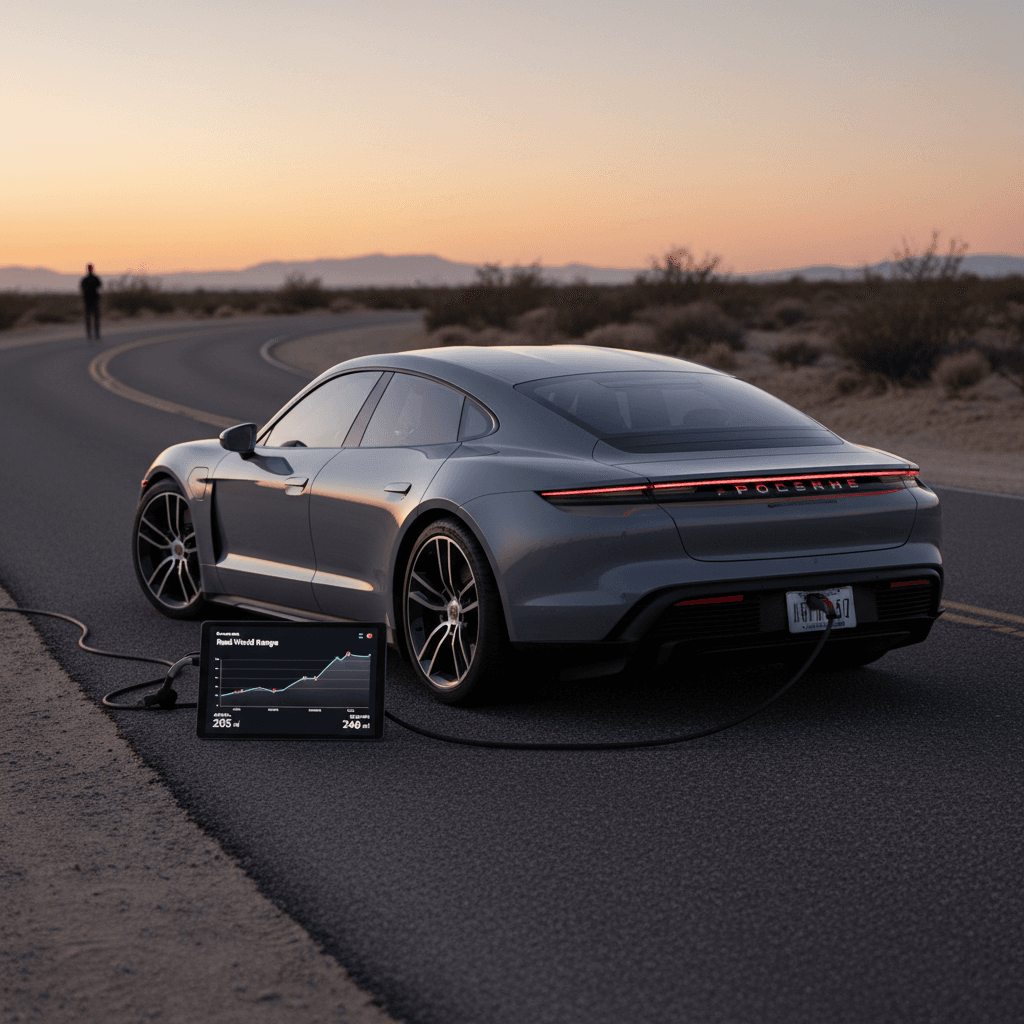
If you’re eyeing a used 2023 Porsche Taycan, you’ve probably noticed a gap between the official EPA numbers and the big range figures you see in magazine tests. A focused 2023 Porsche Taycan range test helps bridge that gap so you know what to expect on your actual commute or road trip, not just on paper.
Quick takeaway
Why focus on a 2023 Porsche Taycan range test?
The 2023 model year sits in an interesting spot for the Taycan. It received software updates that boosted EPA range across most trims versus earlier years, yet it predates the big hardware changes and larger battery packs of the refreshed 2025–2026 cars. That makes 2023 a sweet spot in the used market, if you understand its true range and charging behavior.
Porsche has also built a reputation for conservative official range ratings. Independent tests have repeatedly shown Taycans going significantly farther than their window stickers would suggest when driven efficiently. So instead of looking only at the EPA label, it’s worth unpacking how the 2023 Taycan really performs in different conditions, and what that means if you’re shopping used through a digital retailer like Recharged.
Tip for used shoppers
2023 Taycan battery and EPA range figures by trim
Every 2023 Taycan uses an 800‑volt lithium‑ion pack with two available sizes. The smaller pack is great for performance and lighter weight; the larger Performance Battery Plus is the range-maximizer:
2023 Porsche Taycan battery options
Pack sizes and basic battery specs for 2023 Taycan models.
| Battery | Nominal capacity | Usable capacity | Voltage architecture | Notes |
|---|---|---|---|---|
| Standard Performance Battery | 79.2 kWh | ~71 kWh | 800 V | Base battery on many RWD and some 4S models |
| Performance Battery Plus | 93.4 kWh | ~83.7 kWh | 800 V | Optional long-range pack; standard on some higher trims |
From there, each trim has its own EPA range. For 2023, Porsche’s software and efficiency tweaks nudged nearly every variant upward compared with 2022:
2023 Porsche Taycan EPA range estimates (selected trims)
Approximate EPA combined range figures for key 2023 Taycan variants. Exact numbers vary slightly with wheels and options.
| Model (sedan) | Battery | EPA range (mi) | Change vs 2022 |
|---|---|---|---|
| Taycan RWD | Standard | 208 | ↑ from 200 mi |
| Taycan RWD | Performance Battery Plus | 242 | ↑ from 225 mi |
| Taycan 4S | Standard | 206 | ↑ from 199 mi |
| Taycan 4S | Performance Battery Plus | 235 | ↑ from 227 mi |
| Taycan GTS | Performance Battery Plus | 246 | No change, still range leader |
| Taycan Turbo | Performance Battery Plus | 238 | ↑ from 212 mi |
| Taycan Turbo S | Performance Battery Plus | 222 | ↑ from 201 mi |
Figures are rounded; check the specific car’s Monroney label for the official rating.
Wheel and body style caveat
Real-world 2023 Porsche Taycan range tests
On paper, a 2023 Taycan tops out in the mid‑200‑mile range. In practice, multiple independent tests have shown that Taycans, especially in earlier years, can beat their EPA ratings in mixed driving when you’re not hammering them on every on‑ramp.
What independent range tests tell us
How the Taycan behaves once you leave the spec sheet behind
Edmunds-style mixed driving
Earlier Taycan models have delivered far beyond EPA estimates in real-world loops, with some tests seeing 280–320 miles from trims rated closer to 200–225 miles. While not all 2023 cars will match those outliers, it shows the EPA label is conservative when you drive smoothly.
Highway-focused tests (~70–75 mph)
At steady interstate speeds, expect results closer to the EPA number. In most 2023 Taycans, drivers report roughly 200–230 miles from 100% down to about 5–10% state of charge on a typical highway run, depending on wheel size and weather.
City and suburban use
Stop‑and‑go traffic actually plays to the Taycan’s strengths. With strong regen and efficient electronics, many owners see better‑than‑EPA range on urban commutes, sometimes adding 10–20% versus their highway results.
If you’re evaluating a specific used 2023 Taycan, think of the EPA rating as a conservative floor, with real-world mixed driving often equal or better as long as you aren’t constantly in Sport Plus mode or cruising well above the speed limit.
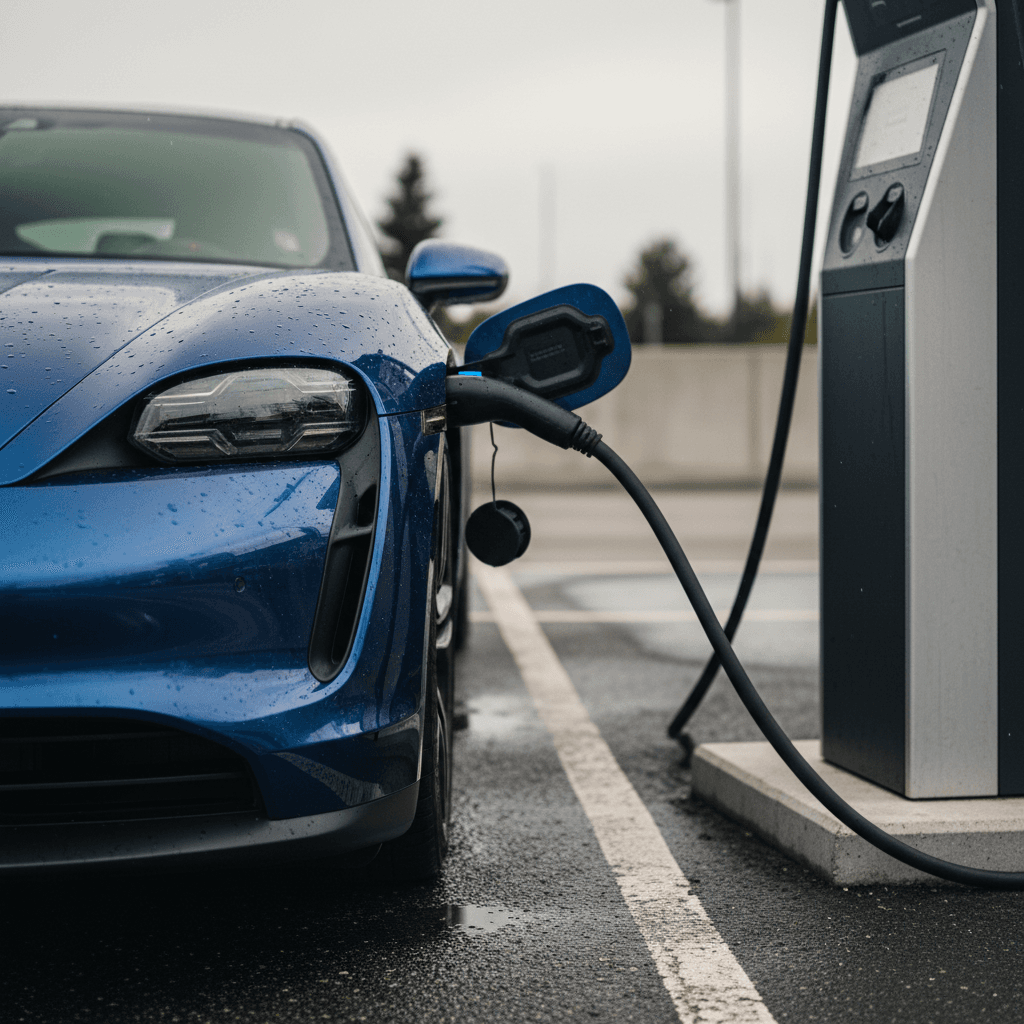
Fast charging matters as much as range
City vs highway: how the Taycan uses energy
Not all miles are equal. The 2023 Taycan’s efficiency shifts a lot between urban, suburban, and freeway use. Understanding that will make any range test, and any used‑EV shopping decision, more realistic.
City and mixed driving
- Lots of regen: Every stop recovers energy, especially in Normal and Range modes.
- Lower aero drag: At 25–45 mph, the Taycan’s sleek body doesn’t fight the air as much.
- Climate loads matter less: HVAC is a smaller share of total energy use at lower speeds.
Result: it’s common to see energy use in the roughly mid‑2s to low‑3s mi/kWh range in gentle city driving, translating into real‑world ranges that can meet or exceed EPA ratings.
Highway driving
- Aero dominates: Above ~65 mph, wind resistance ramps up fast, especially on big wheels.
- Less regen: You’re rarely slowing down from high speed, so you recover less energy.
- Speed is everything: The difference between 65 and 80 mph can easily swing your usable range by 15–25%.
Result: at 70–75 mph, expect energy use closer to low‑2s mi/kWh. That’s how a car rated for ~235–246 miles might deliver something closer to 200–220 miles on a long, fast interstate stretch.
Simple efficiency win
What actually impacts your 2023 Taycan range?
Key factors to watch in any Taycan range test
1. Speed and driving style
Hard launches and sustained high speeds are fun, and expensive in terms of electrons. Smooth acceleration and a modest cruise speed can easily add 30–50 miles of real range versus aggressive driving.
2. Wheel size and tires
Bigger 20–21 inch wheels, performance compounds, and winter tires all cut efficiency. If you see a used 2023 Taycan on large wheels, expect slightly less real-world range than the same car on 19s.
3. Temperature and climate control
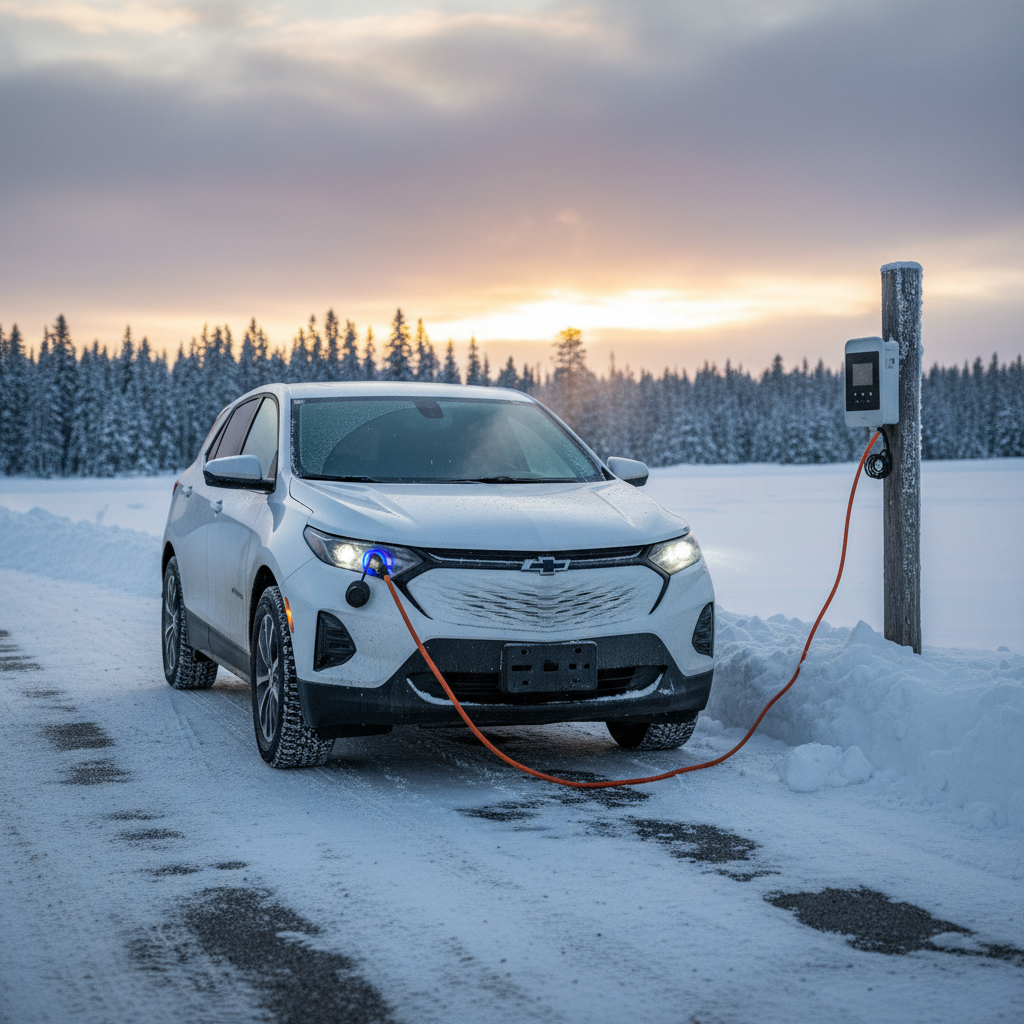
Cold weather thickens battery chemistry and increases cabin-heating demand. In winter, it’s normal to see 10–30% less range. Preconditioning while plugged in and using seat and wheel heaters first can help.
4. Elevation and wind
Long climbs and headwinds chew through energy; long descents and tailwinds do the opposite. If your test route is hilly or windy, your results may not match a flat, calm EPA cycle.
5. Battery state of charge window
Most drivers don’t run from 100% to 0%. If you road-trip between, say, 10% and 80% for fast-charging convenience, your effective leg length will be shorter than the full rated range, and that’s normal.
6. Software and updates
Porsche has rolled out software updates that tweak efficiency and thermal management. A well‑maintained 2023 Taycan that’s up to date can see slightly better real‑world range than one that’s never been back to the dealer.
How to run your own Taycan range test safely
If you’re test‑driving a used 2023 Taycan, or just benchmarking the one you own, you can run a basic range test without ever risking a tow truck. The goal isn’t to drive to zero; it’s to gather realistic consumption data you can extrapolate from.
- Pick a mostly flat loop or out‑and‑back route of 50–70 miles that includes the kind of driving you care about most (for example, 70–75 mph freeway).
- Charge the car to a known starting point (for example, 90% state of charge) and reset the trip computer, including energy usage.
- Drive the route at a steady, legal speed using the same mode you’ll use day to day, Normal or Range for most people.
- Note your average mi/kWh (or kWh/100 mi) and the state of charge at the end of the loop.
- Use simple math: if you averaged 3.0 mi/kWh and have the Performance Battery Plus (~83.7 kWh usable), max theoretical range is about 250 miles in those conditions (3.0 × 83.7). Then discount 10–15% for buffers and real-world variation.
- Repeat in different weather or speeds to see how your personal pattern changes the results.
Don’t chase zero
2023 Taycan vs newer Taycan: is range a dealbreaker?
Newer Taycan models launched after 2023 added larger battery packs, efficiency tweaks, and impressive real‑world highway results. That naturally raises a question: should you skip a 2023 Taycan because the 2025+ cars can go significantly farther on a charge?
How 2023 stacks up against newer Taycans
Range is better now, but 2023 can still be the smart buy
Where newer Taycans win
- Larger usable battery packs and higher mi/kWh figures in independent tests.
- Even faster, more consistent DC fast charging on some trims.
- More refined software and driver‑assist features.
Why 2023 still makes sense used
- Lower purchase price for similar performance and interior quality.
- Improved range vs 2020–2022 thanks to software tweaks.
- Plenty of real‑world range for most daily driving plus capable fast‑charging for trips.
If you routinely drive 250–300 highway miles in one shot with limited charging options, a newer Taycan or a long‑range luxury EV might fit better. But for many buyers, especially those coming from gas performance cars, the 2023 Taycan’s blend of ~200–240 miles of real mixed range and ultra‑rapid fast‑charging is more than enough.
Used 2023 Taycan: battery health, degradation, and Recharged Score
Range tests tell you what a healthy 2023 Taycan can do. A used‑market car adds one more variable: how much of that original capacity is still there after a few years of use. The good news is that Porsche’s thermal management and 800‑volt architecture have generally kept Taycan degradation modest when the car is driven and charged sensibly.
What a healthy 2023 Taycan typically looks like
When you’re shopping used, however, you want more than “typically.” That’s where diagnostics matter. Every vehicle sold through Recharged comes with a Recharged Score Report, which includes verified battery health and range insights pulled from the car itself, not just a guess based on model year and mileage.
How Recharged helps you shop a used 2023 Taycan with confidence
Verified battery health
Range transparency
End‑to‑end support
Ready to find your next EV?
Browse VehiclesFAQ: 2023 Porsche Taycan range
Frequently asked questions about 2023 Taycan range
Bottom line: should range stop you from buying a 2023 Taycan?
A focused 2023 Porsche Taycan range test shows a clear pattern: the EPA sticker undersells what this car can do in mixed driving, but highway speed, wheels, and weather still matter a lot. If you routinely drive at 75+ mph in cold climates with big wheels, you’ll live closer to the EPA numbers. If you mostly mix city and suburban miles and drive efficiently, you may well beat them.
For used‑EV shoppers, the key is matching that reality to your life. If a realistic 180–220 miles between comfortable fast‑charge stops fits your routine, a 2023 Taycan can deliver world‑class performance and charging without the price tag of the latest model year. And if you want hard data on a specific car’s battery before you commit, buying through Recharged means you get a Recharged Score Report with verified battery health, fair market pricing, and EV‑specialist support from your first click to delivery.