If you’re eyeing a used 2023 Mercedes EQS, you’ve probably heard two competing narratives. On one hand, owners rave about the spaceship‑smooth ride, hushed cabin and tech-laden interior. On the other, you’ll find headlines about recalls, software glitches and six‑figure EVs sidelined by warning lights. This guide cuts through the noise so you can understand real‑world 2023 Mercedes EQS problems and decide whether it belongs in your driveway.
Context matters
Overview: Should you worry about 2023 EQS problems?
Why people love the 2023 EQS
- Ultra‑quiet, S‑Class‑level comfort with EV smoothness
- Strong performance even in base 450+ trims
- High owner satisfaction scores on comfort and reliability
- Steep depreciation means big savings on the used market
Why people hesitate
- Multiple recalls across the EQS line, including software and electrical
- Reports of quirky infotainment and connectivity behavior
- Complex air suspension and tech that can be expensive to fix out of warranty
- Uncertainty about long‑term support as Mercedes reshuffles its EQ strategy
Across owner reviews, the 2023 EQS earns glowing marks for comfort, performance and day‑to‑day reliability. Consumer review sites show most owners giving it 5 stars, with 100% saying they’d recommend the car. At the same time, the 2023 EQS has accumulated a notable set of recalls tied to software, high‑voltage electronics and safety systems. The result is a car that can be fantastic to live with, if you buy the right example and verify that the important fixes have been done.
Flagship rule of thumb
How reliable is the 2023 Mercedes EQS overall?
What owners say about 2023 EQS reliability
The 2023 EQS lives in a weird split reality. On one side, you have owners reporting tens of thousands of trouble‑free miles, especially with the EQS 450+ powertrain. On the other, the model family has been the subject of multiple recalls for battery monitoring software, fuses, and loss‑of‑drive‑power risks. Those two truths can coexist: an individual car can be rock‑solid while the overall fleet shows enough issues for regulators and Mercedes to step in.
Look at the car, not just the model
Major 2023 EQS recalls and safety concerns
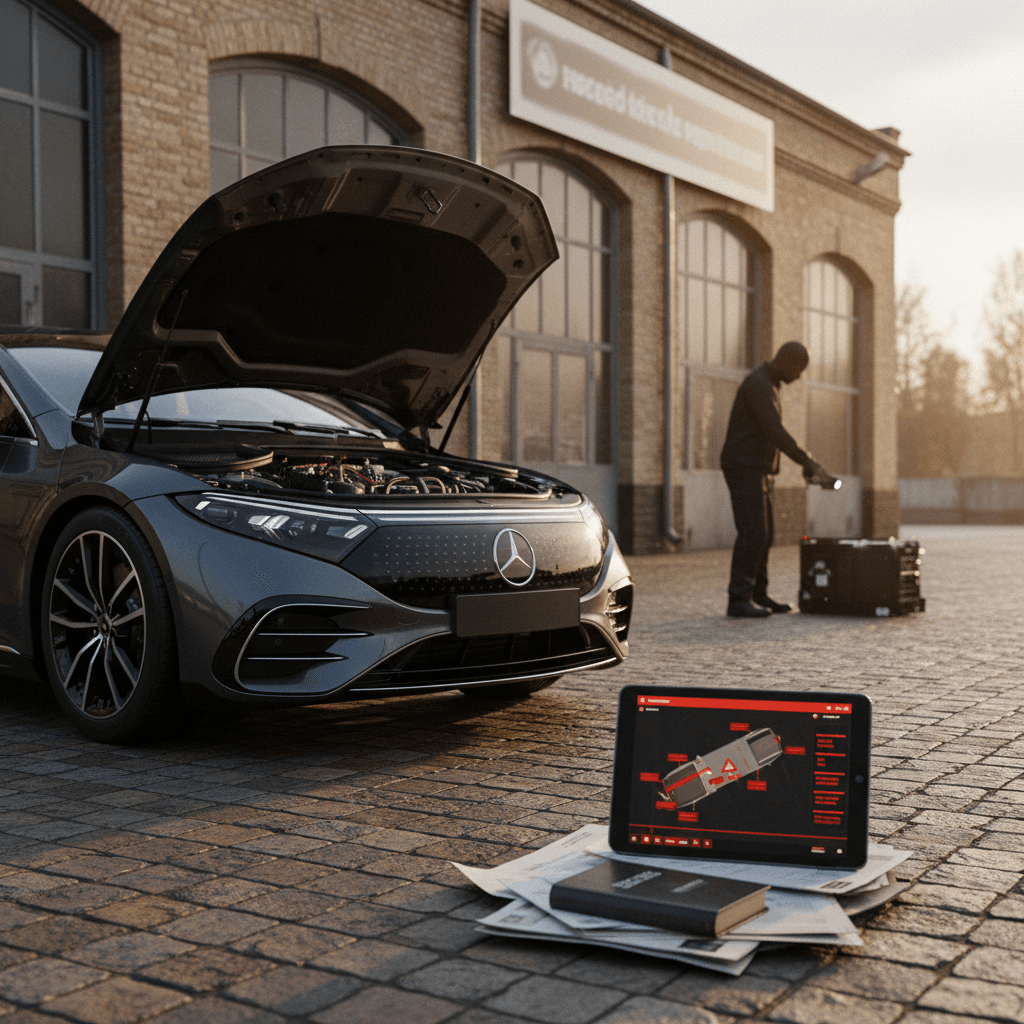
By 2026, the 2023 Mercedes EQS had been linked to around seven separate NHTSA recalls, spanning both sedan and SUV variants. Most are software or component‑related, but a few have direct safety implications if ignored.
Key recalls affecting 2023 EQS models
Not every 2023 EQS will be subject to every recall, but these are the big ones you should verify on any used example.
| Area | Issue | Risk if ignored | Typical fix |
|---|---|---|---|
| High‑voltage battery monitoring | Battery management software may not properly alert the driver to a battery malfunction. | Unnoticed battery fault, increased risk in a severe failure or crash. | Software update to the battery management system. |
| Electric drivetrain software | Error in the electric drive system can cause loss of drive power. | Sudden loss of propulsion while driving, risk of crash. | Drivetrain control software update. |
| Main fuse / fuse box | Incorrect or faulty 80‑amp fuse or fuse box installed on some vehicles. | Loss of power or key safety systems; in rare cases, fire risk. | Inspection and replacement of fuse box and fuses. |
| Rear seat belt buckles | Rear buckle bolts may not be properly secured on some early builds. | Seat belts may not restrain rear occupants in a crash. | Inspection and re‑torquing/replacing buckle bolts. |
| Side‑curtain airbag mounting (small batch) | Sharp mounting bracket edges could damage airbags on deployment in a tiny number of vehicles. | Reduced side‑impact protection in a crash. | Inspection and replacement of brackets and airbags if needed. |
| Acoustic Vehicle Alerting System | Incorrect pedestrian warning sound while reversing. | Non‑compliance with EV sound regulations; potential safety concern for pedestrians. | AVAS software update. |
Always run the VIN through the NHTSA recall tool or a dealer to see which of these apply to the specific car you’re considering.
Non‑negotiable for buyers
Common 2023 Mercedes EQS problems owners report
Outside of formal recalls, day‑to‑day 2023 EQS problems tend to fall into a few familiar luxury‑EV categories: software, electronics, and the occasional hardware oddity that takes time to chase down. Here’s what shows up most often in owner anecdotes and forums.
Typical 2023 EQS problem areas
Most are solvable, but they can be time‑consuming if your dealer is backed up.
1. Infotainment & connectivity quirks
- Occasional freezing or lag from the giant Hyperscreen.
- Glitchy Bluetooth or profile syncing until the latest software updates.
- Random error messages that clear after a restart.
Annoying, but usually fixed with OTA or dealer software updates.
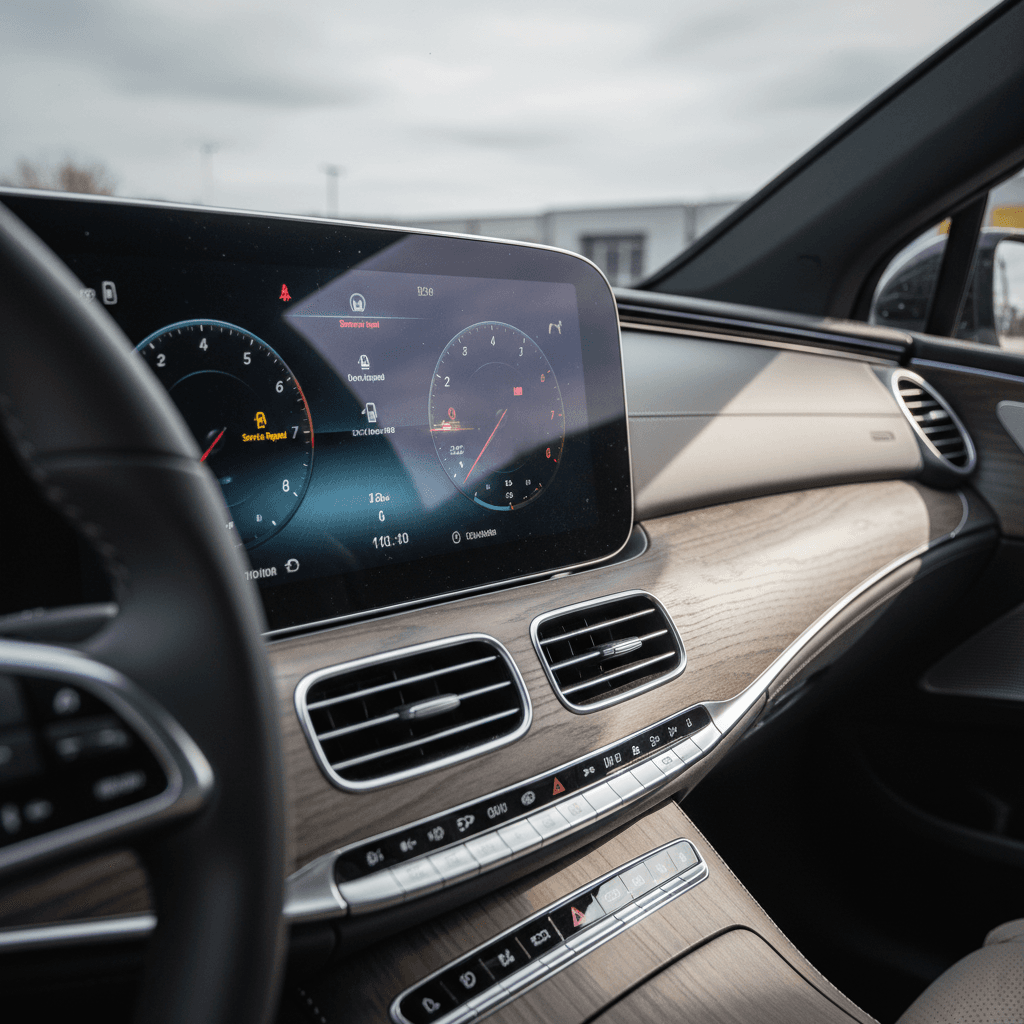
2. Warning lights & sensor gremlins
- Isolated reports of parking sensors or cameras going offline.
- 360° camera system not activating intermittently.
- Socket flap / charging door error messages.
Often traced to faulty harnesses, moisture, or control modules.
3. HVAC & comfort oddities
- Heating or A/C momentarily cutting out and returning after a restart.
- Weak airflow to the third row on some EQS SUVs.
- Occasional squeaks from the panoramic roof or interior trim.
Most issues are warranty repairs but can require multiple visits.
- Isolated complaints of sunroof creaks or wind noise at highway speeds, often fixed by adjusting or replacing the roof cassette.
- A few owners note premature wear on large, low‑profile tires, more a cost annoyance than a defect, but worth budgeting for.
- General frustration with Mercedes’ EV support line or app experience rather than the car itself, especially around charging network support.
The upside
Battery health, range and charging behavior
For most EV shoppers, the nightmare scenario is simple: you buy a used luxury EV and discover the battery is tired and range‑starved. The good news with the 2023 EQS is that, so far, there’s no widespread evidence of catastrophic battery degradation. Most owners still report excellent real‑world range, especially in the rear‑drive 450+ sedan.
How to sanity‑check a 2023 EQS battery
1. Compare range estimate to EPA figures
A healthy 2023 EQS 450+ sedan should still display a projected range reasonably close to its original EPA rating at 100% charge in normal conditions. If it’s dramatically lower, ask why.
2. Scan for high‑voltage fault codes
Have a specialist scan the car for stored or pending high‑voltage battery and inverter codes. Repeated faults may indicate deeper issues than a simple software update.
3. Ask about DC fast‑charging habits
Frequent DC fast charging isn’t automatically bad, but a car that lived almost exclusively on ultra‑fast chargers may age differently than one mostly charged at home on Level 2.
4. Review recall paperwork
Confirm the battery‑monitoring software recall and any high‑voltage system campaigns were completed. They’re there to catch early issues before they become serious.
5. Get an independent battery health report
If you’re buying from a third party, consider paying for a dedicated EV battery test to get more than a dashboard guess at remaining capacity.
How Recharged handles EQS battery health
EQS sedan vs EQS SUV: Which has fewer issues?
Mechanically, the 2023 EQS sedan and EQS SUV share their EVA platform, motors and much of their software, so most systemic problems affect both. That said, real‑world reports suggest a few practical differences that matter when you’re shopping used.
EQS sedan (450+, 580, AMG)
- Generally fewer complaints about third‑row comfort, because there isn’t one.
- Lower ride height can mean fewer suspension creaks over time.
- Owners often report higher efficiency and slightly better real‑world range.
- Some early reports of sunroof noise, usually fixed under warranty.
EQS SUV (450+, 580, 450 4MATIC)
- Extra weight and height can accelerate tire wear and amplify suspension noises.
- Third row adds complexity: some owners mention weak A/C airflow to the way‑back seats.
- Same electronic and software recall profile as the sedan.
- More family‑friendly packaging if you regularly carry 5–7 people.
How to choose between them
Cost of repairs & warranty considerations
This is where the EQS reminds you it wears a three‑pointed star. Even if the car itself is relatively trouble‑free, out‑of‑warranty repairs can be expensive, particularly for air suspension components, complex lighting, and anything involving the Hyperscreen.
What protects you, and what doesn’t
Understanding Mercedes’ coverage before you buy used is crucial.
EV battery warranty
New‑vehicle & CPO coverage
Out‑of‑pocket realities
Budgeting rule for used flagship EVs
What to check when buying a used 2023 EQS
When it’s good, the 2023 EQS feels like an S‑Class from the future. Your job as a shopper is to make sure you’re buying one of the good ones. Here’s a focused checklist to separate the heroes from the headaches.
Pre‑purchase checklist for a used 2023 EQS
1. Run the VIN for recalls and campaigns
Use the NHTSA recall lookup or call a Mercedes dealer with the VIN. Confirm all <strong>recalls for battery monitoring, drivetrain software, fuses and seat belts</strong> are marked complete, or have the seller complete them before purchase.
2. Inspect software version & update history
In the infotainment menus, check that the car is on a recent software version. Ask for service records showing completed software updates, especially any addressing loss‑of‑drive‑power or battery management.
3. Test all cameras and driver assists
Verify that the 360° camera, parking sensors, adaptive cruise, lane keeping, blind‑spot monitoring and automatic emergency braking all work smoothly. Glitches here can be expensive to diagnose.
4. Stress‑test the HVAC and comfort features
Run heat and A/C on all zones, and check seat heating, cooling and steering‑wheel heat. In SUVs, put someone in the third row and confirm they’re actually getting airflow.
5. Listen for squeaks and rattles
On a rough road, listen for <strong>sunroof creaks, dash buzzes or suspension knocks</strong>. A truly quiet cabin is a good sign the structure and trim are still tight.
6. Confirm charging behavior
Level 2 charge the car if possible, and at least plug into a DC fast charger to confirm it initiates a session cleanly, with no socket‑flap errors or high‑voltage warnings.
7. Review tire and brake wear
Oversized, low‑profile tires and heavy curb weight mean replacements aren’t cheap. Check for uneven wear that could hint at alignment or suspension issues.
How Recharged evaluates and protects used EQS buyers
A 2023 EQS can be a phenomenal used EV, if you know what you’re looking at. That’s exactly where Recharged comes in. We’re a dedicated used EV retailer and marketplace, so we treat battery health, software status and recall history as first‑class citizens, not afterthoughts.
What Recharged does differently with used EQS models
So you’re not rolling the dice on a six‑figure flagship.
Recharged Score battery diagnostics
Deep recall & software verification
Financing, trade‑in & delivery
Ready to find your next EV?
Browse VehiclesIf you’re near Richmond, VA, you can also visit our Recharged Experience Center to see how an EQS compares to other luxury EVs in person, talk through battery reports with EV specialists, and build a plan that fits your budget and risk tolerance.
FAQ: 2023 Mercedes EQS problems & shopping tips
Frequently asked questions about 2023 EQS problems
Bottom line: Who the 2023 EQS is (and isn’t) for
The 2023 Mercedes EQS isn’t a fragile disaster, nor is it a flawless spaceship. It’s a deeply impressive luxury EV built on young technology, with a handful of well‑documented recalls and the usual software and electronics drama that come with any flagship from a legacy brand.
If you’re willing to do a careful pre‑purchase inspection, verify recalls and prioritize battery health, a good 2023 EQS delivers one of the most refined EV driving experiences money can buy, now at used‑car prices. If you’d rather not think about software versions, high‑voltage warranties or dealer service queues, a simpler EV may fit you better.
Either way, don’t let scary headlines be your only data point. Look at the specific car in front of you, and if you’d like a partner in that process, consider finding your EQS through Recharged, where every used EV comes with verified battery health, transparent pricing and EV‑savvy support from the first click to delivery.