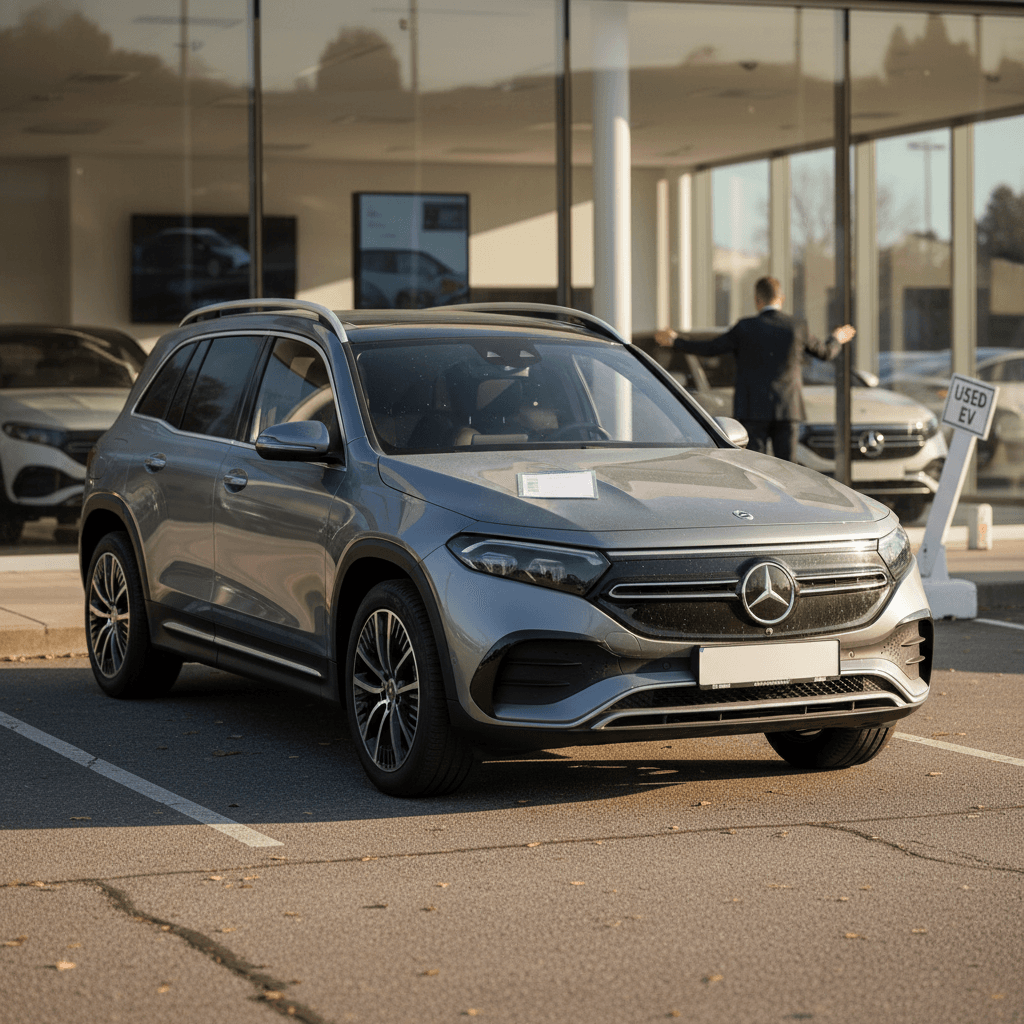
If you’re driving a 2023 Mercedes EQB and thinking about your next move, the big question is simple: what’s my EQB actually worth as a trade‑in today? In 2026, EV prices have been a moving target, and the EQB has seen some sharp swings. This guide walks through current 2023 Mercedes EQB trade in values, what really drives offers up or down, and how to position your EQB so you don’t leave thousands of dollars on the table.
Quick snapshot
Overview: 2023 EQB trade‑in value today
On paper, the major pricing guides give you a baseline for a 2023 EQB with typical miles and no major issues. For example, one leading guide pegs a 2023 Mercedes‑EQ EQB’s average trade‑in value around the low‑$20,000s as of early 2026, depending on trim and equipment. Another source lists 2023 EQB trade‑ins around $21,000–$22,000 for an average‑mile, clean example. But those are starting points, not guarantees.
Real‑world dealer appraisals swing thousands of dollars either way based on local demand, inventory levels, mileage, accident history, and, because this is an EV, verified battery health. That’s where a marketplace focused on used EVs, like Recharged, can narrow the spread between what your EQB is worth on paper and what you’re actually offered.
2023 Mercedes EQB value at a glance (2026)
Typical 2023 EQB trade‑in price ranges
Because the 2023 EQB comes in several flavors, EQB 250+, EQB 300 4MATIC, and EQB 350 4MATIC, trade‑in values span a band rather than a single number. Think in realistic ranges, not exact figures, then adjust for your mileage, condition, and options.
Approximate 2023 Mercedes EQB trade‑in ranges (spring 2026)
Illustrative ranges for a 3‑year‑old 2023 EQB with typical mileage (25,000–36,000 miles) and clean history. Your actual offer will vary by region and buyer.
| Trim (2023) | Condition example | Approx. dealer trade‑in | Strong EV‑focused offer* |
|---|---|---|---|
| EQB 250+ (FWD) | Average miles, basic spec | $18,000–$22,000 | $20,000–$24,000 |
| EQB 300 4MATIC | Average miles, popular options | $20,000–$24,000 | $22,000–$26,000 |
| EQB 350 4MATIC | Lower miles, AMG/loaded | $22,000–$26,000 | $24,000–$28,000+ |
Use these ranges as a starting point before you gather real offers.
About these numbers
If you see a trade‑in quote that’s several thousand dollars below these bands for a clean 2023 EQB with normal miles, that’s a signal to shop the car around. On the other hand, if a specialized EV outlet or a marketplace like Recharged is willing to come in near the top or slightly above those ranges, that’s often a deal worth taking, especially if it includes convenient pickup and fast funding.
How mileage and condition shape your offer
Two 2023 EQBs built in the same month can be worth very different amounts in 2026. The first might be a gently used commuter with 18,000 miles and meticulous service records; the second could be a high‑mile rideshare veteran with a few cosmetic scars. To a dealer or online buyer, those are different cars entirely.
Mileage & condition: quick value impact guide
How your daily use translates into dollars at trade‑in time
Low mileage (under ~20k)
Low‑mile 2023 EQBs still feel nearly new. Expect:
- Trade‑ins nudging the top of the range
- Extra credit if paired with clean history
- Better leverage if you shop multiple buyers
Average mileage (20k–40k)
This is where most 3‑year‑old EQBs fall.
- Offers cluster near published guide values
- Condition and options become tie‑breakers
- Good detail work can still add a few hundred dollars
High mileage (40k+ or hard use)
High miles or obvious wear make buyers cautious.
- Expect noticeable discounts
- History of commercial or rideshare use hurts
- Excellent maintenance can soften the blow, but not erase it
Accidents & title history
Before you ask for offers, order or download a recent vehicle history report, gather your service records, and walk around the car with a critical eye. Deal with inexpensive cosmetic issues, curb‑rashed wheels, small dents, deeply dirty interiors, before the appraisal. These small fixes don’t magically raise your EQB’s book value, but they make it easier for a buyer to stretch toward the upper end of their range.
Battery health and range: why they matter so much
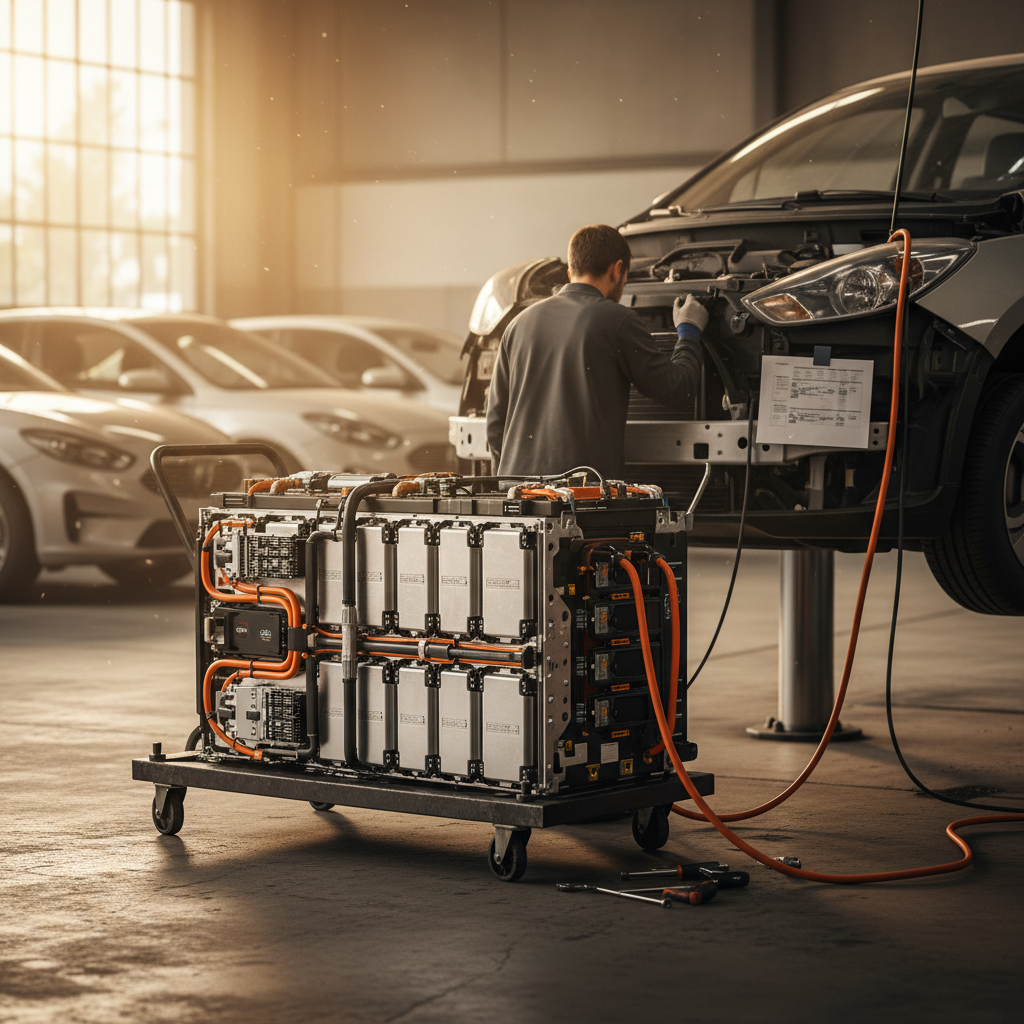
On an electric Mercedes like the EQB, range confidence is value. Shoppers don’t just want leather and a three‑pointed star; they want an EV that still charges predictably and delivers most of the range it had on day one. That’s why more and more sophisticated buyers insist on proof of battery health before they’ll pay top dollar.
- Measured usable capacity versus original specs (how much energy the pack can still hold)
- Charging behavior, whether fast‑charging speeds have dropped off or the car throttles unexpectedly
- Range readouts from real‑world driving, not just the dash estimate on a perfect day
- Any high‑voltage or charging‑system fault codes hiding in the background
Where Recharged can help
If your EQB still delivers range close to its original EPA estimate in normal conditions and shows no red flags in a battery report, you’re in a position to push for upper‑tier trade‑in offers. If range has slipped noticeably or the pack has seen heavy fast‑charging abuse, expect dealers to price in a margin for future battery concerns.
Options, trims, and market demand for the 2023 EQB
The 2023 EQB lineup spans from the front‑wheel‑drive EQB 250+ to the more powerful EQB 300 and 350 4MATIC models. In the used market, buyers generally gravitate toward better‑equipped 300s and 350s, especially those with popular packages, AMG Line styling, panoramic roof, upgraded audio, and advanced driver‑assist tech.
Trims buyers pay up for
- EQB 350 AMG Line with low miles and clean history
- EQB 300 4MATIC with pano roof and driver‑assist packages
- Well‑specced 7‑seat configurations in family‑oriented markets
These configurations can pull $2,000–$4,000 more than a basic 250+ with the same mileage.
Equipment that matters less at trade‑in
- Non‑metallic paint colors
- Minor cosmetic accessories and dealer add‑ons
- Most single‑option upgrades without popular packages
They may help the car sell faster, but they rarely move the appraisal needle by more than a few hundred dollars.
Local demand is huge
Where to sell or trade your 2023 EQB
Once you have a rough idea of what your 2023 EQB should be worth, the next decision is where to sell it. Each channel has different trade‑off between convenience, price, and risk.
Comparing your main options
Convenience vs. price for a 2023 Mercedes EQB
Traditional dealer trade‑in
- Pros: Fast, easy, minimal paperwork.
- Cons: Often the lowest offer, especially on EVs they don’t understand well.
- Best for: When you prioritize time over every last dollar.
Online instant‑offer buyers
- Pros: Quick online quotes, at‑home pickup in many areas.
- Cons: Values can drop at inspection; some shy away from EVs with recalls or scant history.
- Best for: Clean‑title, average‑mile EQBs in major markets.
EV‑specialist marketplaces (like Recharged)
- Pros: Buyers who understand EVs, battery‑health reporting, and nationwide demand.
- Cons: May take a bit longer if you choose consignment to squeeze out top dollar.
- Best for: Well‑kept EQBs where every thousand dollars matters.
Recharged offers multiple paths: an instant offer if you want to cash out quickly, or a consignment model where Recharged markets your EQB nationwide, handles buyer questions, and uses its Recharged Score battery report to justify a stronger sale price. Either way, you avoid trying to educate a traditional dealer about EV range, charging quirks, or fast‑moving incentives.
Step‑by‑step: how to maximize your 2023 EQB trade‑in
Pre‑trade checklist for your 2023 EQB
1. Get your paperwork and history in order
Gather your registration, title (or payoff information), service records, charger receipts, and any EV‑specific warranty documents. A neat file tells buyers you’ve been just as organized with maintenance.
2. Run your own value checks
Look up your EQB on major pricing guides, then browse comparable 2023 EQB listings to see asking prices. Aim for trade‑in offers that sit comfortably below realistic retail but not at the rock‑bottom end.
3. Order a battery health report
If you’re working with Recharged, the Recharged Score Report will handle this. Otherwise, look for EV‑savvy shops or tools that can read battery data. Bringing proof of pack health gives you negotiating leverage.
4. Fix inexpensive cosmetic issues
Address obvious, low‑cost flaws, deep interior cleaning, minor paintless dent repair, wheel touch‑ups. Don’t pour money into full bodywork, but make the car look as close to ‘front row ready’ as possible.
5. Collect multiple offers in a short window
Get at least three bids: a local dealer, an online instant‑offer service, and an EV‑focused buyer or marketplace. Compare not only price but also fees, pickup logistics, and how each handles your existing loan.
6. Decide whether to trade, consign, or sell outright
If convenience is king, a solid instant offer or dealer trade‑in is fine. If you’re equity‑positive and want to maximize your return, consider consigning your EQB through a platform like Recharged to reach nationwide buyers.
Bundling trade‑in with your next EV
Ready to find your next EV?
Browse Vehicles
Real‑world depreciation: what happened to 2023 EQB values
Whether you bought or leased your EQB back in 2023, you’ve likely felt the sting of EV depreciation. Generous factory incentives and lease cash on new EQ models, plus rapid improvements in range and charging on newer EVs, have pulled used prices down faster than many traditional Mercedes owners expected.
By early 2026, several data sources suggest the typical 2023 EQB has lost roughly half of its original MSRP. That sounds brutal, but in context the EQB actually holds up better than many luxury EVs, and it’s one of the strongest performers among three‑row electric SUVs in resale‑value studies.
- Heavy new‑car discounts in 2023–2024 reset used values lower than owners anticipated.
- EV shoppers now expect more range and faster charging for the same money, which puts pressure on older designs like the EQB.
- Some online chatter around reliability and recalls has made buyers cautious, even if your particular vehicle has been trouble‑free.
- Lease‑return volume is rising in 2026, adding supply to the used market.
Watch out for negative equity
Common mistakes when trading in a 2023 EQB
- Taking the first offer. EV values are volatile; the first bid is rarely the best. Shop the car.
- Letting a dealer lump your trade and new purchase together. Always negotiate your EQB’s value as a separate line item before talking about the next vehicle.
- Ignoring battery health proof. A vague “it seems fine” doesn’t inspire confidence. Provide real data.
- Trading in right after bad news headlines. Major recall or reliability stories can temporarily spook buyers. If your EQB is unaffected, waiting a bit can sometimes help.
- Overspending on repairs that don’t add value. A fresh set of premium tires might be worth it; a $2,000 cosmetic respray probably isn’t.
FAQ: 2023 Mercedes EQB trade‑in value
Frequently asked questions
Bottom line: should you trade or keep your 2023 EQB?
If you like how your 2023 EQB drives, the numbers alone don’t force your hand. Much of that steep early depreciation is already behind you. From here, the EQB starts to look less like a status symbol and more like a value‑rich used EV you can enjoy for years, especially if the battery remains healthy and your charging setup works for your life.
If you’re ready to move on, though, you don’t have to accept the first low offer. Understand where 2023 Mercedes EQB trade in values sit today, gather objective data on your vehicle, and let multiple buyers compete. Recharged can give you EV‑specialist support from start to finish, valuing your EQB, helping you compare selling options, arranging financing on your next EV, and handling nationwide pickup or delivery, so you keep more of what your EQB is truly worth.