If you want a compact luxury SUV with three rows and an electric powertrain, the 2023 Mercedes EQB ends up on your shortlist almost by default. This buying guide breaks down trims, range, charging, pricing, reliability, and what to watch for when you’re shopping a used EQB in today’s market.
Quick take
Why consider a 2023 Mercedes EQB?
What the EQB does well
- Optional 3rd row in a compact footprint, rare among EVs.
- Traditional Mercedes look and feel rather than a spaceship vibe.
- Comfort‑biased ride, quiet cabin, and a familiar luxury badge.
- All‑wheel drive options (EQB 300 & 350) for snow‑belt buyers.
Where it falls short
- Range and charging performance lag newer EVs at similar prices.
- Software and infotainment feel more like a tweaked gas car than a clean‑sheet EV.
- Early‑run battery and electronics issues plus multiple recalls mean you need to shop carefully.
2023 Mercedes EQB fast facts
2023 EQB trims and key specs
For 2023, the Mercedes EQB lineup in the U.S. centers on three main versions built around the same 66.5 kWh battery. The big differences are power, driven wheels, and range.
2023 Mercedes EQB trims at a glance
Core specs for the most common 2023 EQB variants you’ll see on the used market.
| Trim | Powertrain | Horsepower (approx.) | Drivetrain | 0–60 mph (approx.) | EPA range (mi) |
|---|---|---|---|---|---|
| EQB 250+ | Single motor | ~188 hp | FWD | ~8.0 s | Up to ~245 |
| EQB 300 4MATIC | Dual motor | ~225 hp | AWD | ~7.7 s | ~220–230 |
| EQB 350 4MATIC | Dual motor | ~288–292 hp | AWD | ~6.0 s | ~220 |
All 2023 EQB models share a ~66.5 kWh battery but trade power for range as you move up the line.
Trim choice tip
All three trims feel like Mercedes first and EVs second. Steering is light, the suspension is tuned for comfort, and the EQB 350’s extra power mainly shows up in merging and passing rather than outright sportiness.
Range and real‑world efficiency
On paper, the 2023 EQB’s range lands in the middle of the compact EV SUV pack. In practice, it’s best to treat the EPA figures as optimistic unless you’re driving gently in mild weather.
Typical real‑world EQB range expectations
What most drivers actually see on the road, not just on the window sticker.
EQB 250+ (FWD)
Best case: 230–240 miles at 65 mph in mild weather.
Mixed driving: ~210–225 miles per charge with normal use.
Cold weather: Plan around 170–190 miles, especially with heat on.
EQB 300 4MATIC
Best case: 210–220 miles on the highway.
Mixed driving: Around 190–210 miles is more typical.
Cold weather: It’s easy to drop into the 160s on winter road trips.
EQB 350 4MATIC
Best case: Similar to 300, but a bit more sensitive to speed.
Mixed driving: High‑100s to low‑200s is common.
Cold weather: Budget extra time and charging stops on long drives.
Don’t overbuy range you won’t use
Charging: how fast does the EQB really charge?
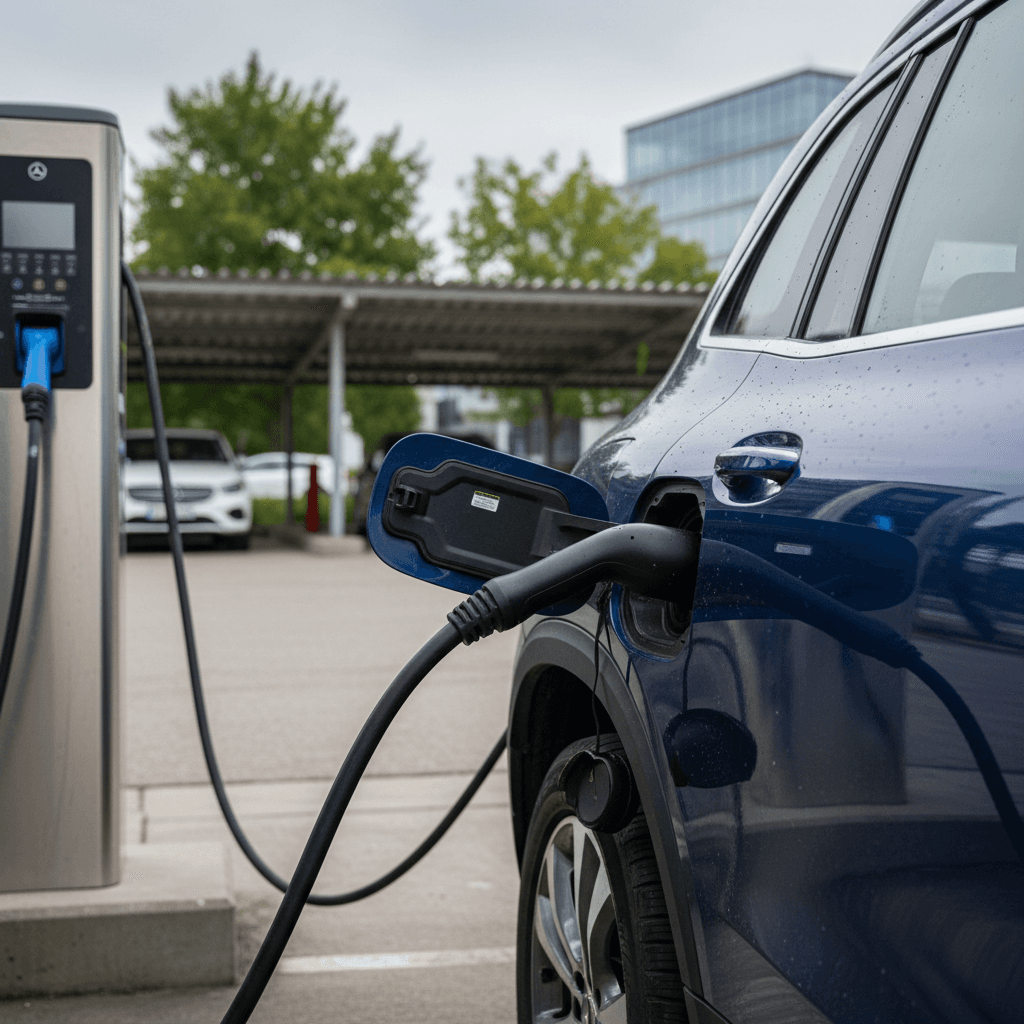
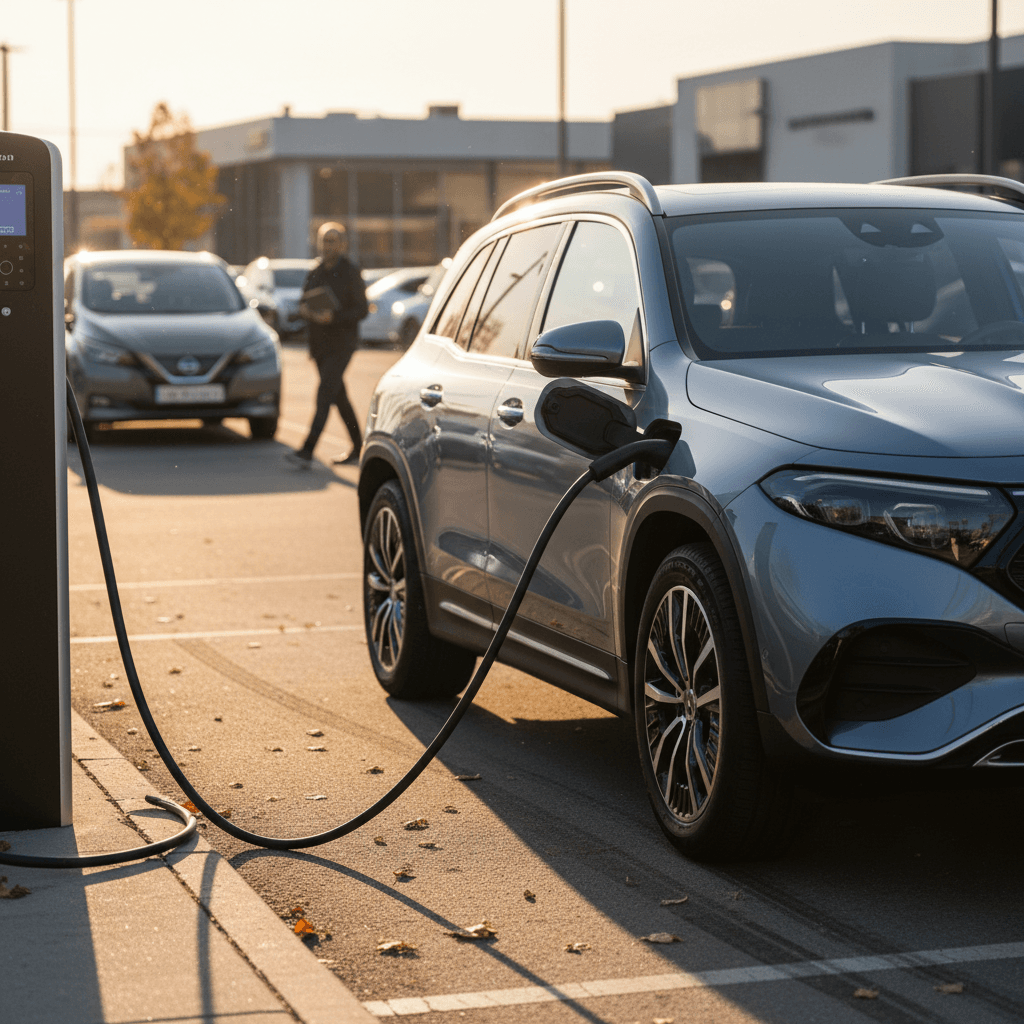
Every 2023 EQB uses the CCS fast‑charging standard and can accept up to about 100 kW at a DC fast charger. On AC, you get an onboard 11 kW charger for home and workplace stations, which is typical for this class.
2023 EQB charging times by charger type
Approximate times from a low state of charge to typical usable levels, assuming healthy hardware and good conditions.
| Charger type | Power | Typical use case | Time 10–80% | Miles added per hour* |
|---|---|---|---|---|
| Level 1 (wall outlet) | 120V ~1–1.4 kW | Overnight at a standard outlet | Too slow for big charges | ~3–5 mi/hr |
| Level 2 home / public | 240V up to 11 kW | Home charging, workplace, destinations | 0–100% in ~6–7 hours | ~25–30 mi/hr |
| DC fast (highway) | Up to 100 kW | Road trips, quick top‑ups | 10–80% in ~30–35 min | Peak ~350–400 mi/hr, then tapers |
Real‑world times will vary with temperature, station quality, and state of charge, but this gives ballpark expectations.
How to road‑trip an EQB without losing your mind
If you’re coming from a Tesla or an 800‑volt Hyundai/Kia EV, the EQB’s DC performance will feel modest. The flip side is that Mercedes includes battery preconditioning tied to navigation in many EQBs, which can help you reach closer to that 100 kW peak at compatible stations.
Interior space, practicality, and tech
The 2023 EQB is built on the GLB’s platform, and that’s mostly a good thing. You get a boxy roofline, upright seating, and genuinely useful cargo space for a compact footprint, plus the option of a third row, which very few EVs in this size class offer.
What it’s like to live with a 2023 EQB
Strengths and compromises from a daily‑use perspective.
Seating & space
Most U.S.‑spec EQBs have 5 seats, but some include a small third row for kids or short hops. Think emergency third row, not adult road‑trip throne.
Cargo & practicality
With the third row folded (or on 5‑seat models), cargo space is solid for Costco runs and weekend trips. The flat floor makes loading easy, but there’s no front trunk.
Infotainment & tech
MBUX dual screens look upscale and support Apple CarPlay/Android Auto. The system is powerful but can be cluttered and menu‑heavy compared with clean‑sheet EV interfaces.
Third‑row reality check
Reliability, known issues, and recalls
The 2023 EQB belongs to Mercedes’ first generation of dedicated EVs built on gasoline‑adapted platforms. As with a lot of early‑cycle EVs from traditional brands, reliability is mixed rather than rock‑solid. You’ll find plenty of owners who are happy, but also a vocal minority with serious frustrations.
- Multiple battery‑related recalls on certain 2022–2023 EQB 300 and 350 models for potential internal battery failures or shutdowns.
- Scattered reports of instrument cluster or infotainment glitches, including frozen screens and navigation bugs.
- Occasional issues with DC fast‑charging sessions failing to start on some public networks, common to many non‑Tesla EVs, not just the EQB.
- Typical luxury‑brand issues around squeaks, rattles, and minor trim or software annoyances.
Why recalls matter more on a used EQB
This is where a structured inspection and transparent reporting help. At Recharged, for example, every vehicle gets a Recharged Score Report that combines battery health diagnostics, recall status, and service‑history review so you’re not relying on guesswork and seller promises.
What is a fair price for a used 2023 EQB?
Because of mixed reviews and early‑EV jitters, the 2023 EQB has depreciated faster than some competing luxury EVs, which can work in your favor as a buyer.
Typical U.S. used pricing for 2023 EQB (as of early 2026)
Broad price bands you’re likely to see at dealers and marketplaces; exact numbers vary by mileage, options, and region.
| Trim / configuration | Approx. price band | Typical mileage | Notes |
|---|---|---|---|
| EQB 250+ | $26,000–$32,000 | 20k–45k miles | Often the best value if you don’t need AWD |
| EQB 300 4MATIC | $29,000–$37,000 | 20k–40k miles | Popular in snow states; many well‑optioned examples |
| EQB 350 4MATIC | $33,000–$42,000+ | 15k–35k miles | Highest performance; check history carefully |
| Low‑mileage, loaded examples | $40,000+ | Under 15k miles | Panoramic roof, AMG styling, Driver Assistance packages, etc. |
Higher‑spec 350 models and AMG‑line packages tend to sit at the top of the range, while high‑mileage 250+ models anchor the bottom.
How to sanity‑check EQB pricing
Who the 2023 EQB fits best (and when to skip it)
Is the 2023 EQB a good fit for you?
Match the EQB’s strengths and weaknesses to your real use case, not the brochure.
Great fit if…
- You want a compact luxury SUV with the option of a small third row.
- You mostly drive in town or on regional trips under ~200 miles.
- You can charge at home or at work most of the time.
- You value comfort and a familiar Mercedes interior more than cutting‑edge EV tech.
Probably skip it if…
- You road‑trip long distances frequently and hate stopping often.
- You want super‑fast charging and 300+ miles of range.
- You’re extremely risk‑averse on first‑generation EV reliability.
- You’re happy in something less premium and care more about efficiency than brand.
2023 EQB buying checklist
Smart steps before you buy a 2023 EQB
1. Confirm trim, battery, and options
Verify whether you’re looking at an EQB 250+, 300, or 350 and confirm that it has the features you care about (AWD, third row, driver‑assist packages, heat pump where equipped). Don’t rely on badges alone, check the build sheet or window sticker if available.
2. Check for open recalls and battery work
Run the VIN through official recall tools and ask for documentation of any <strong>high‑voltage battery or inverter work</strong>. For a 2023 EQB, you want recalls closed and no pattern of repeated shutdown or coolant warnings.
3. Review battery health data, not just range guess
An EV’s real asset is its battery, so look for an independent <strong>battery health report</strong> rather than just what the range estimate says on a random day. Recharged’s Score Report, for example, measures battery capacity, charge behavior, and any fault codes so you can compare one EQB to another objectively.
4. Test DC fast‑charging on your local network
If possible, do a short fast‑charge session during the test drive on the network you’re most likely to use (Electrify America, EVgo, etc.). You’re checking that the car talks nicely to the station and reaches a reasonable peak, often 80–100 kW when the battery is warm and low.
5. Evaluate software behavior and infotainment
Spend time with MBUX: try navigation, CarPlay/Android Auto, and driver‑assist features. Watch for <strong>freezes, black screens, or camera issues</strong>. Glitches can be firmware‑fixable, but a car with a long history of complaints is a red flag.
6. Consider total ownership costs
Factor in home‑charging installation, insurance, and possible warranty or service‑plan coverage. A competitively priced EQB with strong battery health can still be a win even if its charging curve isn’t best‑in‑class.
FAQ: 2023 Mercedes EQB buying questions
Frequently asked questions about buying a 2023 Mercedes EQB
Bottom line: is the 2023 Mercedes EQB a good buy?
If you decode the marketing and focus on fundamentals, the 2023 Mercedes EQB is a niche but compelling used EV. It won’t win any charging‑curve shootouts, and it carries the usual early‑EV caveats around software updates and recalls. But it delivers a genuinely practical, comfortable, and upscale small SUV experience, with the rare bonus of an available third row, at prices that undercut many newer rivals.
The key is to treat a used EQB like what it is: a complex, software‑defined product whose real value lives in its battery, charging behavior, and update history, not just its leather and badges. Whether you buy through Recharged or elsewhere, insist on data, not vibes, battery health reports, recall records, and transparent pricing against the broader EV market. Do that, and a well‑sorted 2023 EQB can be a smart, enjoyable way into luxury EV ownership without paying new‑car money.