If you’re eyeing a 2023 Hyundai Kona Electric, you’ve probably seen wildly different takes on its reliability, from scary headlines about battery fires on early Kona EVs to happy owners racking up trouble‑free miles. This guide breaks down the real‑world 2023 Hyundai Kona Electric problems and fixes so you can tell what’s normal, what’s fixable, and what’s a genuine deal‑breaker, especially if you’re shopping used.
Quick take
2023 Kona Electric reliability: big picture
How the 2023 Kona Electric is holding up
Independent owner reviews for the 2023 Kona Electric skew positive on reliability, even if broader ratings for the Kona family are dragged down by earlier model‑year engine and battery issues. You’ll see some Consumer Reports–style predicted reliability scores that look harsh, but those often blend data from the gas Kona and the 2019–2020 EV battery‑fire recall era, not just the 2023 EV on its own.
How Recharged screens 2023 Kona Electrics
Most common 2023 Hyundai Kona Electric problems
Top issues 2023 Kona Electric owners actually see
Most are solvable, if you know what to look for
1. Fast tire wear
2. Infotainment glitches
3. Driver‑assist quirks
4. 12‑volt battery issues
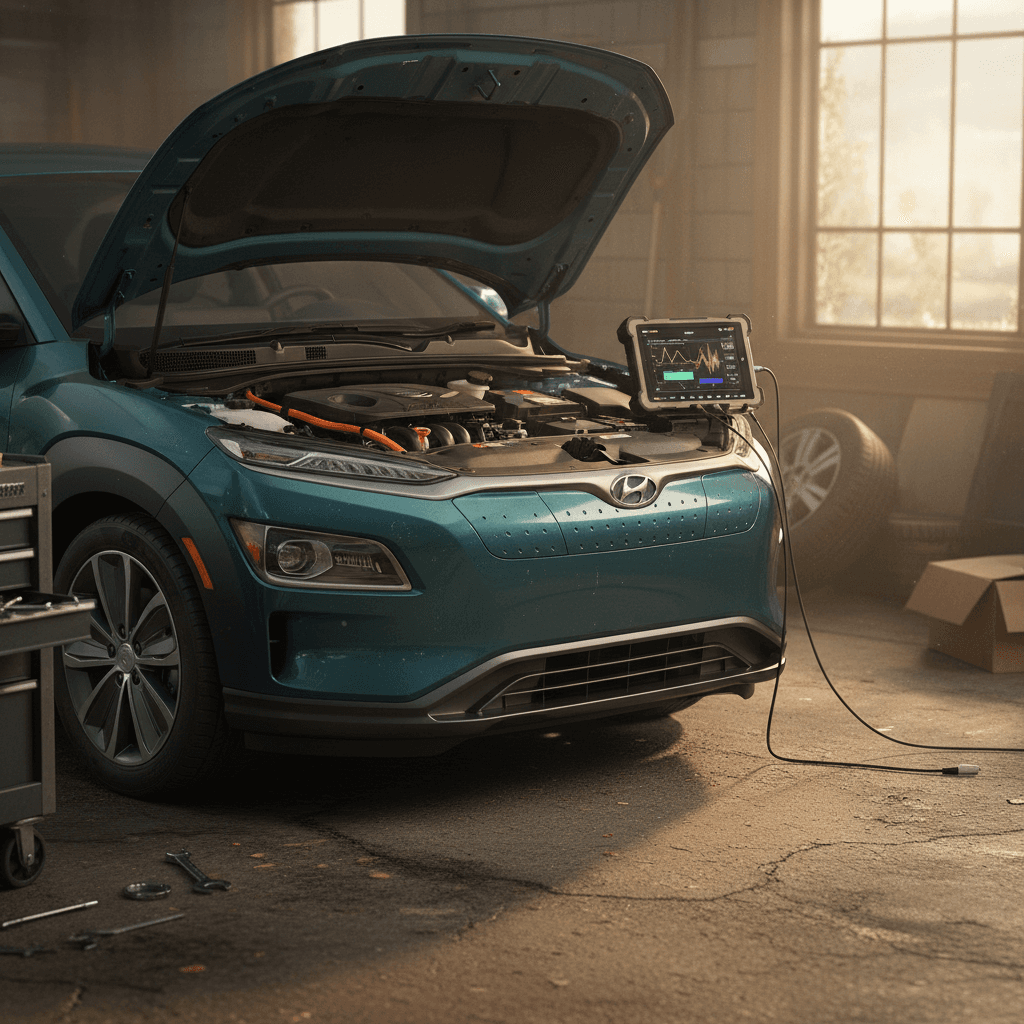
5. Warning lights & BMS errors
6. Ride & brake feel complaints
Let’s unpack each of these 2023 Hyundai Kona Electric problems and fixes so you can recognize which ones are just part of EV life and which deserve a closer look before you sign on the dotted line.
Battery and charging issues on the 2023 Kona Electric
1. High‑voltage battery health and BMS warnings
The big question most used‑EV shoppers ask is: “Will the battery hold up?” For 2023 Kona Electrics, the picture so far is reassuring. They use a newer generation of the 64 kWh pack, distinct from the 2019–2020 cells that were recalled for fire risk. Early telematics data and owner reports suggest modest degradation, often single‑digit percent over the first few years when driven and charged sanely.
- A few 2023 owners have reported “Check Electric Vehicle System” or similar high‑voltage system warnings, sometimes linked to the Battery Management System (BMS).
- In rare cases, dealers have limited maximum state of charge (for example, to 80%) or kept the vehicle while they run extended diagnostics and consult Hyundai engineering.
- Genuinely defective packs are generally replaced under the 10‑year/100,000‑mile high‑voltage warranty, but parts availability and dealer experience can stretch timelines.
Don’t ignore persistent EV warnings
2. DC fast charging and Level 2 quirks
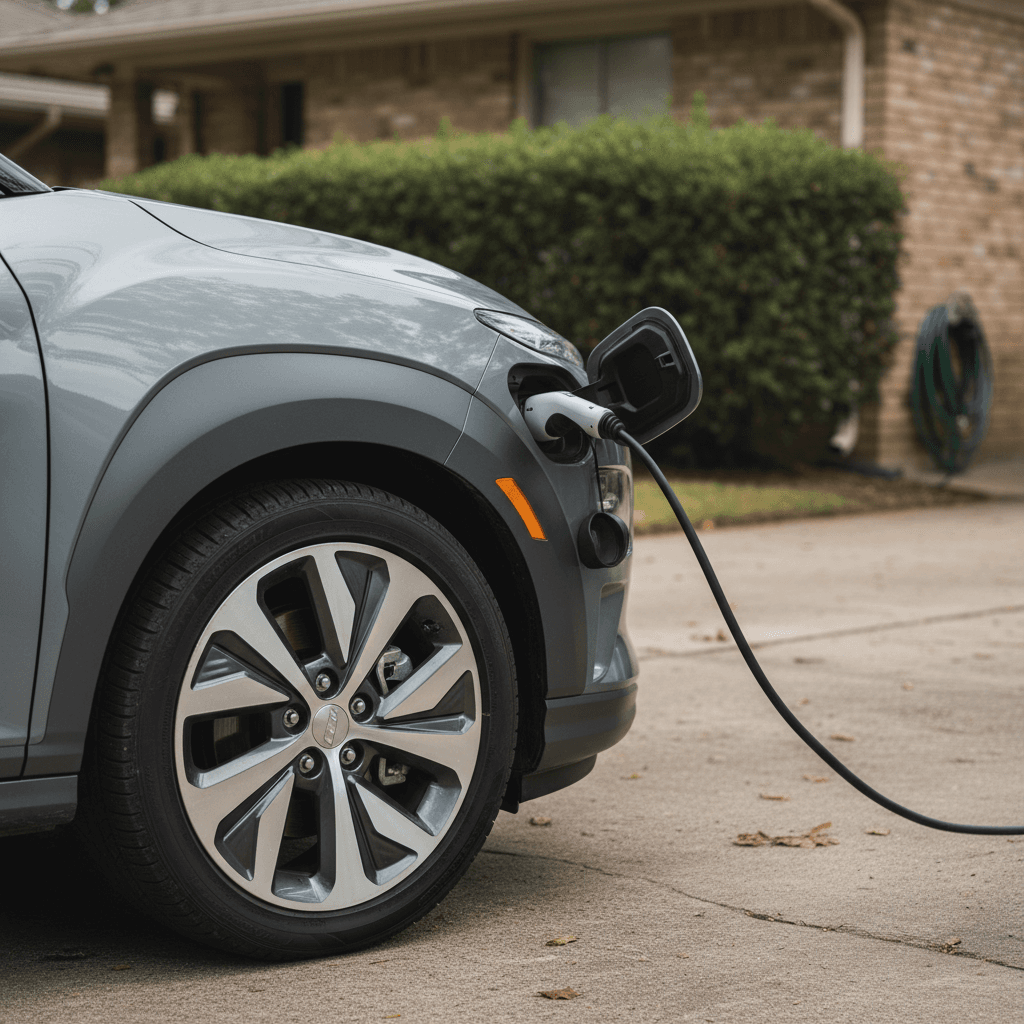
Most 2023 Kona Electrics charge reliably on both home Level 2 and CCS fast chargers. When problems crop up, they tend to fall into a few patterns:
- Inconsistent DC fast‑charge speeds: Charging may peak lower than expected in very cold or very hot weather, or after repeated fast‑charge sessions. That’s largely normal battery protection behavior, not a defect.
- Public charger handshake failures: Sometimes the car refuses to start a session with a particular station brand. This is as often the station’s fault as the Kona’s.
- Home charging stops early: Occasionally tied to a flaky EVSE (home charger), ground‑fault detection, or a sensitive circuit breaker, not always the car.
Quick charging troubleshooting steps
3. The 12‑volt battery: small part, big headaches
Like most EVs, the 2023 Kona Electric still relies on a conventional 12‑volt battery to power computers, contactors, and accessories. When that battery gets weak, the symptoms can be dramatic: random warning lights, refusal to go into “Ready” mode, weird infotainment behavior, and telematics glitches.
Signs your Kona Electric’s 12‑volt battery is the culprit
Slow wake‑up or intermittent “Ready”
You press the start button and the car hesitates, throws warnings, or takes longer than usual to go into Ready mode.
Electronics acting “drunk”
Infotainment reboots, the app stops talking to the car, or driver‑assist features won’t initialize after parking for a few days.
Older than ~3 years
Many 12‑volt batteries in EVs last 3–5 years. On a 2023 model, an original battery that’s already struggling may soon need replacement.
Fix: test, then replace
A load test will confirm weakness. Replacing the 12‑volt battery (often in the $200–$350 range parts and labor) typically clears the chaos.
Infotainment, connectivity, and camera glitches
Software is where a lot of 2023 Hyundai Kona Electric problems and fixes live. Owners report a familiar mix of glitches that look dramatic but usually respond well to updates and resets:
- Touchscreen freezing or lagging, especially right after startup.
- Wireless or wired Apple CarPlay / Android Auto dropping connections.
- Backup camera momentarily blacking out or showing a warning before coming back.
- Hyundai app losing connection with the vehicle after an over‑the‑air update.
Simple home fixes
- Soft reset the head unit using the volume/power knob or the on‑screen reset option if available.
- Delete and re‑pair your phone via Bluetooth and CarPlay/Android Auto.
- Try a different cable for wired connections, cheap or damaged cables cause no‑end of phantom issues.
- Log out and back into the Hyundai app if telematics stop working after an update.
When to see a dealer
- If the screen regularly goes black or reboots while driving.
- If the backup camera fails inspection rules in your state (for example, never displays or shows errors every time you shift into reverse).
- If an over‑the‑air update clearly coincided with loss of app connectivity or repeated warning messages.
- Ask for documented software update campaigns or TSBs that apply specifically to your VIN.
Good news on software issues
Driver-assistance quirks and fixes
Hyundai’s SmartSense driver‑assist suite on the 2023 Kona Electric includes lane‑keeping assist, lane‑centering, adaptive cruise control, and automatic emergency braking. On paper, it’s competitive with other subcompact EVs. In practice, owners complain about behavior that feels more “naggy” than helpful:
- Lane‑keeping ping‑ponging between lines or tugging the wheel on narrow or poorly marked roads.
- Lane‑centering that hugs one side of the lane, especially near large trucks or concrete barriers.
- Overly sensitive forward‑collision alerts in dense urban traffic.
- Steering wheel vibration or beeping that some drivers find fatiguing on long trips.
Tuning driver‑assist to your comfort level
If a 2023 Kona Electric constantly throws assist‑system errors, or if adaptive cruise regularly disconnects without clear cause, have a dealer check for misaligned cameras, radar issues, or steering‑angle sensor problems under warranty.
Brakes, suspension, and fast tire wear
1. Fast tire wear on the 2023 Kona Electric
Like many compact EVs, the 2023 Kona Electric is both heavier and torquier than the gas Kona. That’s fun from a stop, but hard on tires. It’s not unusual to see original‑equipment tires wearing out around 25,000–30,000 miles if rotations and pressures haven’t been perfect.
How to keep Kona EV tire wear under control
Rotate every 5,000–7,500 miles
Follow the service schedule, and verify rotations are actually being done, EVs punish neglect here.
Check pressures monthly
The door‑jamb sticker lists recommended pressures. Underinflation kills range and tires; overinflation can cause harsh ride and center wear.
Watch inside edges
Some owners see more wear on inside shoulders. Ask for an alignment check if you notice uneven wear or the car pulling.
Consider EV‑rated replacements
When it’s time, look at tires designed for EV torque and weight. They may cost more up front but can last longer and preserve range.
2. Brake feel and stability‑control complaints
The Kona Electric blends regenerative braking with conventional friction brakes. A few owners describe the pedal feel as artificial or note odd ABS or stability‑control behavior over washboard pavement or mid‑corner bumps. That’s often more about calibration than failure.
When brake feel is a problem, not a quirk
High‑voltage battery & fire recall context
A lot of shoppers still associate the words “Kona Electric” with high‑profile battery fire recalls from early in the model’s life. It’s important context, but you also need to know how it applies, or doesn’t, to a 2023 car.
What happened on earlier Kona EVs
- Certain 2019–2020 Kona Electric packs built with specific LG Chem cells were recalled globally for fire risk.
- Many affected vehicles had their entire battery pack replaced and their BMS software updated.
- Those early incidents still influence reliability scores and public perception today.
Why 2023 is different
- 2023 Kona Electrics use newer battery batches and revised controls; they have not been part of the original fire‑risk recall campaigns.
- Hyundai and regulators now monitor field data much more aggressively, and the 10‑year/100,000‑mile battery warranty remains in place.
- Battery‑related buybacks or pack replacements on 2023 cars appear rare so far and are typically handled under warranty when they do occur.
Red flags to treat very seriously
2023 Kona Electric recalls, TSBs, and warranty coverage
As of early 2026, there have been no major high‑voltage battery fire recalls targeted specifically at the 2023 Kona Electric in the U.S. You may, however, encounter smaller recalls or technical service bulletins (TSBs) related to software, charging behavior, or safety systems that apply across multiple years of the Kona line.
Key warranty protections for the 2023 Hyundai Kona Electric (U.S.)
Always verify details for your region and whether you’re the first or subsequent owner.
| System | Typical Coverage* | What It Means for You |
|---|---|---|
| High‑voltage battery pack | 10 years / 100,000 miles (original owner) | Most genuine pack defects or extreme degradation should be covered. |
| Electric drive motor & related components | 10 years / 100,000 miles (powertrain) | Major motor or reduction‑gear failures are usually under warranty. |
| Bumper‑to‑bumper | 5 years / 60,000 miles | Infotainment modules, cameras, sensors, and many electronics fall here. |
| 12‑volt battery | Often 2–3 years | Weak 12‑volt batteries beyond that timeframe are typically owner‑paid. |
| Tires & brakes | Wear items | Fast tire wear and brake pads are your responsibility unless clearly defective. |
These coverage terms help determine which problems should still be fixed on Hyundai’s dime versus normal wear or age‑related upkeep.
Always run a recall & TSB check by VIN
Pre‑purchase checklist for a used 2023 Kona Electric
Because the 2023 Kona Electric’s worst problems are relatively rare but high‑impact when they do show up, you want to focus your inspection on battery health, electronics behavior, and service history. Here’s a practical checklist you can work through in under an hour.
Used 2023 Kona Electric inspection checklist
1. Scan for warning lights
With the car in Ready mode, check for any persistent warnings, especially related to the high‑voltage system, battery, or driver‑assist features.
2. Test AC Level 2 charging
If possible, plug into a Level 2 charger and confirm the car starts charging quickly, without unexplained stops or limit messages.
3. Review battery health data
Ask for any dealership battery tests or third‑party reports. With Recharged, you’ll get a <strong>Recharged Score</strong> that quantifies pack health and range versus new.
4. Drive on mixed roads
Take a 15–20 minute drive including highway, city, and a rougher surface. Listen for clunks, clicks, or whining from the front drivetrain and watch how the car tracks in a lane.
5. Hammer on infotainment
While parked, pair your phone, run CarPlay/Android Auto, test every camera, and navigate menus. You want to surface any freezes or reboots now, not after you buy.
6. Inspect tires & brakes
Check tread depth across the full width, look for cupping or inside‑edge wear, and peek at brake pad thickness through the wheels.
7. Pull service & recall history
Request dealership records or a service log. Confirm recall work is completed and that past complaints (for example, BMS errors) were resolved, not just “could not duplicate.”
How Recharged simplifies this process
Ready to find your next EV?
Browse VehiclesWhen a 2023 Kona Electric is a bad bet
Even a generally solid model like the 2023 Kona Electric will have a few duds in the used market. You don’t need to be a high‑voltage engineer to spot them, you just need to know which patterns are warning shots rather than background noise.
Major red flags on a 2023 Kona Electric
If you see more than one of these, keep shopping
Unresolved high‑voltage or BMS errors
Vague or missing service records
Structural crash history
Non‑EV‑specialist modifications
With EVs like the 2023 Kona Electric, the shape of the risk has shifted. You’re less likely to face catastrophic engine failure and more likely to run into a dealer who’s still learning how to support high‑voltage hardware and complex software.
2023 Hyundai Kona Electric problems: FAQ
Frequently asked questions about 2023 Kona Electric problems and fixes
Bottom line: should you buy a 2023 Kona Electric?
If you strip away the noise and focus on what owners of the actual 2023 model are experiencing, the 2023 Hyundai Kona Electric shapes up as a competent, efficient, and generally predictable small EV. Its biggest trouble spots, tire wear, software quirks, and occasional 12‑volt and BMS gremlins, are manageable with good maintenance, attentive diagnostics, and a dealer that knows its way around EVs.
Where you can get into trouble is buying a car with unresolved high‑voltage errors, vague battery diagnostics, or sloppy repair history. That’s exactly the risk Recharged is designed to cut down: every Kona Electric we list comes with a verified Recharged Score, clear battery‑health data, and a transparent history so you can focus on whether the car fits your life, not whether you’re inheriting someone else’s headache.
If the 2023 Kona Electric checks those boxes, it’s a very reasonable bet as an everyday EV, one that delivers low running costs and solid range without the price tag of a larger crossover. And if you’d like help comparing it against other used EVs, Recharged’s EV specialists can walk you through the trade‑offs, financing, and nationwide delivery so you end up in the right car, not just the nearest one.