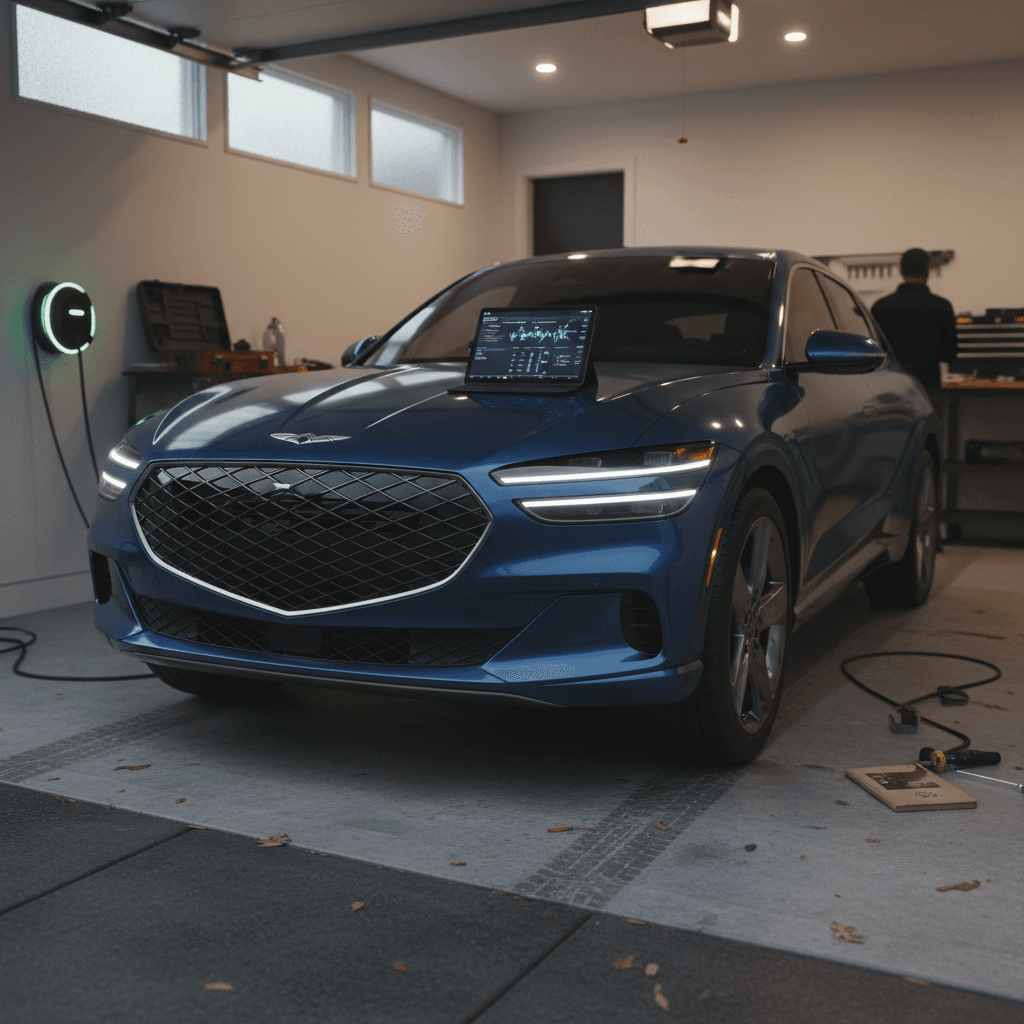
If you’re eyeing a 2023 Genesis GV60, you’re probably wondering whether this stylish, tech-heavy luxury EV will hold up over the long haul. The GV60 is fast, comfortable, and packed with features, but early data and owner reports show a mixed picture on 2023 Genesis GV60 reliability, especially around electronics and charging hardware.
Quick reliability snapshot
Overview: 2023 Genesis GV60 reliability at a glance
2023 Genesis GV60 by the numbers
Third-party data and owner surveys suggest the 2023 GV60 lands below average in overall reliability for its model year, primarily because of electronic and charging-related issues rather than catastrophic drivetrain failures. At the same time, owners consistently praise its build quality, interior, and driving experience, which helps explain why satisfaction scores stay high even when glitches show up.
Key strengths and weak spots of the 2023 GV60
Where the 2023 GV60 shines, and where it doesn’t
Understanding the tradeoffs helps you decide if this EV fits your risk tolerance.
Reliability strengths
- Battery and motors: Few reports of pack failures or motor replacements so far.
- Solid build quality: Tight, quiet cabin; upscale materials that hold up well.
- Low routine maintenance: No oil changes; long service intervals.
- Excellent fast-charging hardware: 800V architecture can charge from 10–80% in about 18 minutes on a strong DC fast charger.
Reliability weak spots
- ICCU/12‑volt charging failures: Can cause loss of drive power and warning lights; subject to a major recall on e-GMP EVs.
- Driveshaft issues: Certain 2023 GV60s had rear driveshafts that could fracture, prompting recall campaigns.
- Infotainment and screen glitches: Occasional blackouts, reboots, and bug-prone in-car tech.
- Dealer and parts delays: Some owners report long waits for appointments and parts imported from Korea.
Platform-wide issue to watch
Recalls and known issues you should know about
The 2023 Genesis GV60 has been subject to an unusually high number of recalls for a first-year luxury EV. None of these make it an automatic “do not buy,” but you should treat recall status as a must-check item before you sign paperwork on a used example.
Major 2023 Genesis GV60 recalls (summary)
Always run a VIN check on NHTSA or with a dealer for the most current recall status. This table summarizes the most meaningful reliability-related campaigns affecting many 2023 GV60s.
| Issue | Component | Typical symptom/risk | Fix |
|---|---|---|---|
| ICCU / 12V charging failure | Electrical system | Warning lights, 12V battery not charging, possible loss of drive power | Inspect and potentially replace ICCU and fuse; update ICCU software |
| Rear inner driveshaft heat treat | Powertrain | Possible fracture under load, loss of rear drive power | Replace affected rear inner driveshaft(s) |
| AWD rear driveshaft fracture | Powertrain | Loss of drive power if shafts break | Replace left and right rear driveshafts |
| Seat belt pretensioner explosion risk | Seat belts | Pretensioner may rupture in crash, throwing metal fragments | Install protective cap or revise pretensioner assembly |
| Front passenger seat belt retractor | Seat belts | Belt may not fasten or extend correctly | Inspect and replace front passenger belt if needed |
| Instrument cluster / display malfunction | Controls & displays | Cluster may go dark or reboot, hiding speed and warning lights | Software update (often over-the-air) to correct logic errors |
| Windshield molding detachment | Body / trim | Molding may detach and become a road hazard | Replace or secure windshield molding assembly |
Recall remedies are free at Genesis dealers, but scheduling and parts availability can add time and inconvenience.
How to check a GV60 for open recalls
Battery life, range, and charging reliability
The good news: so far, there are few documented cases of catastrophic high‑voltage battery failures on the 2023 GV60. The pack is shared with other e‑GMP EVs and has generally been stable. Instead, most owner complaints cluster around real‑world range, cold‑weather performance, and charging hardware rather than the battery cells themselves.
- EPA-rated range is roughly 235–248 miles depending on trim, but many owners report practical highway range closer to ~200 miles or less, especially at 70–75 mph.
- Cold weather can significantly cut range, sometimes by 25–40%, which is common to most EVs but hits the GV60 relatively hard due to its performance focus and wide tires.
- Charging performance is excellent on strong DC fast chargers, thanks to the 800‑volt architecture that allows 10–80% charging in about 18 minutes under ideal conditions.
- The ICCU issue isn’t a battery degradation problem, but it can prevent the 12‑volt system from being charged properly, leading to a seemingly “dead” car even while the main pack is healthy.
Range expectations vs. reality
Drivetrain and mechanical reliability
Outside of the recall-related driveshaft campaigns, the 2023 GV60’s core mechanical and electric components look reasonably solid so far. That includes the dual electric motors, reduction gearsets, and the suspension and brakes.
What’s holding up well
- Electric motors: Very few reports of motor failures or replacements; the motors are shared with siblings like the Ioniq 5.
- Suspension and steering: Owners report a solid, quiet ride with limited complaints about clunks or premature wear.
- Brake system: Regenerative braking reduces pad and rotor wear compared with gas SUVs, keeping brake costs down.
What needs careful verification
- Driveshaft recalls: Verify that both the rear inner driveshaft and AWD rear driveshaft recall work has been done.
- Wheel and tire wear: The GV60’s weight and performance tires can lead to faster wear; inspect for uneven tread or alignment issues.
- Suspension alignment: Curb strikes or potholes can lead to alignment problems; check for pulling, uneven tire wear, or steering wheel off-center.
EV mechanical simplicity helps
Electronics, infotainment, and driver-assist issues
Electronics are the GV60’s biggest reliability sore spot. Owner surveys and repair data flag in‑car electronics, cluster displays, and driver‑assist tech as leading complaint categories.
- Infotainment and cluster screen reboots or blackouts, sometimes tied to HD Radio or software bugs, leading to a temporary loss of speedometer or warning-light display until the system restarts.
- Glitches with navigation, Bluetooth connectivity, and sensors (cameras, parking sensors, or 360° view) that require software updates or, less often, hardware replacement.
- Occasional phantom warnings or inconsistent behavior from driver-assistance systems like lane-keeping or adaptive cruise control, usually improved with software revisions.
- General sensitivity of the GV60’s complex software stack to updates, fixing one bug can create another, so staying current on updates is important but not always seamless.
Why screen issues matter
Ownership experience: dealers, maintenance, and costs
From a pure maintenance-cost perspective, the 2023 GV60 is relatively friendly: no oil changes, fewer fluids, and regenerative braking that stretches pad life. Where many owners run into frustration is on the service and support side, especially in markets where Genesis EV volume is still low.
What GV60 owners report about living with the car
Costs are manageable; time and convenience can be the real pain point.
Routine costs
- Basic services (tire rotations, inspections, cabin filters) are modest compared with luxury gas SUVs.
- Expect higher costs for tires, especially on Performance trims with larger wheels.
- Brake jobs are relatively rare early on thanks to regen.
Service delays
- Some owners report weeks-long waits for recall work or specialized EV repairs.
- Parts, especially for less common GV60‑specific components, may need to ship from Korea.
- Limited Genesis-certified EV technicians in some regions can stretch lead times.
Dealer experience
- Owner stories range from excellent white‑glove treatment to difficulty getting updates or call-backs.
- Because the GV60 is still relatively rare, not every dealer has deep experience troubleshooting its quirks.
- Always check reviews of the specific Genesis store you’ll use for service.
How Recharged helps on the ownership side
Warranty coverage and what it really means
Genesis offers one of the strongest factory warranties in the industry, and that’s a big part of the value story for a used 2023 GV60, especially if you’re buying a lower‑mileage example that still falls well within the powertrain and battery coverage windows.
Typical 2023 Genesis GV60 warranty coverage (U.S.)
Check the specific vehicle’s in‑service date and any transferability limits, some coverages are reduced for second owners or after a certain time.
| Coverage type | Typical term | What it covers | Important notes |
|---|---|---|---|
| Basic (bumper-to-bumper) warranty | 5 years / 60,000 miles | Most non-wear items, electronics, interior, exterior trim | Time and mileage from original in‑service date; may still be active on many 2023s. |
| Powertrain / EV system warranty | 10 years / 100,000 miles | Motors, reduction gearsets, key EV drivetrain components | One of the longest in the industry; check if full term transfers to second owners. |
| High-voltage battery warranty | Often 10 years / 100,000 miles | Battery pack defects and capacity loss beyond specified thresholds | Designed to protect against manufacturing defects, not normal gradual degradation. |
| Corrosion / perforation | 7+ years (varies) | Rust‑through of body panels | Less likely to matter early in the GV60’s life unless you’re in a harsh climate. |
Warranty terms can vary slightly by region and ownership history; always confirm details with Genesis or the original paperwork.
Don’t assume, verify coverage
What to check on a used 2023 GV60
Because the 2023 GV60’s biggest issues center around electronics, recalls, and charging hardware, your pre‑purchase inspection should go beyond a quick test drive around the block. Here’s a focused checklist to reduce your risk.
Used 2023 Genesis GV60 reliability checklist
1. Confirm recall completion
Ask for a recall report by VIN from a Genesis dealer. Verify that ICCU/12‑volt, driveshaft, seat‑belt, and display-related recalls show as completed, not just scheduled.
2. Scan for warning lights and messages
On startup and during a test drive, watch for any persistent warnings about the battery, charging system, drive system, or driver‑assist features. Intermittent warnings can indicate unresolved software or hardware issues.
3. Test DC fast and Level 2 charging
If possible, plug into both a home-style Level 2 charger and a DC fast charger to confirm that the car charges consistently, reaches expected speeds, and doesn’t drop the session unexpectedly.
4. Inspect screens and electronics
Cycle through the gauge cluster, infotainment, cameras, and sensors. Look for flicker, lag, or blackouts. Test navigation, Bluetooth, and all driver‑assist systems during your drive.
5. Check tires, brakes, and alignment
Inspect tire tread for uneven wear, listen for brake noise, and verify that the car tracks straight on a flat road. Performance tires on heavy EVs can wear quickly if alignment is off.
6. Review battery health data
Whenever possible, get a quantified battery health report rather than guessing from range alone. At Recharged, every vehicle includes a Recharged Score battery diagnostic so you can see how the pack compares to new.

Is the 2023 Genesis GV60 a good used buy?
Who the GV60 fits well
- Luxury-first EV shoppers who value design, quietness, and tech as much as raw range.
- Owners with good local Genesis support and patience for the occasional software update or service visit.
- Drivers with predictable daily mileage who can charge at home and don’t need 300+ miles of highway range.
Who might want to look elsewhere
- Road-trip heavy drivers in cold climates who will feel every mile of limited winter range.
- Shoppers who hate dealer visits and want absolute set‑and‑forget reliability.
- Buyers without nearby Genesis EV service, getting to a qualified shop for recall or warranty work matters.
Viewed in context, the 2023 Genesis GV60 is a highly compelling luxury EV with moderate reliability risk. The biggest problems tend to be nuisance issues, recalls, software glitches, charging hardware hiccups, rather than chronic engine‑style failures. If you’re willing to do your homework on recalls, test electronics thoroughly, and lean on remaining factory warranty, a well‑vetted 2023 GV60 can be a smart used buy at the right price. Working with an EV specialist like Recharged, where every vehicle includes a verified battery health report and expert guidance, can tilt the odds even further in your favor.