If you own a 2023 Ford Mustang Mach‑E and you’ve recently checked its trade‑in value, you may have felt your stomach drop. EV depreciation has been harsh since 2023, and the Mustang Mach‑E is right in the blast radius. In this guide we’ll unpack what your 2023 Mustang Mach‑E trade‑in value realistically looks like in 2026, why offers seem low, and what you can actually do to improve them.
Quick snapshot for 2026
Overview: 2023 Mach‑E trade‑in value today
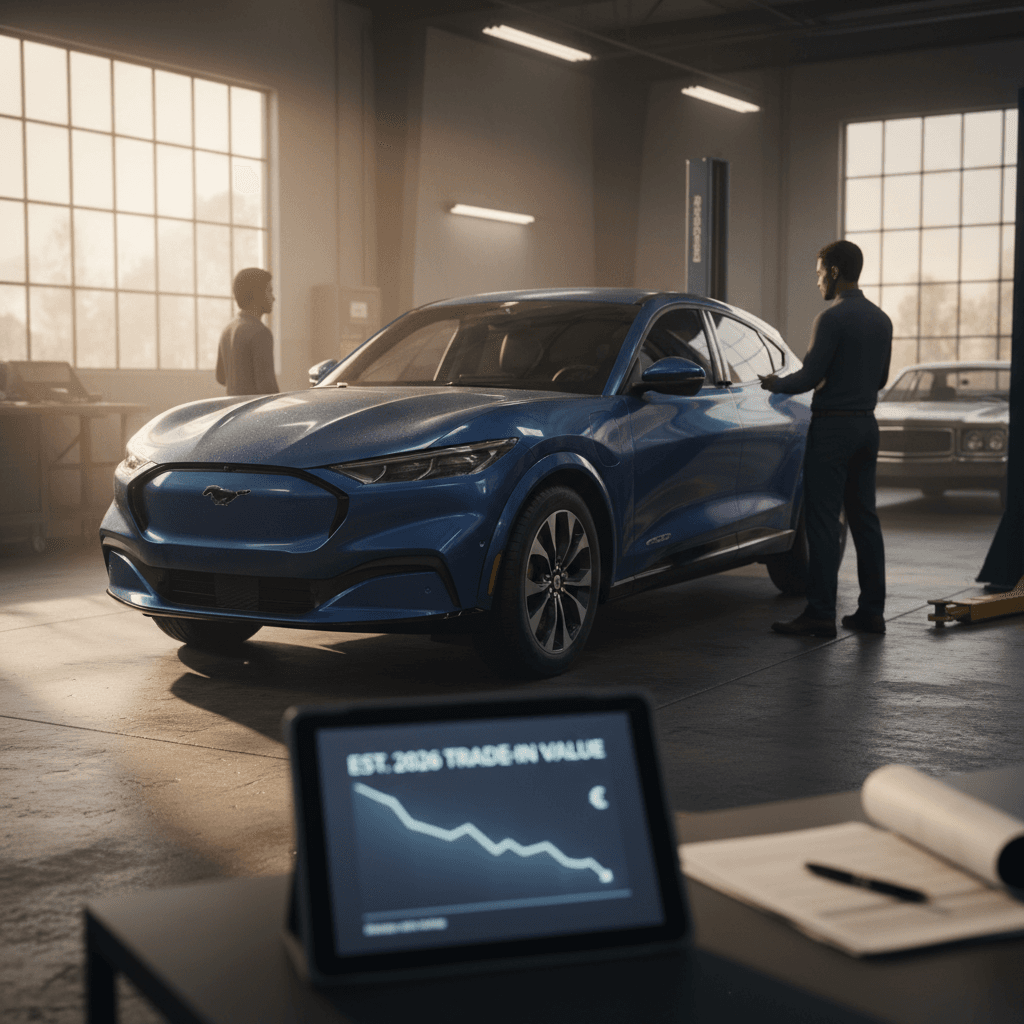
The headline everyone focuses on is depreciation. Several pricing guides now show the Mustang Mach‑E losing around 50–60% of its original value within the first five years, putting it among the quicker‑depreciating SUVs on the market. That sounds brutal, but it doesn’t mean your car is worthless, it means the used‑EV market has reset, and dealers are pricing in risk around batteries, demand, and future tech.
2023 Mustang Mach‑E value picture in 2026
Don’t anchor on a single number
How much is a 2023 Mustang Mach‑E worth right now?
Let’s talk numbers. At the time of writing (April 2026), national appraisal guides show 2023 Ford Mustang Mach‑E trade‑in values starting in the high‑$10,000s to high‑$20,000s, depending heavily on trim, options, and mileage. Some well‑optioned, low‑mile examples still push higher, but those are the exception.
Typical 2023 Mustang Mach‑E trade‑in value bands (April 2026)
Approximate national ranges assuming clean title, no major accidents, and 30,000–45,000 miles. Your local market, incentives, and battery health can move these numbers significantly.
| Trim (2023) | Original MSRP (approx.) | Typical trade‑in range | Typical retail asking |
|---|---|---|---|
| Select RWD | ≈$43,000 | $18,000 – $23,000 | $23,000 – $27,000 |
| Select AWD / Premium RWD | Mid‑$40,000s | $21,000 – $26,000 | $26,000 – $31,000 |
| Premium AWD ER / California Route 1 | High‑$40,000s to low‑$50,000s | $23,000 – $28,000 | $28,000 – $33,000 |
| GT / GT Performance | Low‑ to mid‑$60,000s | $26,000 – $32,000+ | $32,000 – $38,000+ |
These are directional ranges, not firm offers, always check live valuations for your VIN and ZIP code.
Trade‑in vs private‑party
Why 2023 Mach‑E trade‑in values feel so low
Owners of 2023 Mach‑Es are experiencing a perfect storm. Ford cut prices and juiced incentives on new Mach‑Es after you bought yours. Other brands joined the price war. New EV tax credits evolved under the Inflation Reduction Act. And used‑EV buyers got choosier. All of that pushes your 2023 Mustang Mach‑E trade‑in value down harder than a comparable gas SUV from the same year.
The three big forces crushing Mach‑E resale
None of them have anything to do with you being a “bad” owner.
Aggressive new‑car discounts
By late 2023 and into 2024, Ford and other automakers were cutting EV MSRPs and layering on factory rebates and low‑APR deals. A shopper can look at a brand‑new Mach‑E payment and compare it directly to your used one. That caps what a dealer can safely offer you on trade.
Battery & tech uncertainty
Dealers still price in risk for battery replacement costs, software issues, and fast‑moving tech. A three‑year‑old EV feels much older in tech years than a three‑year‑old gas crossover, so the market demands a discount.
Data says “fast depreciator”
Industry studies now explicitly flag the Mustang Mach‑E as a high‑depreciation vehicle. Once that reputation sets in, wholesale buyers, auctions, and lenders all bake it into their numbers.
Be careful rolling negative equity
7 factors that move your 2023 Mach‑E trade‑in up or down
Even inside the same ZIP code, two 2023 Mach‑Es can appraise thousands of dollars apart. Here’s what moves the needle, sometimes dramatically.
Key value drivers for a 2023 Mustang Mach‑E
1. Trim, options, and battery pack
GT and Premium ER (extended‑range battery) models naturally book higher than base Select trims. Feature content, panoramic roof, BlueCruise, premium audio, all add value, especially if dealers know local buyers want them.
2. Mileage and use pattern
On a 2023 model, <strong>30,000–40,000 miles</strong> looks normal. Much higher and you’re punished. Much lower and you’ll get a bump, especially if condition matches the odometer.
3. Battery health
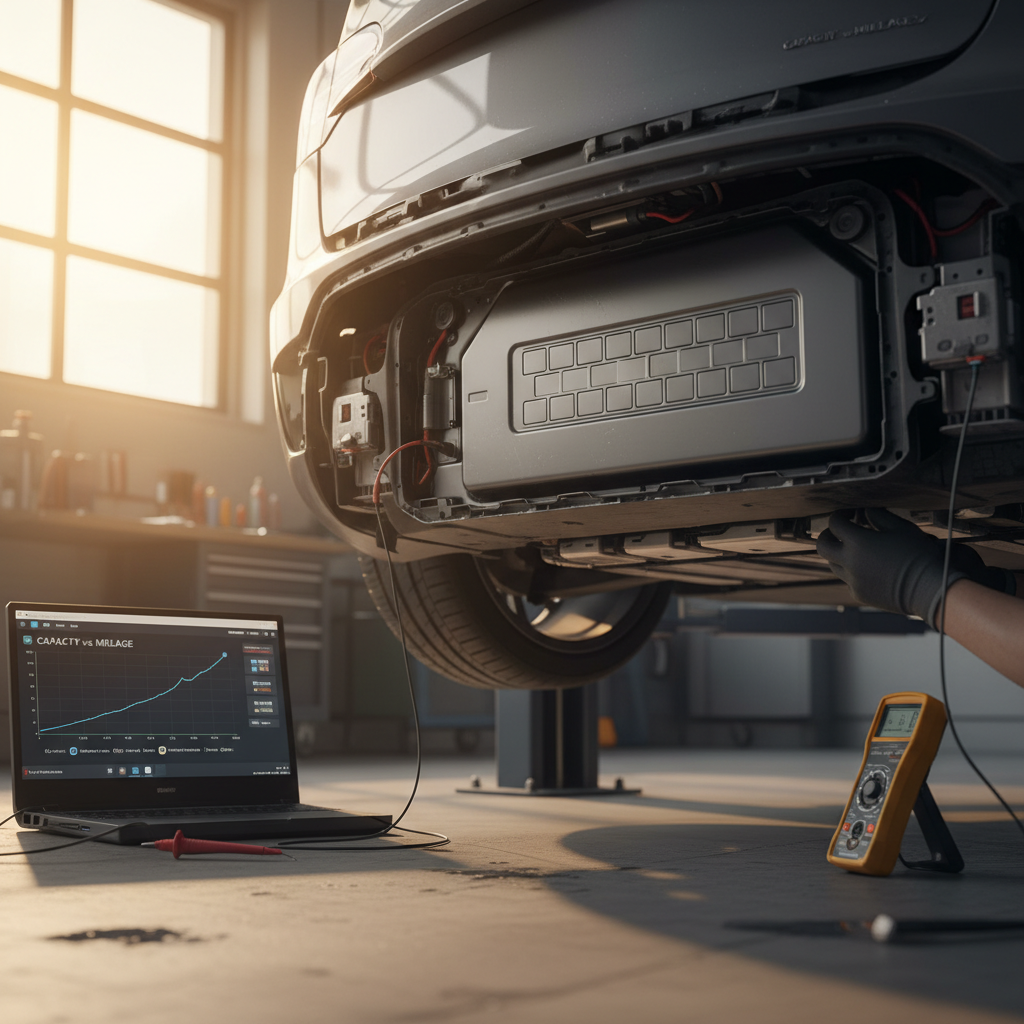
Dealers and marketplaces are increasingly looking at <strong>measured battery health</strong>, not just age and miles. A Mach‑E with 95%+ of original capacity is a different asset than one that’s been fast‑charged hard and shows notable degradation.
4. Accident and title history
Frame damage, airbag deployment, lemon/buyback history, or branded titles can nuke thousands from any EV’s value. Even “minor” accidents can scare wholesale buyers.
5. Market and seasonality
Coastal EV‑heavy metros often support stronger prices than rural areas with thin charging. Winter can soften demand for rear‑drive EVs in snow states, while tax‑refund season often perks values up.
6. Interest rates and incentives
When new‑car APRs drop or factory rebates spike, your used Mach‑E has to be <strong>priced even lower</strong> to make the payment difference compelling. Lenders also sometimes tighten used‑EV residual assumptions, which trickles down into trade‑in bids.
7. Where you request the offer
A franchise Ford dealer, a national car‑buying site, and an EV‑focused marketplace like <strong>Recharged</strong> will all see your car differently. Some bidders specialize in EVs and are more comfortable paying up for strong battery health and the right spec.
Real‑world 2023 Mach‑E pricing examples by trim
To ground all this, let’s look at what different 2023 Mustang Mach‑E configurations tend to fetch when you go to trade them in or sell them outright, assuming clean history and typical mileage (around 36,000 miles in early 2026).
Example 1: 2023 Mach‑E Select RWD
- Original MSRP: around $43,000 with common options.
- Average trade‑in range: roughly $18,000–$23,000 depending on miles and region.
- Typical dealer retail listing: $23,000–$27,000.
If you see an $18,500 offer on a high‑mile Select, it may not be a “rip‑off”, it’s just the bottom half of a realistic range.
Example 2: 2023 Mach‑E Premium AWD ER
- Original MSRP: around the high‑$40,000s to low‑$50,000s depending on options.
- Average trade‑in range: roughly $23,000–$28,000.
- Typical dealer retail listing: $28,000–$33,000.
Clean, low‑mile Premium ER examples with desirable colors and packages are the ones most likely to break into the low‑$30,000s on trade if the local market is tight.
Use multiple pricing lenses
How battery health impacts your trade‑in offer
On paper, every 2023 Mach‑E of a given trim and mileage should be worth about the same. In practice, battery condition is destiny. A car that’s lived on DC fast charging or spent summers baking at 100% state of charge is a very different resale risk than one that’s been charged gently at home and stored in a garage.

Why dealers discount unknown battery health
What appraisers worry about when they see an older EV with no data.
Replacement cost risk
EV batteries are the single most expensive component on the car. If the pack fails just out of warranty, the dealer risks a five‑figure bill or an unsellable vehicle.
Range‑anxiety shoppers
Used‑EV shoppers already fear reduced range. If a test drive shows noticeably worse range than reviews promised, that car becomes a hard retail sell, so the trade‑in bid drops.
Lack of documentation
Many appraisal tools still can’t see live state‑of‑health data, so everyone assumes a conservative worst case unless you can prove otherwise.
How Recharged flips that script
Ready to find your next EV?
Browse VehiclesWhere to sell your 2023 Mach‑E: dealer vs marketplace vs private party
You’ve got options, and they trade speed for money. Think of it as a spectrum: the faster and easier the sale, the more you pay in the form of a lower offer.
Ways to sell a 2023 Mustang Mach‑E and what to expect
A side‑by‑side comparison of common selling paths for a 2023 Mach‑E owner in 2026.
| Option | Typical pricing vs top dollar | Time & effort | Pros | Cons |
|---|---|---|---|---|
| Franchise Ford dealer trade‑in | Lowest to mid‑range | Very low | Fast, can roll into new deal, no strangers meeting at your house | Often the lowest number on the table, especially if they’re heavy on Mach‑E inventory |
| Online cash‑offer site | Low to mid‑range | Low | Simple process, home pickup in many areas | Numbers can be volatile; some drop the price on inspection |
| EV‑focused marketplace (like Recharged) | Mid‑ to high‑range | Moderate | Buyers are shopping specifically for used EVs; battery health is valued; expert help with pricing, paperwork, and delivery | Takes more time than a same‑day trade; vehicle condition still matters |
| Private‑party sale | Highest potential | High | Maximum price potential if you’re patient and present the car well | Time‑consuming; you handle ads, test drives, and paperwork; buyers may push hard on price fearing EV risk |
Not all paths fit every owner, pick the one that matches your time, risk tolerance, and financial goals.
Use trade‑in quotes as leverage
8 steps to maximize your 2023 Mach‑E trade‑in value
You can’t change the macro picture on Mach‑E depreciation, but you can absolutely change where your car lands within the range. Think of prepping your EV like staging a house, presentation, documentation, and timing matter.
Action plan before you ask for a 2023 Mach‑E trade‑in quote
1. Pull your payoff and check for negative equity
Log in to your lender and get your <strong>10‑day payoff amount</strong>. Compare it to realistic trade‑in ranges. If you’re deep underwater, you may be better off keeping the car at least another year instead of rolling thousands forward.
2. Get a battery health report
If possible, document your pack’s state of health before you ask for offers. A third‑party diagnostic or a <strong>Recharged Score battery health report</strong> does more than any sales pitch when you’re trying to defend a higher number.
3. Fix inexpensive cosmetic issues
Touch‑up paint for curb‑rashed wheels or a professional detail can pay back more than they cost. Heavy odors, stained seats, and scratches all give appraisers easy excuses to push your 2023 Ford Mustang Mach‑E trade‑in value down.
4. Gather records and accessories
Service receipts, recall paperwork, two key fobs, mobile charge cord, cargo cover, completeness adds confidence. A missing charge cable, for example, will absolutely show up as a line item deduction on some appraisals.
5. Time your sale strategically
Avoid selling right after a major <strong>new‑car incentive announcement</strong> or at the dead of winter in a cold region if you can. Late spring and early summer often combine active buyers with friendlier weather for EV test drives.
6. Get 3–5 written offers
Cast a wide net: at least one local Ford dealer, one non‑Ford dealer, one national online buyer, and an EV‑focused marketplace like Recharged. Compare not just the top‑line number, but fees, timing, and how they treat you.
7. Separate the new‑car deal from your trade
If you’re trading into another vehicle, negotiate the <strong>new car price</strong> and the <strong>trade‑in value</strong> as independent conversations. That keeps dealers from disguising a weak trade number behind a discount on the new ride.
8. Consider consignment instead of a straight trade
If you want dealer‑style convenience without giving up as much money, a <strong>consignment sale</strong> through a marketplace like Recharged can be a good middle ground. You keep ownership until it sells, but professionals handle marketing, buyer screening, paperwork, and delivery.
Should you trade in or keep your 2023 Mach‑E?
Emotionally, it’s rough to watch a $50,000‑plus EV slide into the mid‑$20,000s after only a few years. But once that initial drop is behind you, your 2023 Mustang Mach‑E is often in its sweet spot: most of the depreciation has happened, yet you still have modern tech, plenty of range, and years of life left in the battery.
When it makes sense to keep it
- You’re significantly upside‑down on your loan and don’t want to roll negative equity.
- The car still fits your lifestyle, range, space, and performance work for you.
- Battery health checks out well, and you’re not facing any major repair decisions.
- You’d have to pay noticeably more per month to get into a newer EV you only “sort of” want.
When trading or selling makes sense
- Your job or move has changed your charging or commuting situation.
- The payment is too high relative to your budget and current value.
- You’re eyeing an EV with substantially better range, charging speed, or interior space.
- You have positive equity now and want to lock it in before further price drops.
How Recharged can help you decide
FAQ: 2023 Ford Mustang Mach‑E trade‑in value
Common questions about 2023 Mustang Mach‑E trade‑ins
Bottom line: getting a fair trade‑in for your 2023 Mach‑E
The bad news is that the 2023 Mustang Mach‑E has become a poster child for EV depreciation. The good news is that if you understand the market and control what you can, presentation, battery health, documentation, and where you sell, you can still land near the top of the realistic range for your 2023 Ford Mustang Mach‑E trade‑in value.
Start by getting a clear picture of your payoff, your car’s condition, and live pricing for similar Mach‑Es near you. Then compare multiple offers, including EV‑focused options like Recharged that actually understand battery reports and EV shoppers. Whether you decide to trade in, consign, or hold onto the car a bit longer, going in with eyes open will save you money, and maybe spare you that sick feeling the next time you see an appraisal number pop up on your screen.