If you’re eyeing a 2023 Ford Mustang Mach-E, especially on the used market, you’ve probably heard the noise: recalls, charging drama, software quirks. The truth is more nuanced. The 2023 model quietly fixed some big early hardware problems, but it still has a shortlist of issues you should understand before you sign anything.
The short version
Overview: How reliable is the 2023 Mustang Mach-E?
The Mustang Mach-E arrived as a statement car, and like many first-wave EVs, early model years had teething problems, most notoriously the high-voltage battery junction box (HVBJB) failures on some 2021–early 2022 builds. By the time the 2023 Mach-E rolled out, Ford had revised key hardware and leaned harder on over-the-air (OTA) updates to clean up bugs. The result: reliability that’s closer to “average” than disaster, but still not boringly bulletproof.
2023 Mach-E reliability snapshot
Why build date matters
Major recalls affecting the 2023 Mustang Mach-E
Before we dive into everyday annoyances, you should know about the big-ticket safety recalls that can hit a 2023 Mustang Mach-E. Recalls aren’t automatically a deal-breaker, if anything, they can be a sign the brand is actually paying attention, but you want to be sure the car you’re considering has had the work done.
Key recalls that can include 2023 Mach-E
Exact eligibility depends on VIN, production date, and build configuration. Always run a VIN check on the NHTSA site before you buy.
| Issue | Model years involved | Risk | Typical fix |
|---|---|---|---|
| Electronic door latch / 12V behavior | 2021–2025 | Rear doors may remain locked if 12V voltage drops, potentially trapping passengers until interior release is used. | Software update to the body control and door modules; in some cases 12V system checks or replacement. |
| Park module / roll-away risk | Certain 2024–2026 Mach-E | Vehicle may not fully engage Park if the integrated park module glitches, creating a roll-away risk. | Park-module software update, performed free at dealers. |
| HVBJB / sudden power loss | Primarily 2021–2022 | In rare cases, high-voltage junction box overheating can trigger reduced power or shutdown. | Hardware repair or replacement plus software changes; most 2023s use updated parts and are not affected. |
Talk to a Ford dealer or EV specialist to confirm whether a specific 2023 Mach-E is affected and repaired.
Buying used? Start with the VIN
Software glitches and SYNC 4A bugs
Ford essentially ships the Mach-E as a rolling beta test: lots of modern features, lots of software. The big 15.5-inch SYNC 4A touchscreen looks like a movie poster in portrait, but it’s doing a lot of work, navigation, climate, driver assists, charging logic, and that can mean hiccups, especially if the car has missed a few OTA updates.
Common 2023 Mach-E software complaints
Most are more annoying than dangerous, but they can sour ownership if they’re chronic.
Freezes & reboots
Navigation oddities
Driver-assist quirks
Quick SYNC 4A reset
How to tame Mach-E software problems
1. Check for OTA updates
Make sure the car is connected to Wi‑Fi at home and that automatic updates are enabled in the settings. Parked overnight with a good connection, the Mach-E will often quietly install bug fixes and feature upgrades.
2. Hard power cycle when needed
If a soft SYNC reboot doesn’t help, shut the car off, open the door, lock it, walk away with the key for a few minutes, then return and start again. This lets more modules fully sleep and restart.
3. Re-add your FordPass account
If the FordPass app is acting possessed, wrong charge status, no remote lock/unlock, remove the vehicle from the app, log out, then pair it again as if it were new.
4. Document repeat problems
If the same glitch appears multiple times per week, log dates, mileage, screenshots, and photos. Dealers and buyback arbitrators speak fluent evidence.
5. Ask a dealer to pull logs
Ford dealers can scan for stored error codes, failed OTA attempts, and module issues that don’t show on your dash. This is especially useful right before your warranty expires.
Charging problems: home and DC fast
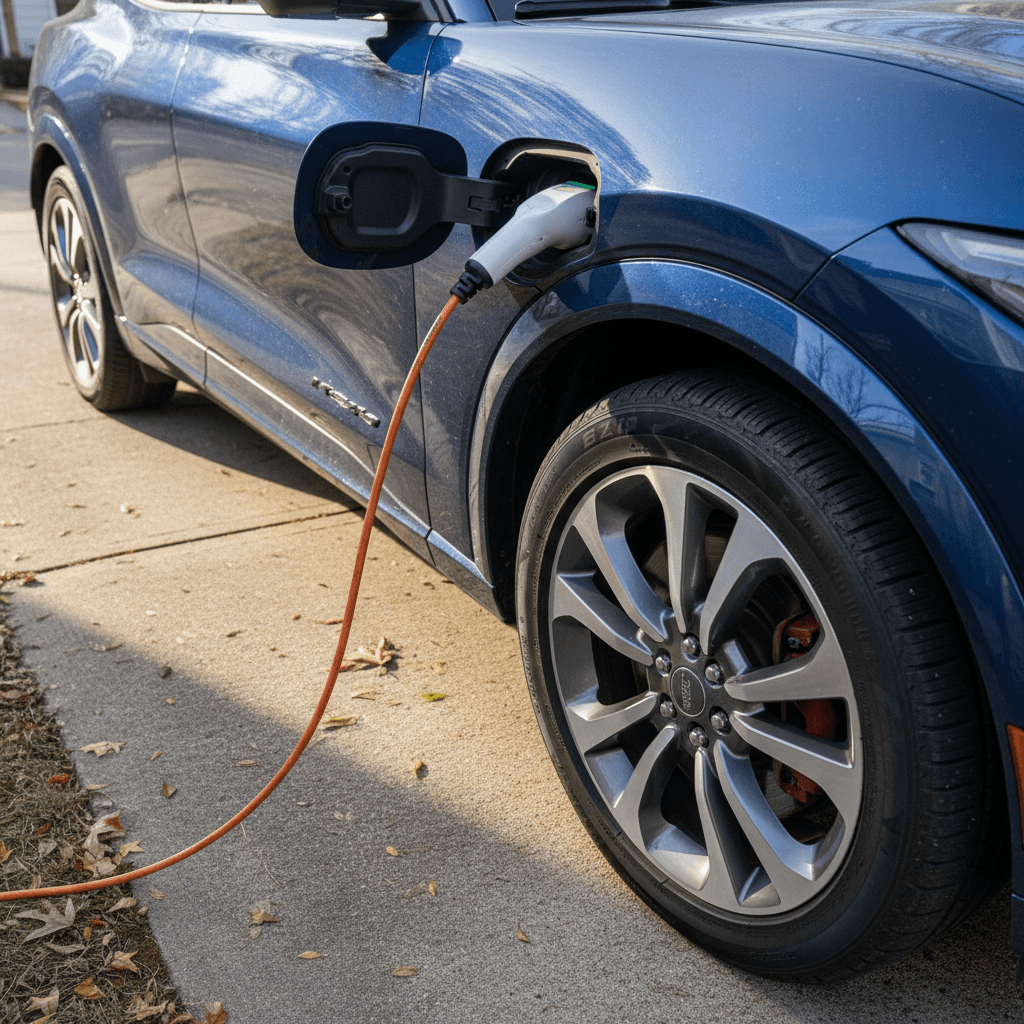
The Mach-E is a good EV saddled with a very American problem: a public charging network that’s…aspirational. Many “charging problems” owners report are really network issues, but the car does have its own quirks with home charging and DC fast charging you should know about.
Typical home charging issues
- Slow Level 2 speeds: The 2023 Mach-E’s onboard charger can pull up to 40A on most trims, but many home EVSEs and circuits are set lower. If you’re only seeing 24–32A, the bottleneck may be your wall unit or wiring, not the car.
- Charge stops at 85–90%: The car or app may have a charge cap set. Some smart chargers also have their own limits. Owners often discover the EVSE and FordPass are arguing about who’s in charge of charging.
- “Charge fault” messages: Often caused by flaky J1772 connectors, ground-fault–sensitive stations, or marginal home wiring. The car aborts to protect itself.
Typical DC fast-charging issues
- Underwhelming speeds: A 2023 Mach-E can accept up to 115 or 150 kW depending on battery and trim, but only if the pack is warm and the station is healthy. Cold batteries, shared cabinets, and derated chargers can drag you down to 40–60 kW.
- Charging stalls or errors: Communication errors between the car and station can cause plug‑in, ramp to speed, then crash to zero. In some cases, this even throws a “Charge station fault” message.
- Won’t charge after a bad DC session: A few owners report that a misbehaving DC charger seems to “poison” the inlet until the port or associated hardware is checked or replaced.
Use built‑in navigation for DC fast charging
Charging problem triage: what to try first
1. Eliminate the obvious
Try a different station, different brand, or a different plug at the same site. If only one stall fails, the problem is probably the station. If multiple unrelated locations fail, suspect the car or your cable.
2. Simplify your settings
Turn off smart schedules and charge limits in the EVSE app and manage it all from the Mach-E / FordPass first. Two brains arguing over amperage or timers can make a simple overnight charge way too complicated.
3. Inspect the connector
Look for bent pins, burns, melted plastic, or debris in the port. DC connectors in particular take a beating. If you see damage, stop using that station and have your own inlet inspected by a dealer.
4. Let the car cool down
After a heavy DC session, the car may temporarily limit further fast charging to protect the pack. Give it 20–30 minutes of normal driving or parking before you conclude something is broken.
5. Get a diagnostic at a Ford EV dealer
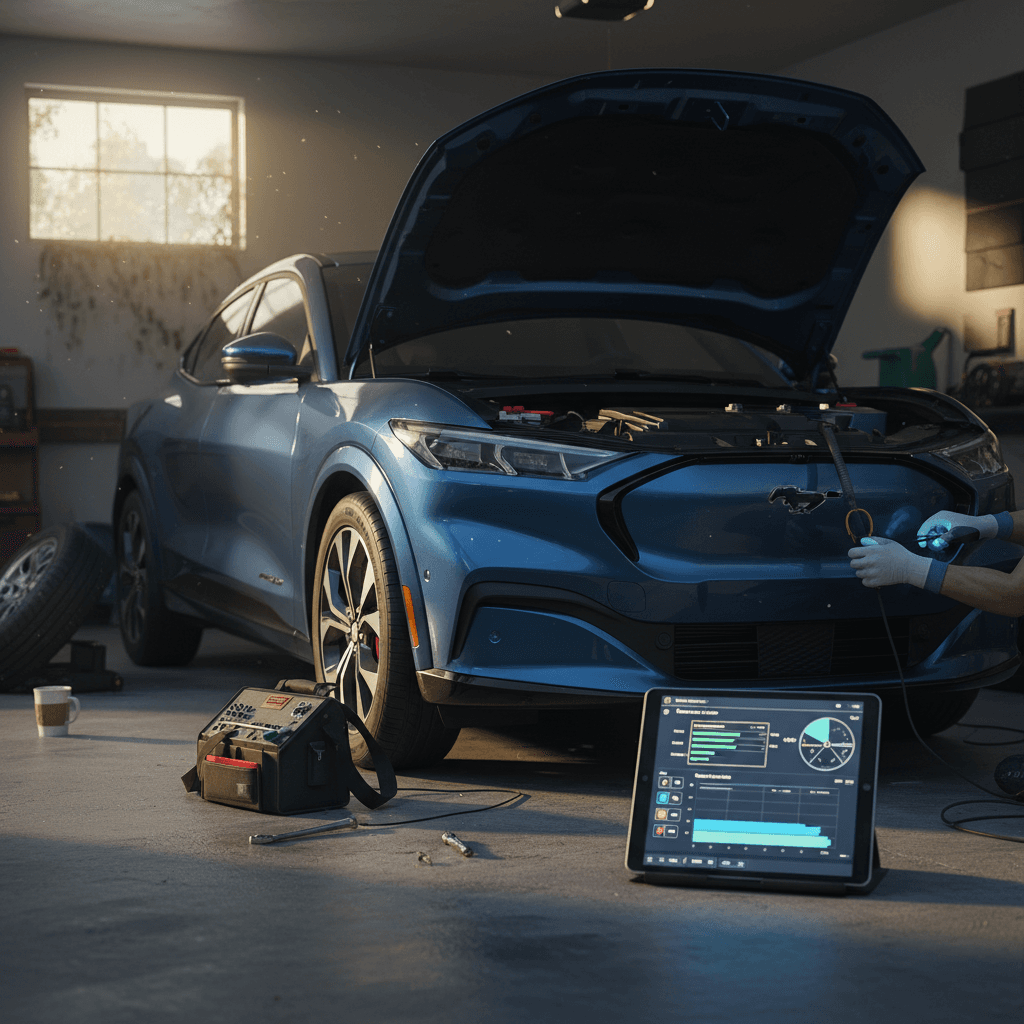
If you consistently see charge faults across different networks, ask a dealer to inspect the onboard charger, HV components, and port. For a used purchase, this is money well spent.
Battery health, range, and degradation concerns
The Mach-E ships with a generous battery warranty, 8 years / 100,000 miles on the high-voltage pack in the U.S., but time and miles still matter. By 2026, a high‑mileage 2023 example is already in its midlife; a low‑miler is just settling in. Either way, you want to know if the car has been driven like a grand tourer or used as a public‑charging stress test.
Real‑world battery concerns on the 2023 Mach-E
Less about catastrophic failure, more about how the car was used and charged.
Normal degradation
Cold-weather range
Range estimates that lie
HVBJB: the ghost of model years past
How to sanity‑check battery health on a 2023 Mach-E
1. Look at real‑world efficiency
On a mixed drive, a healthy 2023 Mach-E typically returns around 2.7–3.5 mi/kWh depending on weather and trim. Horrible numbers in mild weather can hint at tired tires, poor alignment, or a heavy right foot in the car’s past life.
2. Compare displayed range to EPA estimates
Charge to 80 or 90% and see what the car predicts. If it’s dramatically below what similar trims usually show, that’s a yellow flag worth investigating with a specialist scan.
3. Ask for charging history
A car fast‑charged to 100% every day on a busy urban fast charger has lived a harder life than one gently topped to 80% on Level 2 in a garage. Most owners won’t have perfect logs, but patterns matter.
4. Get an independent battery health report
Platforms like <strong>Recharged</strong> use tools such as the Recharged Score to pull detailed battery data on used EVs, useful if you don’t speak CAN bus yourself.
5. Verify warranty window
Confirm in Ford’s system that the traction‑battery warranty is still active and that there are no exclusions due to salvage titles or severe modifications.
Driveability, noises, and ride-quality issues
An EV as quiet as the Mach-E turns every squeak, thump, and wind whistle into a podcast you didn’t subscribe to. Most of what owners report in this department are quality‑of‑life problems, not imminent failures, but they’re the kind of issues that will either drive you a little crazy or become invisible, depending on your personality.
Common 2023 Mach-E driveability complaints
Not deal‑breakers, but things you’ll notice on a test drive.
Wind & road noise
Harsh or floaty ride
Suspension clunks
Test drive like you mean it
Interior, hardware, and build-quality complaints
Inside, the 2023 Mach-E sits somewhere between mainstream Ford and entry‑luxury: big screen, clever storage, some cheaper plastics if you go hunting. The bigger issues aren’t about materials so much as small but irritating failures of execution.
- Door handles and buttons: The “e‑latch” buttons and pull pockets can feel odd at first, and misaligned seals can cause wind noise or little water leaks around the doors if they’re out of adjustment.
- Panel gaps and paint: Early Mach-Es were roasted for inconsistent panel alignment. By 2023 things improved, but you’ll still want to inspect hatch alignment, hood gaps, and paint around edges and wheel arches.
- Interior creaks and buzzes: Plastic trim around the center console and door cards can creak under elbow pressure. Often it’s cosmetic, but persistent noises can hint at panels that were removed and reinstalled for prior repairs.
- Seat comfort: Some drivers love the Mach-E’s seats; others complain they’re too flat on long trips. If you have back issues, don’t assume, sit in one for at least 20–30 minutes on a test drive.
The upside: easy fixes
How to check a 2023 Mach-E before you buy used
By the time a 2023 Mustang Mach-E hits the used market, it’s lived a story: commuting mule, rideshare workhorse, or garage queen. Your mission is to read that story in an hour or less and decide whether it’s a hero car, or a future group‑chat anecdote.
Used 2023 Mach-E inspection checklist
1. Run the VIN for recalls and title history
Check for open recalls on the NHTSA site and review the title history for accidents, lemon buybacks, and flood damage. A clean title with completed recalls is the baseline.
2. Inspect charging behavior in person
If possible, plug into a Level 2 charger and watch for errors, weird noises from the charge port, or early cut‑offs. If you can, also try a public DC fast charger to confirm the car will ramp and hold reasonable speeds.
3. Scan for software and sensor errors
Turn the car on, let all the warning lights cycle, and scroll through the cluster menus. Look for persistent alerts related to BlueCruise, cameras, or driver‑assist systems.
4. Test all doors and latches
Open and close every door, hatch, and the frunk from inside and outside. Make sure the electronic door buttons work consistently and that no latch feels sticky or inconsistent.
5. Look under the car and under the hood
You’re mainly checking for obvious damage: scrapes on the battery pack shield, bent suspension pieces, or signs of impact around the front crash structure and rear subframe.
6. Get a professional EV inspection
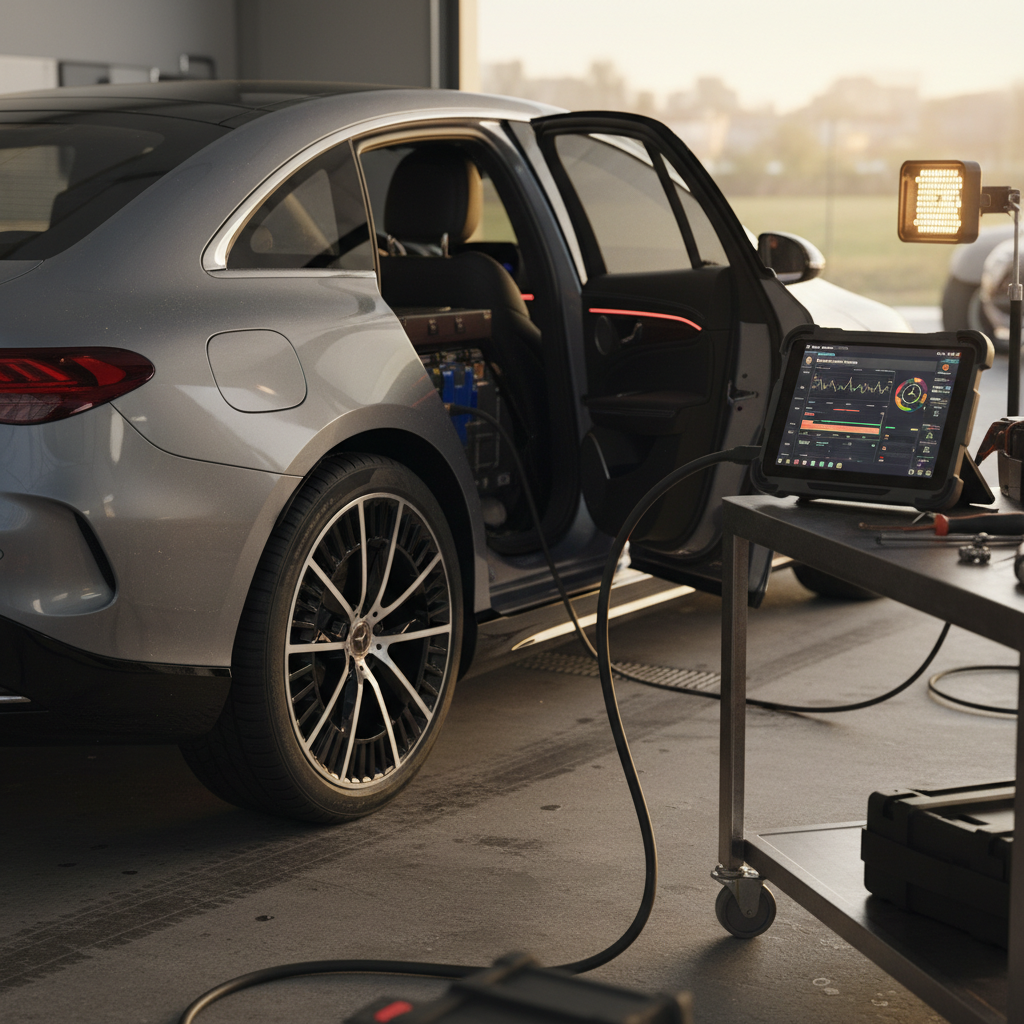
A knowledgeable EV tech, or a marketplace like <strong>Recharged</strong> that includes a Recharged Score battery health report, can read live battery data, thermal history, and module codes that a casual buyer can’t see.
When a 2023 Mach-E is still a great buy
For all the forum drama, a good 2023 Mustang Mach-E is a deeply satisfying EV: strong performance, usable range, a genuinely fun chassis, and a cabin that feels modern without leaning on gimmicks. The trick is separating the solid, well‑maintained examples from the ones that have lived hard on bad fast chargers and missed updates.
Green‑flag 2023 Mach-E
- Complete recall history with documentation from a Ford dealer.
- Regular maintenance and software updates noted in service records.
- No major accident history; clean underbody and battery shield.
- Healthy charging behavior at Level 2 and DC fast stations without frequent errors.
- Calm, rattle‑free test drive over rough and smooth roads.
Red‑flag 2023 Mach-E
- Multiple unresolved recalls or a seller who has “no idea” about updates.
- Repeat charging faults at more than one station brand or location.
- Dashboard lit with driver‑assist or battery warnings, even intermittently.
- Noticeable wind leaks, misaligned doors or hatch, or missing trim.
- Seller unwilling to let you have an independent EV inspection.
How Recharged fits in
Ready to find your next EV?
Browse VehiclesThe 2023 Ford Mustang Mach-E isn’t a perfect EV, but it’s not the horror story some comment sections would have you believe. Its biggest problems, software quirks, charging inconsistencies, and a handful of recalls, are largely manageable with the right updates, a bit of owner savvy, and a thorough pre‑purchase inspection. Choose carefully and you get a quick, practical electric crossover with real character. If you’d rather not play used‑car roulette, letting a specialist like Recharged vet the battery, charging hardware, and recall history for you can turn the Mach-E from a question mark into a confident daily driver.