If you’re looking at a used 2023 Fisker Ocean, range is probably near the top of your checklist. On paper, the Fisker Ocean Extreme boasts an impressive 360‑mile EPA rating, with even higher numbers on Europe’s WLTP cycle. But how far does it really go when you leave the spec sheet behind and head onto real roads?
Why this range test matters
2023 Fisker Ocean range overview
The Ocean launched with four main versions globally, but in the U.S. the 2023 Fisker Ocean Extreme (and launch One) is the trim most shoppers focus on because it delivers the longest range. Here’s the big‑picture view of how Fisker positioned the lineup when the Ocean arrived:
2023 Fisker Ocean trims and claimed range
Factory estimates and EPA ratings where available for the main 2023 Fisker Ocean trims.
| Trim | Drivetrain | Battery chemistry | Official/claimed range |
|---|---|---|---|
| Sport | FWD, single motor | LFP | ~231–250 miles (manufacturer estimate) |
| Ultra | AWD, dual motor | NMC | ~340–350 miles (manufacturer estimate) |
| Extreme | AWD, dual motor | NMC | 360 miles EPA |
| One (launch edition) | AWD, dual motor | NMC | Effectively same as Extreme (360 miles EPA) |
Numbers below are approximate U.S. estimates for 2023 and may differ from later model years or European WLTP figures.
Key spec to remember
Official EPA and WLTP range ratings
Fisker made a splash in early 2023 when it announced that the Ocean Extreme achieved an estimated 440 miles of range on Europe’s WLTP cycle, comfortably beating many rival electric SUVs on that more optimistic test. In the U.S., the story is a bit different once the Environmental Protection Agency weighed in.
- EPA rating (U.S.) – Ocean Extreme/One: 360 miles of combined range, 92 MPGe combined, 99 city / 84 highway.
- Energy use: 37 kWh/100 miles combined on the EPA label, which translates to about 2.7 miles per kWh.
- WLTP rating (Europe – Extreme): up to 440 miles, a figure that’s useful for comparison in Europe but not realistic for U.S. highway use.
- Wheel size effect: EPA rating is based on 20‑inch wheels; optional 22‑inch wheels usually reduce range slightly, though early testing suggested a surprisingly small hit.
EPA vs. WLTP: don’t mix them up
Edmunds’ 2023 Fisker Ocean range test
To understand real‑world performance, it helps to look at consistent, repeatable tests. Edmunds runs one of the better known independent EV range loops, combining city and highway driving at an average of about 40 mph, with cars driven from 100% charge down to nearly empty in their most efficient modes.
Edmunds 2023 Fisker Ocean range & efficiency results
Two big takeaways stand out from the Edmunds data. First, the Ocean can essentially match its EPA range in mixed driving if you drive reasonably and conditions are friendly (mild temperatures, no big elevation changes). Second, its average efficiency over thousands of miles lands a bit shy of the EPA label, which is common among larger, heavier EV SUVs.
Impressive result for a heavy SUV
Highway range test from Bjørn Nyland
If you’re a road‑tripper, you should focus less on mixed driving loops and more on steady‑speed highway tests. That’s exactly what EV tester Bjørn Nyland did with a 2023 Fisker Ocean Extreme in Europe, running controlled range runs at two constant speeds.
Bjørn Nyland’s 2023 Fisker Ocean Extreme highway range tests
Real‑world range and consumption at steady speeds in cool temperatures.
| Test speed | Estimated range | Energy use | Estimated usable capacity |
|---|---|---|---|
| 56 mph (90 km/h) | 283 miles | 375 Wh/mile (2.7 mi/kWh) | ~106 kWh |
| 75 mph (120 km/h) | 222 miles | 476 Wh/mile (2.1 mi/kWh) | ~106 kWh |
Tests were conducted around 43–45°F on winter‑oriented 20‑inch Bridgestone Blizzak tires, conditions that typically reduce EV range.
At about 56 mph, getting roughly 283 miles in cool weather on winter tires is respectable, and Nyland estimated that in warmer conditions the same car might nudge closer to 300 miles at that speed. At 75 mph, the story shifts: the Ocean’s range dropped to about 222 miles, which is more typical of what you should expect on U.S. interstates if you set the cruise control at modern traffic speeds.
Highway realism check
Other real‑world efficiency results
Other early tests, including instrumented evaluations from outlets like Car and Driver, broadly back up the pattern Edmunds and Nyland saw: strong range thanks to a large battery, but efficiency that’s merely average for the class.
- A top‑trim Ocean with the big pack delivered around 290 miles in a 75‑mph U.S. highway loop, well below the 360‑mile combined EPA rating but in line with many other mid‑size EV SUVs.
- DC fast‑charging in third‑party tests was capable of about 200 kW peak, with a 10–90% session taking just under an hour, slower than the fastest‑charging rivals, which often do 10–80% in 20–30 minutes.
- Compared with some Korean and German competitors, the Ocean’s Wh‑per‑mile consumption is higher, but its large usable battery keeps real‑world range competitive.
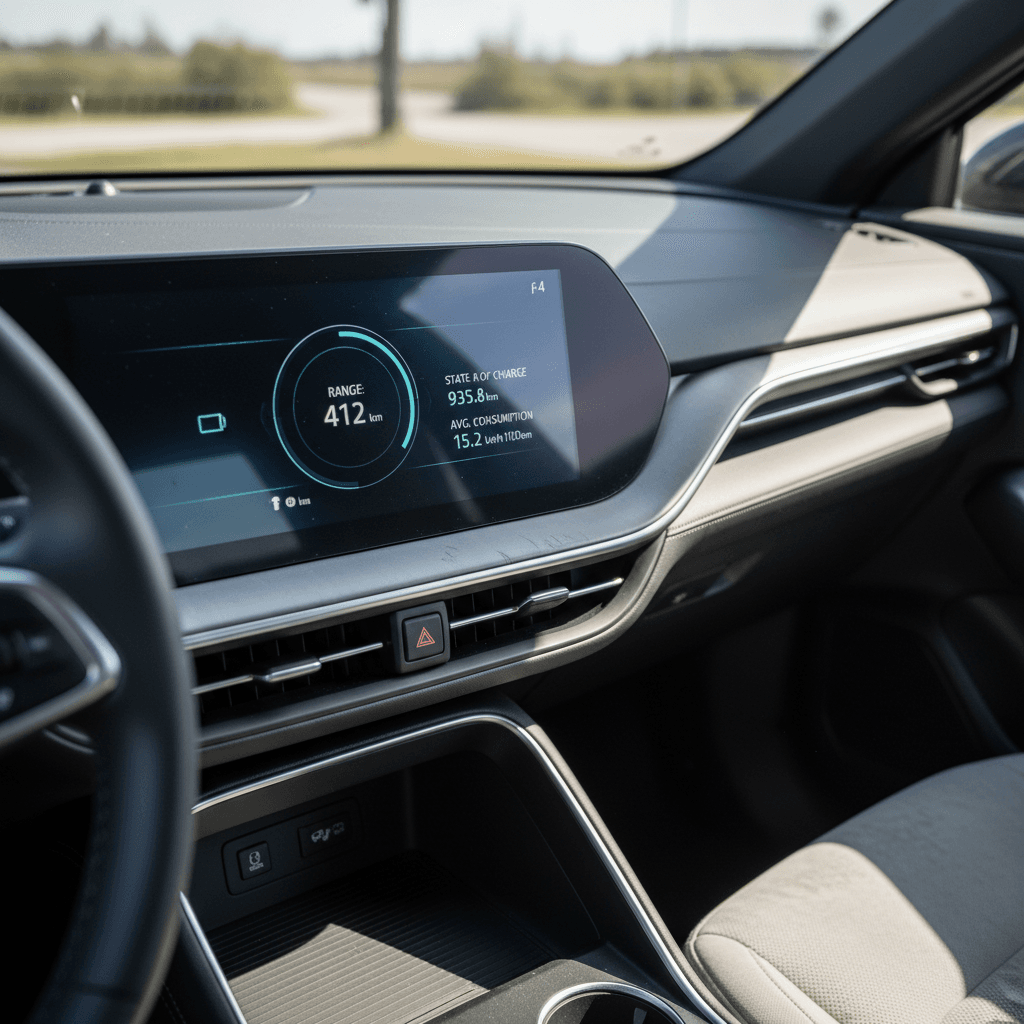
What actually impacts your 2023 Fisker Ocean range
Four big factors that move your Fisker Ocean’s range up or down
Understanding these variables helps you read between the lines of any range test.
Temperature
EV batteries are happiest in mild weather. In cold conditions, the Ocean’s range can drop dramatically, especially before the pack warms up.
- Expect a significant hit below about 40°F.
- Preconditioning while plugged in helps.
Speed and aerodynamics
Push above 65–70 mph and aerodynamic drag ramps up quickly.
- Nyland’s test showed a ~21% range drop from 56 mph to 75 mph.
- Roof racks or cargo boxes worsen things further.
Elevation and terrain
Climbing long grades will burn through energy; you earn some back on the descent but never all of it.
- Hilly routes shorten effective range.
- Regenerative braking softens but doesn’t erase the penalty.
Weight, wheels, and tires
The Ocean is heavy to begin with, and 22-inch wheels or aggressive tires compound that.
- Stick with 20-inch wheels for the best range.
- Winter tires can cost you 5–15% range.
Use EPA as the ceiling, not the floor
How the Fisker Ocean compares to rivals
When the 2023 Fisker Ocean Extreme arrived, its 360‑mile EPA rating looked impressive versus rival EV SUVs like the Tesla Model Y, Hyundai Ioniq 5, Genesis GV60, and Cadillac Lyriq. But in the used market, what matters more is real‑world highway and mixed‑driving range.
2023 Fisker Ocean vs popular EV SUV rivals (long‑range trims)
Approximate EPA combined range ratings for comparable 2023 EV SUVs.
| Model & configuration | Drivetrain | EPA combined range |
|---|---|---|
| Fisker Ocean Extreme/One | AWD | 360 miles |
| Tesla Model Y Long Range | AWD | ~330 miles |
| Hyundai Ioniq 5 Long Range RWD | RWD | ~303 miles |
| Genesis GV60 Advanced AWD | AWD | ~248–264 miles |
| Cadillac Lyriq RWD (standard pack) | RWD | ~314 miles |
Always double‑check the exact model year, wheel size, and drivetrain when comparing ranges, numbers can change with even minor configuration shifts.
In independent tests, the Ocean’s mixed‑driving range hangs with the best, while its freeway range at 70–75 mph tends to fall in the same broad 220–290‑mile band as many competitors. It doesn’t rewrite the rulebook, but it certainly doesn’t embarrass itself either, especially considering its size and weight.
Range expectations for used Fisker Ocean buyers
Because Fisker has filed for bankruptcy and new Oceans are no longer being produced, every Ocean you’ll see going forward is a used EV. That raises two range‑related questions: what can you expect today, and how should you think about battery health over the long term?
1. Today’s range, based on tests
- Daily commuting and mixed driving: If you keep speeds moderate and conditions reasonable, seeing 280–340 miles between charges in an Extreme is realistic.
- Highway road trips: Plan around 200–260 miles between fast‑charge stops at 70–75 mph, less in cold weather.
- Shorter‑range trims: Sport and Ultra models deliver less than the Extreme; treat their factory estimates as best‑case in good weather.
2. Long‑term battery health
- The Ocean’s big NMC battery should age similarly to other modern packs if treated well: avoid frequent 100% charges and high‑power DC fast charging when unnecessary.
- Because Fisker is gone, independent verification of battery health becomes crucial when you’re buying used.
- Services like the Recharged Score can give you a quantified look at current usable capacity so you’re not just taking the seller’s word for it.
How Recharged can help with a used Fisker Ocean
Tips for maximizing range in a Fisker Ocean
Practical ways to stretch your 2023 Fisker Ocean’s range
1. Use Earth mode for most driving
The Ocean’s most efficient drive setting leans on the front motor and dials back responsiveness slightly. It’s the right choice for commuting, errands, and cruising where you don’t need maximum performance.
2. Precondition while plugged in
In cold or hot weather, preheat or precool the cabin while the car is still connected to your home or public charger. That way, the HVAC draws less from the battery once you unplug and drive.
3. Watch your cruising speed
Dropping from 75 mph to 65 mph can add dozens of miles to your effective range. On long trips, that tradeoff in time is often worth one fewer charging stop.
4. Keep an eye on tires and wheels
If you have a choice, stick with the 20‑inch wheels and low‑rolling‑resistance tires. Check pressures regularly, underinflated tires hurt efficiency and range.
5. Travel light and streamline
Roof racks, cargo boxes, and heavy loads all increase energy consumption. Remove unused accessories and avoid turning your Ocean into a rolling storage unit.
6. Charge smart on road trips
Because the Ocean’s DC fast‑charging curve isn’t class‑leading, it’s often quickest to charge from roughly 10–60% instead of waiting all the way to 90–100% at every stop.
Don’t chase 0%
FAQ: 2023 Fisker Ocean range test
Frequently asked questions about 2023 Fisker Ocean range
Bottom line: Should range stop you from buying?
Range is one area where the 2023 Fisker Ocean largely delivers on its promise. Independent tests show that in mixed driving, the Ocean Extreme can run close to its 360‑mile EPA rating, and even at typical freeway speeds it holds its own against other mid‑size electric SUVs. The caveats are the same ones you’ll find with any EV: drive fast, climb mountains, or tackle winter roads, and your effective range drops quickly.
If you’re considering a used 2023 Fisker Ocean, the bigger questions are long‑term support and battery health, not whether the original range claims were pure fiction. Get a clear picture of the specific vehicle’s remaining capacity, think honestly about how and where you drive, and use the results from these range tests as a reality check rather than a scare tactic.
At Recharged, our goal is to make that process straightforward. With tools like the Recharged Score Report, expert EV guidance, and flexible financing and delivery options, you can decide whether a Fisker Ocean fits your life today, and for the range you’ll actually use tomorrow.