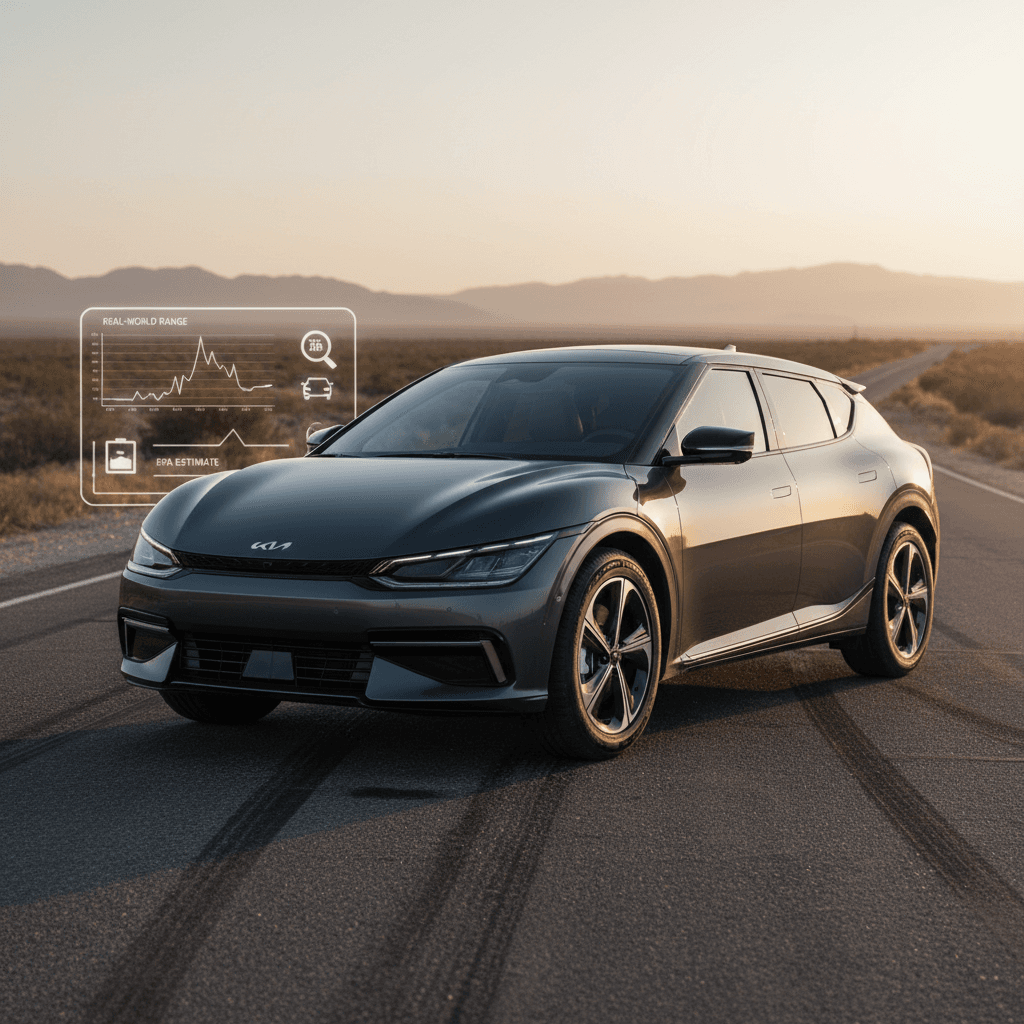
If you’re considering a 2023 Chevy Bolt EUV, you’ve probably seen the official 247‑mile EPA range rating. But what does that look like in the real world, at 70 mph on the interstate, in stop‑and‑go traffic, or on a cold February morning? This 2023 Chevy Bolt EUV range test guide walks you through what owners and instrumented tests are actually seeing, and how that translates into day‑to‑day living and long‑term ownership.
Key range numbers up front
2023 Chevy Bolt EUV range at a glance
Core 2023 Bolt EUV range & efficiency specs
Every 2023 Chevy Bolt EUV uses the same 65.0 kWh lithium‑ion battery pack and a single 200 hp front‑drive motor. That simplifies the range question: regardless of trim, wheels, or options, you’re fundamentally working with an EPA‑rated 247 miles of combined range on a full charge. Real‑world results, however, depend heavily on speed, temperature, elevation, and how you drive.
EPA rating vs real-world 2023 Bolt EUV range
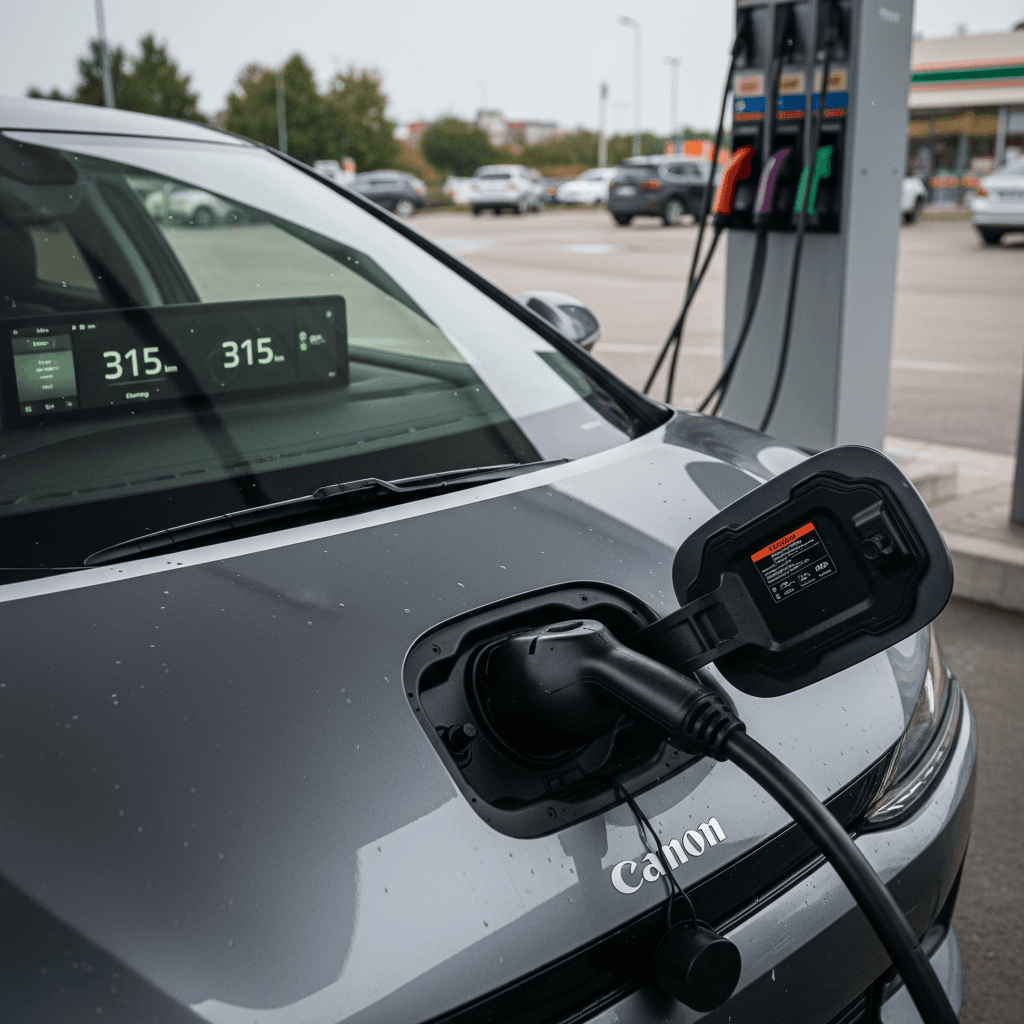
The EPA’s combined figure is meant as a single reference number across all vehicles, but it doesn’t reflect a steady 70‑mph blast down the interstate. In the 2023 Bolt EUV’s case, the 247‑mile rating assumes a mix of city and highway driving with standardized test cycles and mild ambient temperatures.
What the EPA number tells you
- 247 miles is a blended city/highway estimate on a new pack in mild conditions.
- It assumes moderate speeds and relatively gentle acceleration.
- It’s best used to compare the Bolt EUV against other EVs, not to predict your exact trip.
What owners actually see
- Many drivers report 230–260 miles per charge in mild weather around town.
- Highway commuters often see 190–220 miles depending on speed.
- Cold weather, strong headwinds, and heavy loads can pull range into the 160s or lower.
Range varies more than you think
Highway range test: 70 mph in the 2023 Bolt EUV
Highway driving is the toughest real‑world test for the 2023 Chevy Bolt EUV. Aerodynamic drag rises rapidly above 60 mph, so cruising at 70–75 mph can cut range significantly compared with the EPA number.
Typical 2023 Bolt EUV highway range scenarios
Approximate results for a healthy 2023 Bolt EUV driven from 100% to near 0% state of charge on level ground.
| Scenario | Speed | Weather | Estimated Range | Energy Use (Wh/mi) |
|---|---|---|---|---|
| Conservative highway | 65 mph | Mild (60–70°F) | 210–225 miles | 240–260 |
| Typical U.S. freeway | 70 mph | Mild (60–70°F) | 190–205 miles | 260–280 |
| Fast lane driving | 75 mph | Mild (60–70°F) | 175–190 miles | 280–310 |
| Winter freeway | 70 mph | Cold (20–35°F) | 150–180 miles | 300–340 |
Use this as a planning guide, not an absolute guarantee, local conditions matter.
Independent 75‑mph testing of the Bolt EUV has produced highway ranges right around 190 miles on a full charge, a strong showing for a subcompact crossover with a 65 kWh pack. If your daily reality is 70‑mph freeway driving, plan around that 190–200 mile figure and give yourself a 15–20% buffer rather than chasing all 247 rated miles.
How to ballpark your own highway range
City and mixed commuting: where the Bolt EUV shines
In stop‑and‑go or mixed driving, the 2023 Bolt EUV can live up to its EPA label. The efficient powertrain and robust regenerative braking mean you recover energy every time you lift off the accelerator. For many owners, that’s where the car feels like a range overachiever.
Typical daily range outcomes for Bolt EUV drivers
Realistic expectations for most U.S. commutes
Urban commuting
Profile: Low speeds, frequent stops, 5–15 mile legs.
Many owners report 4.0+ mi/kWh in these conditions, which can yield a practical range of 250–270 miles on a full charge in mild weather.
Suburban mix
Profile: 35–55 mph arterials, occasional freeway stints.
Expect something close to the EPA label: 230–250 miles between charges with careful driving.
Longer commutes
Profile: 25–60 mile one‑way commute with highway segments.
Even at 70 mph, a 60‑mile round‑trip daily commute is easy on the Bolt EUV, often using 30–40% of the battery per day.
One‑pedal driving pays off
Cold weather and winter range in a Bolt EUV
No EV loves deep‑winter driving, and the 2023 Chevy Bolt EUV is no exception. Lithium‑ion chemistry works best when the pack is in a comfortable temperature band. Cold weather not only makes the battery less efficient; it also increases demand from cabin heat, window defoggers, and heated seats.
- In light winter (around 40°F), expect a 10–20% range hit if you’re using moderate cabin heat.
- In typical freezing conditions (20–32°F), a 20–30% reduction is common on mixed routes.
- On long highway trips in sub‑freezing temps, particularly at 70+ mph, it’s entirely possible to see 30–40% lower range than the EPA label if you keep the cabin toasty.
Beware very short winter trips
Winter strategies to preserve Bolt EUV range
Pre‑condition while plugged in
Use the Bolt EUV’s pre‑conditioning features to warm the cabin and battery while you’re still connected to home charging. That shifts a big chunk of energy draw off the pack and onto the grid.
Rely on seat and wheel heaters
Heated seats and steering wheel use much less energy than blasting the HVAC. Set the cabin a bit cooler and let those comfort features do the heavy lifting.
Start with a warm battery
If possible, time your charge so it completes shortly before departure. A pack that just finished charging is warmer and more efficient than one that sat all night in sub‑freezing temps.
Slow down a little
Dropping from 75 mph to 65–68 mph in winter can claw back a surprising amount of range, especially into a headwind.
Charging speed, road trips, and planning your stops
Range is only half the long‑trip story. The other half is how quickly you can replace it. Here the 2023 Chevy Bolt EUV shows both its age and its value positioning: it’s an extremely efficient commuter with relatively modest DC fast‑charging speeds by 2026 standards.
Charging the 2023 Bolt EUV: what to expect
From overnight charging to DC fast‑charge pit stops
Level 1 (120V)
Using the included 120V cord, you’ll typically add 3–5 miles of range per hour. Adequate for very light use, but not ideal as a primary solution.
Level 2 (240V)
On a 40–48 amp Level 2 at home or work, expect a 0–100% charge in about 7–8 hours. Perfect for overnight charging and daily use.
DC fast charging
The Bolt EUV tops out around 55 kW on DC fast chargers. Chevy advertised roughly 95 miles added in 30 minutes under good conditions, but expect slower speeds if the pack is cold or already above ~60%.
Plan for longer DC stops
For most owners, the Bolt EUV’s strengths are clear: it’s incredibly efficient, inexpensive to run, and easy to keep topped up at home. For occasional road‑trippers, it can still work well, provided you accept that range is solid but charging is relaxed. If your household does frequent multi‑state drives, you may want the Bolt EUV as a daily driver and something with faster DC charging for the big road trips.
Practical tips to maximize your Bolt EUV’s range
- Use the Energy screen to track your driving style, climate use, and terrain impact in real time.
- Drive in One Pedal mode and avoid abrupt acceleration when you don’t need it.
- Keep tires at the recommended pressure; low pressures increase rolling resistance and energy use.
- Remove unused roof racks or cargo boxes, which add substantial aerodynamic drag at highway speeds.
- When possible, time high‑speed driving for milder temperatures and lighter winds.
Think in Wh/mi, not just miles
Shopping used: judging a 2023 Bolt EUV’s battery health
Because 2023 was the Bolt EUV’s final model year of the first generation, it’s already a popular target in the used‑EV market. The good news: the chemistry and pack design have proven to be efficient and reasonably durable when properly managed. Still, battery health is the single most important factor in whether a used Bolt EUV will deliver the range you expect.
Battery health checks before you buy a used 2023 Bolt EUV
Simple steps to protect your real‑world range
1. Check displayed range vs. charge level
With the car at or near 100% state of charge, note the estimated range. In mild temps with standard 17‑inch wheels, a healthy 2023 Bolt EUV should typically show somewhere in the 220–260 mile band depending on recent driving.
2. Review lifetime efficiency
Use the trip or lifetime energy info to see average Wh/mi. If a prior owner drove aggressively or mostly at high speed, the car may show a lower estimated range that doesn’t actually reflect poor battery health.
3. Confirm recall and software status
Because the Bolt family has had battery‑related recalls in earlier years, make sure all applicable campaigns and software updates are complete. This protects both safety and range accuracy.
4. Get a professional battery health report
A detailed battery health diagnostic can quantify remaining capacity and detect abnormal degradation. This is where a specialist used‑EV retailer like Recharged adds real value.
How Recharged helps used Bolt EUV shoppers
FAQ: 2023 Chevy Bolt EUV range questions
Frequently asked questions about 2023 Bolt EUV range
Is the 2023 Chevy Bolt EUV’s range enough for you?
For many drivers, the 2023 Chevy Bolt EUV hits a sweet spot: a compact, affordable EV with real‑world range that comfortably covers typical American commutes and weekend errands, plus the efficiency to make every kWh count. You can think of its range in layers, roughly 250 miles in gentle mixed use, about 190–205 miles at real‑world highway speeds, and less in deep winter or at very high speeds.
If your routine fits inside those envelopes and you’re content with a more relaxed DC fast‑charging experience, the Bolt EUV remains one of the most range‑efficient and cost‑effective EVs on the used market. If you’re shopping for a 2023 Bolt EUV, or comparing it against other used EVs, Recharged can help you read between the lines of the window sticker. With a verified battery‑health report, transparent pricing, and expert EV guidance, you’ll know exactly what kind of real‑world range to expect before you ever take delivery.