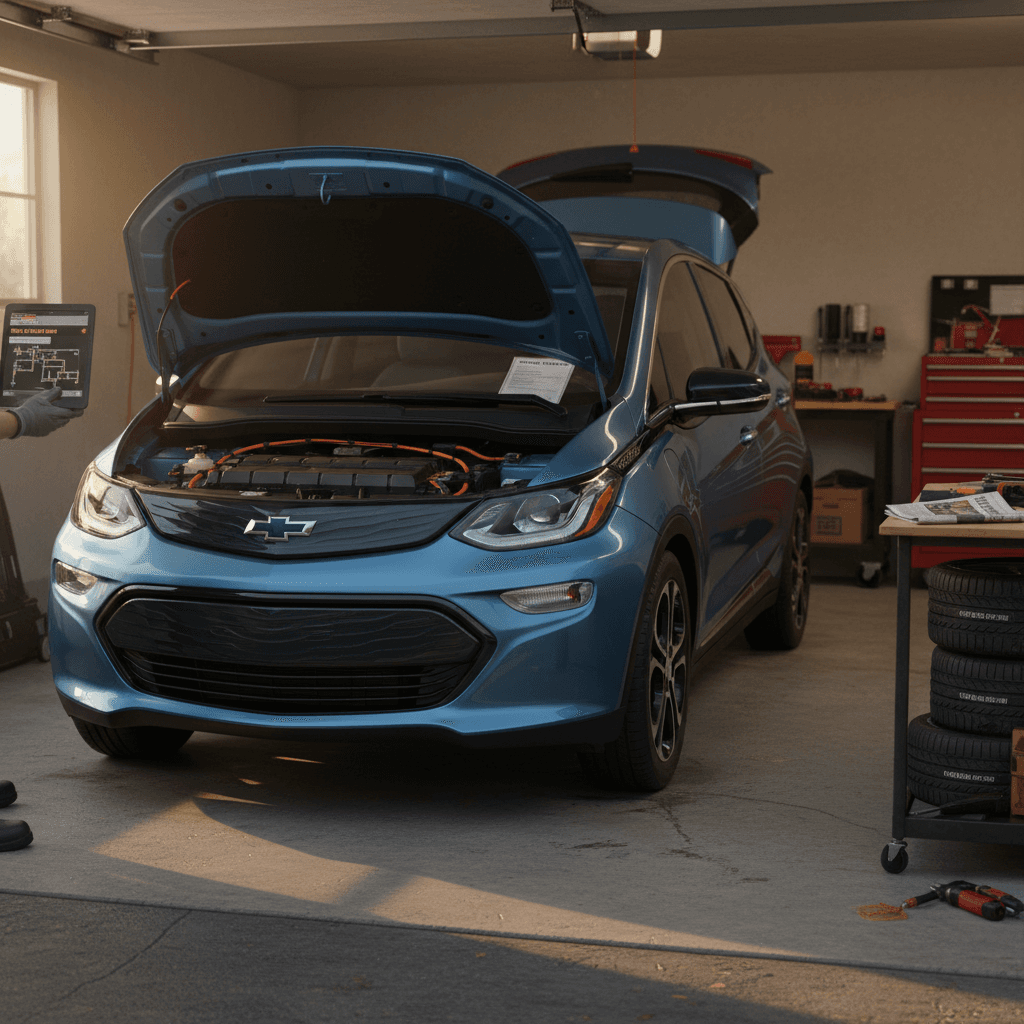
If you own, or are eyeing, a 2023 Chevrolet Bolt EV, you’ve probably heard about battery fires, software updates, and a tangle of recall campaign numbers. This guide pulls together the most important 2023 Chevrolet Bolt EV recalls into one clear list, then walks you through what each recall actually means for safety, everyday driving, and buying a used Bolt with confidence.
Why 2023 Bolts are different
2023 Chevrolet Bolt EV recall overview
From a recall standpoint, the 2023 Chevrolet Bolt EV sits at the tail end of the nameplate’s life. Production wrapped up in December 2023, and by then GM had already lived through the full storm of earlier Bolt battery fires and the sweeping 2017–2022 battery recall campaigns. For 2023 cars, the story shifts from wholesale battery replacement toward **targeted safety fixes**, seat belt fire risk, an airbag/electrical recall, and software and service campaigns designed to watch the battery more closely.
Chevy Bolt EV recalls in context
Quick 2023 Chevrolet Bolt EV recalls list
Here’s the high‑level 2023 Chevrolet Bolt EV recalls list you came for. Exact NHTSA campaign numbers can vary by build date and prior fixes, so always confirm with the VIN tools described later, but these are the big ones to know about:
Major recall & safety campaigns affecting 2023 Chevrolet Bolt EV
Summary of key recalls and safety campaigns that may involve 2023 Bolt EVs. Always verify against your VIN for exact applicability.
| Campaign / Type | Approx. Model Years Covered | Main Issue | Typical Fix for 2023 Bolt EV |
|---|---|---|---|
| High-voltage battery fire recall & follow-on software (multiple GM/NHTSA numbers) | Primarily 2017–2022; some 2023 cars use related diagnostic software | Battery manufacturing defects could cause thermal runaway and fire. Later campaigns added advanced diagnostic software to monitor packs. | 2023 cars are generally built with the updated pack design, but some see additional **battery diagnostic software updates** and monitoring strategies. |
| Seat belt pretensioner fire risk – NHTSA 22V930 | 2017–2023 Bolt EV | After a crash, hot exhaust gases from the front seat belt pretensioner can ignite carpet fibers. | Install protective foil and/or a pretensioner cover under the front seats to prevent carpet from catching fire. |
| Air bag / electrical system recall – NHTSA 23V567 | Select 2023 Bolt EV & EUV | Fault in airbag and/or electrical control may prevent proper deployment or trigger warnings. | Reprogram control modules and/or replace affected components once parts are available; work performed at no cost to owner. |
| Other software / calibration campaigns & TSBs | 2020–2023 Bolt EV/EUV | Various drivability, charging, and instrumentation issues handled via Technical Service Bulletins (TSBs). | Dealer installs updated software or components **when a symptom is present** or when GM flags an update for your VIN. |
This table is a starting point, use it alongside NHTSA and GM VIN lookups for your specific car.
Recall lists are VIN‑specific
Battery fire recall history and what it means for 2023 Bolts
You can’t talk about the Bolt without talking about **battery fires**. Earlier Bolt EVs, 2017 through 2022, were pulled into a massive high‑voltage battery recall after a series of thermal‑event fires traced back to manufacturing defects in LG‑supplied packs. GM’s first response was a combination of software limits and charging restrictions, followed by widespread **battery module replacements** on affected cars.
By the time the 2023 Chevrolet Bolt EV rolled off the line, GM had already revised pack production and quality controls. That means 2023 cars were not built with the same high‑risk pack configurations that drove the original recall. Instead, they’re more likely to see **advanced diagnostic software** and monitoring strategies inherited from that earlier campaign.
- Some owners see software that temporarily limits DC or AC charging to around 80% state of charge while the car logs data over several thousand miles.
- If the diagnostic software sees no concerning voltage behavior in the cells, full 100% charging is usually restored automatically after that monitoring period.
- These software campaigns are part of GM’s attempt to prevent another surprise wave of battery fires, and they can show up in the recall history of 2020–2023 Bolts.
What this means for a 2023 buyer
Seat belt pretensioner fire risk recall (22V930)
One of the most important line items on any 2023 Chevrolet Bolt EV recalls list is **NHTSA 22V930**, a seat belt pretensioner fire‑risk recall that spans 2017–2023 model years.
Seat belt pretensioner fire recall, explained
This recall sounds obscure, but the fix is simple and important.
What can go wrong
In a moderate or severe crash that triggers the front seat belt pretensioners, hot exhaust gases from the inflator can contact carpet fibers under the front seats.
In rare cases, that can ignite the carpet and start a small interior fire.
How GM fixes it
Dealers install a piece of protective foil or shielding, and in some cases a pretensioner cover, around the base of the front seat belt system to block hot gases from reaching the carpet.
The repair is quick and free.
What you should do
If a 2017–2023 Bolt EV hasn’t had this recall completed, schedule it as soon as possible. It doesn’t affect normal driving, but it matters in the exact moment you need the seat belts the most.
Quick check inside the car
2023 air bag & electrical system recall (23V567)
Another key item that appears in recall databases for the 2023 Chevrolet Bolt EV is **NHTSA campaign 23V567**, described as an air bag and electrical system recall. It affects a specific slice of 2023 Bolt EV and EUV production, so not every 2023 car is included.
What the 23V567 recall involves
- An electronic control fault can interfere with proper airbag performance, warning lights, or other safety‑critical functions.
- NHTSA lists this under both air bags and electrical system, which tells you the problem lives in the control electronics, not the bag fabric itself.
- Some owners see lingering "service" or airbag warnings while waiting for parts or a software remedy.
How dealers address it
- Diagnose affected modules using GM’s service software.
- Update control module software and, if necessary, replace the faulty module.
- Repairs are performed free of charge; in some early cases, parts availability delayed completion.
If a used 2023 Bolt you’re considering shows this recall as "open," plan on a dealer visit shortly after purchase.
Don’t ignore airbag warnings
Other Technical Service Bulletins (TSBs) for 2023 Bolt EV
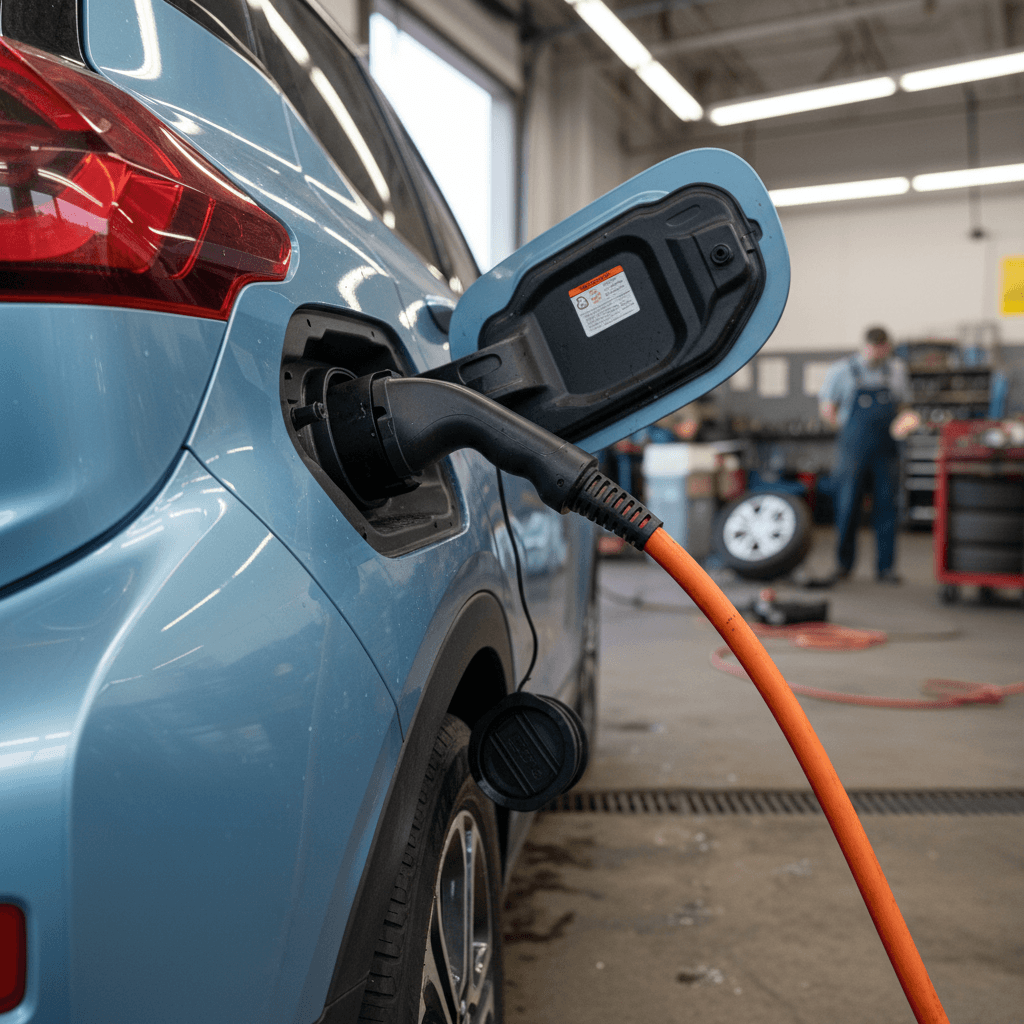
Beyond formal NHTSA recalls, the 2023 Chevrolet Bolt EV also has a stack of **Technical Service Bulletins (TSBs)** and internal campaigns. These aren’t recalls, but they matter when you’re chasing glitches or shopping for a used car that feels "sorted."
- Charging behavior updates that refine how the car handles AC and DC fast charging, temperature limits, or public‑station quirks.
- Infotainment and cluster updates that fix freezing screens, incorrect range displays, or odd warning messages.
- Drivetrain and battery‑management calibrations that smooth throttle response or reduce nuisance alerts.
TSB vs. recall: what’s the difference?
How to check if a 2023 Bolt EV has open recalls
Fortunately, you don’t have to memorize every campaign number. Every 2023 Chevrolet Bolt EV has a unique 17‑character VIN, and that VIN is the key to seeing a live, authoritative recall list.
Step‑by‑step: run a recall check on a 2023 Bolt EV
1. Find the full 17‑digit VIN
Look through the windshield at the base of the driver’s side of the windshield, check the driver’s door jamb label, or grab a photo of the title/registration. For online listings, ask the seller directly if it’s not shown.
2. Check the NHTSA recall tool
Go to the official NHTSA recall lookup and enter the VIN. This will show **all open safety recalls** that have not yet been completed on that specific car, including 22V930 and 23V567 if they apply.
3. Check GM’s owner/recall site
GM’s own recall portal or owner center can show a longer history: completed recalls, service campaigns, and sometimes extended warranties tied to prior battery fixes.
4. Ask the seller for recall paperwork
For a used car, ask for printed service records or digital invoices showing recall campaign numbers and completion dates. You’re looking for campaign codes that match what you saw in the VIN tools.
5. Call a Chevy EV‑savvy dealer
Give a Chevrolet service department the VIN and ask them to read you the open recalls and outstanding service campaigns. A dealer that sells and services EVs regularly is more likely to be up to speed on the Bolt’s history.
6. For extra peace of mind, get a third‑party inspection
If you’re serious about a used Bolt, consider an independent EV‑savvy inspection. They can confirm there are no active warnings, charging limitations, or signs of botched recall work.
How Recharged approaches recall checks
Ready to find your next EV?
Browse VehiclesShopping used: 2023 Bolt EV recall checklist
A 2023 Bolt EV can be a terrific used‑EV value, long range, DC fast‑charging, and a price that undercuts most newer competitors. But you want to be sure you’re not inheriting someone else’s unfinished recall homework. Use this short list when you’re cross‑shopping cars on a dealer lot, marketplace, or a site like Recharged.
Used 2023 Bolt EV recall & safety checklist
Confirm seat belt pretensioner recall completion
Ask the seller to show documentation for the 22V930 recall (or the equivalent GM campaign number) and visually check for shielding under the front seats.
Ask specifically about 23V567
If the VIN falls into the 23V567 range, make sure the airbag/electrical recall is marked "closed" in NHTSA and GM tools. If it’s still open, negotiate time or price to allow for dealer repair.
Review any battery‑related campaigns
Look for prior battery recall entries or advanced diagnostic software installs in the service history. Ask whether the car ever had an 80% charge limit and whether that’s still active.
Drive it and watch the warnings
On your test drive, make sure the instrument cluster is free of persistent "Service High Voltage System," airbag, or charging‑system warnings.
Test DC fast‑charging if possible
If there’s a convenient fast‑charger nearby, a quick session can reveal whether the car charges normally or behaves as if it’s still under restrictive software limits.
Get a modern battery health snapshot
A health report, like the battery portion of the <strong>Recharged Score</strong>, can show you current capacity in plain English and help separate "recall history" from the pack’s real‑world state today.
How recalls affect battery health & resale value
The Bolt’s recall history scares some shoppers away, and that’s exactly why a well‑documented 2023 Chevrolet Bolt EV can be such a good buy. The market tends to lump all Bolts together, even though late‑build 2023 cars were built after GM’s production fixes and have seen fewer serious battery issues.
When recalls are actually a positive
- A completed seat belt or airbag recall means the car has had a second safety check from a trained technician.
- Battery monitoring software can give early warning of issues long before you’d notice them in daily driving.
- Service records attached to a VIN make it easier to prove the car was cared for and kept current.
When recall history can hurt value
- Open or ignored recalls are red flags for lenders, insurers, and savvy buyers.
- Evidence that the car spent months at a dealer for unresolved battery issues can depress resale value.
- Lack of documentation makes it hard to separate a car that’s simply been updated from one that’s been trouble‑prone.
On Recharged, these factors flow into pricing and the Recharged Score so you can see how one 2023 Bolt EV stacks up against another in dollars and risk.
Use recall history as a bargaining chip, not a panic button
FAQ: 2023 Chevrolet Bolt EV recalls
Common questions about 2023 Bolt EV recalls
The bottom line on 2023 Bolt EV recalls
The 2023 Chevrolet Bolt EV carries the shadow of earlier Bolt battery fires, but its own recall record is more surgical than scandalous: a seat belt pretensioner fire fix, an airbag/electrical campaign for certain VINs, and ongoing software work to watch over the high‑voltage pack. A smart shopper doesn’t run from that history; they use it. With a clean recall record, solid documentation, and an up‑to‑date battery health snapshot, a 2023 Bolt EV can be one of the most rational used‑EV buys on the road.
If you’d rather not juggle VIN lookups, service invoices, and guesswork on your own, browsing 2023 Bolts on Recharged gives you a head start. Every car includes a Recharged Score Report that rolls battery health, recall status, and fair market pricing into one clear picture, so you can spend less time decoding campaign numbers, and more time deciding whether this compact electric hatchback fits the way you actually drive.