If you’re looking at a used flagship luxury EV, the 2023 BMW i7 is probably on your shortlist. It’s quiet, absurdly comfortable, and loaded with tech, but when you’re spending six-figure money (even used), reliability and long‑term durability matter just as much as the spec sheet. This guide breaks down 2023 BMW i7 reliability in plain English so you know what to expect before you buy, or what to watch if you already own one.
Quick take
2023 BMW i7 reliability overview
The 2023 BMW i7 launched as the all‑electric version of the 7 Series, using BMW’s latest eDrive architecture rather than an older converted gas platform. That’s good news for fundamentals like thermal management and battery packaging, both of which underpin long‑term reliability in an EV. The flip side: it’s packed with brand‑new hardware and software, from automatic doors to a 31‑inch rear theater screen and an interaction‑bar touch strip across the dash.
2023 BMW i7 reliability at a glance
First‑year model caution
Recall history and safety issues
Any realistic discussion of 2023 BMW i7 reliability has to start with recalls. As of early 2026, the i7 has been subject to numerous NHTSA recalls that cover both software and hardware concerns. Many of these are shared with other large BMWs that use the same platform and electronic architecture.
Major recall themes for the 2023 BMW i7
Always run a VIN check to see which recalls have been completed on a specific car.
| Area | Typical Symptom/Risk | Fix Type | Owner Impact |
|---|---|---|---|
| High‑voltage system / drive motor software | Potential loss of drive power due to software shutting down high‑voltage system | Software update (often over‑the‑air or dealer) | Inconvenient and potentially dangerous if it happens at speed, but fix is straightforward once applied. |
| Integrated brake system (ABS/DSC) | Loss of power brake assist or stability control in rare malfunction cases | Hardware replacement of integrated brake unit | High‑priority safety fix; verify completion before high‑speed driving. |
| Steering wheel ground / hands‑on detection | Driver‑assist may not recognize hands on wheel, affecting automatic emergency stop behavior | Inspection and reattachment of ground connection | Mainly affects advanced driver‑assist; not a core driving safety defect once repaired. |
| Interaction bar / HVAC & hazards | Defrost or hazard buttons may not work or illuminate correctly | Replacement of interaction bar module | Annoying and a regulatory compliance issue rather than a core safety failure. |
| Seats and air bags (specific configurations) | Improper seat welding or passenger air‑bag deactivation in certain seat packages | Inspection, software reflash, or seat structure replacement | Important if you have Executive Lounge or unique seating options, check documentation. |
Recall campaigns are typically fixed free of charge by BMW, but you want proof the work was done.
Non‑negotiable step before you buy
Common problems 2023 BMW i7 owners report
With any low‑volume luxury flagship, traditional reliability scores take time to build. What we do have from early i7 owners and forums is a clear pattern: most issues are not with the motors or battery, but with the layers of software and convenience features wrapped around them.
Typical 2023 BMW i7 problem areas
Based on early owner feedback, forum threads, and service bulletins.
Infotainment & connectivity
- eSIM and connectivity glitches (especially with certain carriers)
- Spotify or media apps freezing or cutting out
- Occasional need to reboot iDrive to restore services
Automatic doors & comfort features
- Soft‑close and automatic opening/closing not always acting consistently
- Door sensors misreading obstacles
- Sometimes resolved or improved with software updates
Wind noise & trim quirks
- Wind noise from side mirrors at highway speeds
- Rattles from rear cabin panels in a few cars
- Typically addressed via dealer adjustments rather than major repairs
Theater screen & rear tech
- Rear theater screen buffering or dropping connection
- In‑car streaming less reliable than on a tablet or phone
- Improving over time but still a common gripe for early adopters
Driver‑assist behavior
- Lane‑keeping and assisted driving can be conservative or overly cautious
- Occasional false warnings
- Not usually a safety defect, more of a refinement concern
Cold‑weather quirks
- Reduced range in winter (normal for EVs)
- Some reports of slower DC charging in very cold conditions
- Preconditioning helps but requires driver effort or planning
How to separate noise from signal
Battery health and range over time
So far, the 2023 BMW i7’s high‑voltage battery is holding up well in early ownership. BMW has years of EV experience from the i3 and iX, and the i7 benefits from a mature thermal management strategy and conservative usable capacity. That usually translates to slow, predictable degradation if the car is charged and driven reasonably.
- Most owners report only modest range loss in the first 2–3 years, often still near original EPA figures in mild climates.
- Frequent DC fast charging at high states of charge (80–100%) and regular high‑speed driving can accelerate degradation, as with any EV.
- The i7’s thermal management tends to protect the pack during fast charging, sometimes at the expense of peak charge speeds in extreme cold or heat.
- BMW’s high‑voltage battery warranty (typically 8 years / 100,000+ miles in the U.S., model and state dependent) covers excessive capacity loss, which helps de‑risk early adoption.
Why a battery health report matters
Software complexity and over‑the‑air updates
The i7 is as much a rolling software platform as it is a car. Over‑the‑air (OTA) updates let BMW fix bugs and add features after delivery, which is great, but it also means your experience can change over time, for better or worse.
Upside of OTA updates
- Fixes for connectivity, driver‑assist, and infotainment bugs can arrive without a dealer visit.
- BMW can patch recall‑related software (like certain HV and driver‑assist behaviors) quickly once validated.
- Feature refinements, charging logic, route planning, interface tweaks, can improve day‑to‑day usability.
Downside of software dependence
- Updates can occasionally introduce new quirks or regressions, especially in edge‑case use patterns.
- Some fixes still require dealer programming sessions, taking the car out of service for a few hours.
- Owners who defer updates may keep known bugs alive longer than necessary.
Best practice: treat updates like maintenance
Running costs and maintenance realities
Purely as an EV, the 2023 BMW i7 avoids many traditional failure modes, no engine oil, no spark plugs, no exhaust system, and a far simpler gearbox. But this is still a complex flagship sedan with air suspension, rear steering, extensive driver‑assist hardware, and a lavish interior. Those pieces can and do affect long‑term reliability and running costs.
Where 2023 i7 ownership costs show up
The powertrain is simple; the rest of the car is not.
Brake & suspension wear
- Regenerative braking reduces pad and rotor wear vs. gas 7 Series.
- Air suspension, rear‑steer hardware, and adaptive dampers are complex and costly if they fail out of warranty.
Climate & HVAC systems
- Heat pump and high‑voltage HVAC components are robust but expensive to diagnose and replace.
- HVAC‑related recalls or campaigns have already surfaced around interaction‑bar controls.
Body, glass & trim
- Frameless doors, large glass areas, and power‑assisted closure all add potential noise and alignment issues.
- Rattles or wind noise are usually fixable, but may require multiple dealer visits to perfect.
Charging equipment
- Onboard charger hardware has been largely trouble‑free so far.
- Most "charging issues" trace back to public station problems, not the car itself.
Connectivity & subscriptions
- eSIM and data services are recurring costs.
- Some features rely on active subscriptions, affecting perceived value if they lapse.
Depreciation
- Luxury EV flagships typically depreciate quickly, which is painful for first owners but creates opportunity for used buyers.
- Cars with clean software history and documented recall work tend to hold value better.
Why used buyers are in a sweet spot
Used 2023 BMW i7 buying checklist
If you’re considering a 2023 BMW i7 on the used market, you’re essentially buying a rolling flagship tech demo from the early 2020s. That can be a fantastic deal, as long as you verify the right things up front. Use this checklist to separate the keepers from the headaches.
Essential checks before you buy a 2023 BMW i7
1. Confirm recall and campaign completion
Ask the seller for a full BMW dealer service history and compare it against an NHTSA recall lookup. You want written proof that high‑voltage, brake, steering‑wheel ground, seat, and interaction‑bar campaigns have been completed.
2. Get battery health and charging data
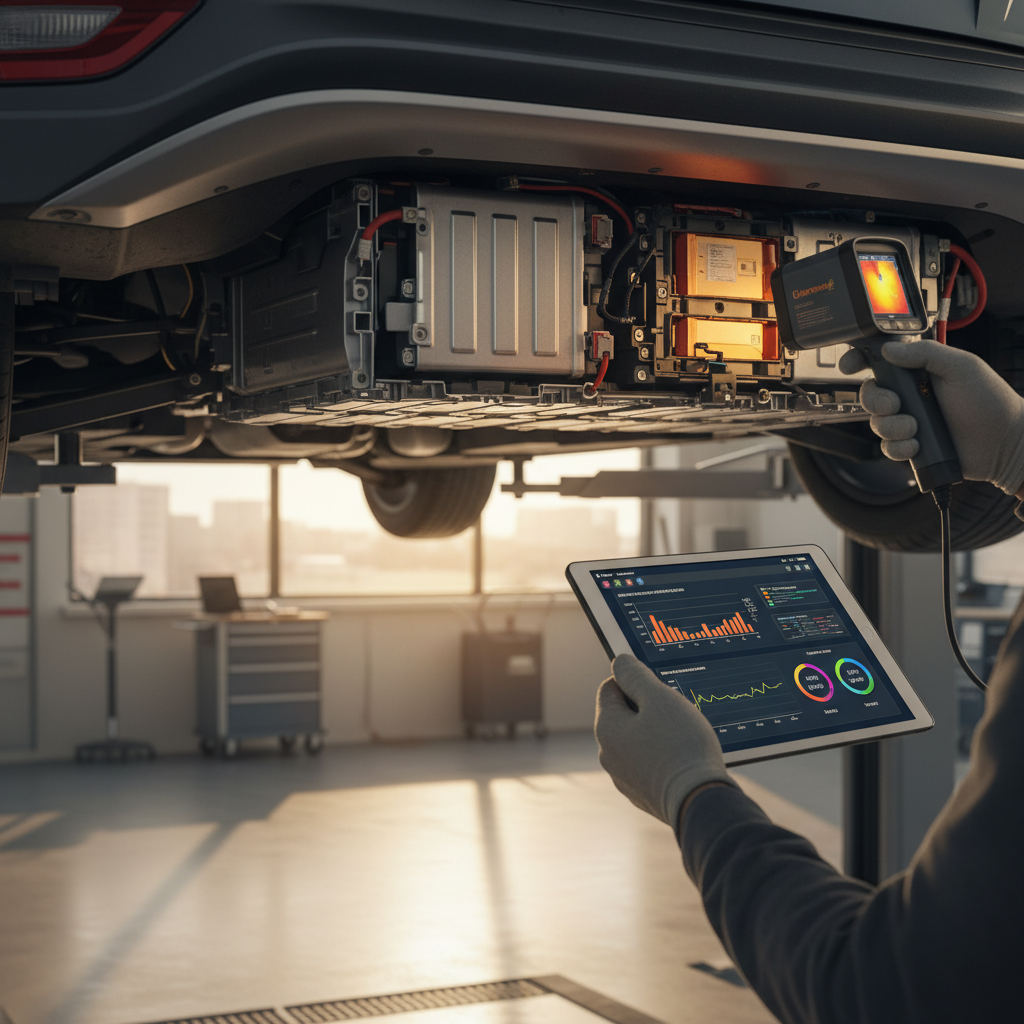
Have the car scanned with professional EV diagnostic tools to read battery state of health, DC fast‑charge counts, and any high‑voltage fault codes. A Recharged Score Report does exactly this so you’re not guessing about pack condition.
3. Test all advanced features
Spend real time with the car: automatic doors, soft‑close, interaction bar, rear theater screen, seat adjustments, massage, ambient lighting, driver‑assist, and parking aids. Flag anything flaky, luxury features are part of the value proposition and can be expensive to sort out later.
4. Drive at highway speed
On a smooth freeway, listen for wind noise around the mirrors and doors, and for any rattles from the rear cabin. Light wind noise is normal; whistling or obvious leaks may require glass or door adjustments.
5. Check charging behavior
If possible, DC fast‑charge the car once. Confirm that preconditioning works, the car reaches expected charge rates for its state of charge and temperature, and there are no sudden session dropouts attributable to the car.
6. Inspect tires, wheels, and alignment
The i7’s weight and power can be hard on suspension and tires. Uneven wear or vibration could hint at alignment issues, bent wheels, or past curb strikes, all of which matter on a big, heavy EV.
How Recharged can simplify this
How the 2023 i7 compares to other luxury EVs
In the ultra‑luxury EV space, the 2023 BMW i7 competes most directly with the Mercedes‑Benz EQS, Tesla Model S (especially in higher trims), and to some extent the Lucid Air. Each takes a different approach to the balance between minimalism, tech overload, and traditional luxury, and that shows up in reliability patterns.
2023 BMW i7 vs. rival luxury EVs: reliability angle
High‑level look at how the i7 stacks up against key alternatives from a reliability and ownership‑experience standpoint.
| Model | Reliability character | Biggest strengths | Watch‑outs |
|---|---|---|---|
| BMW i7 (2023) | Mechanically solid so far; recalls and software quirks typical of a first‑year luxury EV. | Quiet cabin, strong build feel, mature battery/thermal design, traditional luxury with modern tech. | Multiple recalls, complex comfort tech, occasional infotainment and connectivity issues. |
| Mercedes‑Benz EQS (early years) | Soft‑riding and tech‑heavy with mixed owner reports on software polish. | Superb ride comfort, low highway noise, distinctive interior. | Infotainment bugs, some fit‑and‑finish complaints, depreciation. |
| Tesla Model S (Plaid/refresh era) | Simple powertrain, very fast; more variable build quality and repair experience. | Robust fast‑charging ecosystem, strong efficiency, simple battery/drivetrain layout. | Service delays in some regions, interior squeaks/rattles, limited dealer network if you prefer traditional service. |
| Lucid Air (early production) | Extremely efficient, cutting‑edge tech from a young brand. | Outstanding range and efficiency, strong performance, airy cabin. | Young service network, software still maturing, parts lead times. |
Individual cars vary; a thorough inspection matters more than brand stereotypes.
Don’t shop by brand badge alone
Is the 2023 BMW i7 a good used buy?
Looking strictly at the powertrain, the 2023 BMW i7 is a reassuring car. The motors and battery pack have not generated waves of catastrophic failures, and BMW’s EV experience shows in stable thermal behavior and respectable early‑life degradation. The real reliability story is about software complexity, recall management, and the cost of repairing low‑volume luxury components if something does go wrong.
When a 2023 i7 makes a lot of sense
- You value quiet, traditional luxury with strong performance more than minimalist design.
- You’re buying used after the steepest initial depreciation.
- You can verify clean service history, completed recalls, and good battery health.
- You’re comfortable with software updates and the occasional visit to a BMW dealer for complex issues.
When you might want to look elsewhere
- You’re allergic to software glitches or don’t want to think about OTA updates at all.
- You live far from a BMW dealer and don’t want to travel for warranty work.
- You’d rather have simpler hardware and fewer comfort gadgets that can break.
- You’re extremely risk‑averse about first‑model‑year vehicles; a later‑build i7 or another EV might feel safer.
If you approach the 2023 BMW i7 as a highly sophisticated device rather than an old‑school sedan, its reliability picture comes into focus. The fundamentals, battery, motors, chassis, look solid. The noise comes from software, recalls, and the sheer number of comfort and convenience systems layered on top. A carefully vetted used example, backed by thorough battery diagnostics and documentation of recall work, can be a tremendous value in 2026. That’s exactly the niche Recharged is built for: taking the uncertainty out of used EVs so you can enjoy the upside of cars like the i7 without gambling blindly.