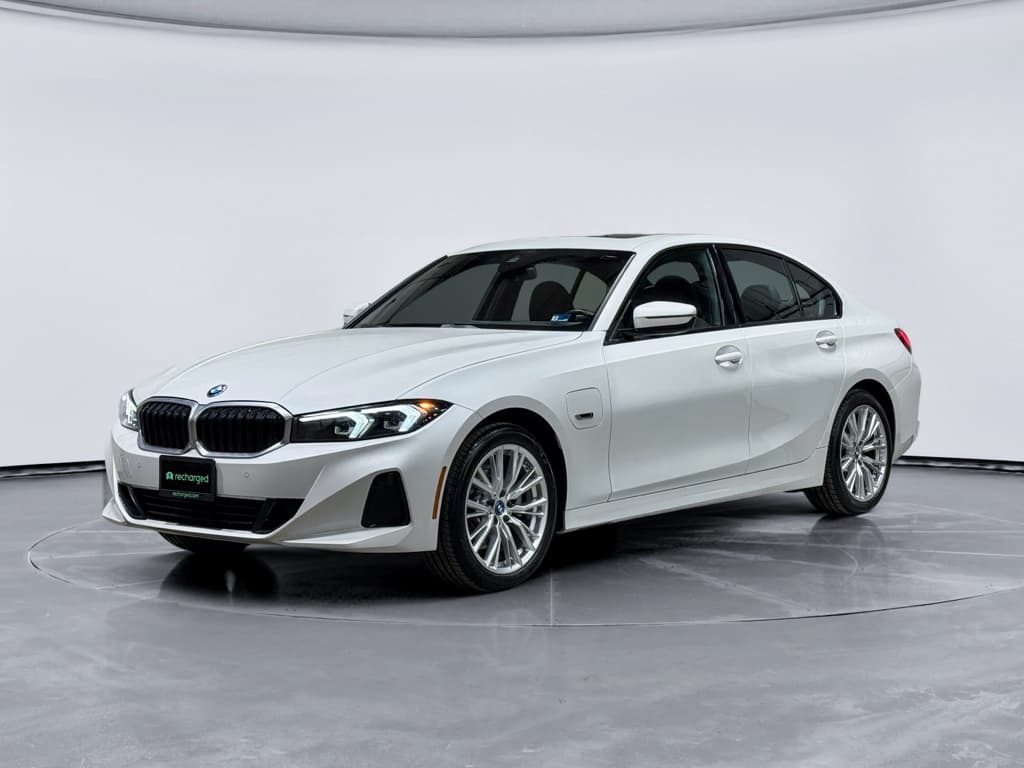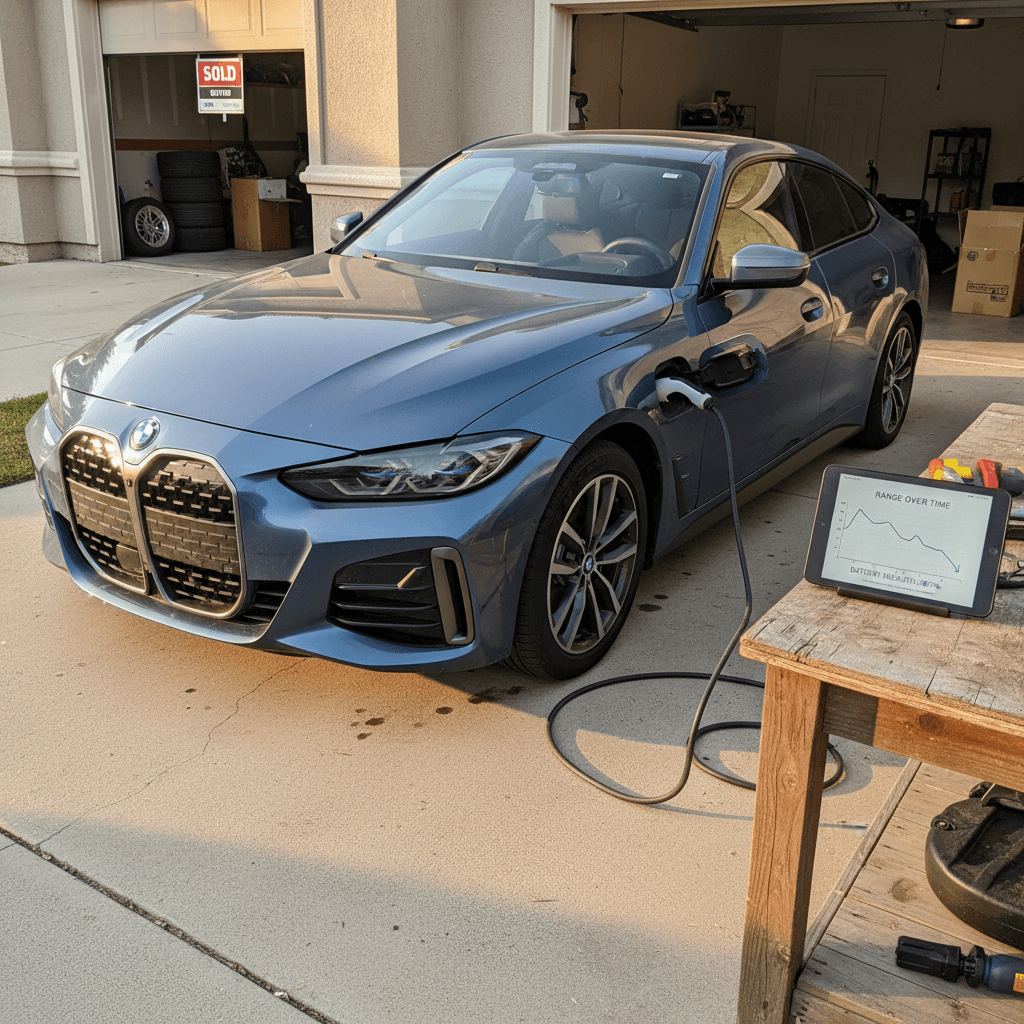
If you’re shopping for a comfortable, quick, and genuinely premium electric sedan, a used 2023 BMW i4 belongs near the top of your list. Two to three years in, early depreciation has already hit, but you still get modern tech, strong range, and plenty of battery warranty left. This 2023 BMW i4 review focuses specifically on the car as a used EV purchase, what it’s like to drive and live with, how the battery holds up, and what to watch for before you sign anything.
At a glance
Why the 2023 BMW i4 Makes Sense as a Used EV
What you get
- A true luxury EV with BMW-level fit, finish, and driving dynamics.
- Real-world range that can match or beat EPA ratings in many conditions.
- 8-year / 100,000-mile high-voltage battery warranty coverage still in force on 2023 models.
- Mature tech: the i4 launched for 2022, so 2023 cars benefit from early software updates and feedback.
Why used is compelling
- New-vehicle prices for the i4 climbed quickly; used 2023 examples now trade thousands below original MSRP.
- Most 2023 cars on the market are coming off leases or short-term ownership, often with low to mid mileage.
- EV adoption has accelerated, so there’s growing independent service and parts knowledge compared with launch year.
- Many rivals (especially legacy plug‑ins) can’t match the i4’s blend of range, comfort, and performance at similar used prices.
Key numbers for a used 2023 BMW i4
2023 BMW i4 trims and key specs
In 2023, U.S. buyers could choose from three main i4 versions: eDrive35, eDrive40, and M50. All are hatchback-style four-door “Gran Coupé” bodies with a low, coupe‑like roofline, but they differ in battery size, power, and range.
2023 BMW i4 trims compared (U.S. market)
Core specs for the 2023 i4 as they matter to used buyers. Exact figures can vary slightly with wheel size and options.
| Trim | Drivetrain | Power | 0–60 mph (approx.) | EPA range (approx.) | Battery gross capacity |
|---|---|---|---|---|---|
| eDrive35 | RWD, single motor | ~281 hp | ~5.8–6.0 s | ~256 miles | 70–71 kWh |
| eDrive40 | RWD, single motor | 335 hp | ~5.5 s | up to ~301 miles | ~81 kWh |
| M50 | AWD, dual motor | ~536 hp | ~3.7–3.9 s | ~245–270 miles | ~81 kWh |
Use this table to quickly see which 2023 BMW i4 trim best fits your performance and range needs.
Trim choice in one sentence
Range and efficiency in the real world
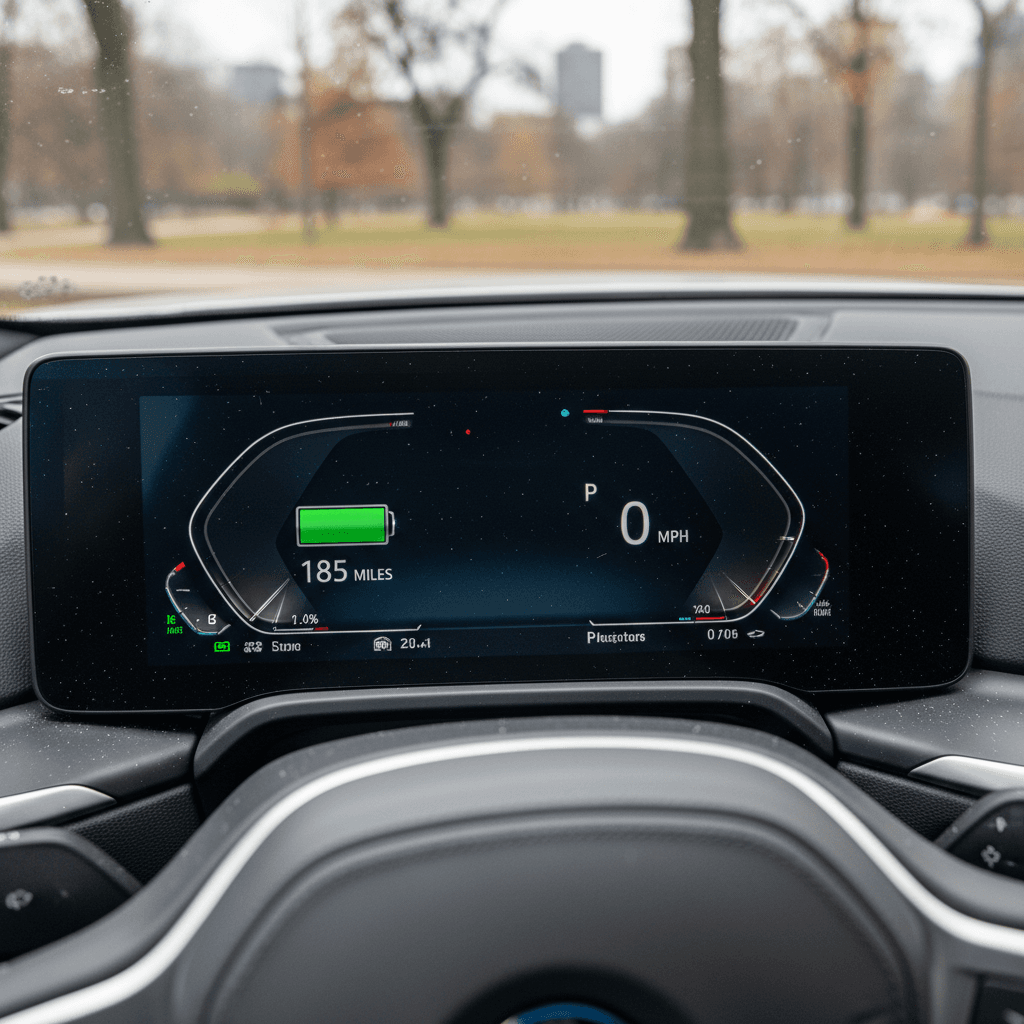
EPA ratings put the 2023 BMW i4 between roughly 256 and 301 miles of combined range depending on trim and wheel choice. In Recharged testing and owner reports, the car often comes surprisingly close to those numbers, and sometimes exceeds them, especially in eDrive40 and M50 form when driven reasonably.
- The eDrive35 offers mid‑200s range that’s adequate for commuting and moderate road trips if you plan charging stops.
- The eDrive40 on smaller wheels is the highway hero, capable of 270–300+ miles in good weather at U.S. interstate speeds.
- The M50 typically lands in the mid‑200s in mixed driving, but heavy acceleration or winter temps can knock that down.
Cold weather caveat
Charging experience: home and road trips
On AC power, all 2023 BMW i4 trims support up to about 11 kW Level 2 charging, which means you can effectively refill a depleted battery overnight on a 48‑amp home charger. DC fast‑charging performance is solid: under ideal conditions, BMW quotes roughly 30 minutes or less to go from 10% to 80% on a 150 kW+ charger, with peak rates well above 150 kW on compatible stations.
What charging a used 2023 BMW i4 feels like day to day
Home charging is easy; fast charging requires a bit more planning, like any non‑Tesla EV.
Home charging
With a 40–48 amp Level 2 charger, you can usually add 25–35 miles of range per hour. Overnight top‑ups from 20–80% are a non‑issue, even on the larger battery cars.
Public Level 2
At work or in public garages, expect 6–8 hours to go from near empty to full. For many owners, these stations are for topping off rather than full charges.
DC fast charging
The i4 works well on most major U.S. fast‑charging networks. As with any EV, speeds slow above ~60–70% state of charge, so plan shorter, more frequent stops on long trips.
Connector and adapter situation
Battery health and warranty coverage
Battery longevity is the heart of any used‑EV decision. For the 2023 BMW i4, there are two big safety nets: conservative battery management and a long factory warranty. In the U.S., the high‑voltage battery pack is typically covered for 8 years or 100,000 miles from the original in‑service date, whichever comes first. In some CARB states, emissions‑related coverage may stretch even longer, always confirm with the original warranty booklet for the specific car.
- BMW designs the i4’s pack with buffers at the top and bottom of usable capacity, helping slow long‑term degradation.
- Early owner data suggests modest initial capacity loss, then a long plateau, many 2022–2023 i4s show very little observable degradation at 20,000–40,000 miles.
- Rapid capacity loss beyond normal expectations is generally covered under the high‑voltage battery warranty, subject to BMW’s testing standards.
How to sanity‑check battery health on a used i4
Reliability, common issues, and recalls
As of 2026, reliability data for the 2023 BMW i4 is generally positive. Owner reviews frequently score the car highly for build quality, with most issues falling into software quirks and minor hardware problems rather than chronic drivetrain failures. Still, no EV is perfect, and you should know what to look for when buying used.
Common 2023 BMW i4 issues to watch for (used)
Most are manageable, but you don’t want to inherit someone else’s headache.
Software & infotainment bugs
Owners occasionally report glitches with BMW’s iDrive system, CarPlay/Android Auto connectivity, or driver‑assist alerts. Many of these are resolved through over‑the‑air or dealer software updates, so check that the car is on the latest version.
Recall campaigns
Some 2022–2024 BMW EVs (including the i4) have seen recalls around high‑voltage components, cooling, or airbag/software issues. Always run the VIN through BMW or NHTSA to confirm all recalls are completed before you buy.
HV battery cooling issues (rare)
A small number of owners report coolant leaks or components in the battery thermal system needing attention under warranty. These are not widespread, but a pre‑purchase inspection should check for any warning messages or stored fault codes.
Suspension & tire wear
The i4 is heavy and powerful, especially the M50. Expect higher‑than‑average wear on tires and potentially bushings or alignment if the car was driven hard. Uneven tire wear is a red flag.
Don’t skip a scan
Used pricing and depreciation trends
New, the 2023 BMW i4 carried luxury‑car stickers. On the used market in 2026, prices are far more approachable. Exact numbers swing with mileage, options, and local incentives, but broadly speaking you’ll see many 2023 i4s in the low‑to‑mid $30,000s for eDrive35/eDrive40 and upper $30,000s to low $40,000s for M50 with typical miles.
- Two‑ to three‑year‑old luxury EVs often hit a depreciation sweet spot where a large chunk of value is already gone, but tech and styling still feel current.
- High‑spec M50s tend to retain value slightly better than base cars, but they also started higher, so monthly payments can still be similar if you’re financing.
- Battery warranty remaining is a major pricing driver. A 2023 car with only 20,000 miles and 5+ years of coverage left is more desirable than a high‑miler with similar options.
Used i4 vs. new EV math
Which 2023 BMW i4 trim should you buy used?
Best all‑rounder: eDrive40
If your budget allows, the eDrive40 is the sweet spot for most used buyers. You get long range, brisk performance, rear‑wheel‑drive balance, and better efficiency than the M50. It’s a strong daily driver that can also handle long‑distance work.
Budget pick: eDrive35
The eDrive35 is compelling when it’s priced meaningfully below an eDrive40, think several thousand dollars, not a token discount. Range is lower but still workable for many commuters. Just be sure the smaller battery meets your winter and road‑trip needs.
Enthusiast choice: M50
If you care most about acceleration and all‑wheel‑drive traction, the M50 is the one. It gives you near‑M‑car performance with EV smoothness. Factor in higher tire costs and slightly more frequent charging stops on long trips due to lower efficiency.
Inspection checklist for a used 2023 BMW i4
Pre‑purchase checklist: 2023 BMW i4
1. Verify battery warranty start and end
Ask for the original in‑service date and confirm remaining <strong>high‑voltage battery coverage</strong>. A 2023 i4 sold new in late 2023 could be covered into 2031 under the 8‑year / 100,000‑mile warranty.
2. Check software and recall status
Have a BMW dealer or EV‑savvy shop check for <strong>open recalls and pending software updates</strong>. A car that’s current on campaigns is a safer bet and often drives better after updates.
3. Review charging history and habits
If possible, ask how the previous owner charged: mostly home Level 2 vs. daily DC fast charging. Frequent DC fast charging isn’t a deal‑breaker, but conservative home charging is easier on the battery long‑term.
4. Inspect tires, brakes, and suspension
Look for uneven tire wear, vibration, or pulling, signs of alignment or suspension issues. Confirm brake pads and rotors are in good shape; EVs often have low pad wear, but heavy M50 use can change that.
5. Test all driver‑assist and infotainment features
On the test drive, cycle through <strong>adaptive cruise, lane‑keeping, parking sensors, cameras, and infotainment features</strong>. Glitches may point to software or sensor problems that you’ll inherit.
6. Confirm charging speeds
If you can, plug into a reputable DC fast charger and a Level 2 station. Make sure the car connects quickly, ramps up to reasonable speeds, and doesn’t throw charging errors.
7. Look for water intrusion or hatch issues
Open the rear hatch and lift the cargo floor. Check for moisture, musty smells, or staining that could hint at leaks or prior damage. Verify the power hatch (if equipped) opens and closes smoothly.
8. Get a third‑party battery health report
Whenever possible, rely on <strong>independent diagnostics</strong>, not just the dashboard range estimate. At Recharged, every i4 comes with a Recharged Score Report that includes pack state of health and a detailed charging profile.
How Recharged evaluates used BMW i4s
Not all used EV inspections go deep enough on the thing that matters most: the battery. That’s why Recharged built the Recharged Score Report, a standardized way to compare used EVs, including the 2023 BMW i4, on battery health, value, and overall condition.
What you get with a Recharged BMW i4
Designed to take the guesswork and risk out of buying a used EV.
Verified battery health
We connect directly to the i4’s battery management system and other data sources to generate a battery state‑of‑health score, detailed charge history, and alerts if anything looks abnormal. You’re not guessing based on a single range reading.
Fair market pricing
Recharged compares each i4 against current market data, mileage, options, and battery health to arrive at transparent pricing. You see how the price lines up with comparable cars nationwide.
Expert EV inspection
Our EV‑specialist partners check for software updates, open recalls, charging‑system faults, and physical wear points that matter on a BMW i4, far beyond a standard combustion‑era used‑car check.
Digital buying, real support
You can shop, finance, and arrange nationwide delivery fully online, with EV‑savvy specialists ready to answer questions about trim choice, home charging, and long‑term ownership.
Ready to find your next EV?
Browse VehiclesWhy this matters for the i4
FAQ: Used 2023 BMW i4
Frequently asked questions about buying a used 2023 BMW i4
Bottom line: Is a used 2023 BMW i4 worth it?
If you want a luxury EV that still feels thoroughly modern but don’t want to absorb brand‑new pricing, a used 2023 BMW i4 is a compelling buy in 2026. It combines genuinely usable range, confident highway manners, and a refined cabin with the peace of mind of remaining battery warranty coverage. The key is to avoid guessing about battery health and software history, two areas where traditional used‑car shopping often falls short.
Target an eDrive40 if you care most about range, or an M50 if performance and all‑weather traction are the priority. Whichever trim you choose, take the time to verify warranty status, complete a thorough inspection, and insist on transparent battery data. Shopping through a platform like Recharged, where every i4 includes a Recharged Score Report, expert EV inspection, and support from EV‑savvy specialists, makes it far easier to enjoy the upside of buying used without losing sleep over what’s happening inside the pack.