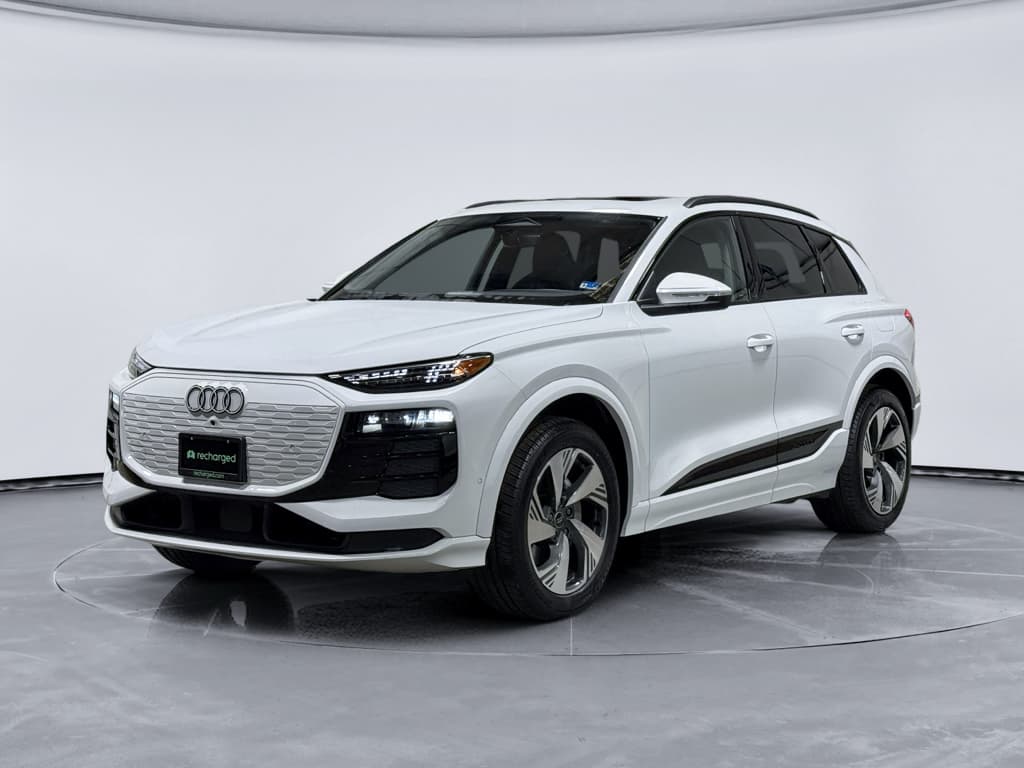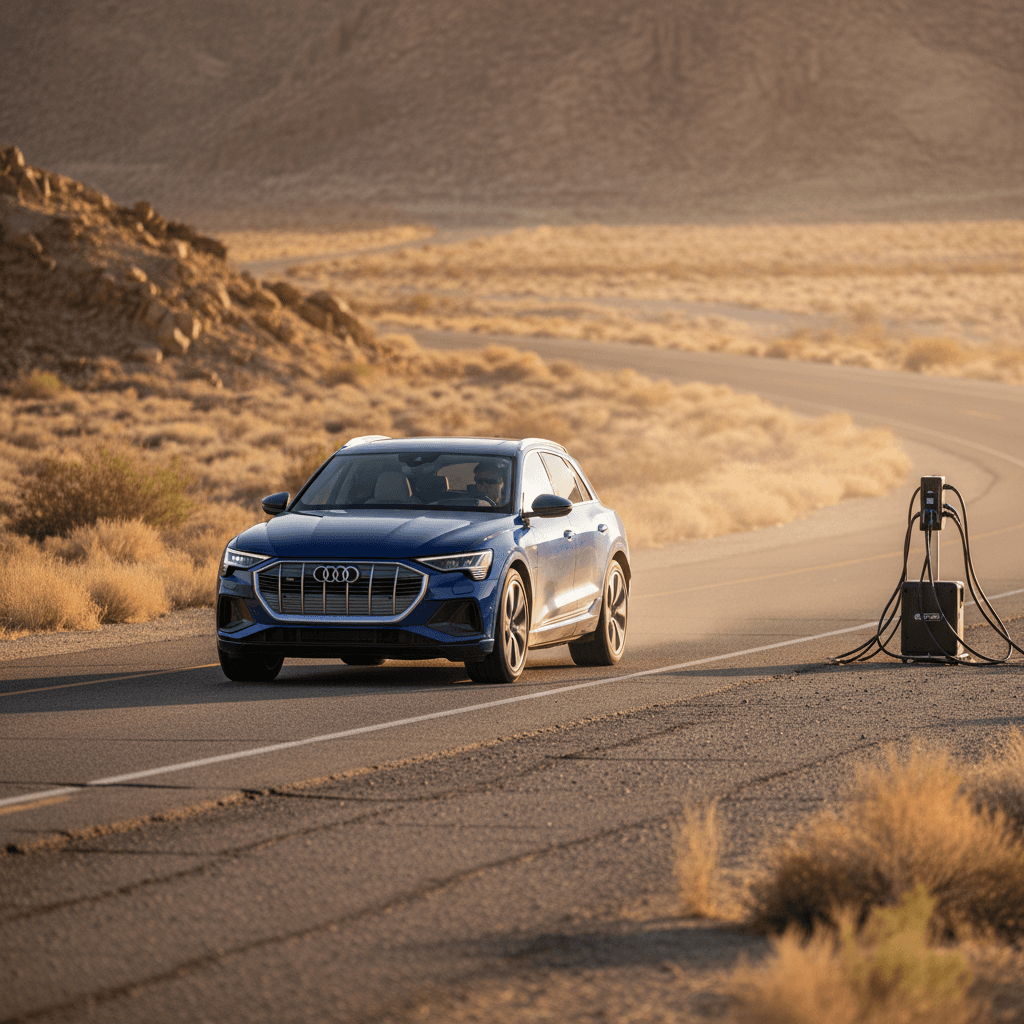
The 2023 Audi Q8 e-tron is what happens when a luxury SUV quietly goes electric but still has to do real SUV things: school runs, Costco raids, 300‑mile highway days. On paper, the Q8 e-tron’s range looks competitive; in the real world, it’s more complicated. This range test breaks down how far the big Audi actually goes in city, highway and winter driving, and what that means if you’re considering one, especially as a used EV.
Models covered in this range test
Why the 2023 Audi Q8 e-tron’s range really matters
The original Audi e-tron earned a reputation as the luxury EV that drank electrons like a V8 drinks premium. Huge comfort, modest range. The 2023 refresh into Q8 e-tron was supposed to fix that with a larger battery, better aerodynamics and more efficient motors. The result: WLTP figures over 500 km (300+ miles) for some trims, and U.S. EPA ratings in the low‑ to mid‑280‑mile range for the 55 models.
But those numbers live in a world of standardized test cycles and gentle drivers. In real ownership, you’re contending with 75–80 mph interstates, winter heaters, roof boxes and the aerodynamic nightmare that is a five‑passenger ski trip. That’s why a clear, grounded range test of the 2023 Q8 e-tron matters more than marketing claims, especially if you’re cross‑shopping it with a BMW iX, Mercedes EQE SUV or a Tesla Model X.
2023 Audi Q8 55 e-tron: headline range & efficiency
Battery specs and official range ratings
Before we get to real‑world numbers, it helps to understand what Audi actually built. The 2023 Q8 e-tron is essentially the second act of the original e-tron SUV, with a bigger battery and some careful tinkering under the skin.
- Battery: 114 kWh gross, 106 kWh usable on Q8 55 and SQ8 e-tron
- Architecture: 396 V lithium‑ion pack with improved cell chemistry and energy density
- Drivetrain: Dual‑motor AWD (quattro), 300 kW (408 hp) in the 55 models
- Official WLTP range (Europe): up to ~582 km SUV / ~600 km Sportback for 55 e-tron
- Typical EPA range (U.S.): roughly 265–285 miles depending on trim, wheels and body style
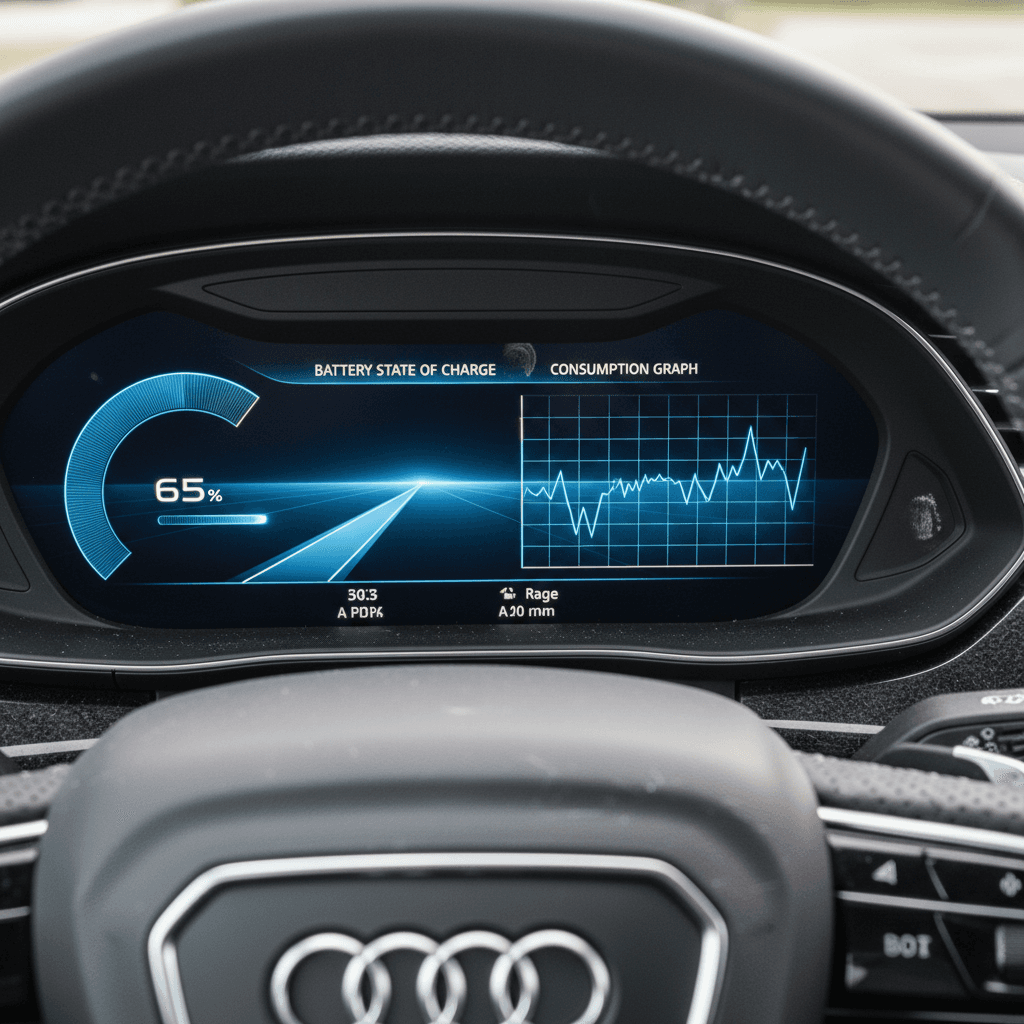
- Efficiency on paper: about 20–21 kWh/100 km on WLTP, equating to ~3.0–3.3 mi/kWh
Translated: the Q8 e-tron has a very large battery paired with only average‑to‑good efficiency. Audi’s engineers prioritized refinement and stability over brutal slipperiness. You can feel it in the way the car rides, and you can see it in the energy consumption readout.
Think in usable kWh, not just miles
Our 2023 Audi Q8 e-tron range test method
Different reviewers quote wildly different numbers for the Q8 e-tron. Some see nearly 300 miles; others barely crack 230 in winter. The truth depends heavily on how, and where, you drive. To cut through the noise, we’ll frame the Q8 e-tron’s range around three common American use cases and realistic assumptions.
Three real‑world range scenarios
How we think about the Q8 e-tron in daily life
1. Urban & suburban
Average speed: 25–35 mph
Environment: Grid traffic, stop‑and‑go, 35–50 mph arterials
Climate: Mild (55–75°F), light HVAC use
This is where EVs shine thanks to regen and low aero drag.
2. Highway commuter
Average speed: 65–70 mph
Environment: Mixed freeway and divided highway
Climate: Mild, steady cruise with a few on‑ramps
Closest to EPA assumptions, but real Americans tend to drive faster.
3. Winter road trip
Average speed: 70–75 mph
Environment: Cold temps, elevation changes, loaded with people and stuff
Climate: 20–35°F with cabin heat and seat heaters running
This is the worst case, and the real test of whether range is "enough".
About numbers in this article
Real‑world range results: city, highway and mixed
So, how far does the 2023 Audi Q8 e-tron actually go when you’re not babying it? Here’s what owners and independent tests broadly agree on for the 55 models with the big battery.
Estimated 2023 Q8 55 e-tron real‑world range
Approximate ranges for a healthy battery at 90–100% charge, moderate wheel sizes, and mild wind conditions.
| Scenario | Typical efficiency | Usable energy | Estimated real‑world range |
|---|---|---|---|
| City & suburban | 3.0–3.3 mi/kWh | 106 kWh | ~300–320 miles |
| Mixed driving (U.S. default) | 2.6–2.9 mi/kWh | 106 kWh | ~275–305 miles |
| 65–70 mph highway | 2.3–2.6 mi/kWh | 106 kWh | ~245–275 miles |
| 75+ mph interstate | 2.0–2.3 mi/kWh | 106 kWh | ~210–245 miles |
Your actual range will vary, but this table shows what most drivers see once the honeymoon period with EPA stickers is over.
Driven gently in town, the Q8 e-tron can flirt with or even exceed its EPA sticker. Stretch its legs at 75 mph, and you quickly discover the physics tax of moving a 5,500‑pound brick through the air. Still, a realistic 250ish miles at 70 mph from full to nearly empty is respectable for a big, square luxury SUV.
Sportback vs SUV: range difference
Winter and bad weather: how much range you lose
Cold weather is where the Q8 e-tron’s thirst shows. Multiple winter tests in the U.K. and northern Europe have pushed the 55 e-tron’s efficiency down toward 2.1–2.4 mi/kWh in near‑freezing conditions, with cabin heat, lights and wipers all humming away.
Moderate winter (30–40°F)
- Expect 15–25% range loss compared with mild weather.
- Highway range often lands around 200–230 miles from a full charge.
- Preconditioning while plugged in helps a lot.
Deep winter (sub‑freezing)
- Range losses of 25–35% are common on fast highway legs.
- Think 180–210 miles at 70–75 mph with a full cabin and cargo.
- Short city hops may actually be worse if the car keeps reheating a cold cabin.
Don’t plan winter range off the sticker
Efficiency explained: why the Q8 e-tron uses more energy
On a spec sheet, the 2023 Q8 e-tron looks competitive: big battery, decent drag coefficient, ultra‑refined powertrain. On a watt‑hour meter, it tends to land on the thirsty side of the luxury EV pack. Why?
Four big reasons the Q8 e-tron isn’t a hyper‑miler
Audi chose comfort and stability over absolute efficiency
1. Size & weight
The Q8 e-tron is roughly 5,500 lb before you add passengers. Moving that much mass up to speed, and stopping it again, costs energy, especially on rolling terrain.
2. SUV aerodynamics
Even with aero tweaks and a Cd as low as ~0.27, this is still a tall, bluff SUV. At American interstate speeds, aero drag dominates, so 75 mph feels very different from 65 mph on the efficiency graph.
3. Dual‑motor, always‑on AWD
That secure quattro feel comes from two asynchronous motors always ready to work. Great for traction; less great for eking out every last mile per kWh compared with some single‑motor rivals.
4. Comfort‑first tuning
Air suspension, big wheels, sound deadening, everything that makes the Q8 e-tron quiet and plush adds mass. Audi essentially built an electric Q7, not a lab experiment.
Where the Q8 e-tron shines anyway
Charging speeds and road‑trip viability
Range is only half the road‑trip story. The other half is how fast you can put energy back in. Here the 2023 Q8 e-tron lands in the "quietly competent" camp: it doesn’t chase huge headline peaks, but it sustains good power for longer than many rivals.
Charging performance: 2023 Q8 55 e-tron
Approximate times on a healthy pack under ideal conditions.
| Charging type | Power | Typical time | Energy added | Useful in practice |
|---|---|---|---|---|
| DC fast 10–80% | Up to 170 kW | ~30–31 minutes | ~74 kWh | Highway road‑trips; one stop can add ~180–220 miles in good weather |
| DC fast 20–80% | Up to 170 kW, tapering | ~25–26 minutes | ~64 kWh | More efficient road‑trip window if you don’t need the last 10% |
| Level 2 home (48 A) | ~11 kW | ~10.5–11.5 hours (0–100%) | ~106 kWh | Overnight refill from nearly empty |
| Level 2 public (40 A) | ~9.6 kW | ~12–13 hours (0–100%) | ~106 kWh | Destination charging at hotels, workplaces, shopping centers |
On a strong DC fast charger, the Q8 e-tron goes from "we really should stop" to "kids, grab snacks now" surprisingly quickly.
How to road‑trip a Q8 e-tron
How the Q8 e-tron compares to rivals
The Audi Q8 e-tron lives in a tough neighborhood. The BMW iX, Mercedes‑Benz EQE SUV and Tesla Model X all promise big range numbers and luxury cabins. The iX in particular tends to beat the Q8 e-tron on pure efficiency.
Range & efficiency vs key rivals (approximate)
Headline figures for popular 2023 luxury EV SUVs, focused on long‑range trims.
| Model & trim | Usable battery | EPA range (long‑range trim) | Typical highway efficiency | Real‑world 70‑mph range |
|---|---|---|---|---|
| Audi Q8 55 e-tron (SUV) | 106 kWh | ~280 mi | 2.3–2.6 mi/kWh | ~245–275 mi |
| Audi Q8 55 e-tron Sportback | 106 kWh | High‑280s | 2.4–2.7 mi/kWh | ~255–285 mi |
| BMW iX xDrive50 | ~105 kWh | ~305–324 mi | 2.7–3.0 mi/kWh | ~280–310 mi |
| Mercedes EQE SUV 350+ | ~90 kWh | ~279–300 mi | 2.7–3.1 mi/kWh | ~260–290 mi |
| Tesla Model X Long Range | ~95–100 kWh | 330+ mi | 2.8–3.2 mi/kWh | ~290–320 mi |
The Q8 e-tron usually trails the class‑leaders on miles per kWh, but stays competitive thanks to its big battery.
The pattern is clear: Audi shows up with a very large energy tank and drinks more of it per mile. On a road trip, you’ll stop slightly earlier than a Tesla or iX, and a bit more often. In day‑to‑day life, though, if you’re charging at home and mostly doing 40–80‑mile days, you’ll rarely bump into the limits.
Range tips for Q8 e-tron owners and shoppers
Seven ways to stretch your Q8 e-tron’s range
1. Dial back highway speed
Every 5 mph above 65 is a tax. Dropping from 78 to 70 mph can easily return <strong>20–30 extra miles</strong> of real‑world range in a Q8 e-tron.
2. Use Eco or Efficiency mode on longer trips
Audi’s drive modes subtly relax throttle response and HVAC settings. It doesn’t turn the car into a slug, but it does trim consumption on steady‑state drives.
3. Precondition while plugged in
Use the myAudi app or the car’s timer to heat or cool the cabin before you unplug. That energy comes from the wall instead of the battery, preserving range in hot or cold weather.
4. Be smart about wheels and tires
The big 21‑ or 22‑inch wheel packages look great but hurt efficiency. If you care about range, seek out Q8 e-trons on <strong>19‑ or 20‑inch wheels</strong> with all‑season tires.
5. Use regen proactively
Lift early instead of coasting forever and then braking hard. The Q8 e-tron’s regenerative braking is strong and can recapture a meaningful chunk of energy around town.
6. Watch your roof rack habit
A box, bike rack or ski pod can eat <strong>10–15% of highway range</strong> by wrecking airflow. If you’re not using it, pull it off.
7. Plan charging around 10–70%
For road‑trips, string together shorter charging stops between 10% and 70%. You’ll spend less time parked and more time covering ground, even if total range per stop is lower.
Buying a used Q8 e-tron: what to watch for
As early Q8 e-trons filter into the used market, range becomes more than a spec sheet number, it’s a health indicator. A well‑treated pack should still deliver very close to its original capacity after just a few years, but usage patterns matter. Lots of DC fast‑charging, constant 100% charges and hot‑climate storage can accelerate degradation.
How Recharged helps you shop by range
Range‑focused checks for a used Q8 e-tron
Questions to ask and numbers to look for
Check real‑world efficiency
On a thorough test drive, reset Trip B and drive a mix of city and highway for 30–40 miles.
- In mild weather, you’re hoping to see 2.6–3.0 mi/kWh.
- Significantly worse numbers could point to tire issues, heavy wheels or very aggressive driving history.
Look for consistent range estimates
Charge the car near full and check the projected range. Then take a modest drive and check again.
- Erratic swings can indicate that the previous owner drove very aggressively, or that the BMS needs time to relearn.
- That’s not necessarily a defect, but it’s worth discussing.
If you’re shopping remotely, a marketplace like Recharged can bundle all of this into a transparent report, so you’re not flying blind on what really matters in a used EV: how much battery, and range, you’re actually getting for your money.
2023 Audi Q8 e-tron range test: FAQ
Frequently asked questions about the 2023 Q8 e-tron’s range
Bottom line: is the 2023 Q8 e-tron’s range good enough?
If you come to the 2023 Audi Q8 e-tron expecting a hyper‑efficient range monster, you’ll be disappointed. This is not a Lucid Air on stilts. What it is, instead, is an electric Q7‑class SUV with a genuinely usable 250‑ish highway miles, quick and consistent fast‑charging, and a driving experience that feels thoroughly Audi.
For most households who charge at home and use public fast chargers mainly on trips, that’s more than enough. The key is going in with clear expectations: know that 75‑mph winter runs will bite hard into the sticker number, and that big wheels and roof toys are not your friends. If you can live with that, and you value refinement and familiarity over bleeding‑edge efficiency, the 2023 Q8 e-tron’s real‑world range is less a constraint and more a quiet competence.
And if you’re looking at one on the used market, that’s where Recharged can tilt the odds in your favor. With verified battery health data, transparent pricing and EV‑savvy guidance, you get more than a pretty spec sheet, you get a clear, honest picture of how far your Audi Q8 e-tron will actually take you.