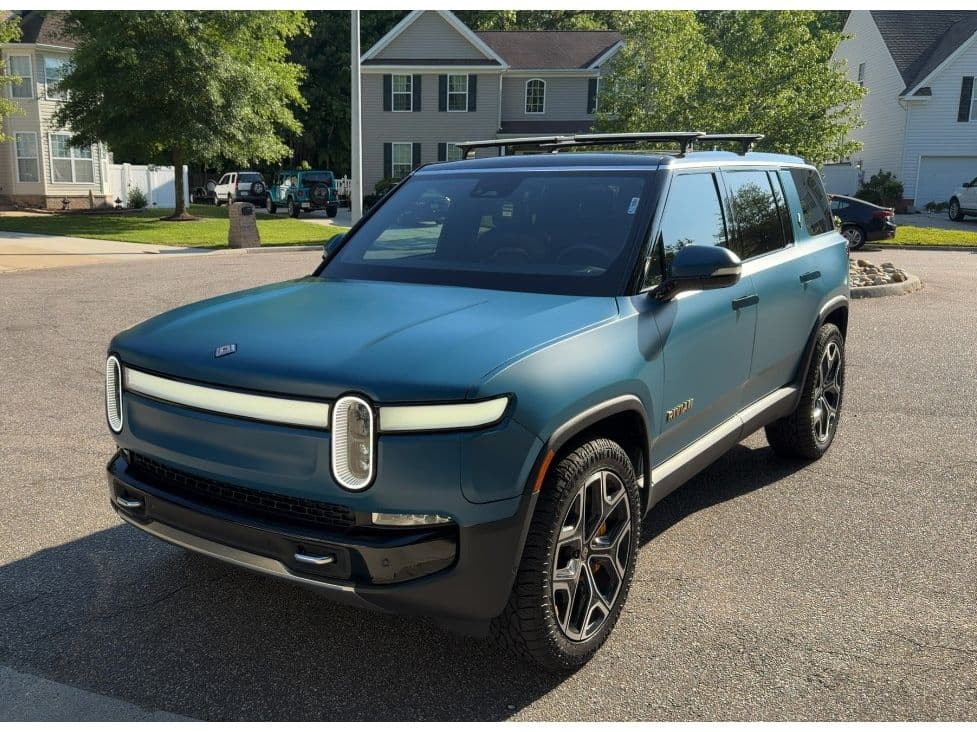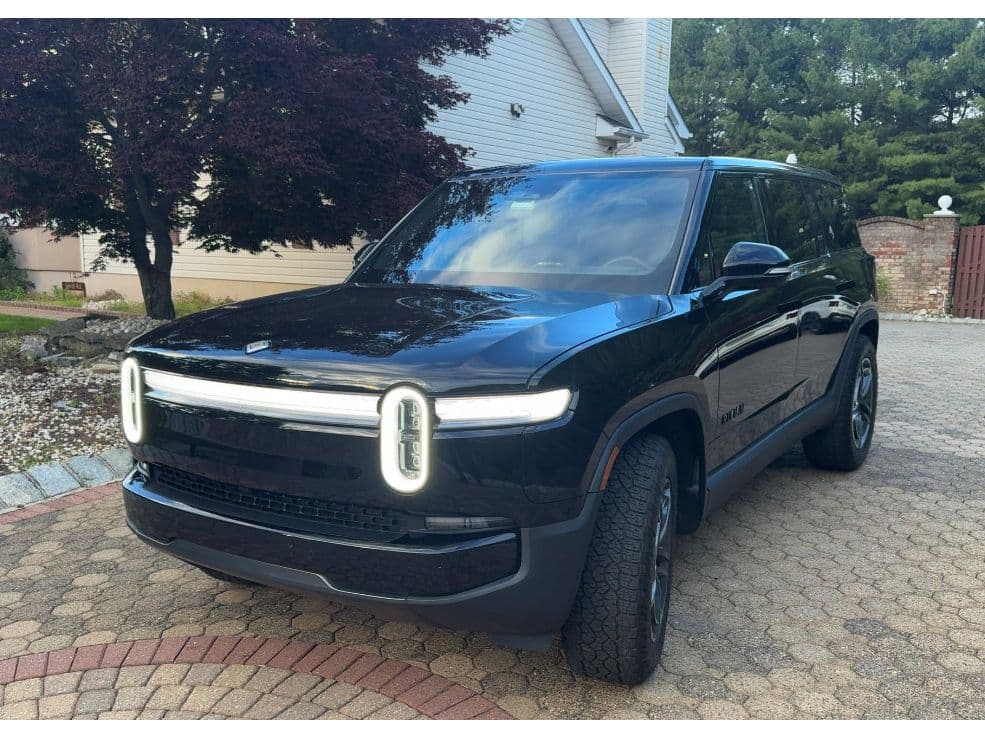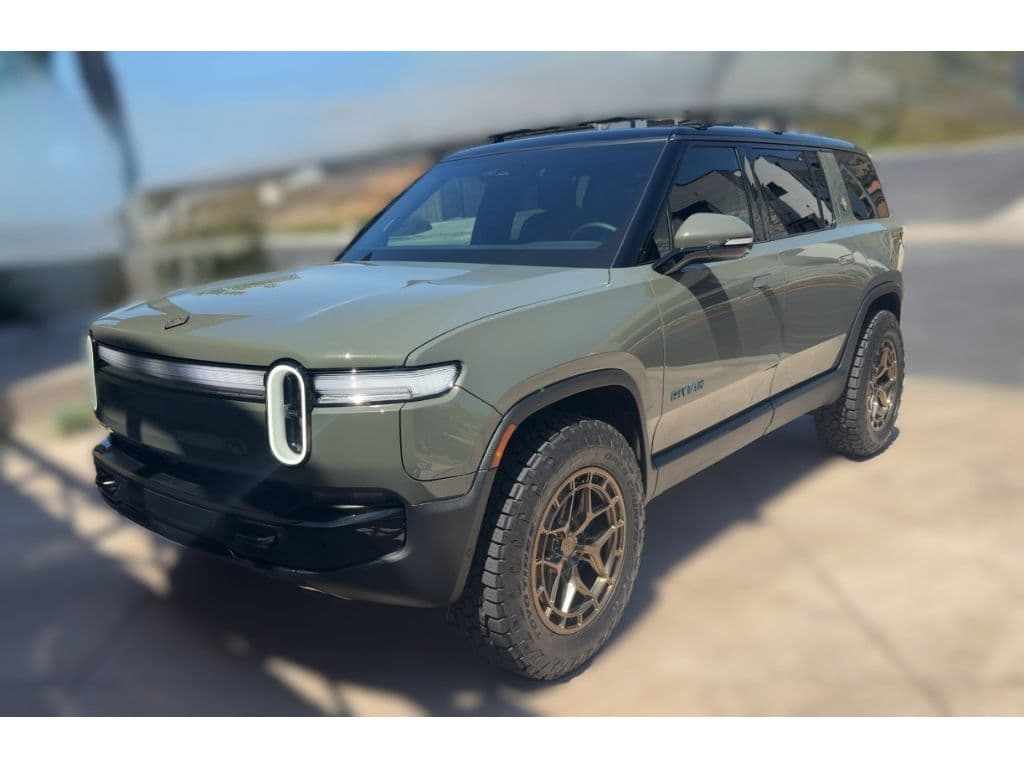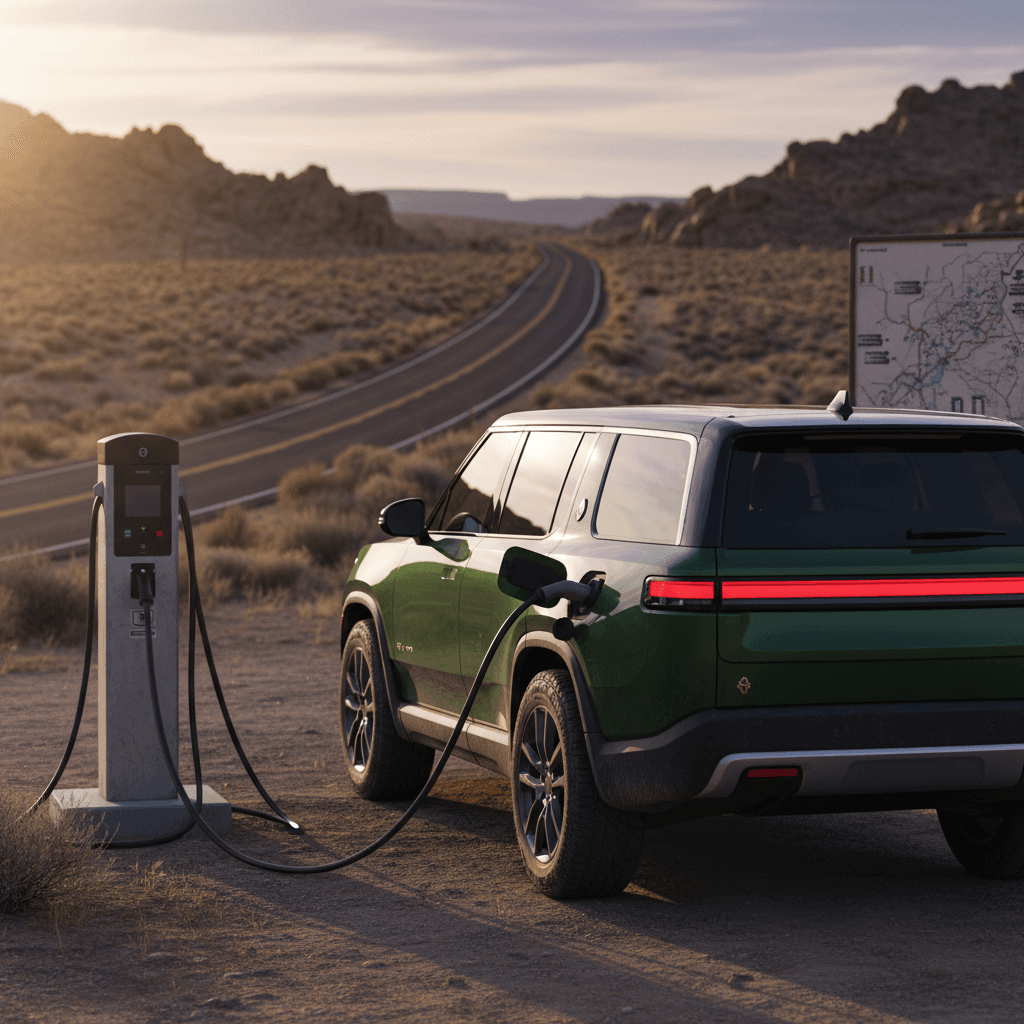
If you’re looking at a 2022 Rivian R1S, you’ve probably seen everything from 230 miles to 330 miles quoted as “real” range. That spread can make any buyer nervous. This guide walks through the most credible 2022 Rivian R1S range tests, how they compare to the EPA rating, and, most importantly, what you should expect in your own daily driving or on a road trip.
Quick range snapshot
Why 2022 Rivian R1S range tests matter
Range is the core promise of any large electric SUV. With the 2022 Rivian R1S, you’re buying not just a family hauler but also an adventure rig, something that can drive to the trailhead, hit the campsite, and get you home without drama. The challenge is that the R1S’s official EPA range figure doesn’t tell the whole story, especially once you factor in big all-terrain tires, higher highway speeds, and cold weather. That’s where independent range tests become incredibly valuable for shoppers, particularly if you’re considering a used R1S from a retailer like Recharged.
2022 Rivian R1S battery and EPA range basics
2022 Rivian R1S battery and range at a glance
What the spec sheet says before we get to real-world tests
Battery pack
The 2022 R1S Launch Edition and most early builds use Rivian’s "Large" pack, around 135 kWh total capacity. It’s a big, heavy pack tuned for range and performance.
EPA rating
With the Large pack and street-oriented tires, the 2022 R1S is rated at about 316 miles of EPA combined range, with efficiency in the high-60s MPGe.
Charging capability
An onboard OBC around 11.5 kW for Level 2 AC charging and DC fast charging peaks a little above 200 kW in ideal conditions, enough for fast road-trip stops.
Those numbers put the R1S among the longest‑range three-row electric SUVs of its era. But EPA tests are a mix of city and highway driving at relatively modest speeds in mild weather. To understand how far you’ll actually get on a charge, we need to look at controlled real‑world testing from outlets that publish their methodology.
Real-world range tests: Edmunds vs Car and Driver
Two of the most useful 2022 Rivian R1S range tests come from Edmunds and Car and Driver. They use very different approaches, which partly explains why their results look so far apart.
Key 2022 Rivian R1S range test results
How major outlets measured range on the same basic vehicle
| Outlet / setup | Test style | Wheels & tires | Measured range | EPA reference |
|---|---|---|---|---|
| Edmunds (2022 R1S Launch Edition) | Mixed real-world loop, moderate speeds, stop-and-go included | 20" wheels with all-terrain tires | ≈330 miles from full to empty | EPA 316 miles |
| Car and Driver (2022 R1S Large Pack) | Constant 75-mph highway loop | 22" road-biased tires | ≈230 miles at 75 mph | EPA 316 miles |
Different test loops and speeds explain why the 2022 R1S can show 230 miles in one test and 330 miles in another.
How to read these numbers
The big takeaway is that the 2022 R1S can beat its EPA rating in slower, mixed driving even on all‑terrain tires, but you should not expect anything close to 316 miles if you sit at 75–80 mph all day with a loaded vehicle. That’s not unique to Rivian, every EV pays a penalty at high speed, but the R1S’s size, boxy profile, and off‑road hardware amplify the effect.
City vs highway: how speed changes R1S range
Why the R1S looks great in city-heavy tests
EVs tend to shine in stop‑and‑go or mixed driving. Regenerative braking recovers energy every time you lift off, and speeds are lower so aerodynamic drag is modest. The R1S also has a sophisticated air suspension and efficient powertrain tuning, so in urban and suburban use it can get surprisingly close to its EPA number, sometimes even beating it like we saw in Edmunds’ test.
Why high-speed highway driving hurts
At 70–80 mph, aero drag dominates, especially for a tall, upright SUV with big tires and a roof box. Car and Driver’s 75‑mph highway loop produced about 230 miles on a charge, roughly 27% below the EPA rating. That’s the kind of drop you should plan around if most of your driving is long‑distance interstate cruising.
Don’t plan trips off the EPA number alone
Biggest range variables: tires, weather, and driving style
How common variables hit 2022 R1S range
On an electric SUV like the R1S, small decisions can add up to big swings in range. Here’s how the main variables interact:
- Tires and wheels: The 22‑inch street wheels are more efficient than the chunkier 20‑inch all‑terrain setup, but the difference is often smaller than people assume in mixed use. The big penalty comes at higher speed, where tall, aggressive tread blocks add drag and noise.
- Temperature: Cold batteries can’t accept or deliver energy as readily, and cabin heat is a major draw. That’s why a 40°F, rainy winter highway drive at 75 mph can feel like it “erases” 100 miles of rated range.
- Elevation and wind: Climbing long grades or driving into a stiff headwind can burn through energy shockingly quickly. You often get some back on the downhill, but not all of it.
- Payload and roof gear: Seven passengers, a packed cargo area, and a roof box all stack the deck against you. Extra weight matters most in stop‑and‑go; roof boxes matter most at speed.
Easy efficiency wins
How much range you can realistically expect
Realistic 2022 R1S range by driving pattern
Ballpark expectations for a healthy Large pack battery
Urban & suburban commuter
Profile: 20–60 miles per day, mix of surface streets and arterials, mild climate.
Expected usable range: 260–320 miles per full charge in good weather. You’ll rarely need the full pack, most owners just top up overnight.
Highway-heavy driver
Profile: 50–150 miles per day, frequent 70–80 mph highway stints.
Expected usable range: Typically 210–260 miles per full charge, assuming mild temps and no trailer.
Adventure & mountain use
Profile: Long climbs, mixed pavement and dirt, gear on board.
Expected usable range: Highly variable, but plan around 180–240 miles unless you’re willing to slow down and baby the throttle.
Planning buffer for road trips
Towing and off-roading: what happens to range
Rivian built the R1S to tow and go off‑road, but physics doesn’t care about marketing. Any time you add a big aerodynamic or rolling‑resistance load, your watt‑hours‑per‑mile figure spikes, and so does your anxiety if you didn’t plan ahead.
What to expect when you tow or leave the pavement
1. Towing can halve your range
Owners routinely report <strong>40–60% range loss</strong> when towing mid‑sized campers or enclosed trailers at highway speeds. A trailer with a high, flat front surface is the worst case, drag, not weight, is the main enemy.
2. Speed matters more than weight
Pulling a lightweight but tall trailer at 75 mph can be worse for range than a heavier but more aerodynamic load at 60 mph. If you’re towing in a 2022 R1S, slowing down is your single most powerful tool.
3. Off-road mode raises the body
Lifting the suspension to clear rocks is great for capability but bad for aero. Planning a day of trail running? Expect a substantial hit vs. the same distance on pavement, and give yourself a margin for detours.
4. Soft surfaces increase rolling resistance
Driving sand, mud, or deep snow can be brutally inefficient. Your consumption might double compared with the same distance on tarmac, so never head into remote areas without an exit plan and extra buffer.
5. Regen isn’t a magic battery
Low‑speed crawling on steep descents will give some energy back, but the gains don’t come close to canceling out the energy you spent on the climb up. Think of regen as a discount, not a refund.
Be conservative off the grid
Charging strategy: making the most of your pack
Range is only half the story; how and where you charge your R1S matters just as much to real‑world usability. The 2022 model’s 11.5 kW onboard charger and ~200+ kW DC capability give you a lot of flexibility, and smart planning makes that 135‑kWh pack feel smaller and more manageable.
- Home Level 2 is your foundation: A 48‑amp (roughly 11.5 kW) Level 2 charger can add about 25–30 miles of range per hour, refilling an average day’s driving in just a couple of hours overnight.
- On road trips, charge in the middle: DC fast chargers add energy fastest when the battery is between roughly 10–60%. It’s often quicker overall to stop more frequently for short sessions than to wait from 10–90%.
- Use preconditioning for cold weather: Warming the pack before a DC fast session can significantly reduce charge times in winter. Pre‑condition while navigating to the charger whenever possible.
- Know your networks: The 2022 R1S uses the CCS standard, so you’ll rely on networks like Electrify America, EVgo, and others. As NACS access expands, adapters will open up more of Tesla’s Supercharger network.
Buying used? Factor in your home setup
Used 2022 Rivian R1S: what range tests mean when you’re buying
When you’re cross‑shopping used EVs, range tests are less about chasing a headline number and more about understanding whether the vehicle fits your use case with some battery aging baked in. A 2022 R1S is now a few years old, so you should expect some degree of degradation, even if Rivian’s pack design has proven robust so far.
Questions to ask about a used 2022 R1S
- How was it used? Short commutes in a mild climate are easier on the battery than constant fast‑charging in extreme heat or cold.
- What wheels and tires are fitted now? An R1S on all‑terrain tires will behave differently than one on 21" street wheels.
- Has the owner done recent road trips? Their last highway energy‑use numbers can tell you more than the EPA label.
How Recharged approaches range and battery health
Every EV listed on Recharged comes with a Recharged Score Report that includes battery diagnostics and a transparent look at pack health. Instead of guessing based on a 2022 range test done on a brand‑new Rivian, you see how that specific vehicle’s battery is performing today. Our EV specialists can also help you match a used R1S to your daily miles, towing plans, and charging setup.
Range-focused checklist for buying a used 2022 R1S
1. Define your worst-case day
Think about your longest regular drive, maybe a weekly 180‑mile client visit or a 150‑mile ski day in winter. Make sure a realistic R1S range (not the EPA number) covers that with at least a <strong>20–30% buffer</strong>.
2. Check current efficiency data
Ask the seller, or your Recharged specialist, for recent <strong>Wh/mi or mi/kWh data</strong> from the trip computer over a few hundred miles. It’s the best window into real‑world consumption for that vehicle.
3. Consider climate and elevation
A 2022 R1S in Phoenix will live a different life than one in Vermont. If you regularly face cold starts, long climbs, or deep snow, mentally discount headline range numbers by another <strong>10–20%</strong>.
4. Inspect tires and aero add-ons
Aggressive all‑terrains, lift kits, light bars, and roof accessories all nibble away at range. None are deal‑breakers, but they’re reasons to adjust your expectations downward.
5. Review battery health info
On a platform like <strong>Recharged</strong>, use the battery health data in the Recharged Score to see how much usable capacity remains and whether it aligns with your needs.
2022 Rivian R1S range test FAQ
Frequently asked questions about 2022 Rivian R1S range tests
Bottom line: is the 2022 Rivian R1S range good enough?
Taken together, the major 2022 Rivian R1S range tests paint a consistent picture. In gentle mixed driving, this big three‑row SUV can match or even beat its 316‑mile EPA rating. At sustained 75‑mph highway speeds, you should expect something closer to 230 miles per charge, less in winter, with a trailer, or with a roof box. That’s not a flaw unique to Rivian; it’s just how physics treats a tall, heavy, powerful EV.
If your life is built around home Level 2 charging, trips under 200 miles between DC fast chargers, and only occasional heavy towing, the 2022 R1S’s real‑world range is more than sufficient, and its combination of performance, off‑road ability, and practicality is hard to match. When you shop through Recharged, the Recharged Score Report and EV‑specialist guidance turn abstract range tests into concrete expectations for your specific lifestyle, so you can buy a used R1S with eyes wide open and adventures already in mind.