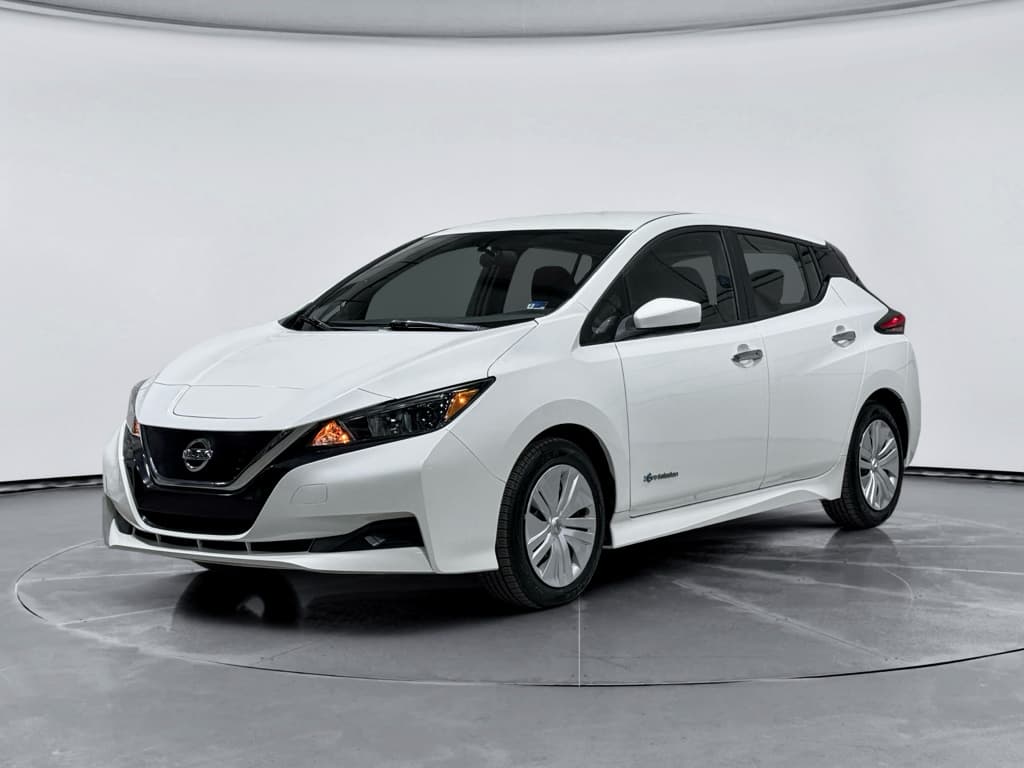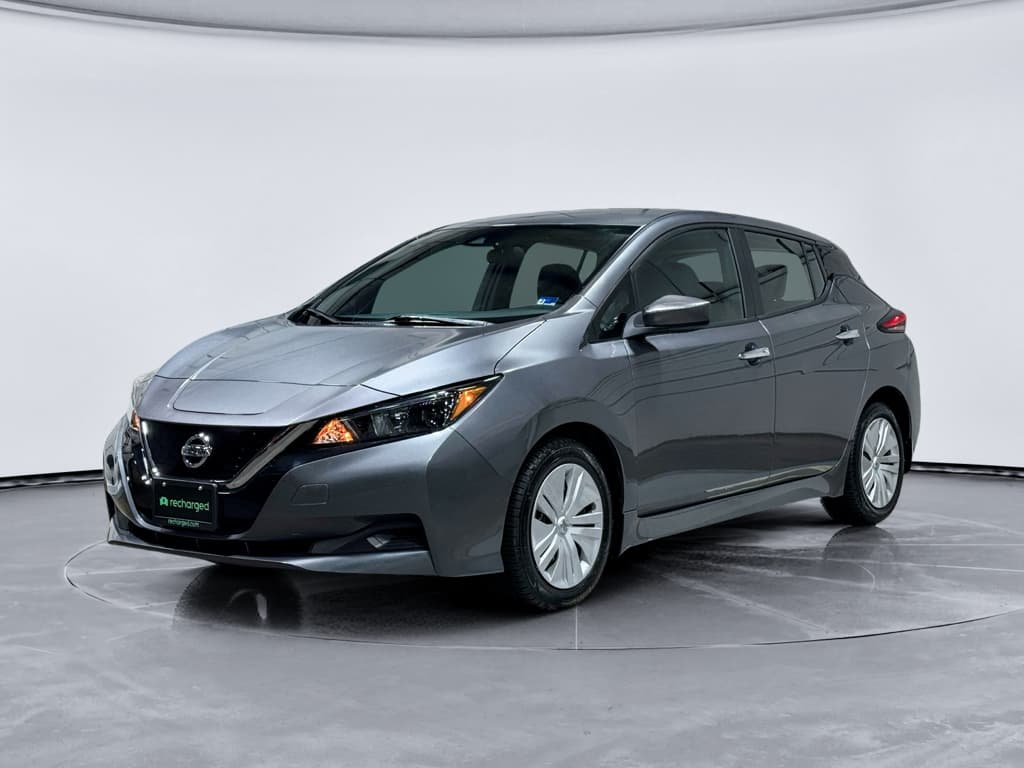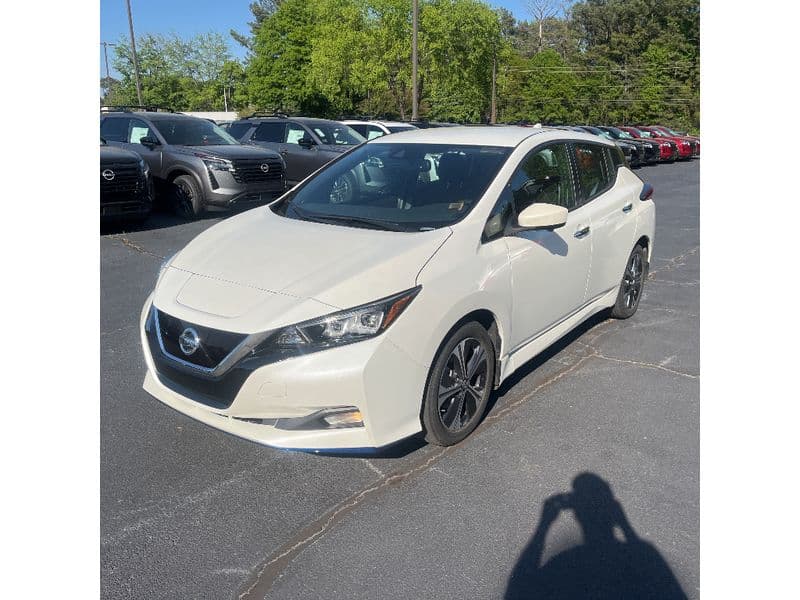
If you’re looking at a 2022 Nissan Leaf, especially on the used market, you’ve probably noticed a big spread between the EPA numbers and what owners report on the road. This 2022 Nissan Leaf range test guide breaks down how far you can really drive on a charge, how the 40 kWh and 62 kWh packs compare, and what changes once the car has a few years and miles on it.
Two Leaf batteries, two very different use cases
2022 Nissan Leaf range at a glance
2022 Nissan Leaf EPA‑rated range & efficiency
Nissan offered two basic 2022 Leaf configurations. The regular Leaf S and SV use a 40 kWh battery and a 147 hp motor. The Leaf Plus models, S Plus, SV Plus and SL Plus, step up to a 62 kWh pack and a 214 hp motor. On paper that adds 60–70 miles of range, but in real‑world testing the difference can feel even bigger, especially at U.S. highway speeds.
2022 Nissan Leaf EPA range and efficiency
Official EPA numbers are a useful baseline, but your real‑world range will vary with speed, temperature, and terrain.
| Model | Battery | EPA combined range | City MPGe | Highway MPGe |
|---|---|---|---|---|
| Leaf S / SV | 40 kWh | 149 miles | 123 MPGe | 99 MPGe |
| Leaf S Plus | 62 kWh | 226 miles | 118 MPGe | 97 MPGe |
| Leaf SV Plus / SL Plus | 62 kWh | 215 miles | 114 MPGe | 94 MPGe |
EPA‑rated range is a starting point, not a guarantee.
CHAdeMO fast‑charging limitation
EPA range vs real‑world tests
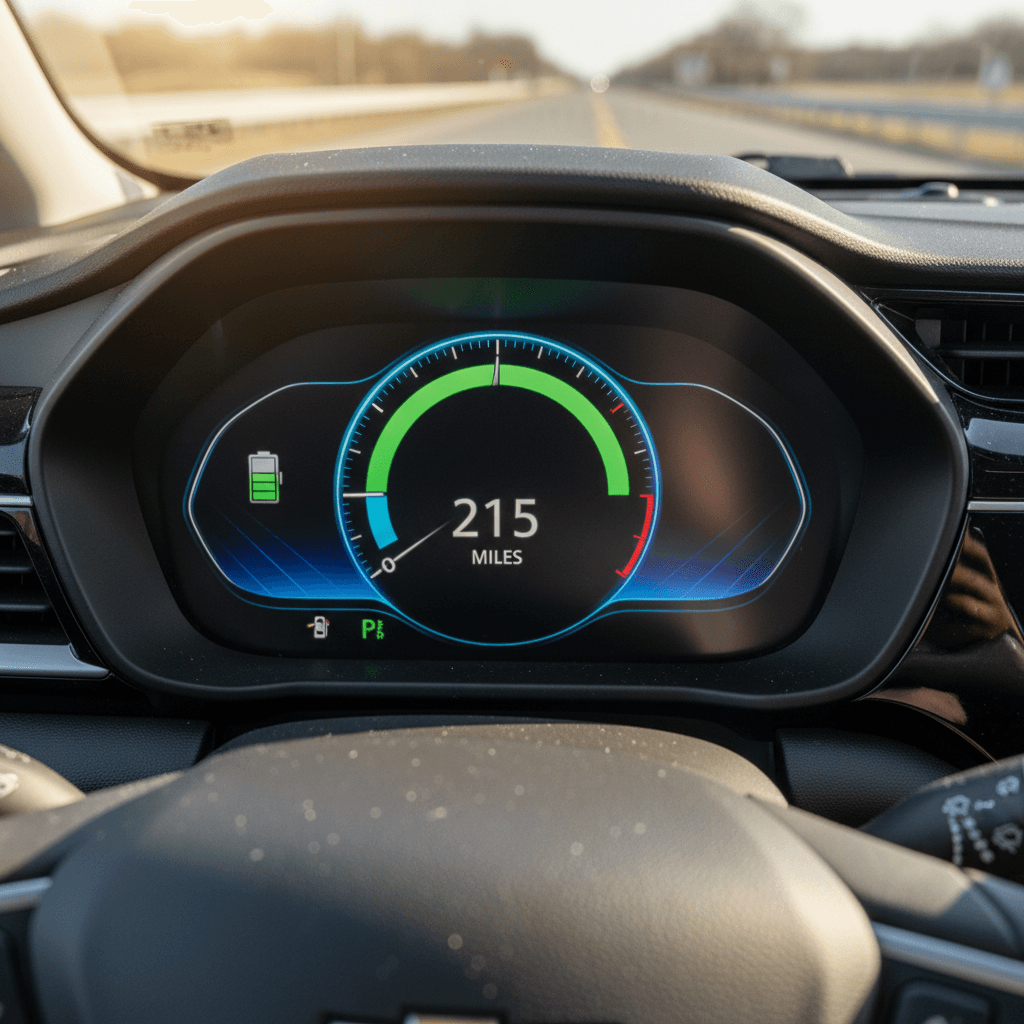
Every EV sold in the U.S. goes through the EPA’s standardized test cycles, which mix city and highway driving at moderate speeds and mild temperatures. The 2022 Leaf does well there: up to 215–226 miles for the 62 kWh pack and 149 miles for the 40 kWh pack. But the EPA cycle doesn’t look much like a real‑world U.S. highway drive at 70–75 mph with climate control running.
What the EPA test assumes
- Moderate average speeds, limited time above 65 mph
- Mild temperatures and no strong headwinds
- Mixed city driving with lots of regenerative braking
- Relatively gentle acceleration and braking
How most owners really drive
- 70–75 mph cruising on interstates, often for hours
- Heat or A/C running much of the year
- Loads of passengers, cargo, or roof racks
- Hills, stop‑and‑go traffic, and weather extremes
In independent highway testing at a steady 75 mph, Leaf Plus models have consistently delivered around 180 miles of range, about 85% of their 215‑mile EPA rating.
That 80–85% rule of thumb is a good way to mentally translate EPA range into realistic highway expectations for the 2022 Leaf: take the number on the window sticker and assume you’ll comfortably use about four‑fifths of it at typical U.S. highway speeds.
Highway range test: 70–75 mph results
Let’s focus on the scenario that exposes the Leaf’s weaknesses most clearly: sustained highway driving around 70–75 mph. That’s where aerodynamics and the Leaf’s relatively modest battery cooling strategy start to bite.
Realistic highway range expectations for a healthy 2022 Leaf
Assumes mild weather, relatively flat terrain, and a battery in good condition.
40 kWh Leaf S / SV
EPA: 149 miles
Expected at 70–75 mph: ~110–120 miles before you’ll want to charge.
Good for shorter hops between cities, but you’ll be stopping often on long trips.
62 kWh Leaf S Plus
EPA: 226 miles
Expected at 70–75 mph: ~180 miles of usable range, similar to independent 75‑mph tests.
Enough to skip a charger or two vs the 40 kWh car.
62 kWh Leaf SV+/SL+
EPA: 215 miles
Expected at 70–75 mph: ~170–180 miles, depending on wind, temps and load.
Slightly heavier trims give up a few miles vs S Plus.
What owners report at 70–75 mph
If you routinely drive 250–300‑mile highway days, the 62 kWh Leaf is workable with one or two fast‑charging stops. The 40 kWh car will demand more frequent, longer stops and is better suited to regional use than true cross‑country travel.
City and mixed driving: where the Leaf shines
In urban and mixed driving, the 2022 Leaf behaves very differently. Speeds are lower, you spend more time coasting or braking, and the car’s strong regenerative braking can claw back a lot of energy that would be lost in a gas car. Here, many owners find they can match or even beat the EPA numbers with a light right foot.
Typical real‑world city results
- 40 kWh: 4.0–4.5 mi/kWh is common in temperate weather
- 62 kWh: 3.6–4.2 mi/kWh with careful, smooth driving
- Lots of stop‑and‑go maximizes regen benefits
- Shorter trips reduce the impact of climate control
What that means in miles
- 40 kWh: ~160–180 miles in gentle suburban use
- 62 kWh: ~220+ miles is realistic on mixed routes
- Driving at 55–60 mph instead of 70+ adds big range
- Pre‑conditioning while plugged in preserves battery energy
Where the 2022 Leaf feels best
7 factors that hit 2022 Leaf range the hardest
- Speed above 65 mph. Aerodynamic drag rises roughly with the square of speed. Jumping from 65 to 75 mph can wipe out 10–15% of your range on its own.
- Cold weather. The Leaf’s pack is air‑cooled and doesn’t have active thermal management like many newer EVs. Winter temps not only reduce battery output but also force the resistive cabin heater to work hard, especially on cars without the heat pump.
- Hot weather and repeated fast charging. On long summer drives, repeated CHAdeMO fast charges can heat‑soak the pack, slowing charging speeds and slightly trimming usable range until the battery cools.
- Big elevation changes. Climbing long grades at highway speeds is extremely energy‑intensive; you’ll gain some of it back on the way down, but net range still suffers.
- Roof racks, bikes, or cargo boxes. Extra frontal area and turbulence kill efficiency. A 62 kWh Leaf with bikes on the roof can behave a lot like a 40 kWh Leaf in clean form.
- Heavy loads. Five passengers, luggage and a full trunk increase rolling resistance and demand more energy every time you accelerate.
- Tires and pressure. Aggressive all‑season or winter tires and under‑inflated pressures can shave 5–10% off your realistic range. Sticking with low‑rolling‑resistance tires and checking pressures regularly pays off.
Recall note: 2021–2022 Leaf battery fire risk
Used 2022 Leaf: range and battery degradation
For most U.S. buyers in 2026, the 2022 Leaf is now a used EV. That raises the question: how much range has it lost since new? Unlike some rivals, the Leaf’s pack is passively cooled, which means it’s more sensitive to heat and repeated fast charging over its life.
What to expect from a 4‑year‑old 2022 Leaf battery
Actual degradation varies a lot with climate and usage, but patterns are emerging.
Hot climates & heavy fast charging
- Potentially noticeable capacity loss by year 4–5
- Highway range may drop from ~180 to ~150–160 miles on a 62 kWh car
- 40 kWh packs can feel quite limited if heavily degraded
Mild climates & mostly Level 2 charging
- Many owners report modest degradation over the first 50k–70k miles
- Expect to keep 85–90% of original range in favorable conditions
- Regular 20–80% charging can be gentler on the pack than constant 100% top‑offs
Nissan’s battery warranty on the 2022 Leaf covers the pack for 8 years or 100,000 miles against excessive capacity loss (defined as dropping below 9 of 12 capacity bars). But the warranty threshold is conservative; you’ll probably feel the reduced range well before the car qualifies for a pack replacement.
How Recharged measures battery health on used Leafs
Trip‑planning examples for both batteries
To make all of this more concrete, let’s walk through some sample trips, assuming a healthy 2022 Leaf and moderate weather. Treat these as planning tools, not promises, always keep a buffer.
Sample trips in a 2022 Leaf
1. 40 kWh Leaf: 90‑mile round‑trip commute
At 70 mph highway speeds, a 90‑mile day is very comfortable. You’ll likely use 60–70% of the pack, leaving margin for detours or weather. Overnight Level 2 at home fully resets you for the next day.
2. 40 kWh Leaf: 150‑mile weekend visit
Plan at least one DC fast charge en route or at the destination. Realistically you’ll cover 80–110 miles before wanting to stop, depending on speed and temperature. For many U.S. intercity routes, CHAdeMO availability becomes the limiting factor.
3. 62 kWh Leaf: 200‑mile highway run
At 70–75 mph, a healthy Leaf Plus can usually cover ~170–190 miles with a sensible buffer. On flat ground in mild temps, a 200‑mile leg is possible if you start at 100% and arrive in the single digits, but that leaves little room for surprises.
4. 62 kWh Leaf: 300‑mile road‑trip day
Think in terms of two DC fast‑charging stops, roughly every 120–150 miles. Stopping a bit earlier, between 10–60% state of charge, keeps charging speeds higher and total trip time shorter.
5. Mixed city/highway day in a Leaf Plus
If half your miles are at 40–50 mph and half at 65–70 mph, it’s realistic to get near the EPA number. A 215‑mile rated SV Plus can deliver 200+ miles in that mixed real‑world use case.
Don’t plan around 0% state of charge
How to maximize range in a 2022 Leaf
If you already own a 2022 Leaf, or you’re test‑driving one and want to see it at its best, there are some simple habits that dramatically improve real‑world range without turning every drive into a hypermiling exercise.
Practical range‑boosting tactics that actually work
You don’t have to baby the car; a few smart tweaks go a long way.
Tame your highway speed
Dropping from 75 mph to 65 mph can add 10–20% more range. On many routes that’s the difference between one fast‑charge stop and two.
Use climate control strategically
In winter, rely on seat and wheel heaters and ECO mode rather than cranking cabin heat. In summer, pre‑cool while plugged in and use moderate A/C settings once you’re moving.
Charge smart, not just often
For daily use, living between ~20–80% state of charge is easier on the battery than constant 100% top‑offs. Save full charges for longer trips.
Smooth driving style
Accelerate progressively, look ahead, and let e‑Pedal or B‑mode regen slow you instead of hard friction braking. The Leaf rewards calm driving with better mi/kWh.
Watch the efficiency readouts
Use the car’s mi/kWh display as a real‑time feedback tool. If you’re seeing 3.0–3.3 mi/kWh at 70 mph, your expectations are aligned with reality; if it’s lower, adjust speed or climate.
Tires, alignment, and load
Stick with low‑rolling‑resistance tires, keep pressures at spec, and avoid carrying unnecessary weight or roof gear when you don’t need it.
Using Recharged to find the right Leaf for your range needs
Ready to find your next EV?
Browse VehiclesIs 2022 Nissan Leaf range enough for you?
The 2022 Nissan Leaf isn’t a 300‑mile highway cruiser, and it was never meant to be. But if you understand its strengths and limitations, it can be an extremely cost‑effective EV, especially on the used market. The 40 kWh version is a great fit for shorter commutes, second‑car duty, and urban or suburban lifestyles. The 62 kWh Leaf Plus broadens that envelope considerably, making 150–200‑mile days practical with some planning, even several years into its life.
If your daily driving lives inside those envelopes, a well‑chosen 2022 Leaf can deliver genuinely useful range without the price tag of newer long‑range EVs. And if you’re unsure where you fit, that’s exactly where Recharged comes in: our team can help you compare real‑world range across models, interpret battery health reports, and even arrange a used EV that matches your actual miles, not just the number on a spec sheet.