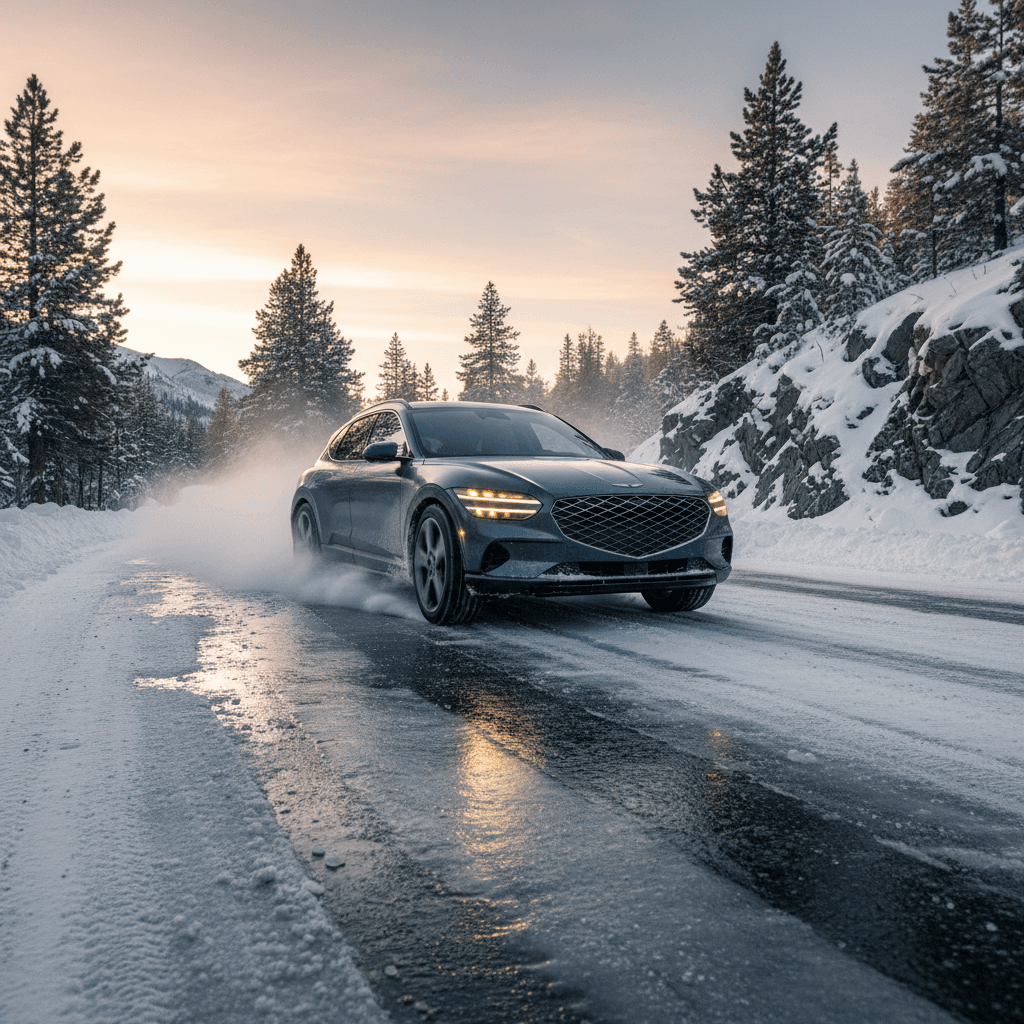
If you live where the roads go white for months at a time, the obvious question is whether the Genesis GV60 is actually good in snow and ice, or just another pretty crossover that panics at the first flurry. The answer is nuanced: the GV60 can be excellent in winter, but only if you play the game right on tires, drive modes, and expectations about cold‑weather range.
In one sentence
Genesis GV60 in Snow and Ice: The Short Version
- All‑wheel drive (dual‑motor) GV60s with Snow mode and proper winter tires are confident, composed winter cars for most on‑road conditions.
- With stock 20" or 21" all‑season tires, the GV60 feels secure in light snow but runs out of grip early on ice or deep, churned‑up snow.
- Ground clearance is about 6.3 inches, which is fine for plowed roads but limiting in heavy, unplowed accumulation.
- Like nearly every EV, the GV60 loses roughly 20–35% of its range in sustained freezing weather, more on short trips and at highway speeds.
- There are a few winter quirks, wiper icing and snow buildup under the frunk have both been called out by owners, but nothing that makes the car unsafe if you prepare for it.
Who should look elsewhere
AWD, Snow Mode and Traction Tech on the GV60
The Genesis GV60 rides on Hyundai–Kia’s E‑GMP platform and is offered in rear‑drive and dual‑motor all‑wheel‑drive versions. For snow and ice, the AWD trims are where the story gets interesting.
How the GV60 Puts Power Down on Slippery Roads
Electronics do most of the heavy lifting, if you let them.
e‑AWD with dual motors
The AWD GV60 uses an electric motor on each axle. In normal driving it can decouple the front motor to save energy, then reconnect it instantly when slip is detected.
Dedicated Snow mode
A long press of the drive‑mode button calls up Snow, which softens throttle response, shuffles torque more gently between axles, and dials in traction and stability control for low‑grip surfaces.
Stability & brake logic
ABS, traction control, and an electronic limited‑slip function can individually brake spinning wheels, helping pull the car straight when one side finds ice and the other has grip.
Snow mode isn’t a party trick. It meaningfully changes how the car behaves, taming the GV60’s strong low‑speed torque and keeping you from accidentally overwhelming the front tires when you pull away from a slick intersection. Many owners report that in real snow, the car feels calm and predictable, bordering on boring, which is exactly what you want when the road looks like a bad television signal.
How to actually activate Snow mode
Ground Clearance, Weight and Winter Hardware
Winter‑Relevant Specs for the Genesis GV60
On paper the GV60 sits at about 6.3 inches of ground clearance. That’s more than a typical sedan but less than a true off‑road‑leaning SUV. In practice that means the GV60 is perfectly at home on plowed city streets, freeways with slushy tire tracks, and driveways with a few inches of accumulation. Where it gets nervous is the deep stuff, snow packed between ruts, wind‑drifted berms at the end of your driveway, or unplowed gravel roads after a big storm.
Weight: friend and foe
The GV60’s battery pack gives it a low center of gravity and a reassuringly planted feel in snow. You don’t get the top‑heavy wobble you feel in taller SUVs. That same mass, however, means longer stopping distances on ice. The electronics can shuffle torque, but they can’t invent friction, braking still comes down to your tires and surface.
Winter‑friendly hardware
- Available heated front and rear seats and heated steering wheel keep the cabin warm so you can use Eco climate settings without freezing.
- Most trims offer a heat pump and battery conditioning, which help preserve range and charging performance in the cold.
- Remote pre‑conditioning lets you warm the cabin and battery while plugged in, a significant advantage on sub‑freezing mornings.
Known winter quirks
Why Tires Make or Break the GV60 in Snow
When people ask whether the Genesis GV60 is “best for snow and ice”, what they’re often really asking is whether it feels invincible on the stock 20‑ or 21‑inch all‑season tires. It doesn’t, and no crossover its size does. The limiting factor in winter isn’t the badge or battery. It’s the four contact patches the size of your palm.
How Tire Choice Changes GV60 Winter Behavior
Same car, very different personalities on snow and ice.
| Setup | Snow Traction | Ice Traction | Ride & Noise | Range Impact |
|---|---|---|---|---|
| 21" performance all‑season (many Performance trims) | Fair | Poor | Firm, more noise | Highest consumption |
| 20" touring all‑season | Good in light snow | Fair | Comfortable | Moderate |
| 18"–19" dedicated winter tire | Excellent | Much better | Softer, a bit louder | Slightly higher but predictable consumption |
If you do one thing to make your GV60 better in snow and ice, put it on dedicated winter tires.
The GV60’s chassis is competent enough that on proper winter tires it feels almost over‑qualified for ugly weather, point it, trust the electronics, and it just goes. On the original 21‑inch performance tires, the same car can feel flummoxed by a glazed intersection. You still have traction control and Snow mode working for you, but they’re working with a fraction of the grip.
What “best for snow and ice” really means
Winter Range Loss and Battery Care
Grip is only half the winter story with any EV. The other half is energy. Like its E‑GMP cousins, the GV60 sees a meaningful range haircut in the cold. Real‑world testing and owner data suggest 20–35% less range in sustained freezing conditions, sometimes more if you stack short trips, high speeds, and deep cold.
- Short, repeated trips where the pack never fully warms up.
- Sustained 70–80 mph highway driving on cold, dense air.
- Heavy use of cabin heat (especially at higher fan speeds).
- Snow‑covered roads that increase rolling resistance.
How to protect winter range in your GV60
Real Owner Experiences: Winter Pros and Cons
Anecdotally, GV60 owners in places like the Midwest, Northeast, and mountain states paint a consistent picture: the car itself is reassuring in snow and ice, but you have to work around some quirks.
What GV60 Owners Report After Real Winters
Patterns that show up across forums, reviews, and long‑term tests.
The good stuff
- Strong traction and stability on winter tires, even on steep, snowy grades.
- Low center of gravity makes it feel less tippy than taller SUVs in crosswinds and slush.
- Cabin warms quickly and stays toasty; heated wheel and rear seats get high praise on cold mornings.
The frustrations
- Wipers can ice up and are hard to lift without using the service position trick.
- Snow and slush can pack into the plastic cowl and under‑frunk area, sometimes requiring manual clearing.
- Winter range feels short on the 21" Performance models if you try to maintain summer‑style highway speeds.
"It drives great in snow and ice but the ice on the wipers is really a problem."
How to Set Up Your GV60 for Snow and Ice
Practical Setup Tips for GV60 Winter Driving
1. Get the right tires before the first storm
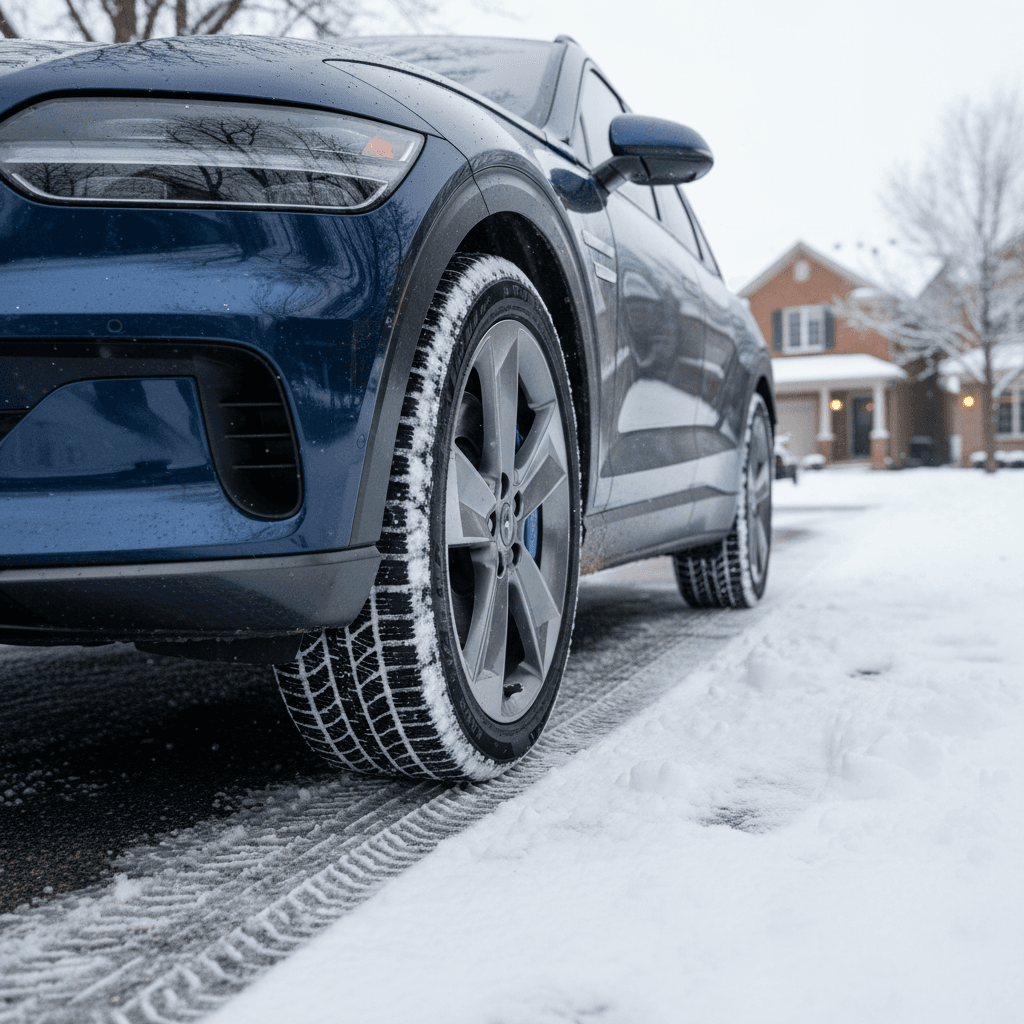
If you run a Performance AWD on 21‑inch wheels, seriously consider a dedicated winter wheel‑and‑tire package in a smaller diameter. If you’re shopping used, budget for this, the best GV60 for snow and ice is the one wearing proper winter rubber.
2. Learn Snow mode and My Mode
Dig into the settings so you know how to engage <strong>Snow mode</strong> quickly and how your custom My Mode is configured. On a cold, slick morning is not the time to be poking around menus.
3. Use pre‑conditioning religiously
On workdays, schedule departure times in the app so the car pre‑heats the cabin and battery while plugged in. You’ll start with warm glass, a warm pack, and more usable range.
4. Protect the windshield and wipers
On nights with freezing rain or heavy snow, consider using a windshield cover, parking under shelter, or popping the wipers into service position before the storm so they don’t freeze to the glass.
5. Add a little extra ride height with common sense
You can’t actually raise the GV60, but you can avoid shaving its 6.3 inches of clearance by steering around frozen ruts, slowing for plow berms, and not treating it like a rock crawler.
6. Practice emergency stops in a safe place
Find an empty, snowy lot and feel how the car responds under hard braking and quick lane changes. You’ll quickly learn the limits of your tire setup before you discover them at an icy intersection.
Buying a Used GV60 for Winter: Checklist
Shopping the used market for a Genesis GV60 you’ll rely on in snow and ice is a slightly different exercise than buying one for Sunbelt duty. You’re not just hunting for the low‑miles creampuff; you’re looking for a car that will put up with real weather, year after year.
Used GV60 Winter‑Focused Buying Checklist
Confirm it’s an AWD model
Rear‑drive GV60s can handle light winter duty with snow tires, but if you regularly deal with ice, steep driveways, or unplowed side streets, the dual‑motor AWD versions are the smart move.
Inspect wheels and tires closely
Huge 21‑inch wheels may look terrific in photos but are a liability in pothole season and limit your winter tire choices. Ask what tires are currently fitted and how old they are; plan on replacing them if they’re more than 4–5 winters old.
Look for signs of heavy salt use
Peek under the car, in wheel arches, and under the frunk liner for excessive corrosion or packed‑in dirt and salt. EVs don’t like trapped moisture around wiring and plastic covers.
Ask about winter range experience
Prior owners in cold states can tell you what sort of real‑world winter range they saw on their typical commute. Compare that to your daily mileage and charging options.
Review software and service history
Make sure all campaigns and updates are current, especially anything related to battery management or charging. Software updates can improve winter behavior over time.
Leverage a third‑party health report
With a used GV60 on <strong>Recharged</strong>, you get a Recharged Score battery‑health report and fair‑market pricing data, plus EV‑specialist support that can talk through winter range and charging expectations before you commit.
Genesis GV60 Snow & Ice FAQ
Frequently Asked Questions About the GV60 in Snow and Ice
Bottom Line: Is the GV60 “Best” for Snow and Ice?
The Genesis GV60 is not a snow beast by default. On low‑profile all‑season rubber and 21‑inch wheels, it’s a stylish, quick EV that happens to cope with winter rather than relish it. But given the right spec, dual‑motor AWD, thoughtful drive‑mode use, and a set of serious winter tires, the GV60 becomes a composed, confident partner for real‑world snow and ice. Its ground clearance limits how heroic you can be in unplowed conditions, yet on the roads most people actually drive, it’s as capable as nearly any premium electric crossover its size.
If you’re shopping used and you live in the Midwest, Northeast, Rockies, or anywhere else the snowplows earn their pay, treat winter readiness as a first‑order requirement, not an afterthought. That means asking hard questions about tires, range, and prior salt exposure, not just paint color and sound system. Working with a platform like Recharged gives you transparency on battery health and pricing, plus EV‑savvy support that can help you choose a GV60 that fits your winter reality, not somebody else’s brochure weather.