If you bought a 2022 Mercedes EQS, you’ve probably felt the sting of headlines about luxury EV depreciation. Now that it’s 2026 and you’re thinking about selling or upgrading, the obvious question is: what’s a fair trade-in value for a 2022 EQS? This guide walks through real-world price ranges, why values fell so quickly, and what you can do to avoid leaving thousands on the table.
Quick take
Overview: 2022 EQS trade-in value in 2026
2022 Mercedes EQS value snapshot (spring 2026)
Those ranges are broad by design. A gently‑used EQS 580 4MATIC with 20,000 miles and perfect history can still appraise near the top of that spectrum, while a high‑mileage EQS 450+ with cosmetic issues will sit closer to the bottom. The point is less the exact dollar and more understanding how dealers arrive at those numbers, so you can negotiate from a position of strength.
How much is a 2022 Mercedes EQS worth right now?
No article can give you a precise value for your specific car, but we can anchor you with realistic 2026 ballparks based on current used‑EV data, listings, and how similar 2023–2025 EQS models are being appraised:
2022 EQS trade-in value ranges by trim (typical U.S. conditions)
Illustrative ranges for a 2022 model year EQS sedan traded in during 2026. Actual values depend on options, region, history, and condition.
| Trim (2022) | Mileage example | Likely dealer trade-in | Likely private-party sale | Notes |
|---|---|---|---|---|
| EQS 450+ RWD | 30,000 mi | $37,000–$42,000 | $44,000–$50,000 | Highest range, lowest power. Values hold best when mileage is below average. |
| EQS 450 4MATIC | 30,000 mi | $38,000–$44,000 | $45,000–$52,000 | AWD helps a bit in snow states; options and wheels move the needle. |
| EQS 580 4MATIC | 30,000 mi | $40,000–$47,000 | $48,000–$55,000 | Higher original MSRP, but steeper early depreciation. Strong spec can still command a premium. |
| High mileage any trim | 60,000+ mi | $30,000–$37,000 | $36,000–$44,000 | Mileage, wear, and any accident history will drag the number down significantly. |
Think of these as starting points for negotiation, not guarantees.
These are directional, not promises
As of early 2026, it’s common to see clean‑title 2022 EQS 450+ sedans retailing in the high‑$40,000s, sometimes a bit less in high‑supply markets. If your trade‑in quote starts with a “2” or low “3” and your car is clean, that’s a signal to slow down and get more offers.
Why did my 2022 EQS depreciate so fast?
4 big reasons 2022 EQS trade-in values look brutal
None of them are about your individual car, they’re about the segment.
1. Massive MSRP and steep first-owner hit
2. Fast-moving tech and design
3. EV market reset after 2021–2022
4. Competing with Tesla, Lucid, BMW, Porsche
How bad is it versus other luxury cars?
Key factors that change your 2022 EQS trade-in value
- Trim and options: AMG Line, higher‑end interior packages, head‑up display, and popular wheel packages can add modest value. Odd color combos or sparse specs can make the car harder to sell and hurt trade‑ins.
- Mileage vs age: A 2022 EQS with 18,000 miles will appraise differently than one with 60,000 miles, even if they’re the same trim. Auctions, lenders, and dealers all discount heavily above certain mileage thresholds.
- Title and accident history: A clean, one‑owner Carfax is table stakes in this segment. Structural damage, airbag deployment, lemon titles, or buybacks can slash value 20–40% or make some buyers walk away entirely.
- Battery and charging performance: Range complaints, persistent DC fast‑charging issues, or out‑of‑warranty high‑voltage components are major red flags. In contrast, documented healthy battery performance is a selling point.
- Regional demand: EQS sedans tend to move faster in coastal EV‑dense markets and high‑income metro areas. A dealer in the Midwest may appraise more conservatively than a store in LA or the Bay Area.
- Condition and reconditioning cost: Curb‑rashed wheels, tired tires, windshield chips, interior wear, and overdue maintenance are all line‑items a dealer has to fix before retailing your car, and they come directly out of your trade‑in check.
Focus on what you can control
Estimating your 2022 EQS trade-in value step by step
DIY process to sanity-check your EQS trade-in number
1. Decode your exact trim and options
Grab your original window sticker if you have it, or use your VIN on Mercedes’ site or a spec decoder. Knowing whether you have a 450+, 450 4MATIC, or 580, and what packages are on it, matters more than you’d think.
2. Check live asking prices, not just guides
Search for 2022 EQS sedans matching your trim and mileage on major listing sites. Focus on <strong>actual asking prices at dealers</strong>, not outlier private listings with unrealistic numbers.
3. Pull guide values from multiple sources
Run your car through KBB, Edmunds, and maybe your credit union’s valuation tool. Compare <strong>trade‑in</strong>, <strong>private‑party</strong>, and <strong>retail</strong> values. Your real‑world dealer trade is usually closer to the lower end of the “trade‑in” band unless your car is exceptional.
4. Adjust for miles, history, and reconditioning
If you’re far above or below 12,000–15,000 miles per year, nudge your expectations down or up. Add deductions in your own spreadsheet for tires, brakes, cosmetic fixes, and any accidents, even if they were repaired.
5. Get at least three real offers
Online instant offers, your local Mercedes dealer, and at least one other franchise or EV‑focused buyer will give you a spread. If one quote is way off the others, ask why and use the better offers as leverage.
6. Factor in taxes and convenience
Remember that <strong>trading in usually reduces the taxable amount</strong> on your next purchase in many states. A private sale might pay a bit more but can lose some of that edge once you account for tax, time, and risk.
Sample 2022 EQS 450+ trade-in math
Imagine a 2022 EQS 450+ with 32,000 miles, clean history, typical options, and good tires.
- Similar cars retailing at dealers: $47,000–$50,000
- Guide retail values around: high‑$40,000s
- Guide trade‑in values around: mid‑$30,000s to low‑$40,000s
In that scenario, a realistic dealer trade‑in might land around:
- Low side: about $37,000 if the dealer expects slow turnover or sees cosmetic needs.
- High side: about $42,000 at a store with strong EQS demand and cheap reconditioning.
If someone quotes you $30,000 on that car with no major issues, they’re effectively asking you to subsidize all of their risk and profit. That’s when you shop the car around or consider selling into a marketplace that retails used EVs directly.
Trade-in vs selling your 2022 EQS yourself
With depreciation this steep, it’s natural to wonder whether you should squeeze every last dollar out of your 2022 EQS. The right answer depends on your appetite for effort and risk.
Trade-in vs private-party vs EV marketplace
What each path usually looks like for a 2022 EQS owner.
Dealer trade-in
- Pros: Fast, tax advantage in many states, one‑stop transaction.
- Cons: Often the lowest dollar number; some dealers are still wary of off‑lease EQS inventory.
- Best for: Convenience‑first sellers rolling into another car immediately.
Private-party sale
- Pros: Highest potential sale price if you find the right buyer.
- Cons: Test drives, financing fall‑throughs, fraud risk, and more time on your part.
- Best for: Sellers comfortable marketing a high‑end EV and screening buyers.
EV-focused marketplace (like Recharged)
- Pros: EV‑savvy buyers, battery‑health transparency, options for instant offer or consignment.
- Cons: You may need to ship the car or drop it at a partner location.
- Best for: Owners who want stronger value than a dealer trade without doing all the legwork.
Where Recharged fits
Ready to find your next EV?
Browse VehiclesHow battery health and warranty affect what your EQS is worth
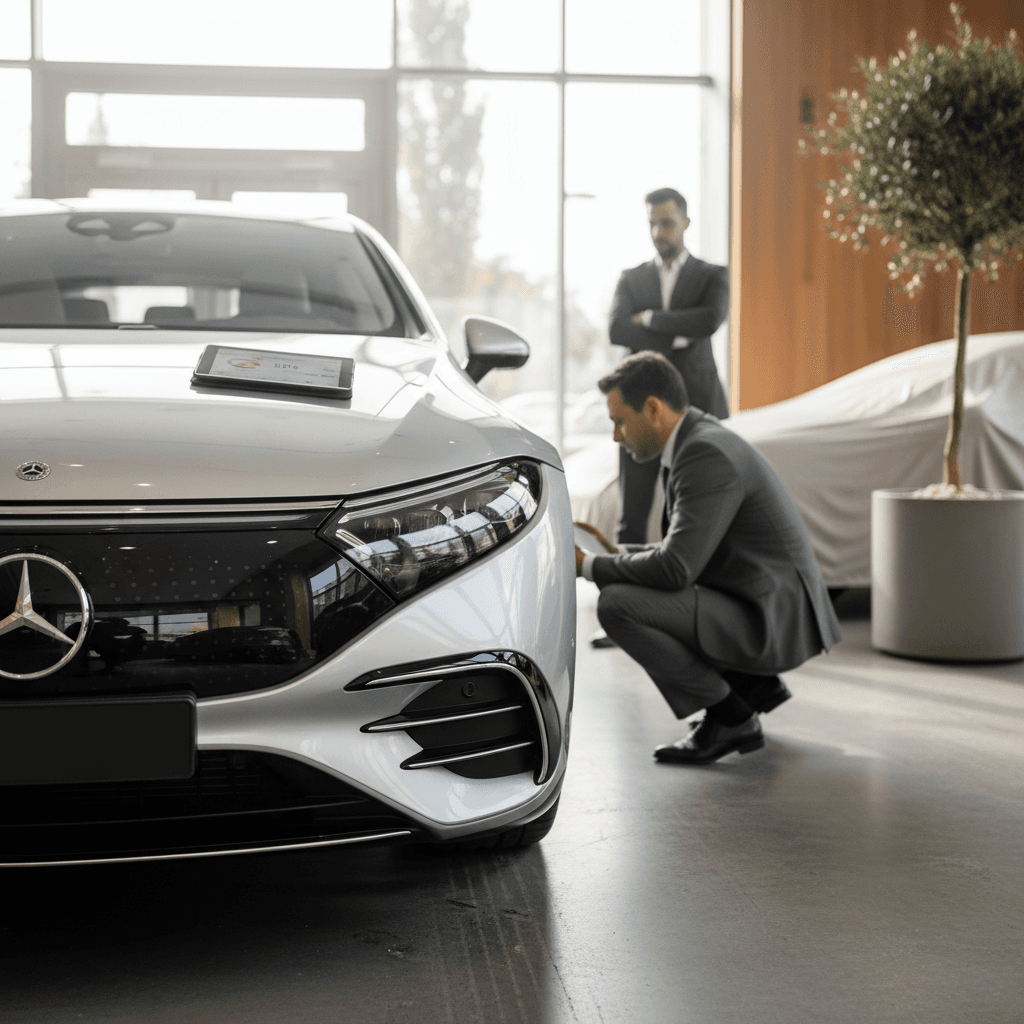
Battery health is to a used EQS what an engine and transmission are to a used S‑Class. The good news is that Mercedes backs the EQS high‑voltage battery for around 10 years or 155,000 miles, which most 2022 owners are still well within. The bad news is that buyers and lenders don’t see detailed state‑of‑health numbers by default, so they often price in a risk discount.
- State of health (SoH): Subtle degradation is normal. But if range has fallen significantly versus EPA ratings under similar driving, buyers will worry about future replacement costs.
- DC fast charging history: Heavy fast‑charging usage isn’t an automatic red flag, but combined with high mileage it may make some buyers more cautious.
- Warranty time vs mileage: A 2022 EQS with 30,000 miles has a very different risk profile than one with 110,000 miles, even if both are still technically under the battery warranty cap.
- Documented diagnostics: Third‑party or dealer battery health reports give objective data about usable capacity and performance, which helps narrow the gap between what buyers fear and what your car is actually like.
Leverage a formal battery health report
Practical tips to maximize your 2022 EQS offer
7 levers that actually move your EQS trade-in value
1. Fix cheap, obvious reconditioning items
Dealers routinely deduct more for cosmetic work than it would cost you to address yourself. Touch up wheel rash, repair small windshield chips, replace missing trim caps, and get a quality detail. A few hundred dollars can swing the trade‑in by four figures.
2. Service and software up to date
If your EQS is behind on scheduled maintenance or has outstanding campaigns, get them handled and keep receipts. A full digital service history reassures appraisers that the car hasn’t been neglected.
3. Present both keys and all accessories
Missing keys, charge cables, cargo covers, or manuals all cost money to replace. Bring everything you have, including wall‑charger documentation if you’re including it, to remove excuses for deductions.
4. Bring written valuations to the table
Show printed or PDF appraisals from KBB/Edmunds and competing dealers when you sit down. You’re unlikely to beat the market, but you can often pull a lowball offer closer to the average with real data.
5. Time your sale around incentives and selection
If the dealer is light on high‑end EV inventory, they’re likelier to stretch. Conversely, if they’re sitting on a row of unsold EQS sedans, you’re negotiating uphill. Ask how many comparable cars they have in stock.
6. Be realistic about sunk cost
If you paid $120,000 in 2022, you’re not negotiating against that number, you’re negotiating against today’s <strong>market clearing price</strong>. Accepting the reality of depreciation makes it easier to walk away from bad offers without chasing the impossible.
7. Consider consignment for top-spec, low-mile cars
If you have a low‑mile 580 or a rare spec, consignment with an EV‑focused retailer can net you thousands more than a straight trade‑in while still sparing you the hassle of a pure private‑party sale.
Watch out for blended numbers
How Recharged fits into your 2022 EQS exit plan
Option 1: Instant offer or trade-in
You can start with a fast, digital offer on your 2022 EQS through Recharged. We factor in live EV market data, battery health, and demand for specific trims rather than just blindly following a generic book number.
If you’re also buying your next EV, our team can help you roll your EQS value into a new purchase, with financing and nationwide delivery available.
Option 2: Consignment with transparency
For high‑spec or low‑mile 2022 EQS sedans, Recharged can list your car on our marketplace with a Recharged Score battery health report, professional photos, and pricing guidance.
That combination of transparency and EV‑specialist support helps attract buyers who understand what they’re getting, and are willing to pay closer to top‑of‑market for the right car.
Why this matters for your EQS
FAQ: 2022 Mercedes EQS trade-in value
Frequently asked questions about 2022 EQS trade-in value
The 2022 Mercedes EQS is a case study in how quickly first‑generation luxury EVs can shed value, but that doesn’t mean you have to accept the first depressing number someone throws at you. By understanding how today’s trade‑in values are set, documenting your car’s battery health and history, and shopping your EQS to buyers who actually want it, you can narrow the gap between what it’s “worth” on paper and what you actually take home. If you’re ready to explore options, Recharged can help you compare an instant offer, consignment, or trade‑in into your next EV, all without guessing what’s really fair.