If you own a 2022 Hyundai Kona Electric, you’re sitting on one of the better small-EV packages of the last few years: real-world range, a roomy hatch, and a 10‑year battery warranty. But the only number that matters when you walk into a showroom is this: what’s my 2022 Hyundai Kona Electric trade-in value in 2026?
Context: fast-moving EV prices
2022 Kona Electric trade-in value in 2026: the quick answer
Typical 2022 Kona Electric value bands in early 2026 (U.S.)
As of early 2026, national pricing tools show 2022 Hyundai Kona Electric trade-in values clustered in the mid‑teens for SEL and Limited trims in good condition and with typical mileage. Clean, lower‑mileage examples with excellent battery health can still push toward the high teens on trade, while high‑miles or cosmetically rough cars fall below those bands.
These are ranges, not promises
How much is a 2022 Hyundai Kona Electric worth right now?
Let’s translate the abstract into something closer to what you might see on a screen at a dealership in April 2026. We’ll assume a U.S.‑spec 2022 Kona Electric with average equipment, no major accidents, and about 48,000–60,000 miles on the odometer.
Typical 2022 Kona Electric value bands in 2026
Approximate U.S. value ranges for 2022 Hyundai Kona Electric models with average mileage and clean history. Real offers may sit above or below these numbers based on battery diagnostics, local demand, and trim‑specific options.
| Scenario | Trim & condition example | Likely trade-in range | Likely dealer retail / asking price | Comments |
|---|---|---|---|---|
| Average 2022 SEL | ~55,000 mi, clean Carfax, minor wear | $13,000–$14,500 | $16,000–$18,500 | Bread‑and‑butter example; where many 2022 SEL trade-ins land. |
| Average 2022 Limited | ~50,000 mi, full history, good tires | $14,000–$15,500 | $17,000–$19,500 | Higher equipment level helps, but battery health still dominates. |
| Low‑miles standout | Under 30,000 mi, excellent cosmetics | $15,000–$17,000 | $19,000–$21,000+ | Strong miles and condition can still command a premium in 2026. |
| High‑miles commuter | 80,000+ mi or visible wear/curb rash | $10,500–$13,000 | $14,000–$16,000 | Mileage and cosmetics start to hurt; dealers price more cautiously. |
| Battery-health concern | Degradation above typical, or pack history | Varies widely; may be thousands lower | Varies widely | Weak battery health can matter more than mileage or trim. Get a diagnostic before you negotiate. |
Use this table as a starting point, then adjust for your mileage, condition, trim and how you choose to sell.
Why retail prices look so much higher than trade-in
What actually drives 2022 Kona Electric trade-in value
The four big levers on your 2022 Kona Electric’s value
Think like a used‑car manager and the numbers start making sense.
1. Mileage and use pattern
Mileage is still the headline for most appraisers. A 2022 Kona Electric with 25,000–40,000 miles looks like a lightly used appliance; over 70,000 miles and it reads as a commuter workhorse, and the offer follows suit.
But it’s not just the odometer, short‑trip urban use can be easier on the car than endless 80‑mph highway runs in August.
2. Accident and service history
A clean history report, documented maintenance, and no airbag deployments help the desk manager sleep at night. Structural repairs, repeated insurance claims, or a branded title can push otherwise nice Konas into the bargain bin, even if they still drive fine.
3. Battery health & charging habits
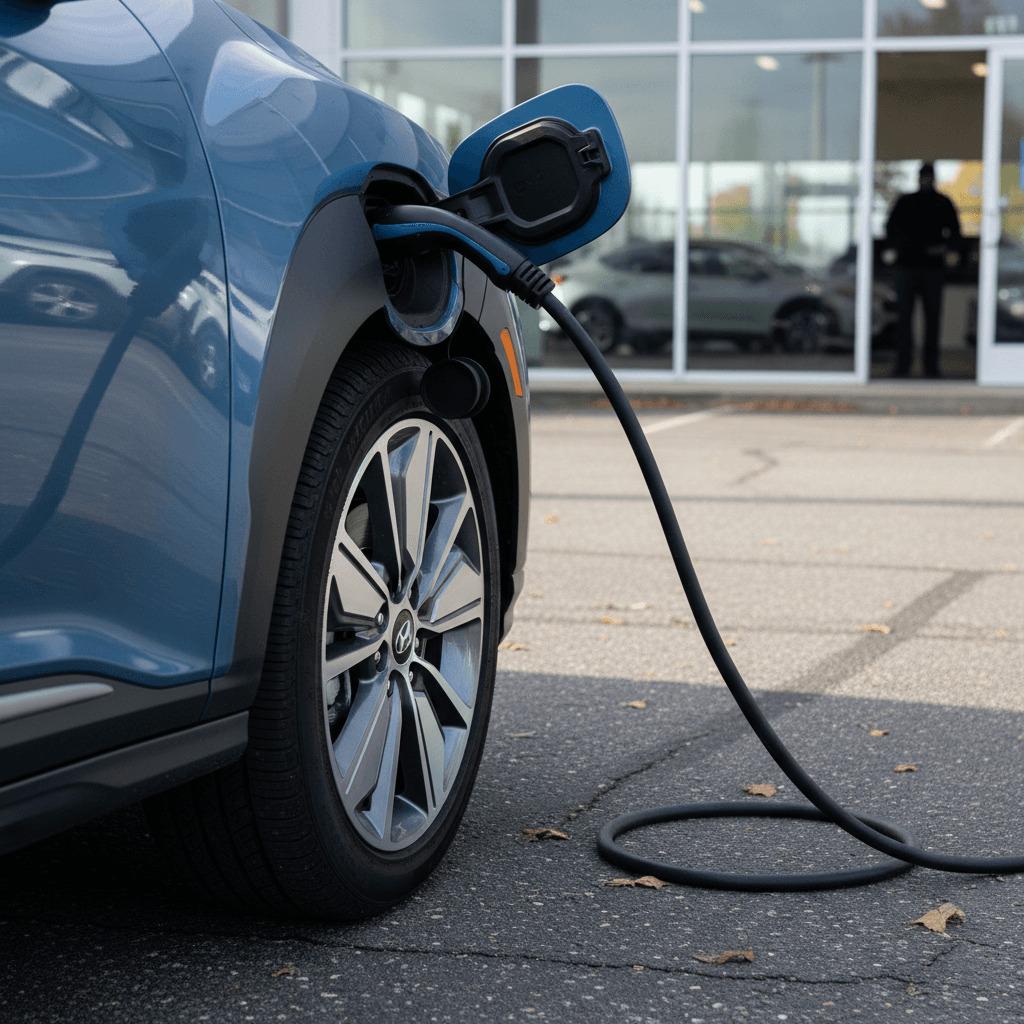
For EVs, usable battery capacity is the new compression test. A pack showing close to original capacity and no warning codes holds value. One with notable degradation or a history of DC-fast‑charging abuse will be priced defensively.
4. Local demand and incentives
In EV‑friendly states with strong public charging and local incentives, used Kona Electrics move faster and fetch more. In regions without infrastructure, or where buyers are stampeding into newer models with NACS ports, dealers will be stingier.
Pro move: show, don’t just tell
Battery health, warranty and why dealers are obsessed with both
The Kona Electric’s battery pack is its single most expensive component and the main reason its trade‑in value can look either heroic or tragic for a four‑year‑old compact crossover. The 2022 model came with a 10‑year/100,000‑mile battery warranty for U.S. buyers, which still has plenty of runway in 2026 for most owners. That’s good news, but it’s not the whole story.
What dealers want to know about your battery
- State of health (SoH): How much capacity the pack still has compared with new. A car that still charges roughly to its original range is easier to price and easier to sell.
- Error codes: Any active or pending battery or high‑voltage system codes will prompt an automatic haircut on the offer.
- Charging history: A life spent mostly on Level 2 home charging looks better than one hammered on DC fast chargers every day.
- Recall or replacement history: A properly documented pack replacement under warranty isn’t necessarily bad news; in some cases it’s a quiet positive.
How warranty changes the risk calculus
- Years/miles remaining: A 2022 Kona Electric with, say, 60,000 miles still has a healthy chunk of battery coverage left, which supports a stronger offer.
- Transferability: The main high‑voltage warranty coverage follows the car, not just the first owner, which reassures second‑ and third‑hand buyers.
- Out‑of‑warranty tail risk: Dealers are staring at the calendar and asking, “How old will this be when we resell it?” That’s part of why they bid conservatively as the car approaches the end of its battery coverage window.
Red flag: unexplained range loss
Trade in, sell outright, or use a marketplace?
You have more choices than ever for unloading a 2022 Kona Electric, and they’re not all created equal. The right move depends on how much hassle you’re willing to tolerate in exchange for more money.
Ways to sell your 2022 Kona Electric
How the main options stack up on price, effort, and control.
Dealer trade-in
Pros: Fast, simple, and tax‑efficient in many states because you only pay sales tax on the difference when you buy your next car.
Cons: Usually the lowest number on the table; dealer has to build in margin and risk.
Best for: If you value convenience over squeezing out every last dollar.
Private party sale
Pros: Often nets $1,000–$2,500 more than trade‑in for a clean 2022 Kona Electric.
Cons: You’re handling ads, test drives, paperwork, and the occasional flaky buyer.
Best for: Owners comfortable meeting buyers and waiting a bit longer for the right offer.
Modern EV marketplaces
Pros: Blend of convenience and value: online offers, EV‑savvy pricing, and help with paperwork and logistics.
Cons: Offers still need to leave room for fees and resale margin.
Best for: Sellers who want EV‑specific expertise and transparent offers without doing it all themselves.
Where Recharged fits in
Ready to find your next EV?
Browse VehiclesHow to estimate your 2022 Kona Electric trade-in like a dealer
The used‑car manager across the desk doesn’t have a crystal ball; they have data feeds, rough rules of thumb, and a healthy fear of getting stuck in the wrong car. You can run a similar play at home and walk in with realistic expectations, and a little leverage.
DIY valuation checklist for your 2022 Kona Electric
1. Start with online value tools
Pull trade‑in and private‑party estimates for a 2022 Hyundai Kona Electric on the big valuation sites, making sure you input your actual trim, mileage, and ZIP code. Treat the numbers as a spread, not a promise.
2. Study real listings, not just calculators
Search for 2022 Kona Electrics at dealers and online marketplaces. Filter for cars similar to yours. Subtract $2,000–$4,000 from the advertised retail prices to ballpark where dealers likely want to own them on trade.
3. Adjust for your mileage and options
If your odometer is far below the examples you’re seeing, add a bit; if it’s far above, subtract. Do the same for big‑ticket options on Limited trims like premium audio or active safety packs.
4. Get a battery-health report
Have a shop or EV specialist run a battery health scan, or use a trusted marketplace that includes diagnostics. A clean bill of health is a tangible argument against a lowball “EVs all have bad batteries” pitch.
5. Be honest about condition
Door dings, curb‑rashed wheels, mismatched tires, windshield chips, all of it costs money to fix. Walk around the car and price out repairs roughly; dealers will do the same and build that into their number.
6. Decide your minimum acceptable number
Before you visit a lot, decide the lowest trade‑in you’d actually accept based on your homework. It’s much easier to walk away, or negotiate calmly, when you’ve already done the math.
Bring your homework to the dealership
Seven smart ways to boost your trade-in offer
You can’t change the model year stamped on the VIN, but you can absolutely change how your 2022 Kona Electric looks and feels to the person pricing it. Think of it as staging a house before an open house, only cheaper and with less throw‑pillow drama.
- Detail the car inside and out. A professional‑level clean, including wheels and engine bay, often makes a four‑year‑old Kona feel like a two‑year‑old one, and that’s how it tends to get appraised.
- Fix the cheap stuff yourself. Replace bald wiper blades, burned‑out bulbs, missing floor mats, and ratty charging cables. Small defects are easy excuses for big discounts.
- Put decent rubber on it. A fresh set of midrange tires can move the needle more than they cost, especially if your current set is down to the wear bars.
- Bundle both keys and accessories. Present two working key fobs, the OEM portable charger, manuals, cargo cover, and any original take‑off parts you still have.
- Time your visit intelligently. Saturdays stacked three‑deep at the sales desk are not your moment. Weekdays and end‑of‑month visits sometimes find managers a touch more flexible.
- Get written offers from more than one buyer. Even if you prefer a trade‑in, a strong written offer from another dealer or EV marketplace is a powerful negotiation tool.
- Consider selling to an EV‑focused buyer. Platforms like Recharged that specialize in used EVs understand Kona Electric demand, battery behavior and warranty dynamics better than a random gas‑heavy franchise lot. That often translates into stronger, more transparent offers.
Common trade-in mistakes 2022 Kona owners make
If there’s a recurring theme in owner stories, it’s regret over anchoring to one website’s number, or letting a dealer frame the Kona Electric as a problem child because it plugs in instead of pumps gas.
Avoid these 2022 Kona Electric trade-in traps
Most of them are easy to sidestep once you know they exist.
Believing the highest number on the internet
Online tools are calibrated to national averages and sometimes optimistic assumptions. If you drive above‑average miles or live in a tough EV market, that glossy number can set you up for disappointment.
Walking in with no battery data
When you don’t know your own pack’s health, you’re letting the dealer define reality. A quick diagnostic, even via a trusted marketplace, puts you on equal footing.
Trading at the wrong moment
Stacking your trade right before a facelifted or NACS‑equipped model drops, or during a wave of heavy incentives on new Kona Electrics, can make your 2022 look older and less desirable overnight.
Letting the payment conversation swallow the trade
Salespeople love to talk monthly payment. Keep the trade‑in conversation separate: nail down your 2022 Kona Electric’s value first, then talk about financing and the new car.
Don’t fall for the “your EV will be worthless soon” line
FAQ: 2022 Hyundai Kona Electric trade-in value
Frequently asked questions
Bottom line: Is now a good time to trade your 2022 Kona Electric?
The 2022 Hyundai Kona Electric occupies a sweet spot in the used‑EV world: modern safety and range, still‑active battery warranty, and pricing that puts it within reach of buyers cross‑shopping hybrids and compact crossovers. On the trade‑in side of the desk, that translates into respectable but not spectacular numbers, usually somewhere in the mid‑teens, more if you’ve babied the car and its battery.
Whether you should trade now comes down to your next move. If you’re jumping into a newer, longer‑range EV or a model with native NACS charging, 2026 is a reasonable time to cash out of a 2022. If your Kona Electric still fits your life and you’re nowhere near the end of its battery coverage, you’re under no obligation to beat a panicked retreat just because the EV news cycle has moved on.
When you are ready, walk into the process with data, documentation, and a floor price in mind. Get multiple offers. Consider EV‑focused buyers like Recharged that understand how much a healthy pack and a clean history are really worth. That’s how you turn a good little electric crossover into the strongest possible trade‑in check.