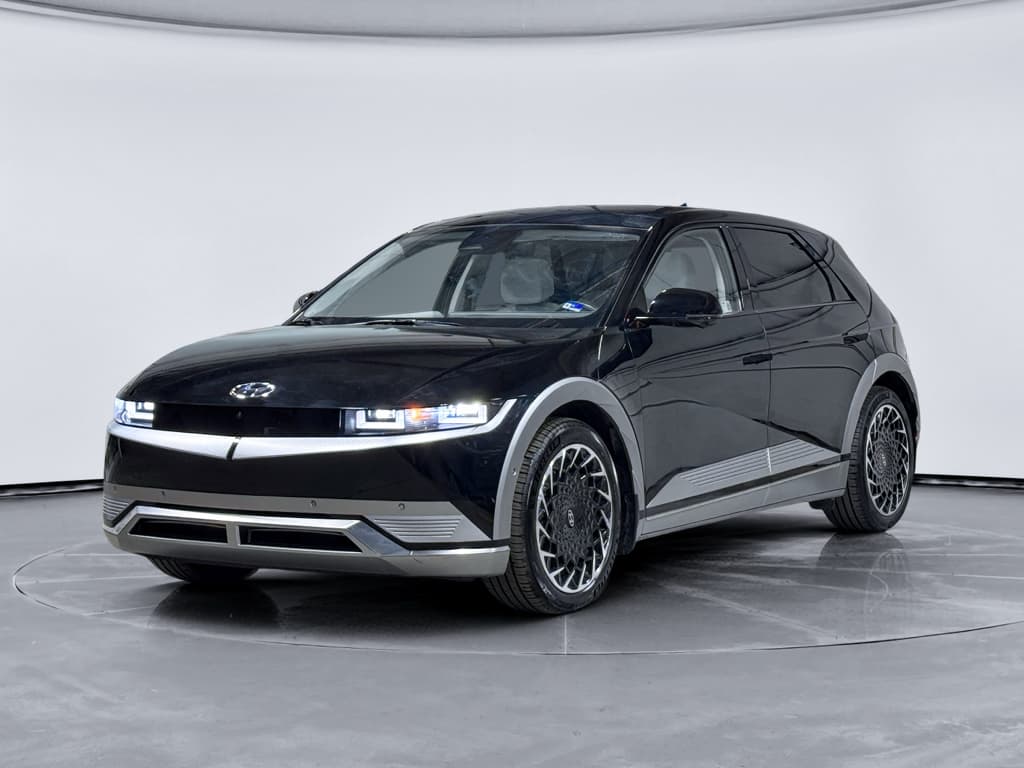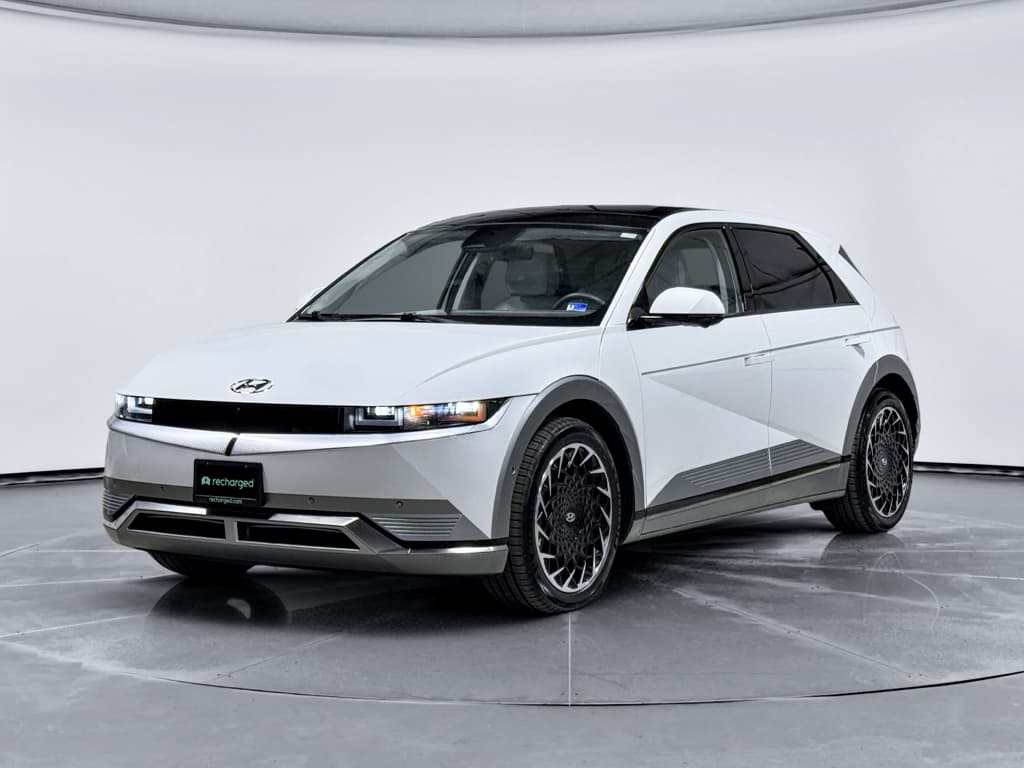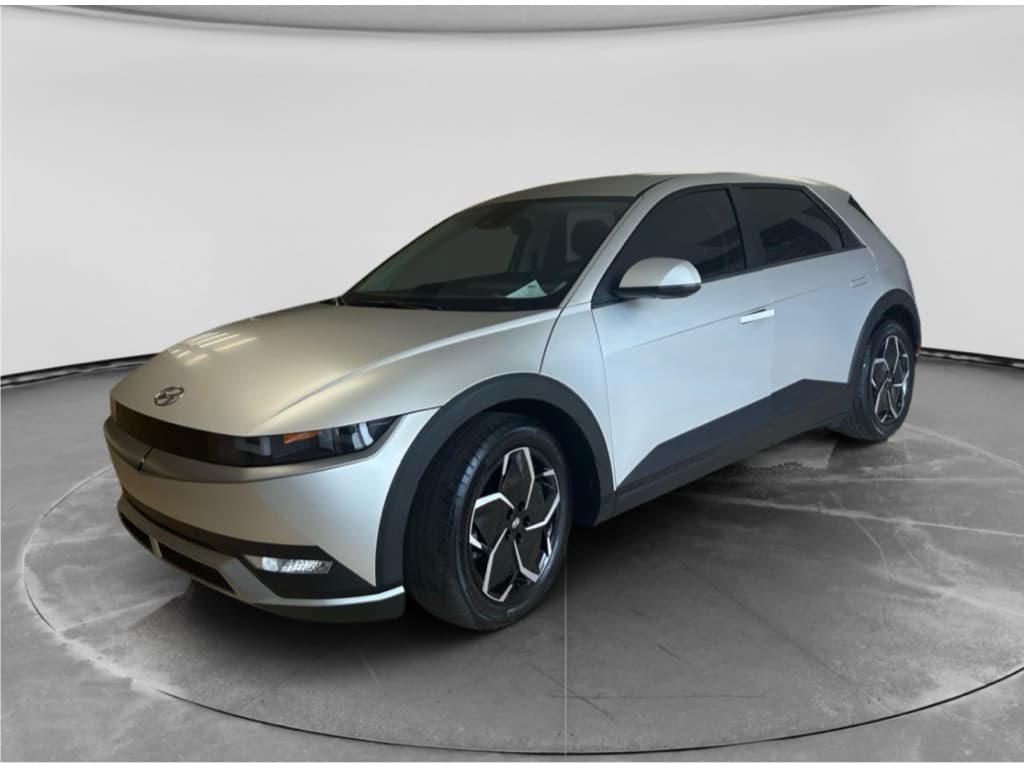
If you own, or are thinking about buying, a 2022 Hyundai Ioniq 5, you’ve probably heard about recalls for rollaway risk and a charging issue that can cause the car to lose power. This guide walks through the full 2022 Hyundai Ioniq 5 recalls list in plain English, explains how serious each one is, and shows you how to quickly check any VIN before you buy a used Ioniq 5.
Quick facts
Overview: 2022 Ioniq 5 recalls at a glance
Key 2022 Ioniq 5 recall highlights
- 22V-324 / Campaign 228 – Shift‑by‑wire control unit bug that can let the car roll even when you think it’s in Park.
- 24V-204 / Campaign 257 – Integrated Charging Control Unit (ICCU) defect that can damage a fuse, prevent 12‑volt charging, and eventually cause loss of power.
Don’t assume they’re done
Recall 1: Rollaway risk while in Park (22V-324 / Campaign 228)
The first big recall for the 2022 Ioniq 5 arrived in May 2022, when Hyundai announced Recall 22V-324 (internal Campaign 228) for the Shift‑by‑Wire Control Unit (SCU). In rare cases, a software logic error could fail to engage the parking pawl properly when you shifted into Park, creating a risk that the vehicle might roll away on a slope.
Rollaway recall summary: 22V-324 / Campaign 228
Key details about the 2022 Ioniq 5 rollaway recall.
| Field | Details |
|---|---|
| Affected model years | 2022 Ioniq 5 (early production) |
| Main component | Shift‑by‑Wire Control Unit (SCU) software |
| Primary symptom | Vehicle can move after being shifted to Park |
| Typical warning signs | May show shift‑system warning lights; in some cases, none before movement |
| Fix type | Dealer software update to SCU |
| Owner cost | $0 (safety recall) |
| Downtime | Usually under 1–2 hours at the dealer |
| What you should check | Dealer records showing Campaign 228 / SCU update completed |
This safety recall is software‑only but important for anyone who parks on grades or relies heavily on the electronic parking system.
Owner habit that still matters
From a used‑car buyer’s perspective, the rollaway recall is important but not particularly scary. It’s a software update that, once completed, tends to stay fixed. When you’re looking at a 2022 Ioniq 5, verify that Recall 22V‑324 / Campaign 228 is closed, and then focus more of your due‑diligence energy on the charging‑system recall below.
Recall 2: ICCU failure and loss of power (24V-204 / Campaign 257)
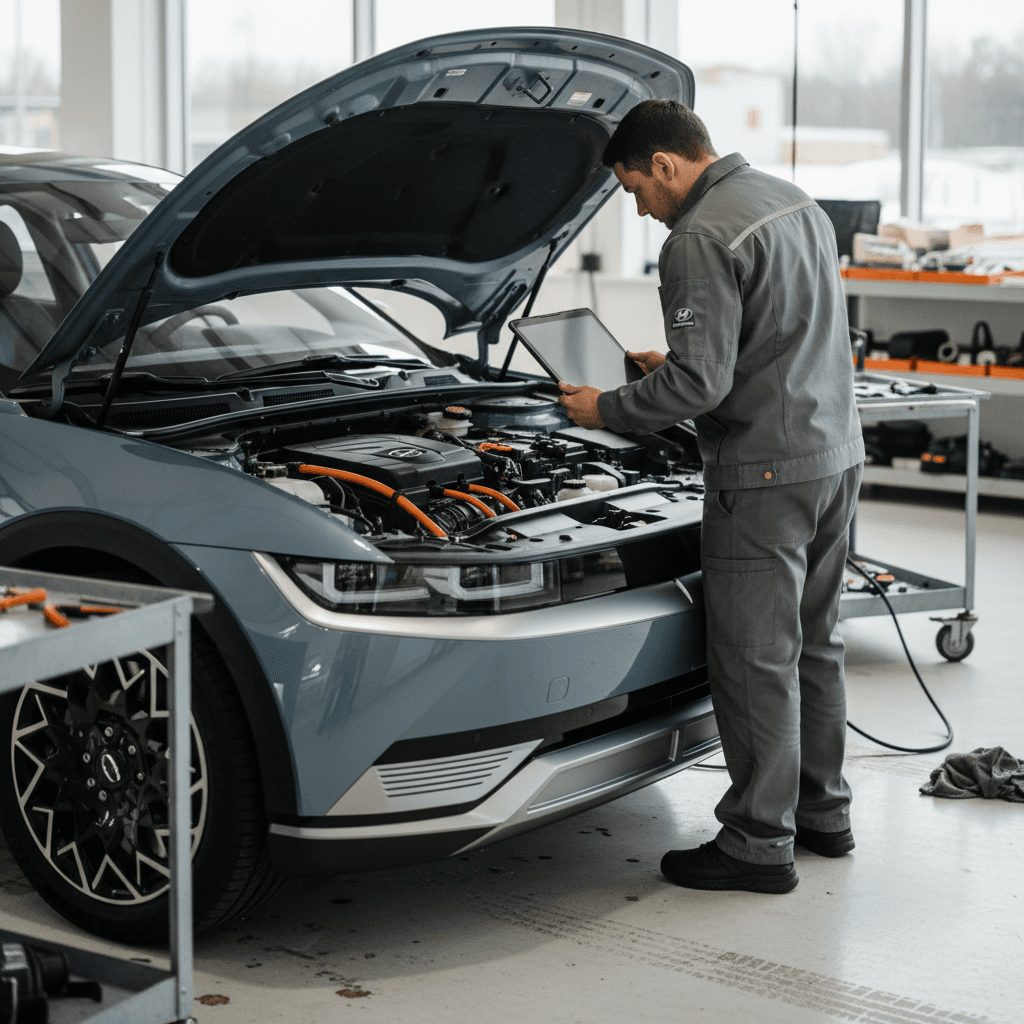
The more serious and better‑publicized recall for the 2022 Ioniq 5 involves the Integrated Charging Control Unit (ICCU). The ICCU manages DC‑to‑DC conversion and 12‑volt charging. When it fails, the 12‑volt battery can’t be replenished properly, the car lights up with warnings, and if you keep driving, you can ultimately lose motive power.
ICCU / power‑loss recall: 24V-204 / Campaign 257
High‑level look at the ICCU recall for 2022–2024 Ioniq 5.
| Field | Details |
|---|---|
| Affected model years | 2022–2024 Hyundai Ioniq 5 (plus some Ioniq 6 and Genesis EVs) |
| NHTSA recall number | 24V-204 |
| Hyundai campaign code | 257 (sometimes referenced with 021G) |
| Main component | Integrated Charging Control Unit (ICCU) and related fuse |
| Typical symptoms | Multiple warning lights, “Check EV system” messages, reduced power, 12‑volt battery issues, car eventually won’t move |
| Root cause | ICCU internal components can be damaged by overcurrent, voltage spikes, and thermal loading during charging and driving |
| Fix type | Software update to reduce ICCU stress; inspection and, if needed, replacement of ICCU and high‑voltage fuse |
| Owner cost | $0 (safety recall) |
| Downtime | Typically 1–2 days if parts are needed; shorter for software‑only visits |
This recall brings an important mix of hardware checks and software changes designed to prevent ICCU damage and sudden loss of power.
Federal defect‑investigation files describe failure scenarios where owners first see warnings and modest power reduction, then progressively lose performance over roughly 22–45 minutes of driving before the car finally can’t move. That’s not as abrupt as a total instant shut‑off, but it’s still a serious safety risk, especially on high‑speed roads or in busy traffic.
Why you shouldn’t ignore ICCU symptoms
This recall is also tightly linked to the Ioniq 5’s reputation for 12‑volt battery problems. In many cases, the 12‑volt battery is the first visible casualty of an ICCU fault: it stops charging correctly, drains quickly, and can leave the vehicle unable to “boot up” even though the high‑voltage pack still has plenty of range.
Other updates: Software campaigns and TSBs owners should know
On top of the two main recalls, 2022 Ioniq 5 owners have seen a steady stream of technical service bulletins (TSBs) and service campaigns. These don’t always show up on public recall searches, but they can make a real difference in day‑to‑day reliability and charging behavior.
- ICCU software refinements – Follow‑on updates that tweak how the ICCU manages current and temperature, meant to reduce repeat failures after the main recall.
- Charging‑behavior updates – Campaigns to address interrupted Level 2 sessions, throttling at higher amperages, and communication glitches with some home chargers.
- Superseded SCU / shift‑by‑wire bulletins – Updated guidance for technicians after the original rollaway recall, clarifying diagnostic steps and new software versions.
TSB vs recall: what’s the difference?
How to check if your 2022 Ioniq 5 has open recalls
Before you buy, or if you already own a 2022 Ioniq 5, the single best move you can make is to run a VIN‑specific recall check. That’s the only way to know for sure whether your exact car needs attention.
Step‑by‑step: Checking recall status on a 2022 Ioniq 5
1. Locate the full 17‑digit VIN
You’ll find it at the base of the windshield on the driver’s side, on the driver‑door jamb, and on your registration or insurance card.
2. Check the NHTSA recall lookup
Go to the official NHTSA recall website and enter the VIN. This will show all open (unrepaired) safety recalls, like 22V‑324 and 24V‑204, specific to that vehicle.
3. Cross‑check Hyundai’s owner portal
Create or log into a Hyundai owner account, register the VIN, and check the “recalls and service campaigns” section. This often shows software campaigns and TSB‑driven updates that NHTSA doesn’t list individually.
4. Call a Hyundai service department
Ask a service advisor to pull your VIN and read out any <strong>open</strong> or <strong>completed</strong> campaigns. Request a printout or screenshot of the campaign history for your records.
5. Verify paperwork when buying used
If a private seller or non‑Hyundai dealer claims recalls are done, ask for service receipts showing the <strong>campaign codes</strong> (like 228 and 257) and dates.
6. Schedule recall work promptly
If any safety recall is open, book it as soon as possible. Parts backlogs can happen, especially for high‑volume campaigns like the ICCU fix.
How Recharged handles recall checks
Ready to find your next EV?
Browse VehiclesWhat these recalls mean for reliability and resale value
On paper, a couple of safety recalls can look alarming. In practice, recalls are part of life with any first‑generation EV platform, and how the manufacturer responds matters as much as the underlying defect. For the 2022 Ioniq 5, the story is nuanced: the ICCU issue is real, but the remedy is comprehensive and backed by long EV component warranties.
Short‑term impact
- Inconvenience risk: If your ICCU fails before the recall is done, you’ll likely deal with a dead 12‑volt battery or a no‑start condition, plus towing and dealer time.
- Dealer backlog: During the peak of a big recall, some owners face wait times for parts or loaner cars.
- Software confidence: Early software campaigns sometimes require later refinements; it can take a couple of iterations to fully dial in complex power‑electronics behavior.
Long‑term outlook
- Extended component coverage: The high‑voltage battery and related components are typically covered for 8–10 years and up to 100,000 miles or more, which helps protect owners from big‑ticket failures.
- Post‑fix reliability: Once the ICCU recall and follow‑up updates are properly completed, many owners report trouble‑free operation at higher mileage.
- Resale value: A 2022 Ioniq 5 with documented recall completions and clean charging behavior can still be a strong value in the used‑EV market, especially compared with some rivals with more persistent drivetrain issues.
How it compares to other EVs
Shopping used? Recall checklist for 2022 Ioniq 5 buyers
If you’re considering a used 2022 Ioniq 5, whether through a private seller, a legacy dealer, or a digital retailer, use recalls as a lens into how the car was cared for. A well‑sorted Ioniq 5 will have a clean recall slate, updated software, and no ongoing charging weirdness.
Pre‑purchase recall & reliability checklist
Confirm both major recalls are closed
Ask for documentation showing <strong>22V‑324 / Campaign 228</strong> and <strong>24V‑204 / Campaign 257</strong> have been completed. If either is still open, factor in the time you’ll spend at the dealer.
Ask about ICCU or 12‑volt replacements
Has the ICCU or high‑voltage fuse ever been replaced? Has the 12‑volt battery been swapped early? Those can be signs the recall work was done, or that the car saw early ICCU issues.
Test real‑world charging behavior
If possible, plug the car into a 40‑amp Level 2 charger and a DC fast charger. Watch for interruptions, sudden throttling, or warning lights. Smooth, predictable charging is a good sign post‑recall.
Scan for warning lights or stored codes
During a pre‑purchase inspection, have a shop or dealer scan for EV‑system fault codes. Recent ICCU or charging‑system codes that keep reappearing are a red flag.
Look at mileage and use pattern
A 2022 Ioniq 5 that spent its life on gentle commutes and home Level 2 charging may have an easier history than one that lived on DC fast chargers and long‑haul road trips.
Review a third‑party condition report
On platforms like <strong>Recharged</strong>, every EV comes with a <strong>Recharged Score Report</strong> that includes battery‑health diagnostics and recall status. Use that to compare multiple 2022 Ioniq 5s side by side.
Consider marketplace transparency
When to call a dealer or Hyundai roadside assistance
Recalls are one thing on paper and another when they show up as warnings on your dash. Here’s when you should stop troubleshooting at home and get a dealer involved immediately.
- Persistent “Check EV system” or power‑supply warnings, especially if combined with sluggish acceleration or limited top speed.
- Repeated 12‑volt battery low or dead‑battery events even after a fresh 12‑volt replacement.
- Vehicle will not shift into Drive or won’t move despite plenty of high‑voltage range showing on the gauge.
- Uncommanded vehicle movement when in Park, or any sign the parking system isn’t holding the car properly.
- Any sudden loss of motive power in traffic, even if the car later restarts normally.
Use Hyundai’s support channels
FAQ: 2022 Hyundai Ioniq 5 recalls
Common questions about 2022 Ioniq 5 recalls
Bottom line: Should recalls scare you away from a 2022 Ioniq 5?
The 2022 Hyundai Ioniq 5 is an important first‑generation EV built on a modern 800‑volt platform, and like most early EVs, it’s had some growing pains. The rollaway recall is essentially a one‑time software fix, while the ICCU recall is a deeper effort to improve how the car manages charging and 12‑volt support. If those campaigns are properly completed and the vehicle shows healthy charging behavior, a used 2022 Ioniq 5 can still be an excellent choice for many drivers.
Rather than treating recalls as automatic deal‑breakers, use them as a roadmap for smarter shopping. Verify each campaign by VIN, look for solid service documentation, and lean on EV‑specialist marketplaces like Recharged that include battery‑health diagnostics and recall status in every listing. That way, you get the design and efficiency that made the Ioniq 5 a hit, without inheriting someone else’s unfinished recall homework.