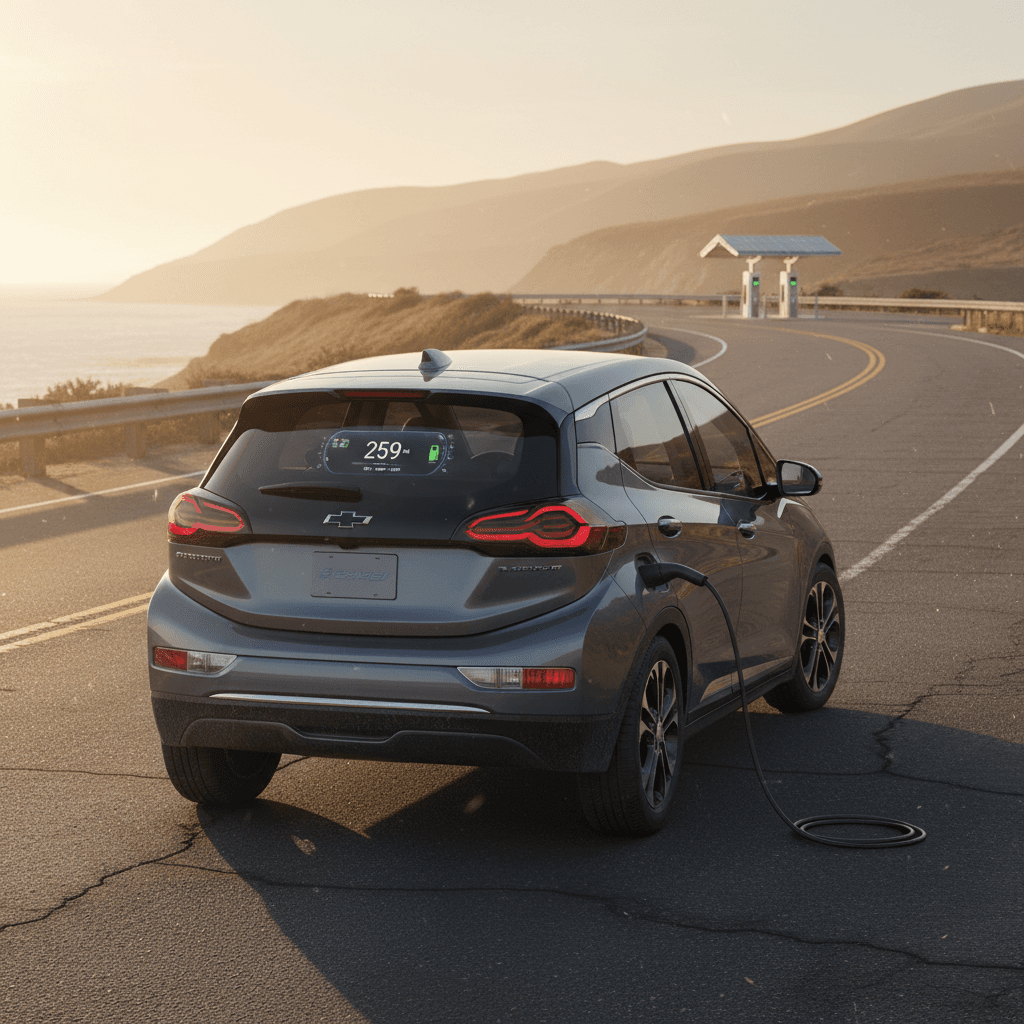
Search for a 2022 Chevy Bolt EV range test and you’ll see the same number over and over: 259 miles. That’s the EPA rating, but it’s not what you’ll actually see day to day. In the real world, speed, temperature, and how you treat the battery can swing your range by 100 miles or more, especially on a used Bolt. This guide pulls together the best independent tests and owner data, then translates it into practical advice for shoppers and new owners.
TL;DR: What our range deep dive shows
Overview: Why 2022 Bolt EV range matters for used buyers
The 2022 Chevy Bolt EV lives in a sweet spot: it’s one of the most efficient EVs ever sold in the U.S., but it’s now firmly in used-car territory, which makes it a compelling value. That combination, high efficiency and low entry price, means range is both the car’s biggest selling point and the easiest thing to misunderstand. If you’re considering a used Bolt from a marketplace like Recharged, you’re probably asking two questions: “How far will it really go for me?” and “Has the battery lost much range since new?” We’ll tackle both.
2022 Chevy Bolt EV range and efficiency at a glance
2022 Bolt EV official range and battery specs
From the factory, the 2022 Chevy Bolt EV carries an EPA‑rated range of 259 miles on a full charge, using a lithium‑ion battery pack rated at roughly 65 kWh usable energy. That works out to about 4 miles per kWh in mixed EPA driving, which is elite efficiency for a practical hatchback rather than a hyper‑aero science project.
2022 Chevy Bolt EV EPA range and efficiency
How the official government numbers break down for city, highway, and combined driving.
| Metric | EPA City | EPA Highway | EPA Combined |
|---|---|---|---|
| Range (miles) | ~280 mi | ~233 mi | 259 mi |
| MPGe | 131 MPGe | 109 MPGe | 120 MPGe |
| Energy use (Wh/mi) | ~257 Wh/mi | ~309 Wh/mi | ~281 Wh/mi |
The 2022 refresh slightly improved efficiency compared with earlier Bolts, while keeping the same 259‑mile combined rating.
Think in kWh, not just miles
City and mixed-driving range tests: Beating the EPA
Independent testers have consistently found that the 2022 Bolt EV can match or beat its EPA figure in real‑world mixed driving. Edmunds ran a full‑to‑empty loop and recorded about 278 miles, roughly 7% better than the 259‑mile rating in mild California weather. That’s the upside scenario: gentle driving, reasonable temps, and mostly suburban and highway cruising at legal speeds.
In-town and suburban driving
- Lots of slowing and accelerating favors regenerative braking.
- Speeds of 25–50 mph are the Bolt’s happy place.
- Drivers commonly see 4.5–5.0 mi/kWh in temperate weather.
At 4.7 mi/kWh, your 65‑kWh pack can theoretically deliver over 300 miles, though you’ll rarely run it that low in daily life.
Realistic mixed driving
- Commute includes surface streets and some highway.
- Typical efficiency is 3.8–4.3 mi/kWh.
- Expect 240–280 miles per full charge, weather‑dependent.
This is why many Bolt owners feel like the EPA number is conservative unless they’re constantly at 70+ mph.
Good news for used buyers
Highway range test at 70 mph: What to really expect
Highway is where range dreams go to die. Aerodynamic drag climbs with the square of speed, so pushing air at 70–75 mph is a very different game than gliding through town at 40. That’s why serious reviewers do a separate constant‑speed highway range test.
InsideEVs ran the 2022 Bolt EV on a controlled 70‑mph loop from full to effectively empty and recorded about 260 miles before the car shut down. Segment data showed efficiency hovering around 3.9–4.0 mi/kWh despite the higher speed, an impressive result that speaks to the Bolt’s slippery shape and efficient drivetrain.
Realistic highway range scenarios for a 2022 Bolt EV
Assumes a healthy battery and mild temperatures (around 60–75°F).
Conservative cruiser (60–65 mph)
- Efficiency: ~4.0–4.5 mi/kWh
- Estimated range: 260–290 miles
- Best for: Maximizing distance between stops.
Normal U.S. highway (70 mph)
- Efficiency: ~3.5–4.0 mi/kWh
- Estimated range: 225–260 miles
- Best for: Comfortable pace that still respects range.
Fast lane (75–80 mph)
- Efficiency: ~2.8–3.3 mi/kWh
- Estimated range: 180–215 miles
- Best for: Shorter hops where time matters more than efficiency.
Beware the math of “just 5 mph faster”
Winter driving: How cold weather hits Bolt EV range
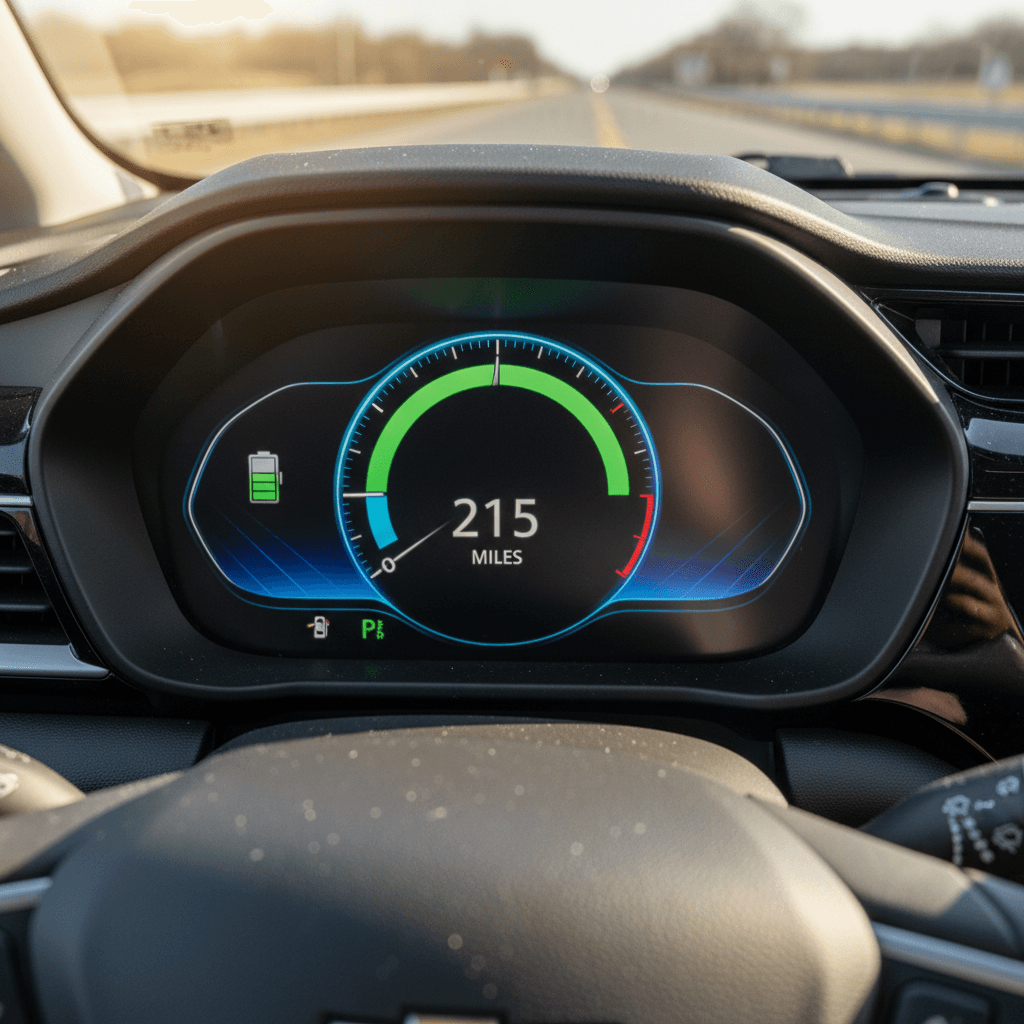
Cold weather is the villain in every EV range story, and the 2022 Bolt EV is no exception. Lithium‑ion batteries are less efficient when cold, and the Bolt’s electric resistance cabin heater can be a real energy hog until the cabin and pack warm up.
- In mild winters (around 30–45°F), many owners report 20–30% range loss if they run the cabin heater for comfort.
- In harsher climates (single digits to teens), losses of 30–40% aren’t unusual on short trips, especially if the car sleeps outside and starts each drive with a cold-soaked pack.
- Longer highway drives in cold temps are a bit kinder: once everything warms up, efficiency tends to stabilize, though still below summer numbers.
Cold weather range expectations
- Normal 260–280 mi mixed‑driving car becomes a 180–220 mi car in a typical U.S. winter.
- At 70 mph in the cold, plan for 160–200 miles per full charge.
- Short trips are hardest on range; you keep reheating a cold cabin and pack.
Simple winter survival tactics
- Precondition while plugged in so the car uses grid power to warm the cabin.
- Use the heated seats and wheel aggressively; run cabin temp a bit lower.
- Keep the car in a garage or at least out of the wind when possible.
Don’t size your EV on a perfect spring day
Driving habits that make or break your Bolt’s range
The 2022 Bolt EV is like an honest personal trainer: it quietly records your every sin and posts the results in mi/kWh. Two drivers on the same road, in the same weather, can finish a trip with completely different ranges left. The difference is in how they drive.
Five habits that transform your 2022 Bolt EV range
Each one sounds small in isolation; together they’re the difference between anxiety and ease.
1. Smooth throttle, early lift-offs
2. Choose 65 mph over 75 mph
3. Smart climate control
4. Plan DC fast charges around 10–60%
5. Watch mi/kWh, not just miles left
6. Use one‑pedal driving in town
Battery health on a used 2022 Bolt EV: What we’re seeing
By 2026, every 2022 Bolt EV is 3–4 years old. That’s prime time for used shoppers, and for asking whether the battery has meaningfully degraded. The headline: when properly cared for, modern Bolt packs have aged better than many shoppers fear.
Real‑world owner reports commonly show only single‑digit percentage losses in usable capacity after several years and tens of thousands of miles, especially when the car hasn’t lived its life parked at 100% charge in blazing sun. On top of that, 2022 models benefit from GM’s post‑recall pack updates and an 8‑year/100,000‑mile battery warranty from original in‑service date.
How Recharged measures Bolt battery health
Typical 2022 Bolt EV battery health scenarios (illustrative)
Generalized examples showing how modest degradation affects realistic range expectations.
| Battery health | Usable capacity (approx.) | Mixed-driving range | 70 mph highway range |
|---|---|---|---|
| 100% (as new) | ~65 kWh | 260–280 mi | 225–260 mi |
| 95% | ~62 kWh | 245–265 mi | 215–245 mi |
| 90% | ~58.5 kWh | 230–250 mi | 205–230 mi |
Actual numbers vary by car; use this as a framework, not a lab result.
Is the 2022 Bolt EV’s range enough for your life?
On paper, 259 miles sounds generous. In practice, the right question is: “Is my worst‑case range, on the highway, in winter, with heat on, enough for my real life?” That’s where the 2022 Bolt EV shines for some buyers and comes up short for others.
How the 2022 Bolt EV fits different drivers
Urban & suburban commuters
Daily round‑trip under 80 miles? You’ll likely charge every few days, not nightly.
Cold weather will shrink your buffer, but a home Level 2 charger makes it feel invisible.
For this group, the Bolt’s range is generous overkill. Your life revolves around errands, not chargers.
Long‑distance highway drivers
Weekly 200‑mile interstate trips? The Bolt can do it, but you’ll stop to DC fast charge once each way.
Plan highway legs around <strong>160–200 winter miles</strong> and <strong>200–240 summer miles</strong>.
If you routinely hammer out 400‑ to 500‑mile days, the Bolt will do it, but you’ll need patience with its modest DC fast‑charge speeds.
Occasional road‑trippers
Most of your miles are local, but you want to road‑trip a few times a year.
The Bolt’s efficiency means fewer stops than similarly priced crossovers with worse aerodynamics.
If you can tolerate a slightly slower travel day, the value proposition is hard to beat.
Where Recharged fits in the picture
Ready to find your next EV?
Browse VehiclesChecklist: Simple ways to stretch your range
Range‑maximizing checklist for 2022 Bolt EV owners
1. Set realistic trip buffers
When planning longer drives, assume you’ll use only <strong>80–85% of the pack</strong> and aim to arrive at chargers with at least 10% remaining. That mental model keeps you out of nail‑biting territory.
2. Learn your car’s favorite speed
On an empty stretch of highway, reset a trip meter at 65 mph, then again at 75 mph. Compare mi/kWh at each. The Bolt will show you the exact price of impatience.
3. Precondition whenever you can
Use the myChevrolet app or the in‑car schedule to warm or cool the cabin while plugged in. It’s free range, especially in winter when the heater is hungry.
4. Use one‑pedal mode in town
Enable one‑pedal driving and practice modulating the accelerator so you rarely touch the brakes. Regen is your friend; friction brakes are where range goes to die.
5. Keep tires and cargo in check
Under‑inflated tires and a rolling garage of stuff in the hatch eat efficiency. Check pressures monthly and clean out the dead weight.
6. Understand your car’s DC fast‑charge curve
The 2022 Bolt EV peaks around 55 kW and slows as you approach 80–90%. On road trips, it’s usually faster overall to stop more often and charge less deeply.
FAQs: 2022 Chevy Bolt EV range questions answered
Frequently asked questions about 2022 Bolt EV range
The 2022 Chevy Bolt EV is a quietly radical car: a compact hatchback that, in the right hands, can wring 260‑plus honest miles from a battery pack that would barely get a big luxury SUV out of bed. Range tests from Edmunds, InsideEVs, and thousands of owners sketch a consistent picture: respect the physics, speed, temperature, and driving style, and the Bolt will respect your time. If you’re shopping used, the final piece of the puzzle is battery health. That’s where a transparent report, like the Recharged Score, turns the abstract idea of ‘kilowatt‑hours remaining’ into a clear answer to the only question that really matters: will this car go as far as you need, on the days when it matters most?