If you’re looking at a 2022 Chevy Bolt EUV, you’re probably asking a simple but crucial question: **how far will it really go on a charge** in your daily life, not just in a lab range test? On paper the 2022 Bolt EUV looks solid, but real-world range depends heavily on speed, temperature, terrain, and driving style. This guide pulls together how range tests translate to everyday use, what you can realistically expect, and how to protect range and battery health, especially important if you’re considering a used Bolt EUV from a retailer like Recharged.
EPA vs real life
2022 Chevy Bolt EUV range at a glance
Key 2022 Bolt EUV range and efficiency numbers
- 200+ miles in moderate weather with a gentle right foot
- High‑100s on the highway at modern traffic speeds
- Mid‑100s in winter with frequent short trips and cabin heat
How to read any 2022 Bolt EUV range test
Different outlets test range in different ways: some run **steady 70 mph loops**, others mix city and highway, and some do winter‑only or summer‑only tests. If you’re comparing 2022 Chevy Bolt EUV range tests, always look for these details before you decide which number applies to you.
4 range test factors that matter more than the headline number
Check these details before you assume a range test matches your driving
1. Test speed
Range drops faster at higher speeds. A 60 mph test may show 230+ miles, while a 75 mph test on the same car might land in the 170–190 mile range.
2. Temperature & weather
EVs are most efficient around 60–75°F. Cold‑weather tests, especially below freezing, will naturally show shorter range due to battery chemistry and cabin heating loads.
3. Route mix
Stop‑and‑go city driving actually favors EVs like the Bolt EUV because of regenerative braking. Pure highway runs usually produce the lowest range numbers you’ll see.
4. Load & driving style
Passengers, cargo, roof racks, and aggressive passing all eat into range. A lightly loaded car driven smoothly at traffic speed will do much better than a full car driven hard.
Match the test to your reality
City vs highway: where the Bolt EUV really shines
Despite its upright styling and "EUV" badge, the 2022 Bolt EUV is still a compact, relatively aerodynamic hatchback. That helps it post **strong mixed-driving efficiency**. Most owners find that city and suburban routes with plenty of coasting and regeneration give them numbers that beat the EPA rating, while high‑speed interstate driving produces the lowest range. Here’s how that usually plays out.
Typical 2022 Bolt EUV real‑world range by scenario
Approximate numbers for a healthy battery starting at 100% charge. Your results will vary with climate, tires, and driving style.
| Driving scenario | Speed & conditions | Expected real‑world range | Comments |
|---|---|---|---|
| Urban/suburban mix | 30–50 mph, frequent stops, 60–80°F | 220–250 mi | Strong regeneration and moderate speeds help range; gentle driving can beat EPA. |
| Commuter belt mix | 40–70 mph, light traffic, 50–80°F | 200–230 mi | Typical for many U.S. commuters mixing surface streets and freeways. |
| Pure highway | 70–75 mph, steady cruise, 60–80°F | 170–200 mi | Higher aero drag at speed eats into range; wind and elevation matter. |
| Mountain interstate | 65–75 mph, long grades | 150–190 mi | Uphill pulls reduce range; you’ll gain some back on the way down via regen. |
| Stop‑and‑go traffic | 0–30 mph averages | 190–220 mi | Slow traffic hurts comfort more than range; cabin climate loads matter more here. |
Use these as planning tools, not promises. Planning with a 10–20% buffer is smart, especially in unfamiliar conditions.
High speeds = outsized impact
How weather and climate control change your range
Temperature is the single biggest wild card in any 2022 Chevy Bolt EUV range test. The Bolt’s heat pump–free HVAC setup relies on electric resistance heating in many situations, and that draws significant power. Cold weather also slows the battery’s chemistry, reducing how much usable energy you can access at a given moment.
Mild & warm weather (50–85°F)
- Best‑case efficiency: This is where most published range tests live. You’ll typically see 3.5–4.0 miles per kWh in mixed driving.
- A/C impact: Modern electric A/C is efficient; a few miles of range penalty at most when used moderately.
- Battery happy zone: The pack operates near its ideal temperature, which also supports long‑term health.
Cold & very hot weather
- Winter (below ~32°F): Expect a 20–40% hit to range between cabin heat and a cold-soaked battery. Short trips magnify the drop because the car keeps reheating.
- Summer heat waves: You’ll lose less range than in winter, but pre‑conditioning the cabin and pack while plugged in is still smart.
- Heated seats & wheel: These use far less energy than blasting cabin heat and can keep you comfortable with a smaller range penalty.
Beware of short winter hops
Battery health and degradation on used 2022 Bolt EUVs
The 2022 Bolt EUV’s battery chemistry is designed for **slow, predictable degradation**, especially when the car is mostly charged to 80–90% and not left at 100% for long periods in high heat. In the real world, most well‑cared‑for 2022 packs show modest capacity loss over the first few years, often small enough that range tests still land within sight of the original EPA rating.
What actually affects Bolt EUV battery health
If you’re buying used, these matter more than model year alone
Heat exposure
Cars that spent years parked outside in hot climates at high state of charge tend to show more degradation. A garage‑kept 2022 Bolt EUV in a mild climate can retain a very high percentage of its original capacity.
Charging habits
Daily DC fast charging from low to 100% is harder on any pack than mostly Level 2 charging to 80–90%. Occasional road‑trip fast charging is normal and expected.
Age & mileage
Degradation is a function of both calendar age and miles. A 2022 with low mileage but three summers in Phoenix will age differently than a higher‑mileage 2022 from coastal Oregon.
How Recharged helps you verify battery health
Ready to find your next EV?
Browse VehiclesSimple ways to stretch your real‑world Bolt EUV range
You don’t need to hypermile or crawl in the right lane to get satisfying range from a 2022 Chevy Bolt EUV. A handful of small, repeatable habits can easily add **10–20% more usable range** without making the car feel slow or uncomfortable.
Everyday habits that boost your 2022 Bolt EUV range
1. Use one‑pedal driving and strong regen
Set the Bolt EUV to its strongest regenerative braking mode where it feels comfortable. Lifting early and letting the car slow itself recaptures energy instead of wasting it as heat in the friction brakes.
2. Pre‑condition while plugged in
On hot or cold days, use the app or in‑car schedule to warm or cool the cabin while the car is still charging. That way the battery energy goes to driving, not getting the interior to a livable temperature.
3. Moderate your cruising speed
Cruising at 65 instead of 75 mph can feel like a minor change but often adds dozens of miles of range over a full charge. Use the Bolt EUV’s cruise control to keep speeds steady when traffic allows.
4. Check tire pressure regularly
Underinflated tires increase rolling resistance and hurt efficiency. Keep your tires at the recommended pressures (often listed on the driver’s door jamb) and consider low‑rolling‑resistance replacements when it’s time for new rubber.
5. Travel light and de‑clutter the roof
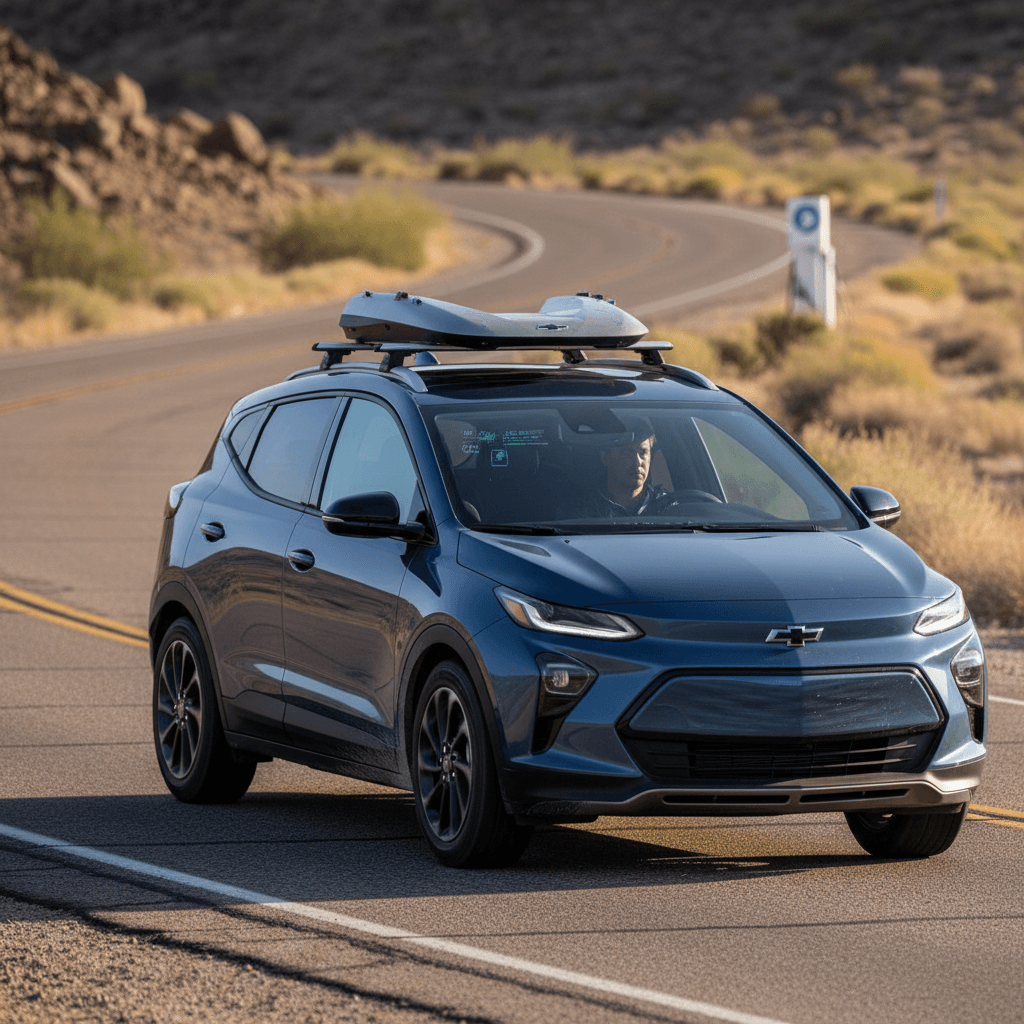
Roof racks, cargo boxes, and bike racks all add aerodynamic drag. If you don’t need them every day, remove them between trips. Clearing unnecessary weight out of the cargo area also gives a small efficiency boost.
6. Use seat and wheel heaters first in winter
If you’re driving alone, heated seats and steering wheel use much less energy than blasting cabin heat. You’ll stay comfortable while taking a smaller hit on range during cold snaps.
Trip planning and charging strategy for the Bolt EUV
For daily commuting, most 2022 Bolt EUV owners simply plug in at home and rarely think about public charging. But when you stretch beyond your normal radius, it helps to plan with **conservative range assumptions** and a realistic look at charging options along your route.
Day‑to‑day planning
- Use 70–80% of rated range: For routine planning, assume you’ll use the middle of your typical range window rather than the absolute best case.
- Arrive with a buffer: Aim to get home or to a charger with at least 10–15% remaining, especially in unfamiliar areas or bad weather.
- Home Level 2 = peace of mind: A 240V home charger can easily refill your daily use overnight. If you’re shopping for a used Bolt EUV, factor home charging plans into your decision.
Road‑trip strategy
- Plan around fast chargers, not just distance: Apps like PlugShare and network apps (EVgo, Electrify America, etc.) help you see where DC fast chargers sit along your route.
- Charge from ~10–15% to 60–80%: Those middle state‑of‑charge windows usually offer the fastest charge rates and best travel time.
- Be flexible in bad weather: In strong headwinds or deep cold, add an extra stop or charge a bit higher than usual to preserve your comfort margin.
Bolt EUV range compared with the Bolt EV and rivals
One of the smartest ways to interpret any 2022 Chevy Bolt EUV range test is to see how it stacks up against close alternatives. The EUV trades a bit of efficiency for extra rear‑seat space and available Super Cruise driver assistance, while staying very competitive with other compact EVs in its price and size class, especially in the used market.
Range comparison: 2022 Bolt EUV vs similar EVs
Approximate EPA combined range ratings for 2022 model‑year vehicles. Real‑world numbers will vary by conditions, just like the Bolt EUV.
| Model & year | Battery size (approx.) | EPA combined range | Highway range feel |
|---|---|---|---|
| 2022 Chevy Bolt EUV | 65 kWh | ~247 mi | Comfortable for 170–200 mi at interstate speeds in mild weather. |
| 2022 Chevy Bolt EV (hatchback) | 65 kWh | ~259 mi | Slightly more efficient; feels a bit stronger on long highway runs. |
| 2022 Hyundai Kona Electric | 64 kWh | ~258 mi | Similar efficiency to Bolt EV; strong mixed‑use range. |
| 2022 Nissan Leaf SV Plus | 62 kWh | ~215 mi | Shorter road‑trip legs; better for local use or shorter commutes. |
| 2022 VW ID.4 (RWD) | 77 kWh | ~250–260 mi | Larger battery and body; highway range similar but with more interior space. |
Use this table to understand where the 2022 Bolt EUV fits in the broader EV range landscape, especially if you’re cross‑shopping used options.
Where the Bolt EUV stands out used
Range checklist when shopping a used 2022 Bolt EUV
If you’re considering a used 2022 Bolt EUV, range shouldn’t be a mystery. It’s a combination of **battery condition**, your driving profile, and your charging setup. Use this checklist to decide if a particular car will comfortably fit your life today and several years down the road.
Used 2022 Chevy Bolt EUV range checklist
1. Clarify your daily mileage
Add up your typical weekday driving, including side trips. If you regularly drive 120 miles or less in a day, a healthy 2022 Bolt EUV has ample buffer, even in less‑than‑ideal conditions.
2. Consider your worst‑case days
Think about your longest, coldest, or busiest days. If those push into the high‑100‑mile range, plan on using fast charging en route or make sure you’re comfortable with slower speeds and energy‑saving tactics.
3. Review battery health data
Ask for a recent battery health report. With a Recharged vehicle, the Recharged Score shows how the car’s usable capacity compares to a healthy benchmark, so you can translate that into realistic range expectations.
4. Confirm your home charging plan
If you have, or can add, a Level 2 charger at home, daily range anxiety largely disappears. If you’ll rely on shared or public charging, make sure there’s convenient overnight or all‑day options near home or work.
5. Inspect tires and wheels
Oversized wheels, aggressive all‑terrain tires, or mismatched sets can all hurt range compared with the stock setup. Ask how and why they were changed, or budget to return the car to more efficient rubber.
6. Test drive like you actually drive
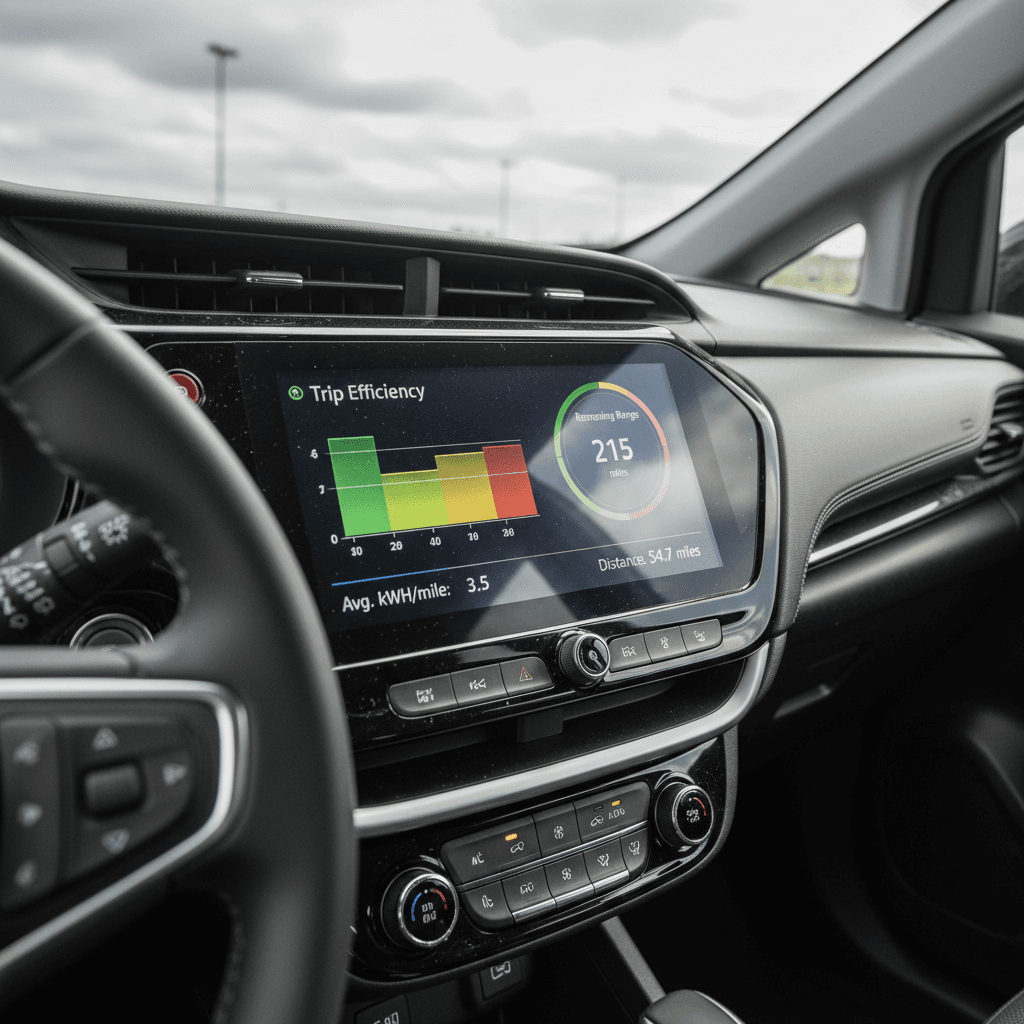
On a test drive, include some highway time at your typical speed. Watch the energy screen to see instantaneous and average efficiency, it’s your own mini range test under your real driving style.
2022 Chevy Bolt EUV range: common questions
Frequently asked questions about 2022 Bolt EUV range tests
Is the 2022 Bolt EUV’s range enough for you?
No single 2022 Chevy Bolt EUV range test can tell the whole story, but taken together, they paint a clear picture. In mixed driving and decent weather, a healthy Bolt EUV comfortably delivers 200+ miles of usable range, with winter and high‑speed highway driving trimming that number back. If your longest regular days fit inside that envelope with some buffer, the Bolt EUV can feel almost effortless to live with, especially paired with home charging.
Where things get even more compelling is in the **used market**. A carefully‑screened 2022 Bolt EUV with documented battery health can deliver modern EV range for far less than many newer competitors. At Recharged, every Bolt EUV comes with a Recharged Score battery report, transparent pricing, and EV‑specialist guidance, so your decision isn’t based on guesswork or a single optimistic test. Combine that objective data with the real‑world insights in this guide, and you’ll know whether the 2022 Bolt EUV has the range, and value, you’re looking for.