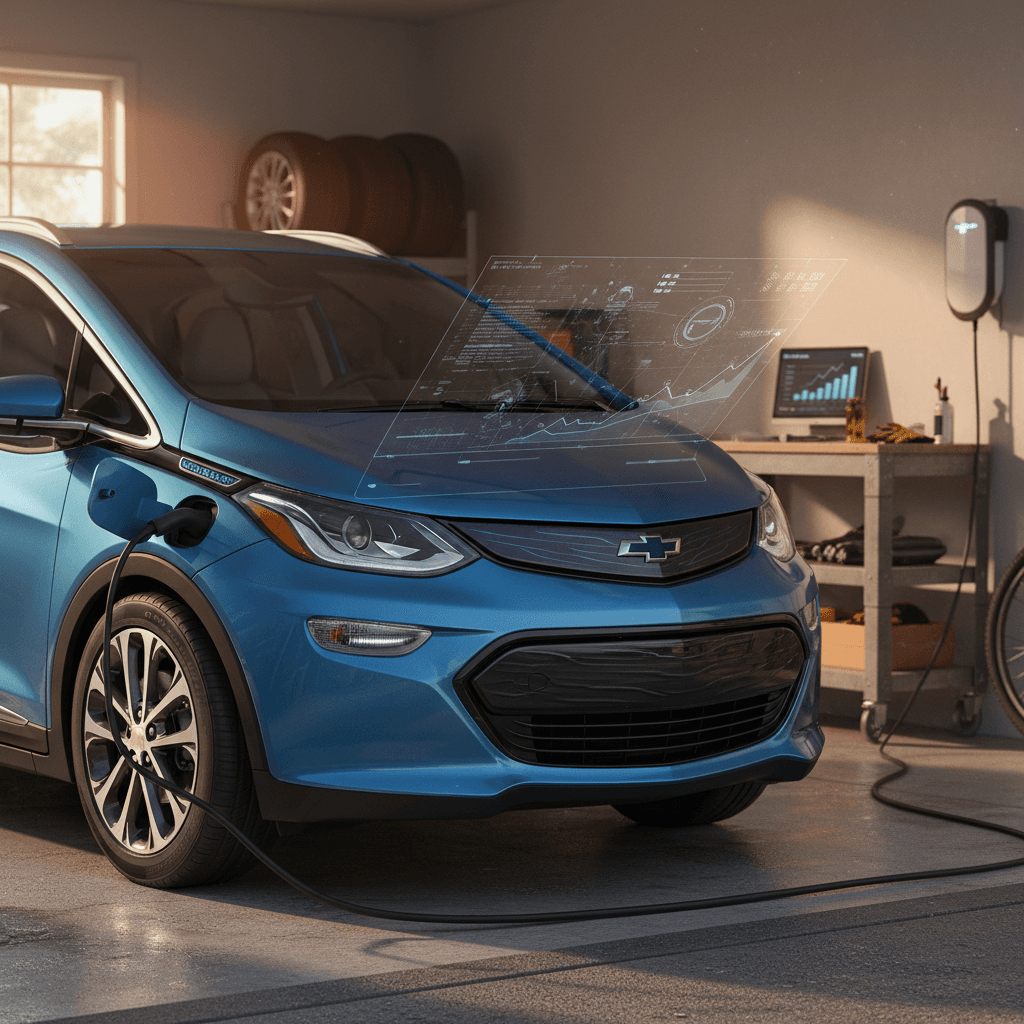
If you’re shopping for an affordable used EV, the 2022 Chevrolet Bolt EV is probably on your shortlist. But the phrase “Chevy Bolt” is still tied to headlines about battery fires and recalls, so it’s fair to wonder how the 2022 Chevrolet Bolt EV reliability rating really stacks up today, and what that should mean for your wallet and your peace of mind.
Quick take
2022 Bolt EV reliability at a glance
2022 Chevy Bolt EV reliability snapshot
Taken together, the 2022 Bolt EV is not a disaster car, but it’s also not a boringly bulletproof Toyota. It’s a relatively simple, efficient EV with a controversial battery history. If you understand that context and buy carefully, it can be a low‑drama commuter with extremely low running costs.
The catch
How major rating sources score the 2022 Bolt EV
Reliability ratings for the 2022 Bolt EV can look contradictory at first glance because different organizations weigh the battery recall very differently. Here’s how to interpret the alphabet soup.
2022 Chevy Bolt EV reliability ratings explained
Why Consumer Reports, owners, and reviewers don’t always agree
Consumer Reports
What you’ll see: In some CR reliability tables, recent Bolts (including 2022) have scored near the bottom of the pack.
Why: CR tends to heavily penalize any serious safety recall, especially one involving fires, so the battery campaign drags the Bolt’s predicted reliability down even if most owners never experience failures.
Owner reviews
What you’ll see: On sites like Kelley Blue Book, Cars.com and Edmunds, owner ratings for the 2022 Bolt EV typically land in the 4.5–4.7 / 5 range for reliability and satisfaction.
Why: Once fixed, most cars simply commute without drama. Owners praise the lack of routine maintenance and low operating costs.
Expert/press reviews
What you’ll see: Automotive outlets generally rate the 2022 Bolt EV’s reliability as average for a compact EV, with most concerns centered on past recalls and GM service experiences rather than chronic breakdowns.
Why: Simple powertrain, but a long shadow from early‑run battery issues and GM’s recall handling.
How to reconcile the scores
The battery recall: how it affects 2022 Bolt EV reliability
From a reliability perspective, the Bolt EV’s battery recall is the elephant in the room. GM ultimately recalled every 2017–2022 Bolt EV and 2022 Bolt EUV to address manufacturing defects in the LG battery cells that could, in rare cases, cause fires. For 2022 models, some were built with updated packs from day one, while others received software monitoring, pack replacements, or both.
- All 2017–2022 Bolt EVs were pulled into the high‑voltage battery recall campaign, regardless of mileage or owner history.
- Some 2022 cars had their packs replaced; others received advanced diagnostic software that continuously monitors for abnormal cell behavior.
- GM instructs owners of affected cars to obey specific charging limits and to have any alert messages addressed promptly.
- Battery‑related campaigns are separate from smaller recalls (seatbelt pretensioner fires, wiring issues, etc.) that may also apply to 2022 cars.
Battery fires vs. “typical” reliability
Common issues reported on 2022 Bolt EVs
Set the recall aside for a moment and the 2022 Bolt EV behaves like what it is: a relatively simple, front‑drive hatchback riding on a matured BEV platform. Here are the issues that come up most often in owner reports and forums.
Typical 2022 Bolt EV problem areas
Most are annoyances rather than show‑stoppers
Infotainment glitches
Some owners report the center screen freezing, rebooting spontaneously, or dropping Bluetooth and CarPlay/Android Auto connections.
- Usually resolved with over‑the‑air or dealer software updates.
- Occasionally requires a screen or module replacement under warranty.
Charge port & charging quirks
Complaints range from bent pins in the charge port to the car refusing to start a session on certain public Level 2 stations.
- Sometimes the culprit is a flaky public charger, not the car.
- In other cases, the Bolt needs a port repair or control module update.
Noise, rattles & trim wear
Being a light hatchback with a big battery, the Bolt can transmit more road and suspension noise than pricier EVs.
- Owners report squeaks, occasional hatch rattles, and some cheap‑feeling plastics.
- Annoying, but rarely reliability‑limiting.
DC fast‑charging performance
All Bolts are limited to roughly 55 kW at DC fast chargers.
- That’s by design, not a defect, but it can feel slow compared with newer EVs that can pull 100+ kW.
- On cold days or high‑mileage packs, speeds can dip further, which some owners interpret as a “problem.”
What counts as a red flag
Owner experience: what 2022 Bolt drivers report
Surveys and online communities paint a fairly consistent picture of day‑to‑day life with a 2022 Bolt EV once the recall work is in the rearview mirror.
- Low routine maintenance: Many owners report nothing but tire rotations and cabin filters for tens of thousands of miles, no oil, no timing belts, no exhaust system to rust out.
- High efficiency and low energy cost: The 2022 Bolt EV’s official 259‑mile range and strong efficiency mean cheap commuting, especially if you can charge at home on off‑peak rates.
- Strong value satisfaction: Because Bolts were discounted heavily new and often sell competitively used, owners frequently mention that reliability is “good enough” given the price and fuel savings.
- Trust depends on recall experience: Drivers who had smooth battery replacements or software updates tend to be very happy. Those who fought with dealers or spent months waiting on parts tend to view the car, and GM, far more skeptically.
“In a combined 4 years and over 60,000 miles on our Bolts, we’ve had fewer issues than with any gas car we’ve owned, once the recall work was done.”
How the 2022 Bolt EV compares to other affordable EVs
If you’re cross‑shopping a 2022 Bolt EV against cars like the Nissan Leaf, Hyundai Kona Electric, or early Tesla Model 3, it helps to put its reliability rating in context.
2022 Bolt EV vs similar used EVs: reliability snapshot
High‑level view; specific cars will vary based on history and mileage.
| Model (approx. MY) | Typical reliability picture | Battery/thermal history | DC fast‑charge speed | Notable gotchas |
|---|---|---|---|---|
| 2022 Chevy Bolt EV | Average once recall is done; simple hardware, few chronic failures. | Major 2017–2022 battery recall; many 2022 packs repaired or monitored via software. | ~55 kW | Recall status and battery diagnostics are critical; modest road‑trip charging speed. |
| 2019–2022 Nissan Leaf | Generally solid; older cars may have more degradation. | Earlier Leafs (esp. pre‑2018) lack liquid cooling; 2019+ improved but still air‑cooled. | Up to ~100 kW (e+), slower on standard models | Faster degradation in hot climates; CHAdeMO fast‑charging standard is being phased out in North America. |
| 2019–2021 Hyundai Kona Electric | Good mechanical reliability; some high‑profile battery recalls in early years. | Battery recall on certain packs; most fixed under warranty. | Up to ~75 kW | Check recall completion and for any remaining battery limitations or software caps. |
| 2018–2020 Tesla Model 3 | Strong powertrain track record but more build‑quality complaints. | Liquid‑cooled packs; no broad fire‑related recall like the Bolt. | 120–250 kW depending on variant | Panel gaps, water leaks, and electronics issues more common; service experience varies widely. |
Use this as a directional guide, not a substitute for a VIN‑level inspection.
Where the Bolt does well
- Simplicity: Single motor, front‑wheel drive, no air suspension or complex driveline parts.
- Range per dollar: 259 miles of EPA range is still competitive in its price bracket.
- Mature platform: By 2022, GM had several years of field data on the BEV2 platform’s non‑battery hardware.
Where the Bolt lags
- Public charging speed: 55 kW DC fast‑charging feels dated if you road‑trip a lot.
- Brand perception: The recall heavily colors how shoppers and watchdogs rate its reliability.
- Dealer support: EV‑certified Chevy dealers are improving, but competence still varies regionally.
What to check before you buy a used 2022 Bolt EV
Because the 2022 Chevrolet Bolt EV reliability rating hinges so heavily on battery history, you should approach any used example like an investigator, not just a test‑driver. Here’s a practical checklist.
Pre‑purchase checklist for a 2022 Chevy Bolt EV
1. Run the VIN for open recalls
Use NHTSA’s recall lookup or GM’s recall site to confirm <strong>every battery‑related campaign</strong> and the seatbelt‑pretensioner fire recall are closed. If anything is still open, factor in the time and hassle of getting the work done.
2. Confirm what battery work was done
Ask for service records showing whether the car received a <strong>full pack replacement, module replacement, or advanced diagnostic software only</strong>. A dealer printout of recall completion is ideal. Be wary if the seller is vague.
3. Review battery health and range
On a reasonably warm day, charge the car to at least 80% and note the estimated range. Compare it to the original 259‑mile EPA figure. Some loss is normal; a big sudden drop can signal an issue that deserves deeper diagnostics.
4. Test Level 2 and DC fast charging
If possible, plug into both a home‑style Level 2 charger and a DC fast charger. Confirm the car starts and maintains a session without throwing errors. Pay attention to any warnings in the instrument cluster or app.
5. Scan for warning lights and stored faults
During a pre‑purchase inspection, have the car scanned for <strong>EV‑specific trouble codes</strong>, not just generic OBD‑II codes. Hidden battery, charging, or high‑voltage system faults can indicate expensive fixes later.
6. Inspect interior, suspension, and brakes
Take a thorough test drive over rough surfaces. Listen for clunks, rattles, or grinding. Check that one‑pedal driving feels smooth and consistent, any weirdness here can hint at issues with the regen or brake blending systems.
Leverage EV‑specific inspections
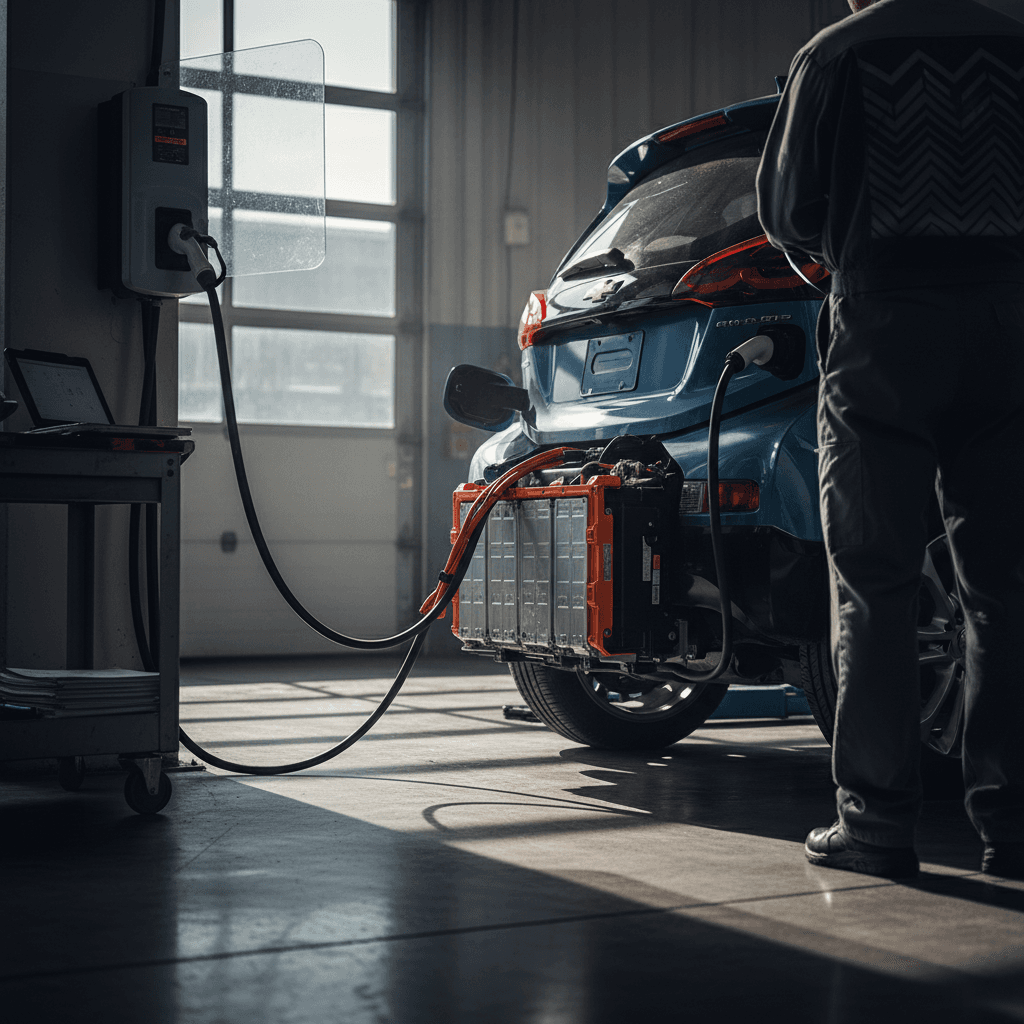
How Recharged evaluates 2022 Bolt EV battery health
Because the battery is simultaneously the Bolt’s greatest asset and its biggest reputational liability, Recharged treats it as the centerpiece of our evaluation process. When a 2022 Bolt EV shows up on our platform, it doesn’t just get a quick test drive and a Carfax check.
Inside the Recharged Score for a 2022 Bolt EV
What we look at before a Bolt ever hits our marketplace
Pack health & capacity
We use specialized tools and road testing to estimate usable battery capacity and state of health, then compare it to what we expect for that model year and mileage.
Recall & software status
We verify completion of all relevant GM campaigns, including the 2017–2022 battery recall and any advanced diagnostic software updates, and flag anything still outstanding.
Charging behavior
We test AC and, when possible, DC fast‑charging behavior to confirm the car starts, maintains, and terminates charge sessions correctly, no hidden quirks that only show up on a road trip.
Ready to find your next EV?
Browse VehiclesThe results feed into the Recharged Score Report you see when you browse a Bolt EV on our marketplace. Instead of guessing from a vague “good battery” claim, you get a clear view of pack health, recall history, and any charging anomalies, so the car’s real‑world reliability isn’t a mystery.
FAQs: 2022 Chevrolet Bolt EV reliability rating
Common questions about 2022 Bolt EV reliability
Bottom line: is the 2022 Bolt EV reliable enough to buy used?
If you’re looking strictly at average defect rates and owner‑reported headaches, the 2022 Chevrolet Bolt EV reliability rating lands in the “good enough” zone once its recall work is complete. It’s not as squeaky‑clean as a boring compact hybrid, but it’s also not the rolling fire hazard some headlines imply. Mechanically, the 2022 Bolt is a straightforward, efficient EV with a mostly solid track record.
Where things get interesting, and where you can either get a screaming deal or an expensive headache, is in how carefully you vet a specific car’s battery history. A 2022 Bolt EV with documented recall completion, healthy pack diagnostics, and clean charging behavior can deliver years of low‑cost, low‑drama driving. One with murky paperwork and unresolved alerts is a risk you don’t need to take when so many fixed examples are on the market.
If you’d rather not play detective alone, buying through Recharged means every Bolt EV comes with a Recharged Score Report, verified battery health testing, and EV‑specialist support from first click to delivery. That way, you’re not just betting on a rating, you’re buying a used 2022 Bolt EV whose real‑world reliability profile you actually understand.