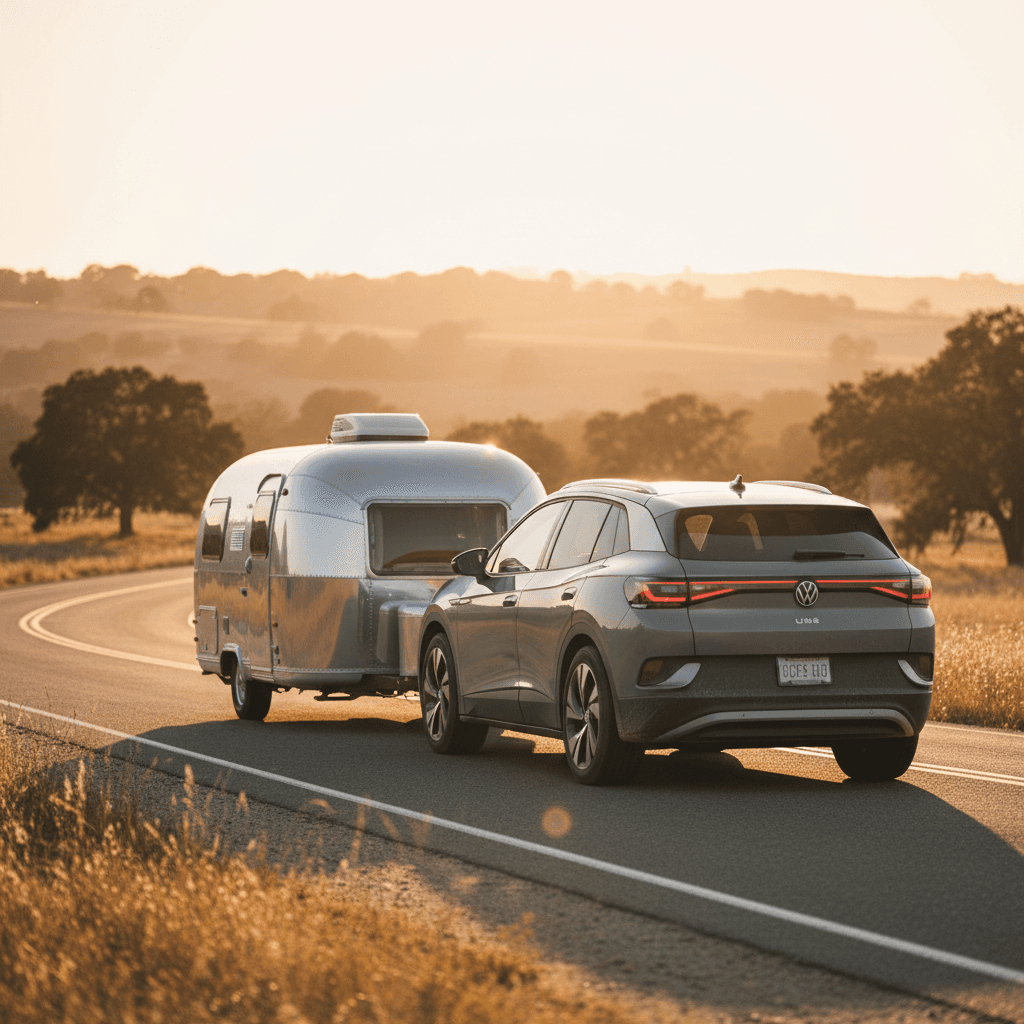
If you’re eyeing a Volkswagen ID.4 and wondering, **“can this EV actually tow a trailer?”**, the short answer is yes, *with the right configuration and realistic expectations*. Many ID.4s are rated to tow, but capacity, hardware, and legality depend heavily on model year, drivetrain, and where the car was originally sold.
Key context for U.S. shoppers
Quick answer: can a Volkswagen ID.4 tow a trailer?
Yes, a properly equipped **Volkswagen ID.4 can tow a trailer**, and many recent U.S. models are rated to pull around **2,200–2,700 pounds** when they have the factory tow package and you’re using a trailer with its own brakes. That’s enough for a small camper, lightweight boat, or utility trailer, but not a full-size travel trailer.
- Most **2023–2025 AWD ID.4s with factory hitch**: typically advertised around **2,200–2,700 lbs** maximum braked trailer weight.
- Some **RWD trims with factory hitch** (or early First Edition models): often quoted closer to **1,500–2,200 lbs** braked.
- U.S. cars **without a factory tow rating** should be treated as *not approved* for towing, even if an aftermarket hitch is installed.
- Real‑world towing can cut **usable range by 30–50%**, especially at highway speeds.
Ratings are vehicle-specific
VW ID.4 towing capacity by trim and market
Volkswagen has adjusted ID.4 tow ratings over time and publishes **different numbers in different regions**. Here’s how the most common setups break down for shoppers in North America, plus a quick comparison to European specs.
Approximate VW ID.4 towing capacity by configuration
Typical maximum trailer weights when properly equipped with a factory hitch. Always confirm against your specific vehicle documentation.
| Configuration | Typical model years (U.S.) | Max braked trailer | Max unbraked trailer | Notes |
|---|---|---|---|---|
| RWD First Edition (factory hitch rare) | 2021 | 1,500 lbs | ~1,000 lbs | Limited early run; U.S. hitch option was uncommon. |
| Later RWD, with factory tow option where offered | 2024–2025 | Up to ~2,200 lbs | Typically lower than braked rating | Some dealer literature lists 2,200 lbs when equipped; not all RWD cars are rated. |
| AWD with factory tow hitch | 2023–2025 | ≈2,200–2,700 lbs | ≈1,650–2,000 lbs | Most dealer specs quote up to 2,700 lbs with trailer brakes. |
| U.S. ID.4 with no factory tow rating | 2021–2025 | Not rated | Not rated | Treat as non‑towing, even if an aftermarket hitch is added. |
| European RWD with tow package | Various | Up to 1,000–1,200 kg (2,205–2,645 lbs) | Typically 750 kg (1,650 lbs) | Euro ratings are higher in some cases but don’t automatically apply to U.S. cars. |
| European AWD with tow package | Various | Up to 1,400 kg (3,086 lbs) | 750 kg (1,650 lbs) | Shown for comparison; follow your own vehicle’s documentation. |
These figures are directional, not a substitute for your door‑jamb label or owner’s manual.
Why the numbers vary so much
ID.4 towing at a glance
What kinds of trailers can an ID.4 realistically tow?
Tow rating is only half the story. You also need to think about **aerodynamics, frontal area, tongue weight, and how much gear you’re packing**. Here’s a practical view of what usually works, and what doesn’t, for an ID.4 driver who wants to tow.
Common trailer types vs. VW ID.4 towing capability
Assumes a factory‑rated AWD ID.4 with roughly 2,200–2,700 lbs max braked capacity.
| Trailer type | Typical loaded weight | ID.4 suitability | Comments |
|---|---|---|---|
| Small utility trailer (Home Depot style, lawn equipment, moving boxes) | 1,000–1,800 lbs | Good fit | Keep the load low and balanced; watch tongue weight with heavier cargo. |
| Single‑axle small cargo trailer (5×8, 6×10) | 1,500–2,500 lbs | Borderline to good | Fine if you keep total weight on the lighter end and trailer has brakes. |
| Lightweight teardrop / mini‑camper | 1,200–2,000 lbs | Good fit | Very popular pairing; low frontal area helps preserve range. |
| Pop‑up camper | 1,800–2,500+ lbs | Depends | Heavier floorplans can push the limit; confirm actual weight and brakes. |
| Small boat on trailer (fishing boat, small sailboat) | 1,500–2,500 lbs | Depends | Weight is often okay; launching on ramps puts extra stress on drivetrain. |
| Full‑size travel trailer (20–25 ft) | 3,500–5,000+ lbs | Not recommended | Too heavy and too tall for the ID.4’s tow rating and braking capacity. |
When in doubt, aim for a fully loaded trailer weight at least 10–20% below your official rating.
Aim lighter than the brochure
Range loss: how far can you tow with an ID.4?
Towing is where EVs and gas vehicles behave similarly: **drag and weight eat range**. With the ID.4, expect a **30–50% hit to usable range** when you tow at freeway speeds, especially with a tall camper catching a headwind.
Light, low trailer (best case)
- Example: teardrop camper around 1,500 lbs loaded.
- Highway‑heavy trip at 60–65 mph.
- You might see **60–70% of your normal highway range**.
- On a larger‑battery ID.4, that can mean 130–170 miles between comfortable charging stops.
Tall, heavy trailer (worst case)
- Example: boxy 2,200–2,500 lb cargo or pop‑up camper.
- Driving 70+ mph into wind or hills.
- Range can drop to **50% or even less** of your solo highway range.
- You may be planning stops every 80–120 miles, depending on battery size and conditions.
Plan your fast‑charging around the trailer
Hitches, tongue weight, and brakes: what matters most
Once you know your weight limits, you still have to get the **hardware and setup right**. On the ID.4, three variables matter a lot: the hitch itself, tongue weight, and whether the trailer has its own brakes.
Three towing essentials for a VW ID.4
Get these wrong, and even a light trailer can feel sketchy.
Factory vs. aftermarket hitch
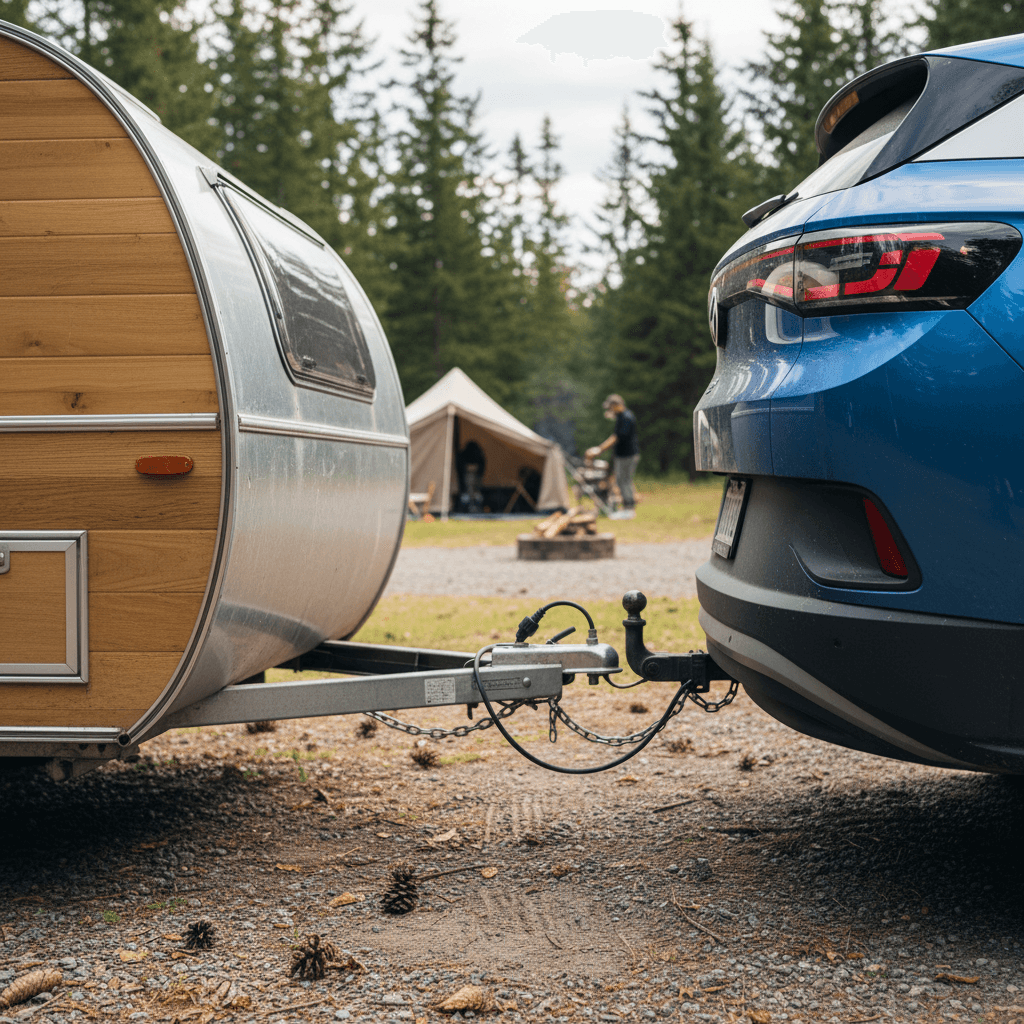
A **factory tow package** typically includes a rated receiver, reinforced mounting points, and electrical connectors. Aftermarket hitches can work, but they don’t change your vehicle’s official tow rating, **you’re still bound by the car’s limits**, not the hitch’s headline number.
Tongue weight limits
Many ID.4 guides and hitches quote **roughly 165–270 lbs of max tongue weight**. That’s the downward force on the hitch. Too much tongue weight can bottom the suspension, upset handling, and overload the rear structure.
Trailer brakes required
For loads above a few hundred pounds, you should assume you’ll need **brakes on the trailer** plus a compatible brake controller. Laws vary by state, but from a safety standpoint, unbraked trailers near the ID.4’s limit are a bad idea.
Don’t follow the hitch rating alone
Towing with a used ID.4: what to check before you buy
If you’re shopping the used market, the ID.4 can be a smart choice for light towing, *but only if you pick the right build and inspect it carefully*. Here’s how to evaluate a used ID.4 through a towing lens.
Used VW ID.4 towing checklist
1. Confirm it’s actually rated to tow
Check the **owner’s manual, door‑jamb label, and original window sticker** (if available) for a listed towing capacity. If the car wasn’t sold with a towing package or formal rating, assume it’s not approved for towing, even if it has a hitch now.
2. Identify drivetrain and battery size
AWD models with the larger battery are generally **better towing candidates** thanks to extra traction and energy. RWD and smaller‑battery cars can still tow in some configs, but range and stability margins are tighter.
3. Inspect the hitch and wiring
Look underneath for **rust, bent hardware, poor welds, or DIY wiring taps**. Trailer wiring hacked into the taillight harness can create electrical gremlins. A clean, properly mounted hitch and harness are a good sign; a messy install is a red flag.
4. Ask how it was used
Light duty with a **bike rack or cargo carrier** is very different from towing a near‑max‑weight camper every weekend. Ask the seller directly what they towed, how far, and how often. Compare that story with visual signs of wear.
5. Check braking and suspension feel
On a test drive, listen and feel for **clunks over bumps, rear‑end sag, or noisy brakes**. A car that’s been run close to its tow limit for years may show more wear on dampers, bushings, and pads.
6. Review battery health data
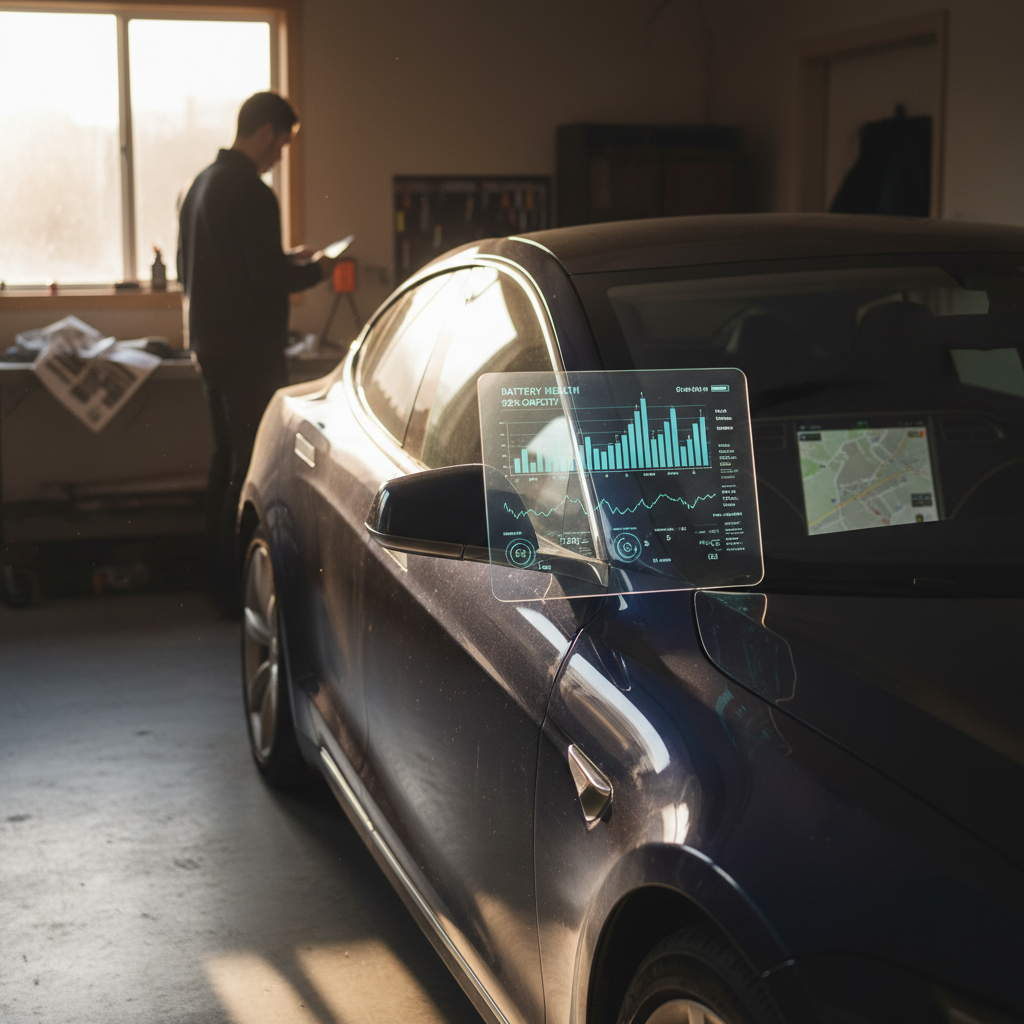
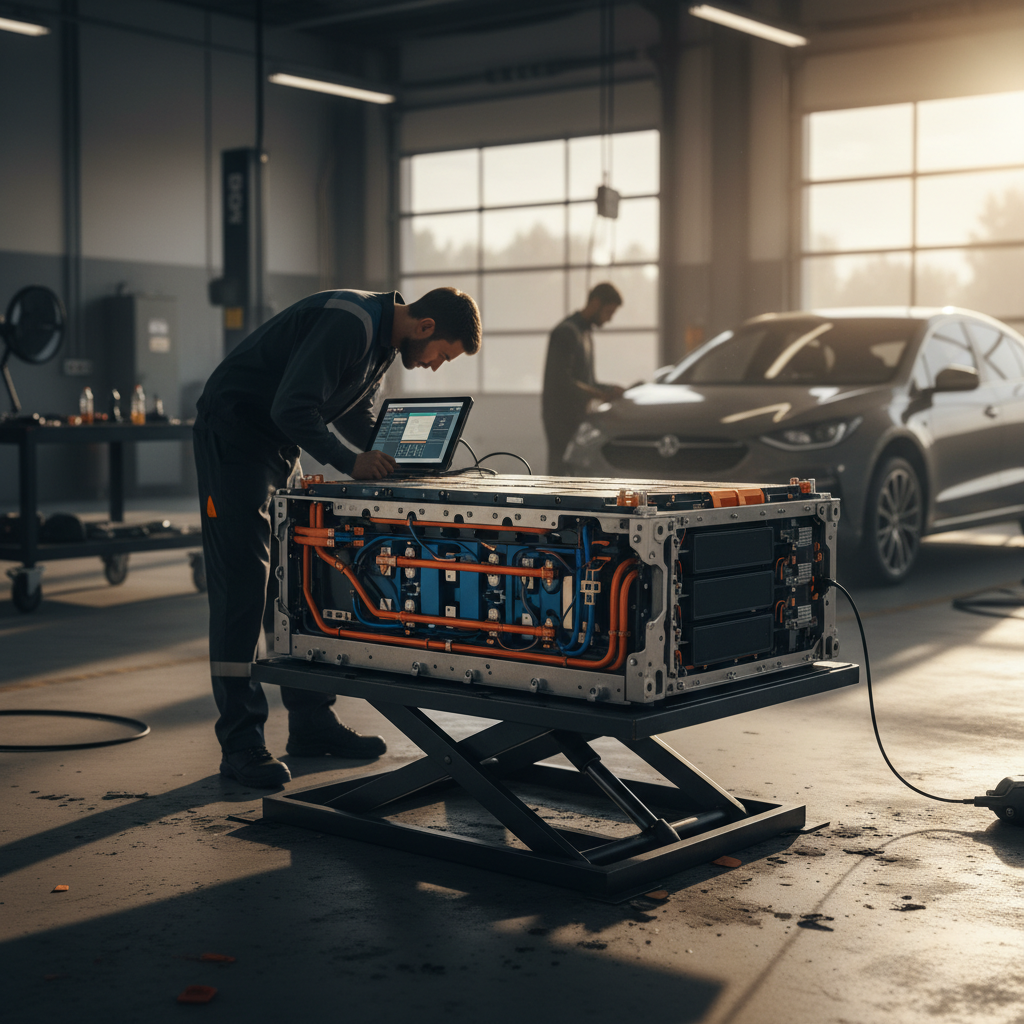
Towing doesn’t automatically ruin a pack, but frequent high‑load use means more stress and more DC fast‑charging. A **battery health report**, like the Recharged Score you get when you buy through <strong>Recharged</strong>, helps you understand long‑term capacity before you commit.
How Recharged can help
Ready to find your next EV?
Browse VehiclesIs the VW ID.4 a good tow vehicle? Pros and cons
Where the ID.4 shines
- Instant torque: Electric motors pull strongly from a stop, which feels great when moving a small camper or boat up a ramp.
- Low center of gravity: The battery pack keeps the SUV planted, improving stability with modest trailers.
- Quiet, smooth towing: No gear hunting or engine noise; the experience is relaxed compared to many gas crossovers.
- Great for regional trips: For **weekend camping within a few hours of home**, the ID.4 can be an excellent partner.
Where it falls short
- Limited tow rating: Around 2,200–2,700 lbs isn’t enough for many traditional travel trailers.
- Range hit on the highway: Expect to stop more often, sometimes every 100–150 miles, on longer tows.
- Charging logistics: DC fast‑charging with a trailer can be awkward at stations not designed for pull‑through access.
- Rating confusion: Mixed messages between regions, trims, and aftermarket hitches make it easy for owners to overestimate what’s safe.
Step-by-step: how to tow safely with an ID.4
Once you’ve confirmed your ID.4 is rated to tow and chosen an appropriately light trailer, follow a disciplined process each time you hitch up.
Safe towing procedure for VW ID.4 owners
1. Verify weights before you hook up
Confirm the trailer’s **actual loaded weight** using a scale or manufacturer data, not just the dry number in a brochure. Make sure you’re below both the **max trailer weight and tongue weight** for your specific ID.4.
2. Inspect tires and set pressures
Check and adjust **tire pressures on both the ID.4 and the trailer**. Under‑inflation is a common cause of sway, blowouts, and poor efficiency.
3. Attach hitch, safety chains, and wiring
Secure the coupler, insert and lock the hitch pin, cross and connect **safety chains**, and plug in the wiring harness. Test **brake lights, turn signals, and running lights** before moving.
4. Dial in the brake controller
If your trailer has brakes, follow the controller’s setup procedure and perform **low‑speed stops in a parking lot**. You want firm, balanced braking without the trailer yanking or pushing the car.
5. Start slowly and watch for sway
Ease up to speed, paying attention to **steering feel and how the trailer tracks** in your mirrors. If you notice any sway, back off the throttle and reduce speed immediately rather than trying to power through it.
6. Plan conservative speeds and charging stops
High speed multiplies aero drag and kills range. Stay in the **right lane at moderate speeds** and plan DC fast‑charging stops with a comfortable buffer, especially in cold weather or strong winds.
Smart route planning
FAQ: VW ID.4 towing questions answered
Frequently asked questions about towing with the VW ID.4
Bottom line: should you tow a trailer with a VW ID.4?
A **Volkswagen ID.4 can absolutely tow a trailer**, as long as you pick the right configuration, stay within its relatively modest limits, and plan your trips around shorter range and more frequent charging. Think **small campers, utility trailers, and light boats**, not big fifth‑wheels or 25‑foot travel trailers.
If you’re shopping used, take the time to **verify tow ratings, inspect hitch installs, and review battery health**. Buying through a platform like Recharged can simplify that process: every vehicle includes a Recharged Score battery report, expert EV guidance, and a digital‑first experience that makes it easier to find an ID.4 that fits both your daily driving and your weekend towing plans.