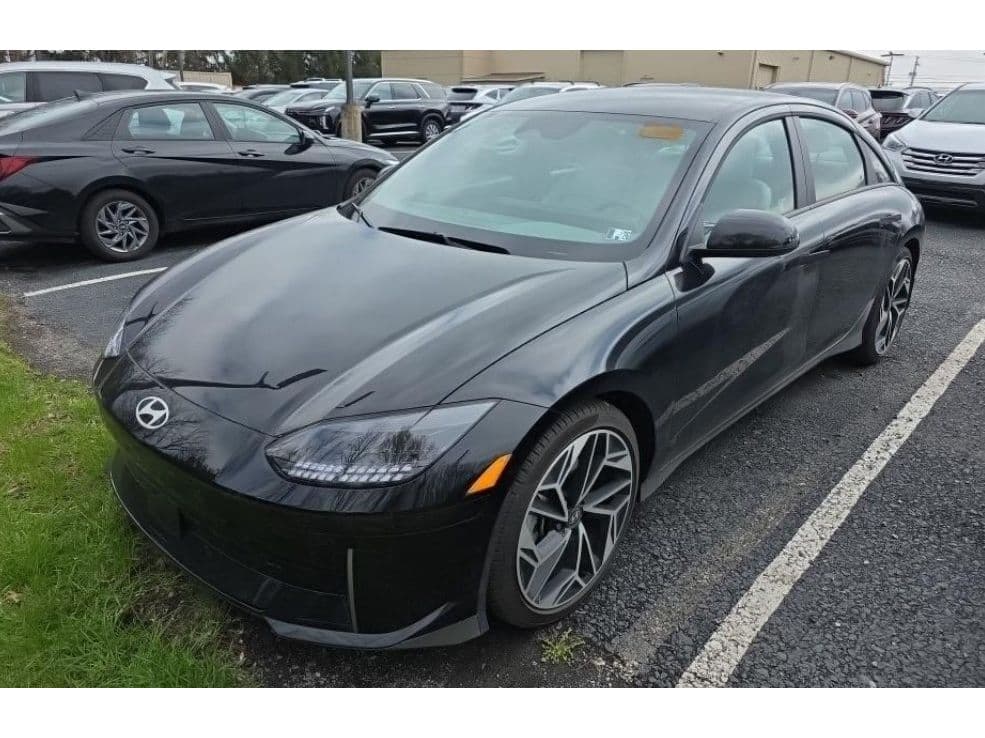
If you’re cross‑shopping a Hyundai Ioniq 6 against a familiar gas sedan like a Hyundai Sonata, Toyota Camry, or Honda Accord, the big question isn’t just sticker price. It’s total cost of ownership, how much you’ll actually spend over 5–10 years on payments, fuel, maintenance, insurance, and depreciation. This guide walks through the Hyundai Ioniq 6 total cost vs a gas car equivalent using realistic 2024–2026 U.S. numbers, then shows how to tilt the math even further in your favor by buying used.
Key takeaway in one sentence
Why compare the Ioniq 6 to a gas car now?
The economics of EVs have changed fast in just a few years. Electricity prices have crept up, but so have gasoline prices and maintenance costs for modern gas cars. Meanwhile, EV prices, especially used EV prices, have come down sharply, and federal tax incentives have shifted toward North American–built models. That leaves shoppers looking at something like an Ioniq 6 wondering: “Does this still pencil out vs a gas sedan I know and trust?”
- Energy cost per mile (electricity vs gasoline)
- Maintenance and repairs over time
- Depreciation and used‑market pricing, where EVs behave differently from gas cars
What gas car is the right comparison?
The Ioniq 6 is a sleek, mid‑size electric sedan. On space and comfort, its closest gasoline peers are mid‑size sedans like the Hyundai Sonata, Toyota Camry, Honda Accord, and Kia K5. For this article, we’ll use a well‑equipped Sonata or Camry as the mental benchmark, rather than a tiny compact or a luxury sedan, that keeps the comparison honest.
Hyundai Ioniq 6 vs typical gas sedan: apples-to-apples
Approximate, U.S.‑market 2024–2025 numbers for mainstream trims, not base stripper models or top luxury trims.
| Hyundai Ioniq 6 (RWD) | Gas sedan equivalent (Sonata/Camry/Accord) | |
|---|---|---|
| Class & size | Mid‑size electric sedan | Mid‑size gas sedan |
| Typical new transaction price | $42,000–$48,000 | $32,000–$38,000 |
| EPA fuel/energy use | ~25–30 kWh/100 miles (about 135 MPGe for the most efficient trims) | 30–35 mpg combined for non‑hybrid models |
| Typical used (2–3 years old) | Low‑ to mid‑$30k range depending on miles and trim | Mid‑ to high‑$20k range |
These ranges are ballpark figures to frame the cost discussion, not exact quotes from any single dealer.
About hybrids
Energy cost per mile: Ioniq 6 vs gas sedan
Headline energy cost assumptions (U.S. national averages)
Let’s translate those assumptions into cost per mile. We’ll keep the math simple and then show what it means over a typical year of driving (12,000 miles).
Hyundai Ioniq 6 electricity cost
- Energy use: 27 kWh/100 miles (0.27 kWh/mile)
- Electricity price: $0.18/kWh (national residential average)
- Cost per mile: 0.27 × $0.18 ≈ $0.049/mile
- 12,000 miles/year: about $590/year in electricity
If your rate is closer to $0.14/kWh, annual electricity drops to roughly $450. If you pay $0.25/kWh, it rises toward $800.
Gas sedan fuel cost
- Fuel economy: 27 mpg
- Gas price: $3.50/gallon
- Cost per mile: $3.50 ÷ 27 ≈ $0.13/mile
- 12,000 miles/year: about $1,560/year in gasoline
If gas is closer to $4.00/gallon in your area, you’re over $1,750 per year at the same mileage.
Annual fuel savings snapshot
5‑year total cost: Hyundai Ioniq 6 vs gas equivalent
Sticker price is where gas cars often look cheaper, but once you add energy and maintenance, the picture changes. Below is a simple, conservative 5‑year total cost comparison for buying new and keeping the car for 5 years (60,000 miles), ignoring tax credits for now.
Illustrative 5‑year cost comparison (new purchase, 60,000 miles)
Numbers are approximate and will vary by state, trim, incentives, and your driving profile, but they highlight the relative gap between EV and gas sedan ownership.
| Cost item (5 years) | Hyundai Ioniq 6 (RWD) | Gas mid‑size sedan |
|---|---|---|
| Purchase price (out‑the‑door) | $45,000 | $35,000 |
| Financing interest (typical loan) | $4,000 | $3,000 |
| Fuel / electricity (60k mi) | ≈$3,000 (home‑heavy charging) | ≈$7,800 |
| Routine maintenance | ≈$1,500 | ≈$3,000 |
| Repairs outside warranty | ≈$1,000 | ≈$1,500 |
| Total cash outlay (excl. resale) | ≈$54,500 | ≈$50,300 |
| Estimated resale value after 5 yrs | ≈$22,000 | ≈$16,000 |
| Net 5‑year cost (outlay − resale) | ≈$32,500 | ≈$34,300 |
Purchase prices assume mainstream trims, not bare‑bones fleet models or fully loaded luxury variants.
Even starting from a $10,000 higher purchase price, the Ioniq 6 claws back the difference through lower fuel and maintenance, and it may hold more value at resale if gasoline costs stay volatile and EV adoption continues to accelerate. In this conservative scenario, the Ioniq 6 actually undercuts the gas sedan by around $1,800 over 5 years, and that’s before we talk about any federal or state incentives on new or used EVs.
How used changes the math
Maintenance, repairs, and tires
From a mechanical standpoint, an Ioniq 6 is much simpler than a gas sedan. There’s no engine, transmission, exhaust system, timing belt, or spark plugs to service. That doesn’t make it maintenance‑free, but it does change where your money goes.
Where the money actually goes on maintenance
Same car class, very different wear items.
Ioniq 6 maintenance profile
- No oil changes or engine tune‑ups
- Brake wear is low thanks to strong regenerative braking
- Tires can wear a bit faster than on a light compact car because EVs are heavier and torquier
- Cabin air filters, wiper blades, and brake fluid still need periodic service
Budget roughly $250–$350 per year if you keep up with recommended service and rotate tires.
Gas sedan maintenance profile
- Regular oil changes, filters, and spark plugs
- Transmission fluid services and more complex driveline
- More brake wear (no strong regen to help)
- Same consumables: tires, wipers, fluids
It’s easy to average $500–$700 per year in maintenance on a mainstream gas sedan over 5–7 years.
Watch out for cheap tires
Insurance and taxes: where EVs differ
Insurance is more nuanced. In many parts of the U.S., an Ioniq 6 will cost slightly more to insure than an equivalent Sonata or Camry simply because the car is newer, more expensive, and packed with advanced electronics. But there are offsets:
- Some insurers now offer EV discounts or telematics‑based programs that reward smooth, efficient driving, an Ioniq 6’s strong driver‑assist features can help here.
- Many states charge extra EV registration fees to replace gas tax revenue, often in the $100–$200/year range.
- You may save on local emissions inspections that gas cars require, depending on your state or county.
Net effect on total cost
Depreciation and used‑market dynamics
Depreciation is where a lot of online EV debates go off the rails. Yes, EV prices, including the Ioniq 6, have taken a noticeable hit as interest rates rose, new‑EV incentives shifted, and automakers cut prices. But what matters to you isn’t abstract depreciation, it’s what you pay going in and what you get coming out.
If you buy new
- New EVs (including Ioniq 6) have seen aggressive discounts and incentives. A big chunk of “depreciation” is often baked in as soon as you negotiate.
- You’re taking the heaviest depreciation hit yourself, just as you would on a new gas sedan.
- If gas prices spike again, used EV values can be more resilient than people expect, because fuel savings become top‑of‑mind.
If you buy used
- You’re letting the first owner eat the steepest part of the curve.
- Ioniq 6 batteries have strong efficiency and generous warranties, so a 2–4‑year‑old car can be a value sweet spot.
- A platform like Recharged can give you a verified battery‑health report, which helps protect you from the rare problem car and improves your resale story later.
Used Ioniq 6 vs new gas sedan
Home charging vs public charging costs
Everything so far assumes you can do most of your charging at home. That’s the cheapest and most convenient way to run an Ioniq 6. If you rely heavily on DC fast charging or paid public Level 2, your cost per mile rises and the gap vs gas narrows.

How your charging mix changes total cost
Think about where you’ll realistically plug in each week.
Mostly home charging
- 80–90% of kWh at home rates (≈$0.14–$0.20/kWh in many states)
- Occasional DC fast charging on road trips
- Best‑case economics vs gas, full savings unlocked
Mixed home + public
- 50–70% at home, rest at workplace or public Level 2
- Cost per mile rises slightly vs home‑only
- Still usually beats gas, just by a smaller margin
Mostly public or DC fast
- Apartment living with little or no home charging
- DC fast rates can be similar to or higher than gas per mile
- Total cost becomes closer to a gas sedan, you’re buying the EV drive feel more than big savings
Home charging hardware isn’t free, but it’s finite
Quick checklist: Are you a better fit for Ioniq 6 or gas?
Ioniq 6 vs gas sedan: ownership fit checklist
1. How many miles do you drive per year?
If you’re closer to <strong>15,000+ miles/year</strong>, the Ioniq 6’s fuel savings compound fast. If you’re under 7,500 miles/year, the difference shrinks and comfort, styling, and price may matter more than pennies per mile.
2. Can you charge at home overnight?
A dedicated 240‑volt outlet (or even a regular outlet for low‑mile drivers) turns your house into a “gas station.” If you <strong>can’t charge at home</strong>, run the numbers carefully based on public charging prices in your area.
3. Are you planning to buy new or used?
New‑car shoppers should compare the Ioniq 6 to similarly priced gas sedans and look at incentives. Used‑car shoppers often find the sweet spot: a <strong>2–3‑year‑old Ioniq 6</strong> with a healthy battery can beat a brand‑new gas sedan on total cost.
4. How long do you keep cars?
If you tend to <strong>own for 7–10 years</strong>, low maintenance and fuel costs matter more, making the Ioniq 6 very compelling. If you flip cars every 2–3 years, pay close attention to lease terms and resale values.
5. What’s your local fuel and electricity pricing?
In some high‑electricity / low‑gas states, savings are modest; in others, electricity is cheap and gas is pricey, which dramatically favors the EV. A quick spreadsheet with your exact rates is worth the 10 minutes.
6. How much do you value refinement?
The Ioniq 6’s quiet, smooth torque and advanced driver‑assist features are hard to put a dollar value on. If your daily commute is stressful, those intangibles may matter more than a razor‑thin cost advantage either way.
Buying a used Ioniq 6 with confidence
If you want the strongest value story, a used Hyundai Ioniq 6 is often the sweet spot. You get a modern EV platform, long remaining battery warranty, and a big discount vs new. The catch is that you need to understand battery health and total‑cost factors just as you would engine and transmission health on a gas car.
How Recharged helps de‑risk a used Ioniq 6 purchase
Total cost of ownership starts with buying the right car at the right price.
Verified battery health
Fair market pricing
EV‑specialist support & delivery
Ready to find your next EV?
Browse VehiclesDon’t forget to factor in incentives
FAQ: Hyundai Ioniq 6 total cost vs gas car
Frequently asked questions
Bottom line: Should you go Ioniq 6 or gas?
When you zoom out beyond the sticker price, the Hyundai Ioniq 6 usually wins the total‑cost battle against a similarly sized gas sedan, particularly if you drive a normal or above‑average number of miles and can charge at home. Energy and maintenance savings steadily erode the gas car’s upfront price advantage, and buying a used Ioniq 6 can flip the script even more dramatically in the EV’s favor.
If you live in a place with very high electricity prices, do almost all your miles on DC fast chargers, or simply drive very little, the cost gap shrinks and your decision may be more about driving feel and convenience than about hard dollars. But for a typical U.S. household, an Ioniq 6, especially a well‑priced used example with a strong battery report, delivers a compelling blend of lower running costs, smoother commuting, and future‑proof tech.
If you’re ready to see how those numbers look on a real car, you can browse used Hyundai Ioniq 6 listings on Recharged, review each vehicle’s Recharged Score battery‑health report, and get EV‑specialist guidance on financing, trade‑in, and home charging. That way, you’re not just buying a car, you’re buying a total ownership experience that actually matches the spreadsheet.