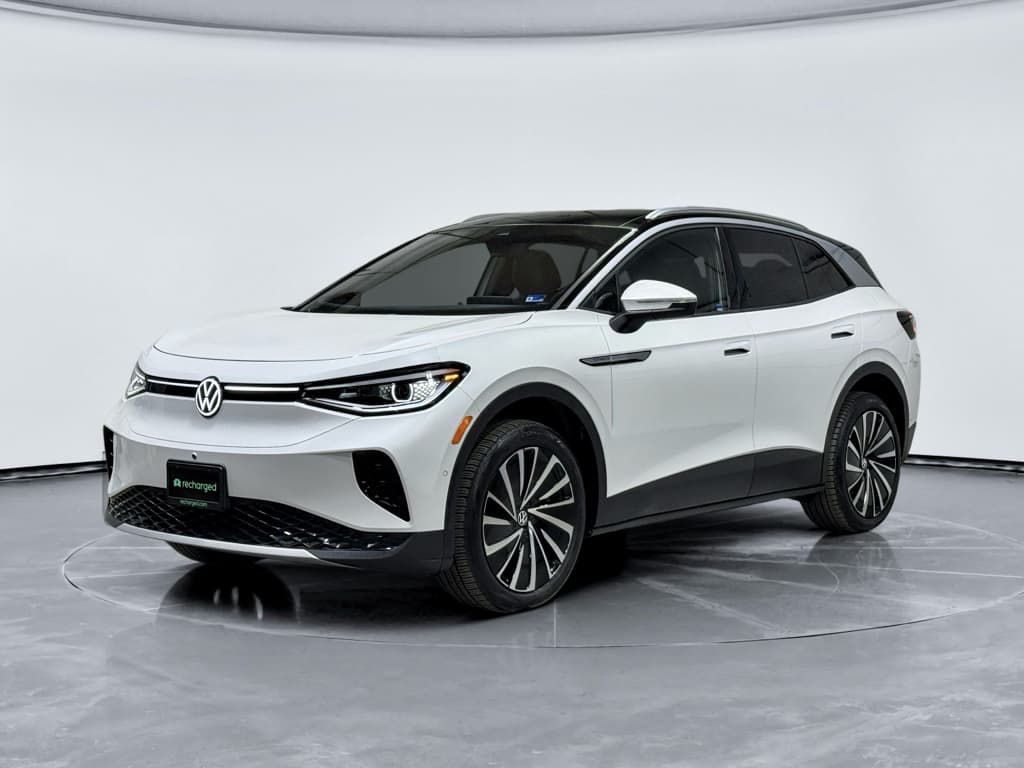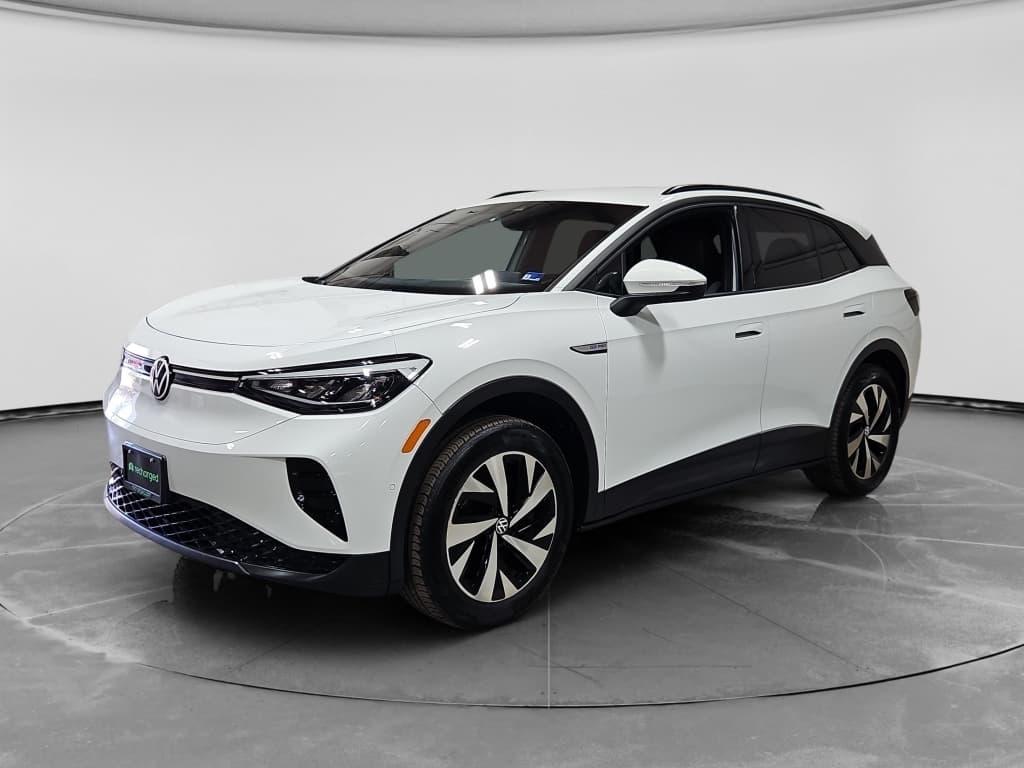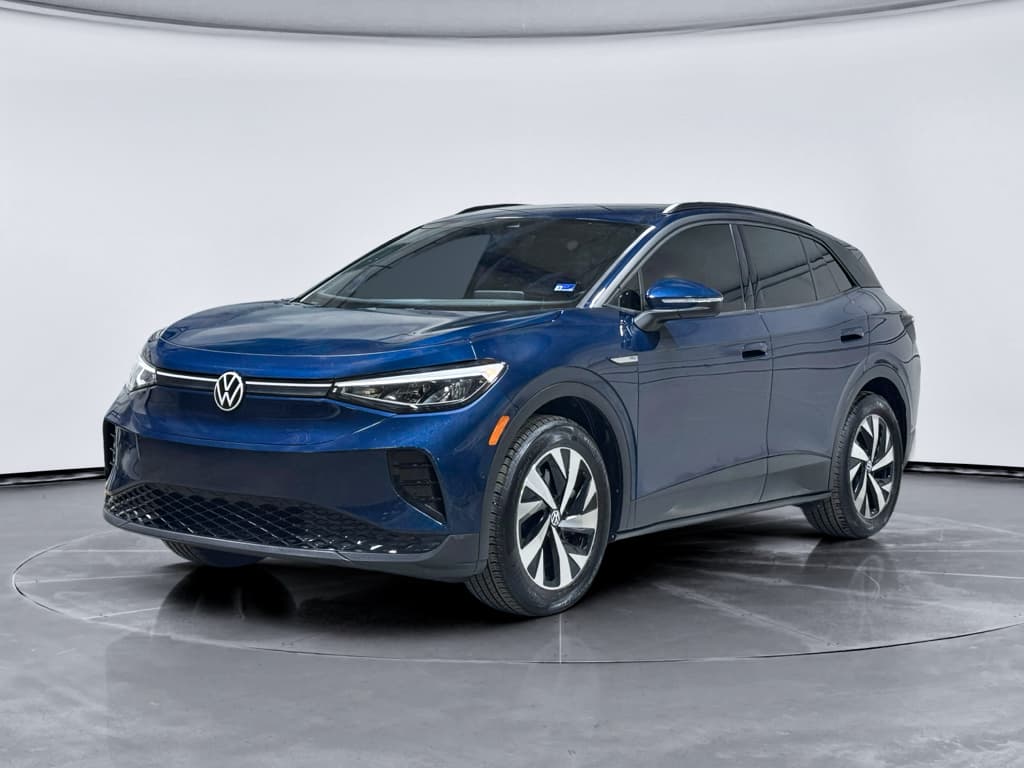
If you’re planning to haul bikes, a cargo box, lumber, or even a rooftop tent, you need to know the **Volkswagen ID.4 roof rack weight limit**. VW does publish a clear number, but there’s a lot of confusion about how it interacts with crossbar ratings, rooftop tents, and the ID.4’s panoramic glass roof. This guide walks through what the limit really is, what it includes, and how to stay safely within it.
Official ID.4 roof load in one line
Volkswagen ID.4 roof rack weight limit: the short answer
Across model years 2021–2025, the **Volkswagen ID.4 owner’s manual lists a maximum roof load of 75 kg (165 lbs)**. This applies regardless of whether your ID.4 has standard roof rails or the panoramic glass roof with integrated rails. The key point: **75 kg / 165 lbs is the governing limit while driving**, and it includes the weight of the crossbars **plus** whatever you’re carrying.
- Maximum roof load (dynamic): 75 kg / 165 lbs
- Includes: rack/crossbars + cargo together
- Applies while the vehicle is moving (highway, cornering, braking)
- You must also respect any lower limit on the specific rack system you use
Never exceed the lower-rated component
Understanding the ID.4 roof load rating (75 kg / 165 lbs)
When VW talks about “maximum permissible roof load,” they’re talking about the total weight that the roof structure is designed to handle **in motion** under normal driving. For the ID.4, that’s **75 kg (165 lbs)**, and the owner’s manual is explicit that this number already includes the rack system itself.
- Vehicle structure limit: What Volkswagen engineers have validated the ID.4 roof to handle safely.
- Dynamic load: The weight the roof can carry while you’re driving, over bumps, in crosswinds, and through emergency maneuvers.
- Total load: Roof bars + box/tent/bikes/lumber, all added together.
ID.4 roof load at a glance
Where to find your exact limit
Crossbars vs. vehicle limit: which number matters?
Scroll through Amazon or an accessory site and you’ll see ID.4 crossbars advertised with ratings like **165 lbs**, **176 lbs**, even **220 lbs**. It’s easy to assume those numbers override VW’s, but they don’t. The safe load for your setup is always capped by the **lowest-rated component in the chain**.
1. Vehicle roof rating (ID.4)
- VW specifies 75 kg / 165 lbs maximum roof load for the ID.4.
- Engineers design this around crash performance, rollover risk, and long-term durability.
- This rating applies to every accessory you mount on the roof while driving.
2. Rack / crossbar rating
- Aftermarket bars might list 165–220 lbs dynamic rating.
- These numbers reflect what the bars can handle in isolation.
- If their rating is lower than VW’s, you must obey the lower number.
Think of it like a chain
Dynamic vs. static weight: driving loads vs. rooftop tents
Another point of confusion is the difference between **dynamic** and **static** roof loads. Volkswagen’s 75 kg / 165 lb figure is a **dynamic** rating, what the car can handle while driving. **Static load** is what the roof rack can support when the car is parked, such as when you’re sleeping in a rooftop tent.
- Dynamic load (driving): VW’s 75 kg / 165 lbs limit. This is the number that matters for safety on the road.
- Static load (parked): Often roughly 2–3x the dynamic rating on many rack systems. That’s why a small SUV can technically hold a tent plus people when stationary.
- VW only publishes dynamic load: Volkswagen cares primarily about safe driving behavior, not how many campers can sleep on the roof.
Don’t “cheat” the dynamic rating
How much can you really carry on an ID.4 roof?
Let’s translate VW’s 75 kg / 165 lb limit into real-world setups. The math starts with your crossbars: most ID.4-specific bar kits weigh **7–12 lbs (3–5 kg)** for the pair. Subtract that from 165 lbs to see what you have left for actual cargo.
Example ID.4 roof load scenarios
Approximate weights for common ID.4 roof setups. These are estimates, always check your specific gear.
| Use case | Estimated rack weight | Cargo weight | Total on roof | Within 165 lb limit? |
|---|---|---|---|---|
| 2 bikes on tray racks | 10 lbs | 2 × 35 lb bikes + 2 × 15 lb trays = 100 lbs | 110 lbs | Yes, with margin |
| Cargo box (medium) | 10 lbs | Empty box ~35 lbs + 60 lbs luggage = 95 lbs | 105 lbs | Yes, good margin |
| Rooftop tent (compact) | 10 lbs | Tent shell ~110 lbs, no people while driving | 120 lbs | Yes, but little spare capacity |
| Heavy lumber load | 10 lbs | 150 lbs of lumber | 160 lbs | Technically under, but leaves almost no margin |
| Oversized tent + gear | 10 lbs | Tent 140 lbs + 40 lbs gear = 180 lbs | 190 lbs | No, exceeds VW dynamic rating |
Remember: rack + cargo must stay at or under 75 kg / 165 lbs.
How to run your own numbers
Can you run a rooftop tent on a Volkswagen ID.4?
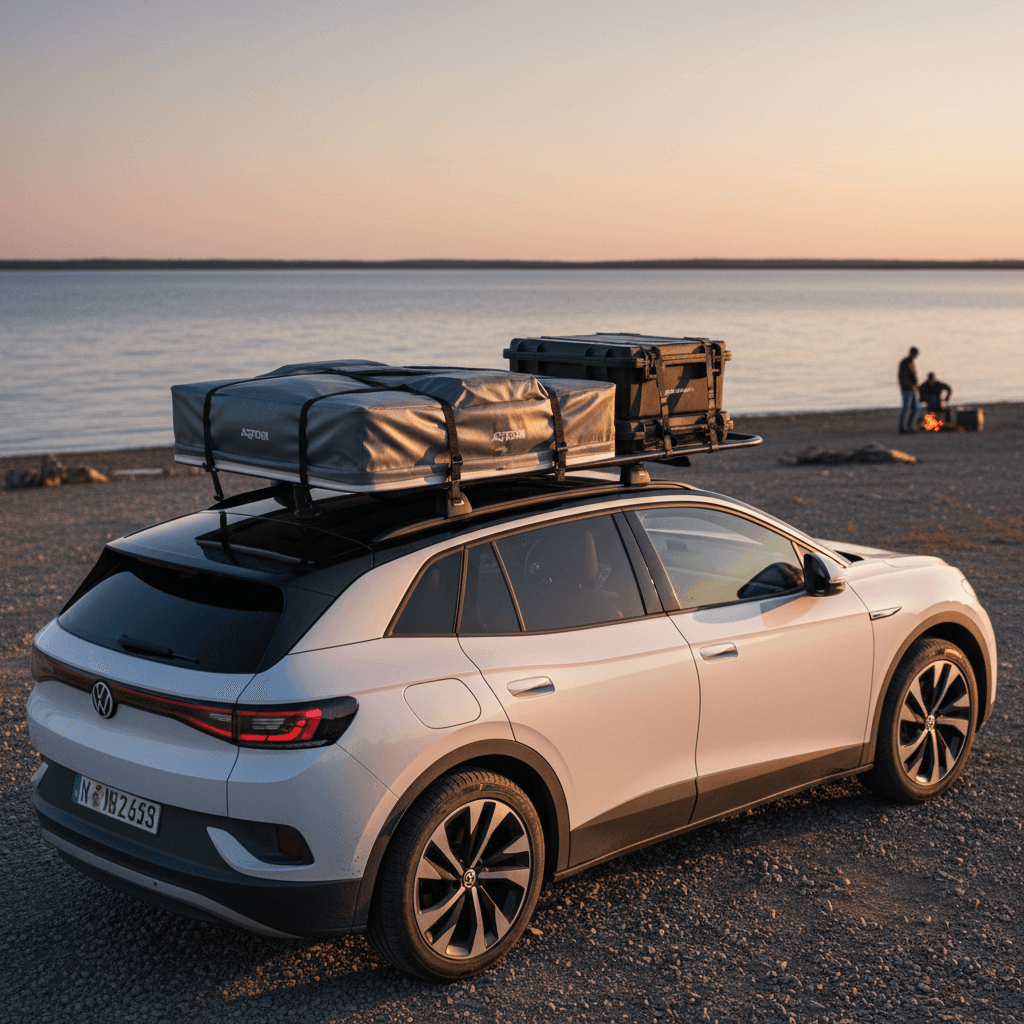
Short version: **yes, a rooftop tent on an ID.4 can be done**, but only if you respect the 165 lb dynamic roof load and choose a lightweight tent. Several specialty outfitters list the ID.4 as suitable for small roof tents based on VW’s 75 kg rating, but the burden is on you to pick the right hardware and stay within the numbers.
Rooftop tents on an ID.4: pros and cons
What to consider before you bolt a tent to your EV
Why rooftop tents can work
- Dynamic limit of 75 kg / 165 lbs is similar to many compact SUVs.
- Static load (parked) on quality racks is typically 2–3x higher.
- EV torque makes towing or loaded-roadtrips comfortable.
- Instant setup at camp without touching the ground.
Where people get into trouble
- Choosing tents that weigh 140–180 lbs before adding tools, ladders, or awnings.
- Ignoring the dynamic limit because “static is higher.”
- Mounting to marginal rack systems or universal clamps that don’t interface properly with ID.4 rails.
- Forgetting that crossbar weight counts against the 165 lb cap.
Checklist for rooftop tents on an ID.4
1. Choose a light tent
Look for models in the **90–120 lb** range. Anything much heavier makes it difficult to stay comfortably under VW’s 165 lb dynamic limit once you add bars and accessories.
2. Use ID.4-specific crossbars
Pick bars designed for the ID.4’s factory rails with a clear dynamic rating. Avoid generic clamp-on solutions that can damage the rails or spread load poorly.
3. Confirm combined dynamic rating
Check the tent, rack, and ID.4 roof ratings. Your true driving limit is the **lowest** of the three, and in practice that will usually be the ID.4’s 165 lbs.
4. Mount tent as low and centered as possible
Keep the center of gravity low and centered between the rails. Avoid overhanging heavy sections far to one side.
5. Keep extra gear out of the tent while driving
Tools, water, camp chairs, and other heavy items belong **inside the vehicle or on a hitch rack** while you’re in motion, not packed inside the rooftop tent.
6. Re-check hardware after the first miles
After mounting a new tent, drive a short distance, then retorque the rack and tent fasteners per the manufacturer’s specs.
ID.4 panoramic glass roof and roof racks
Many North American ID.4 trims come with a **fixed panoramic glass roof** and integrated roof rails. Understandably, owners worry about putting weight over glass. The good news is that VW’s **75 kg / 165 lb limit already accounts for the glass roof structure** on trims that have it.
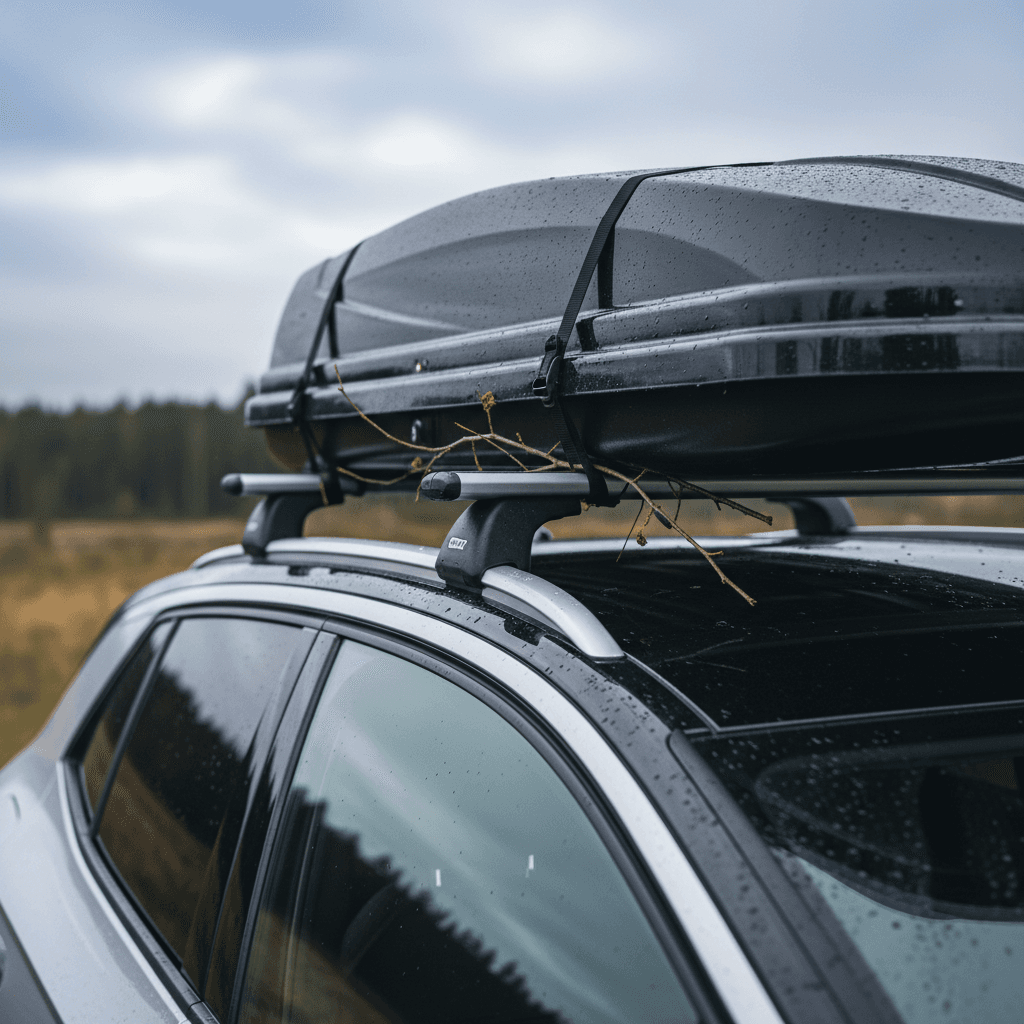
- The **rails are structural**; load is transferred into the body, not directly onto the glass.
- Never place cargo directly on the glass panel, it’s not intended to support point loads.
- Only mount racks to the approved rail interface or factory mounting points.
Skip the “soft bag directly on glass” hack
How to load and secure cargo safely
Once you know your target weight, the next step is loading the ID.4’s roof in a way that preserves handling and avoids damage. Think about **where** the weight sits, not just how much.
Best practices for loading an ID.4 roof rack
Simple habits that keep your EV happy on long trips
Keep weight low & centered
Place heavier items in the middle of the bars and as low as possible. Avoid tall, top-heavy loads that can increase body roll and crosswind sensitivity.
Distribute side to side
Balance weight between left and right. Two bikes? Mount one on each side of center. Cargo box? Load heavier items toward the middle.
Match your speed to the load
With a fully loaded roof, be conservative on speed, especially in crosswinds. High-speed stability can change noticeably with extra weight up high.
Step-by-step: securing cargo on an ID.4 roof rack
1. Start with a clean, correctly installed rack
Make sure crossbars are installed exactly per the manual, with torque wrenches where specified. Clean the contact points to avoid slip and corrosion.
2. Pre-weigh or estimate your cargo
Use a bathroom scale for bikes, boxes, and tents. Don’t guess when you’re close to the 165 lb limit, numbers matter here.
3. Load heaviest items first
Place the heaviest item in the center between the bars, then add lighter gear around it. This helps keep the center of gravity where VW’s engineers expect it.
4. Use proper straps, not just bungees
Ratcheting or cam straps are far more secure than bungee cords. Use at least two independent straps per major item, and tie off loose ends.
5. Check hatch and charge-port clearance
Open the rear hatch and verify it clears your load. Also make sure nothing can interfere with the charge port door or cables when plugged in.
6. Re-check after 10–20 miles
Stop after the first stretch of highway, feel each strap and clamp, and listen for new noises. Retighten as needed.
Common ID.4 roof rack mistakes to avoid
Compared with a body-on-frame SUV, an electric crossover like the ID.4 is **more sensitive to weight up high**. It also carries a large, heavy battery pack down low, so a poorly loaded roof can change how the car reacts in quick maneuvers. A few patterns show up again and again in owner stories.
- Ignoring the rack’s own weight. Those 8–12 lbs eat into your 165 lb budget.
- Overloading for “just one trip.” A stack of lumber or a fully stuffed cargo box can easily creep past VW’s limit.
- Assuming a higher rack rating raises the vehicle limit. It doesn’t; the ID.4 is still capped at 75 kg dynamic roof load.
- Using universal clamp systems on the rails. Cheap hardware can shift, loosen, or damage the rails over time.
- Forgetting aerodynamics. A big box or tent increases drag and can reduce real-world range more than you expect, plan more charging stops on road trips.
A better play for heavy cargo
FAQ: Volkswagen ID.4 roof rack weight limit
Frequently asked questions about ID.4 roof loads
Thinking about a used ID.4? Roof load is just one piece
Understanding the **Volkswagen ID.4 roof rack weight limit** is critical if you’re gearing up for road trips, bikes, or a rooftop tent. But from an ownership perspective, roof capacity is just one factor. Battery health, charging behavior, and previous use all shape how an ID.4 will serve you over the long haul, especially if you’re considering a used one.
At Recharged, every used ID.4 we list comes with a **Recharged Score Report** covering verified battery health, charging history signals, and fair-market pricing. Our EV specialists can also help you think through the right mix of roof racks, hitch racks, and cargo solutions for how you actually travel. If you’re weighing whether an ID.4 fits your lifestyle, including what you want to carry on the roof, shopping through Recharged gives you transparent data and expert guidance from the first click to delivery.