If you’re eyeing a 2021 Tesla Model S, especially a Plaid or Long Range, you’ve probably seen some huge range numbers. But how does a 2021 Tesla Model S range test look in the real world, on actual highways at typical U.S. speeds? And just as important if you’re buying used: what does that range look like a few years and tens of thousands of miles later?
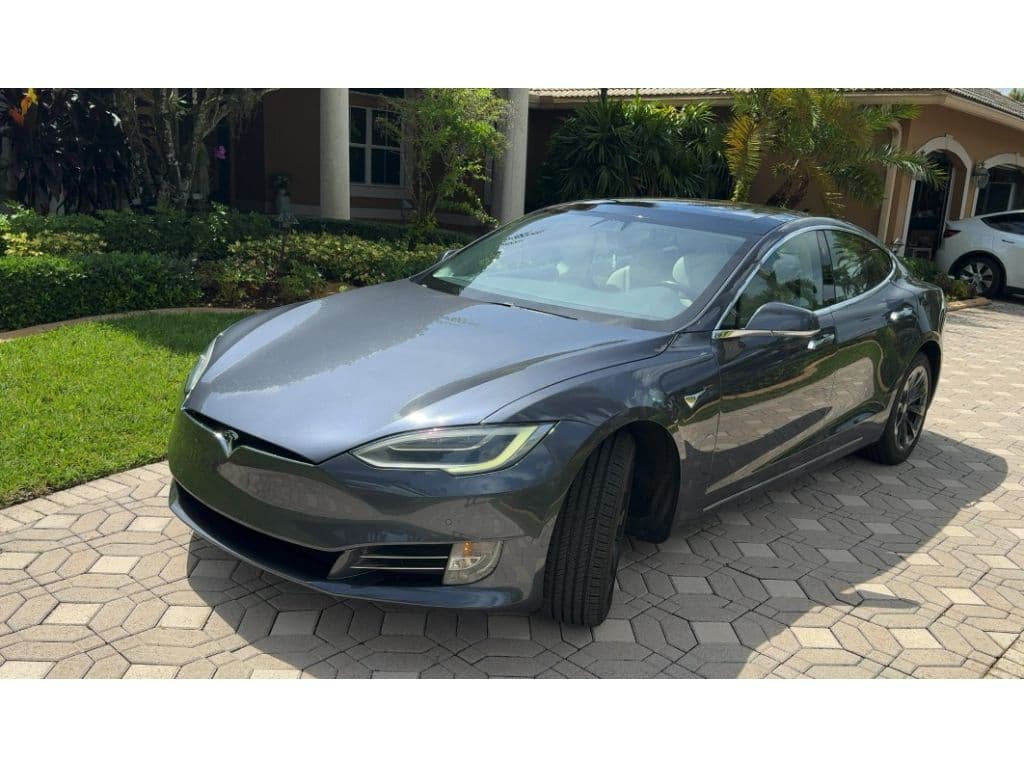
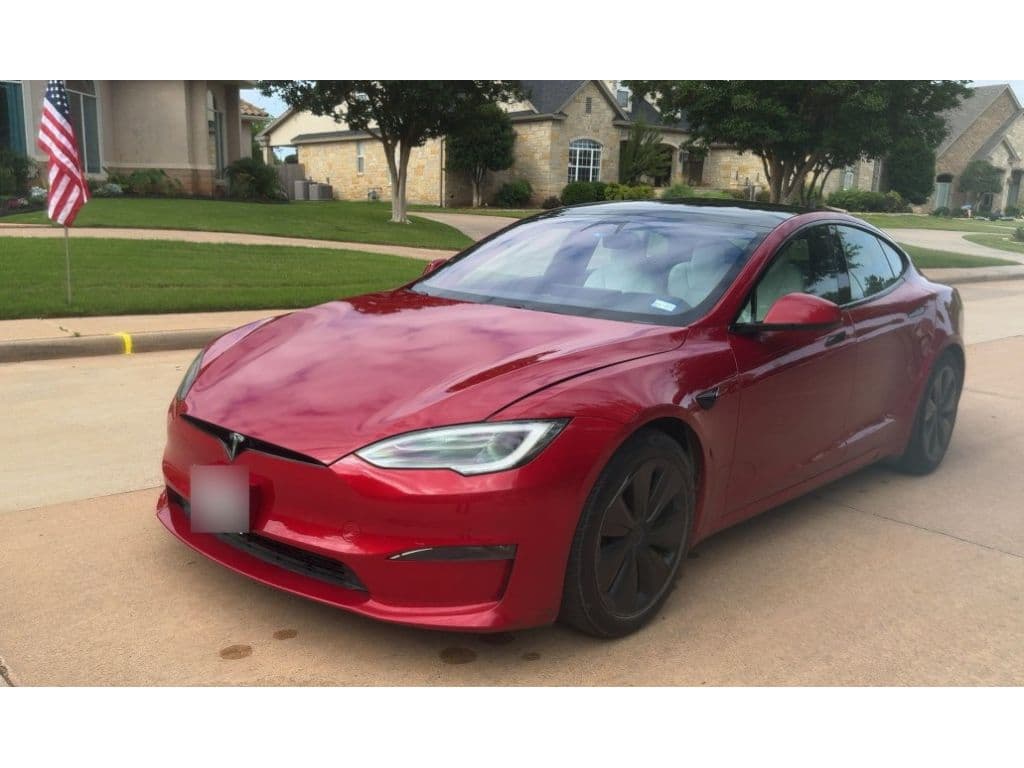
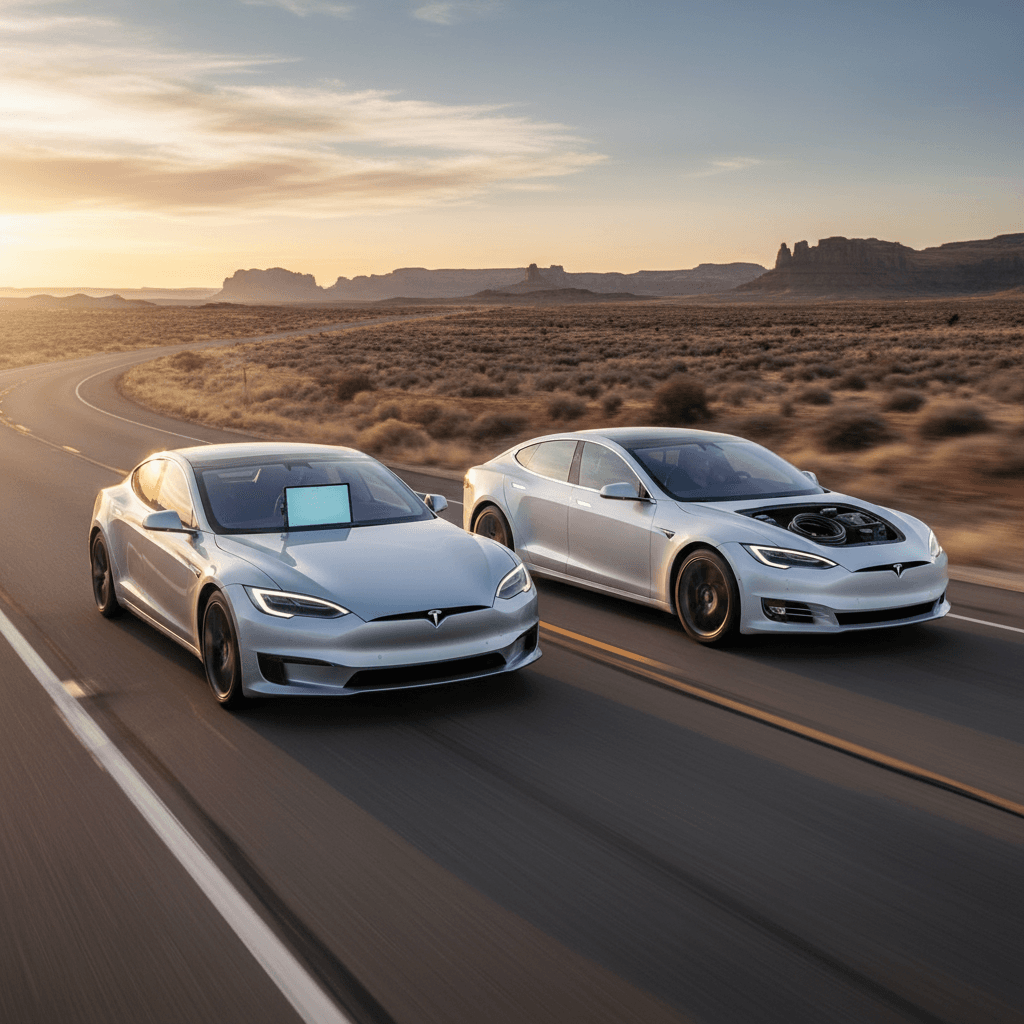
Two very different 2021 Model S variants
Overview: 2021 Tesla Model S range at a glance
2021 Model S range in one snapshot
On paper, the 2021 Model S Long Range sits at the top of the EV world for range, with the Plaid not far behind despite its 1,020 hp powertrain. Independent testers have generally found that highway range lands at 75–85% of EPA ratings when you hold a steady ~70–75 mph, which is exactly how most U.S. owners actually drive on road trips.
Quick rule of thumb
EPA vs real-world tests: what the numbers say
Before you dive into individual 2021 Tesla Model S range tests, it helps to understand the EPA cycle vs independent highway loops.
EPA range (window sticker)
- Mixed city/highway cycle with relatively gentle acceleration.
- Moderate highway speeds and warmer ambient temps.
- Driven until the test protocol says “empty,” not until the pack is bricked.
- Great for comparison across EVs, but often optimistic vs U.S. interstate driving.
Independent highway tests
- Typically 70–75 mph steady‑state on real highways.
- Run from 100% down to a low state of charge (often to 0% indicated).
- Document temperature, wheel size, tires, and elevation changes.
- Better proxy for how far you’ll actually go between Superchargers.
Don’t chase the last 5%
Highway range tests: Plaid vs Long Range
Let’s look at what credible third‑party testers have actually recorded for the 2021 Model S on controlled highway loops. These are single‑car tests, not universal guarantees, but they’re extremely useful benchmarks.
Independent 2021 Model S range test results
Key public 70–75 mph tests of the 2021 Tesla Model S on U.S. highways.
| Trim & setup | Test type | Speed & conditions | Distance on a charge | Share of EPA rating |
|---|---|---|---|---|
| Model S Long Range (21")* | Highway loop | ~75 mph, mild weather | ≈320 miles | ≈80% of ~400‑mile EPA |
| Model S Plaid (21") | Highway loop | 75 mph, mild weather | 280 miles | 80% of 348‑mile EPA |
| Model S Plaid (21") | Mixed real‑world loop | Typical speeds, warm weather | 345 miles | ≈99% of 348‑mile EPA |
Think of these as best‑case but realistic highway scenarios for a healthy battery in mild weather.
Why numbers differ between tests
The headline takeaway is that the 2021 Model S, especially the Plaid, does unusually well at turning its EPA promise into real‑world range. A Plaid that can rip off a 9‑second quarter‑mile still covered about 280 miles at a constant 75 mph in one widely cited test, and up to the mid‑300s when driven more gently on a mixed loop. The more efficiency‑minded Long Range unsurprisingly goes farther, cresting 320 miles at 75 mph in testing.
Good news for used buyers
What actually affects your 2021 Model S range
If you repeat someone else’s 2021 Tesla Model S range test and come up 10–20% short, it doesn’t automatically mean your battery is bad. Range is a system‑level outcome influenced by hardware, software, and behavior.
Biggest factors that move your range up or down
These apply to both 2021 Model S Long Range and Plaid.
Speed
Temperature & HVAC
Wheels & tires
Elevation & wind
Driving style
State of charge usage
Easy efficiency wins
Battery degradation on a 2021 Model S
The 2021 refresh uses Tesla’s familiar large‑pack architecture, right around 100 kWh usable in both Long Range and Plaid trims. Across the fleet, early‑life Tesla degradation tends to be front‑loaded: you might see a noticeable step‑down in usable capacity in the first 30,000–40,000 miles, then a long, flatter tail.
- Many owners report roughly 5–10% capacity loss in the first 3–4 years, then a slower decline after that.
- Degradation is heavily influenced by temperature, fast‑charging habits, and how often the pack sits at high state of charge.
- The 2021 pack chemistry and thermal system are designed for frequent Supercharging, but that doesn’t mean it’s free, heavy road‑warrior use will still show up in range over time.
- Tesla’s 8‑year / 150,000‑mile (or similar) battery warranty covers catastrophic failures, not returning the pack to its original EPA range. A 10% loss is considered normal.
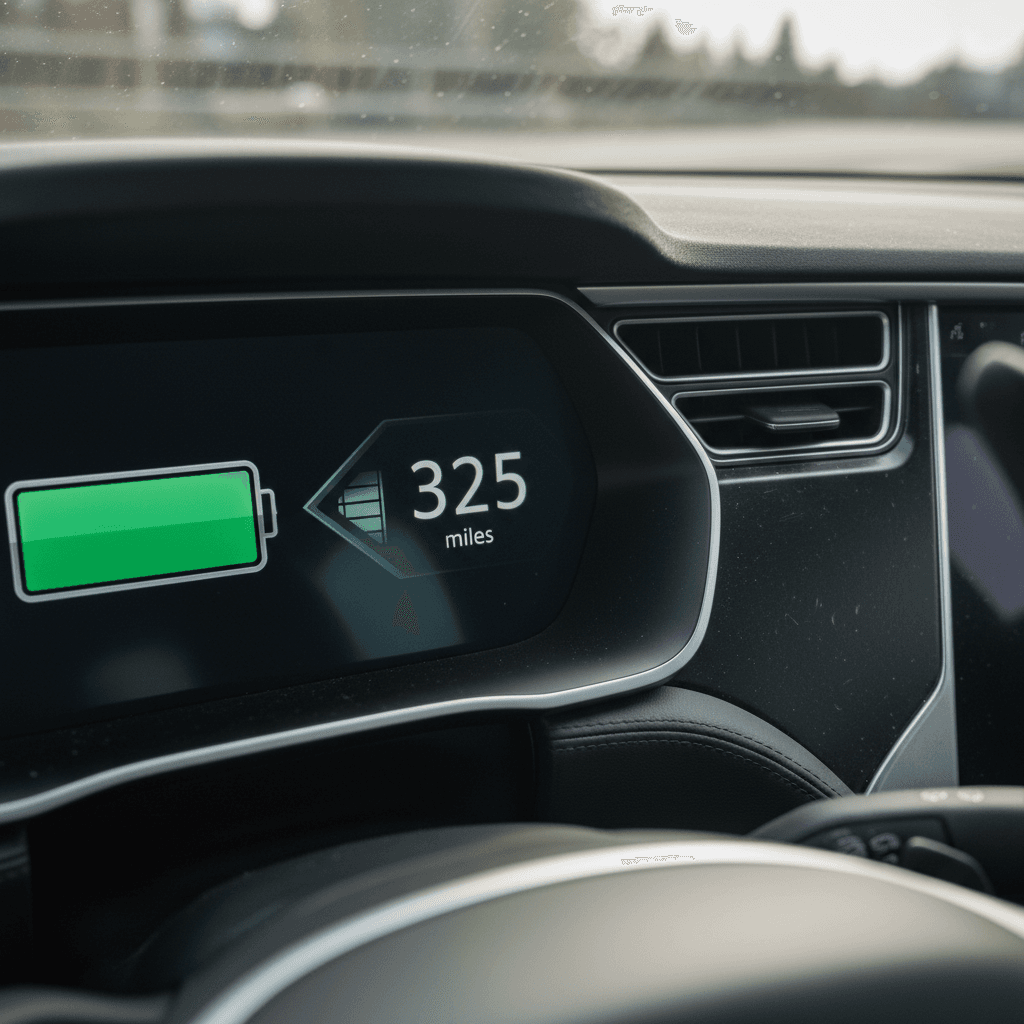
Don’t rely on the dash alone
If you’re shopping used, what you really care about is not the marketing number on the original window sticker, but: “How much energy does this particular pack still deliver today?” That’s where objective battery‑health diagnostics become more important than screenshots of the UI.
How to range-test your own 2021 Model S safely
You don’t need to run your 2021 Model S down to 0% on an empty highway to get a solid sense of its real‑world range. You just need a disciplined loop and some basic math.
Simple, low‑stress DIY range test
1. Pick a safe, repeatable loop
Choose an out‑and‑back highway route with minimal elevation change, ideally 20–50 miles each way. You want something you can repeat at a constant speed with familiar traffic patterns.
2. Start near 80–90% SOC
Charge to around 80–90% instead of 100%. This is kinder to the pack and still gives you plenty of usable energy for a test loop or two.
3. Use cruise at 70 mph
Set Autopilot or cruise at a realistic speed (e.g., 70 mph). Avoid big bursts of acceleration; consistency makes the math cleaner.
4. Log distance and % used
After your loop, note total miles driven and the state of charge you ended at. For example: 92% to 52% over 80 miles equals 40% of the pack used.
5. Extrapolate usable range
Divide miles driven by % of pack used: in the example above, 80 miles / 0.40 = 200 miles for a full 0–100% sweep at those conditions. Then knock off a safety margin in your planning.
6. Repeat in different conditions
Run the same test in winter vs summer, with 19" vs 21" wheels, and with/without a full cabin. You’ll quickly build your own personal range map.
Pro move: track Wh/mi
Planning road trips: realistic range assumptions
Range tests are interesting, but what you really care about is: how far can you comfortably run between charging stops without sweating the last few percent? For a 2021 Model S, the answer depends on your risk tolerance and the kind of driving you do.
Conservative planner
- Assume 65–70% of EPA for highway legs.
- For a Long Range, budget around 260–280 miles per full 10–90% window in good weather.
- For a Plaid on 21" wheels, plan closer to 220–240 miles per comfortable leg.
- Leave extra buffer in winter or in remote areas with sparse charging.
Aggressive planner
- If you’re comfortable arriving at chargers with single‑digit SOC and watching energy graphs closely, you can run closer to 75–80% of EPA in mild weather.
- That’s how testers extract 280–320 miles in controlled runs, but it requires constant attention and some experience with the platform.
Watch winter road trips in particular
Shopping used: how to evaluate range and battery health
If you’re looking at a used 2021 Model S, range isn’t just an abstract stat sheet number, it’s a proxy for how the car was used, charged, and cared for. Two Plaids with the same mileage can have meaningfully different real‑world range.
Checklist for a used 2021 Model S Long Range or Plaid
Questions and tests that actually matter.
Charging history
Software & updates
Replicate a short range loop
Independent battery report
Total cost picture
Compare to peers
How Recharged approaches used EV range
Ready to find your next EV?
Browse VehiclesFAQ: 2021 Tesla Model S range questions
Frequently asked questions about 2021 Model S range
Bottom line: key 2021 Model S range takeaways
The 2021 Tesla Model S remains one of the most capable long‑distance EVs on the road. Independent 2021 Tesla Model S range tests show that the Long Range can legitimately crack 300 miles at U.S. interstate speeds, while the Plaid comes surprisingly close to its EPA promise despite super‑car performance. The flip side is that range is highly conditional: wheels, weather, speed, and charging habits can swing your result by 20–30% either way.
If you’re shopping used, focus less on the original window‑sticker number and more on the actual health of the pack in front of you. A short, disciplined highway loop, careful attention to Wh/mi, and a professional battery‑health report will tell you far more than the car’s guess of how many miles you’ll get at 100%. At Recharged, every used EV comes with a Recharged Score Report so you can see, in black and white, what kind of range you can realistically expect from your 2021 Model S, before you commit to years of ownership.