If you’re cross‑shopping a Hyundai Kona Electric against its gas equivalent, the sticker price only tells part of the story. The real question is the Hyundai Kona Electric’s total cost vs a gas car equivalent, after you add up fuel, maintenance, depreciation and everyday ownership realities.
Quick answer
Kona Electric vs gas: why total cost matters
On paper, a new Kona Electric often has a higher MSRP than a nicely equipped gas Kona. But over the years you own it, the EV gives back in the form of lower fuel and maintenance costs. That’s why serious shoppers look at total cost of ownership (TCO) instead of just monthly payments.
- Up‑front price and financing costs
- Fuel or electricity over the miles you actually drive
- Routine maintenance and unexpected repairs
- Insurance, registration and taxes
- Depreciation and resale value when you sell or trade
In this guide, we’ll walk through each of those buckets using current U.S. energy prices and realistic Kona numbers, then show you how the math changes if you buy a used Kona Electric from a marketplace like Recharged instead of brand‑new.
Key assumptions for this cost comparison
To keep things apples‑to‑apples, we’ll frame the Hyundai Kona Electric total cost vs gas equivalent around a typical U.S. ownership scenario. You can plug in your own numbers later, but here are the baselines we’ll use:
Baseline assumptions: Kona Electric vs gas Kona
Realistic U.S. averages for a 5‑year ownership comparison.
| Factor | Kona Electric assumption | Gas Kona assumption |
|---|---|---|
| Annual mileage | 12,000 miles | 12,000 miles |
| Ownership period | 5 years (60,000 miles) | 5 years (60,000 miles) |
| Electricity price (home) | $0.17 per kWh (U.S. 2024–25 average) | , |
| Gas price | , | $3.75 per gallon national average assumption |
| Driving efficiency | 3.8 mi/kWh (mixed real‑world) | 31 mpg combined (typical AWD Kona |
| Charging mix | 85% home Level 2, 15% DC fast | 100% gas stations |
You can adjust these later to match your driving, electricity rate and gas prices.
Customize to your reality
Energy costs: Kona Electric vs gas Kona
Fuel vs electricity over 5 years (60,000 miles)
Let’s walk the math so you can see exactly where those numbers come from and adjust them to your situation.
Kona Electric energy cost
Using the assumptions above:
- Efficiency: about 3.8 mi/kWh in mixed driving (roughly 26 kWh/100 miles).
- 60,000 miles / 3.8 mi per kWh ≈ 15,800 kWh over 5 years.
- At $0.17/kWh average: 15,800 × $0.17 ≈ $2,686 in electricity.
If you live somewhere cheaper (say $0.12/kWh) that number drops closer to $1,900. In a high‑cost market at $0.25/kWh, it rises nearer to $4,000, but it’s still usually lower than gas.
Gas Kona fuel cost
For a typical Kona with AWD and the 1.6‑liter turbo:
- Real‑world economy around 31 mpg combined.
- 60,000 miles / 31 mpg ≈ 1,935 gallons of fuel.
- At $3.75/gal: 1,935 × $3.75 ≈ $7,256 over 5 years.
At $4.25/gal, that bill climbs past $8,200; if gas drops to $3/gal, it falls to about $5,800.
Public fast charging can change the math
Maintenance, repairs and battery health
One of the quiet ways an EV like the Kona Electric saves you money is simply by having fewer moving parts. No oil, spark plugs, exhaust system, timing belts, or transmission fluid changes. But EVs add a big‑ticket item: the battery pack. Let’s separate the predictable from the scary‑looking but rare.
Typical 5‑year maintenance picture
How the Kona Electric compares with its gas sibling
Routine service
Gas Kona: Oil changes every 5,000–7,500 miles, transmission service, engine air filters, spark plugs later on.
Kona Electric: Cabin filter, brake fluid checks, tire rotations, occasional coolant service for the battery system.
Brake wear
Both Konas wear tires at similar rates, but the EV’s regenerative braking dramatically cuts brake pad wear. It’s common to see 60,000+ miles on the first set of pads in normal driving.
Battery health
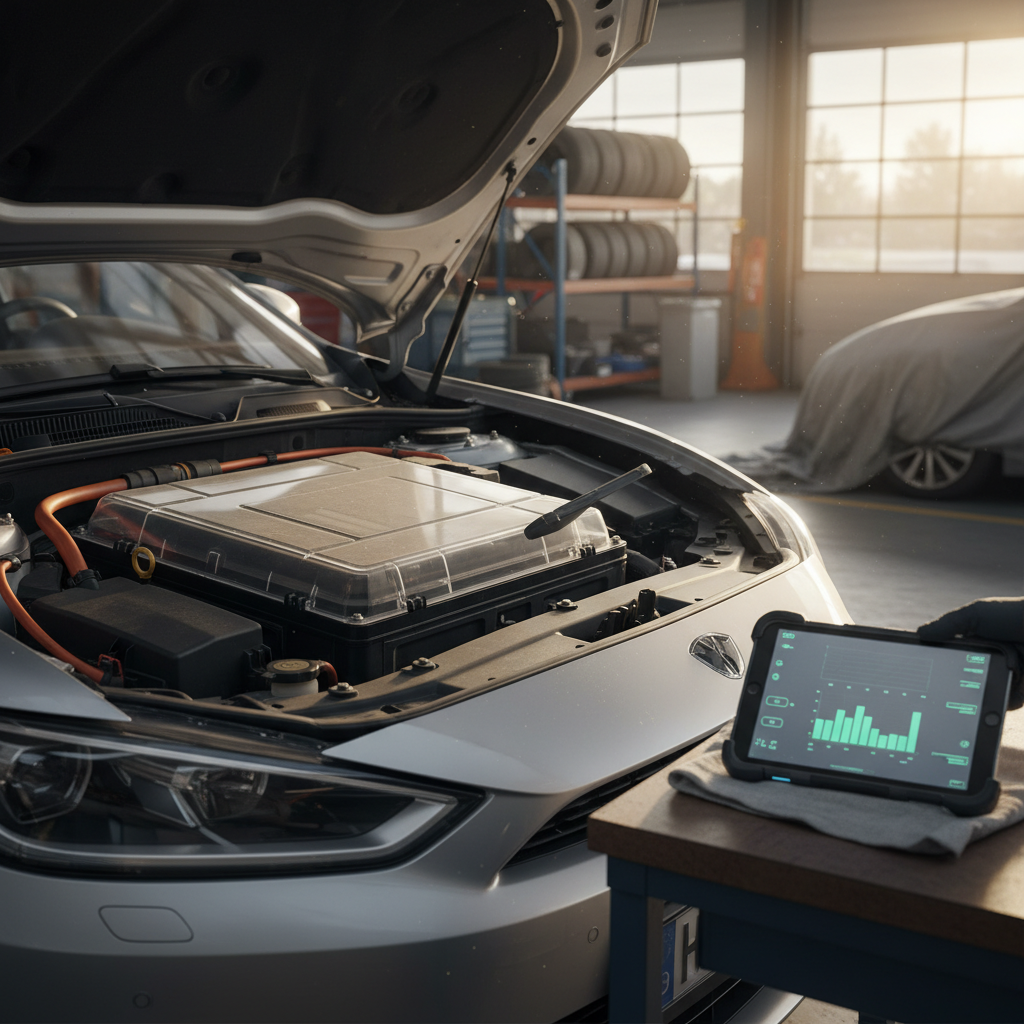
Modern Kona Electric packs are holding up well in real‑world use. Mild capacity loss over time is normal, but outright pack replacements are rare within the first 8–10 years, especially in moderate climates.
Estimated 5‑year maintenance costs
Depreciation, insurance and other costs
Depreciation is the biggest single line item in most total cost of ownership calculations, EV or gas. Hyundais tend to depreciate faster than some Japanese rivals, but the Kona lineup has carved out a niche with shoppers who want small‑SUV practicality without a huge price tag.
Depreciation trends
- New EVs, including the Kona Electric, took a big hit in 2023–2024 as used EV prices normalized.
- That’s painful if you buy new, but creates excellent value if you buy used.
- A gas Kona and Kona Electric of the same model year now often sit within a few thousand dollars of each other on the used market.
For a new purchase, plan on both versions losing roughly 40–50% of their value over the first 5 years, with local incentives and demand nudging that number up or down.
Insurance, fees and taxes
- Insurance: The Kona Electric can be slightly more expensive to insure because of higher repair part costs, but the difference is usually small compared with fuel savings.
- Registration: A few states add EV fees to replace lost gas‑tax revenue; others discount registration for EVs. Check your DMV.
- Taxes: If you buy new and qualify for federal or state EV incentives, they effectively reduce your up‑front cost and future depreciation hit.
New vs used: cost behaves very differently
5‑year total cost: Kona Electric vs gas
Let’s pull it all together. Below is a simplified 5‑year cost snapshot for typical U.S. drivers buying new. These are rounded, directional numbers meant to show relative differences, not exact quotes.
Illustrative 5‑year cost comparison (new purchase)
Approximate totals for 60,000 miles. Actual numbers will vary by trim, state incentives, and how you drive.
| Category | Kona Electric | Gas Kona |
|---|---|---|
| Purchase price (net, after any incentive) | $37,000 | $32,000 |
| Depreciation (5 years) | $18,500 | $15,000 |
| Fuel / electricity | $2,700 | $7,300 |
| Maintenance & repairs | $2,000 | $3,000 |
| Insurance, fees, taxes (incremental EV fees included) | $6,000 | $5,800 |
| Estimated 5‑year total | ≈ $29,200 beyond depreciation | ≈ $31,100 beyond depreciation |
| All‑in cost (purchase loss + running costs) | ≈ $47,700 | ≈ $46,100 |
Assumes modest EV tax credit or discount is already baked into the EV’s net purchase price.
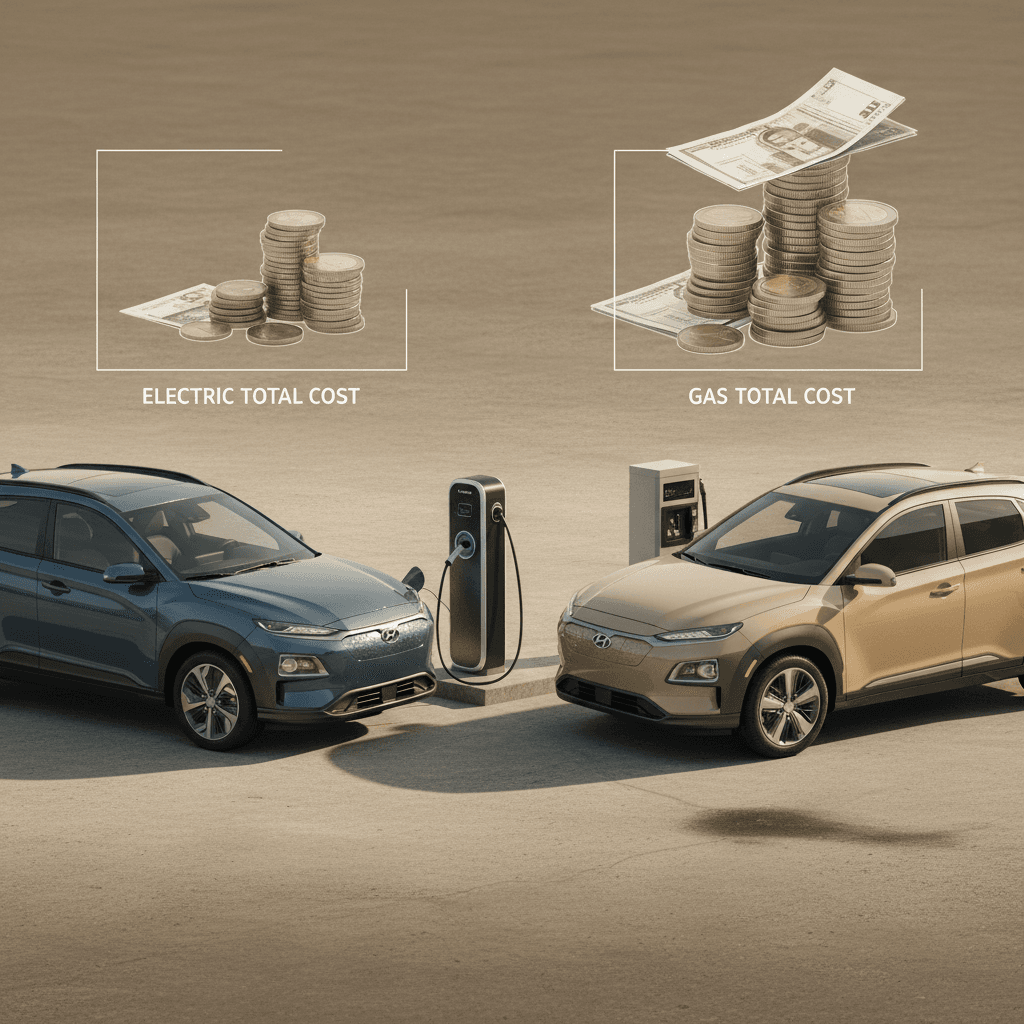
On a purely new‑car basis, the gas Kona can still be slightly cheaper all‑in because of the lower starting price, even though the Kona Electric costs much less to “refuel.” But this is only half the story. The numbers look very different if you buy used, or if your electricity is cheap and local gas prices are high.
Where the EV quietly wins
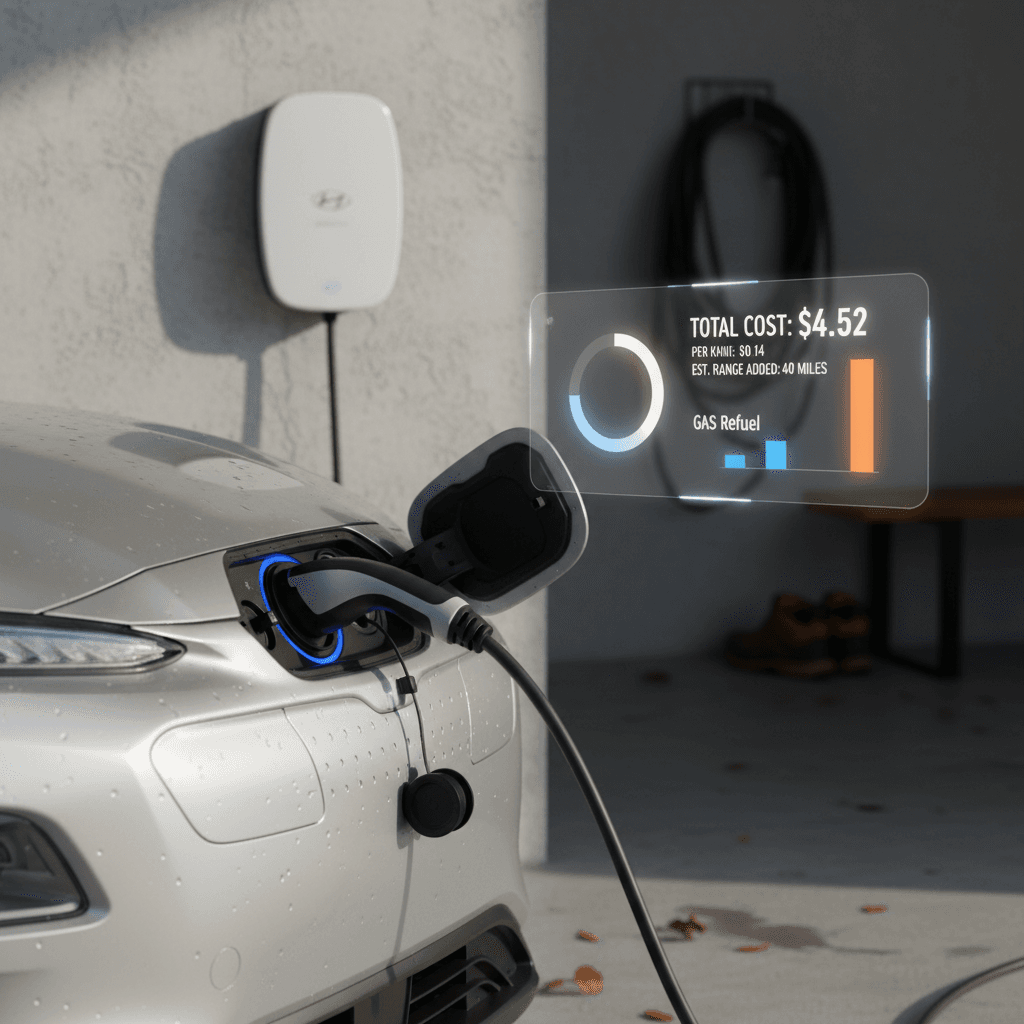
When does the Kona Electric win or lose?
Scenarios where each Kona comes out ahead
Use these as reality checks against your own life
Kona Electric usually wins when…
- You can charge at home most nights on a reasonable electricity rate.
- You drive 10,000–15,000 miles a year or more.
- Your area has higher‑than‑average gas prices.
- You’re buying a used Kona Electric that’s priced close to, or below, a similar gas Kona.
- You plan to keep the car at least 4–5 years.
Gas Kona may make more sense when…
- You have no home or workplace charging and would rely heavily on public fast chargers.
- Your state has very cheap gasoline and unusually expensive electricity.
- You drive few miles per year (for example, under 7,000), so fuel savings are modest.
- You routinely take long rural trips where fast chargers are scarce and you value maximum flexibility.
Don’t ignore your charging reality
Buying a used Kona Electric through Recharged
Where the Kona Electric really starts to shine is on the used market. Because many first‑generation EVs saw sharp early depreciation, you can often buy a 2‑ to 4‑year‑old Kona Electric for not much more, sometimes less, than a same‑year gas Kona. That’s where your fuel and maintenance savings compound without paying a new‑car premium.
How Recharged helps you de‑risk a used Kona Electric
Verified battery health with the Recharged Score
Every EV on Recharged comes with a <strong>Recharged Score Report</strong> that includes independent battery diagnostics, so you’re not guessing about the most expensive component in the car.
Fair pricing based on real EV market data
Recharged benchmarks each vehicle’s price against the broader EV market, helping you understand whether a Kona Electric is truly a better deal than a gas Kona equivalent.
EV‑specialist guidance, not generic sales talk
You get one‑on‑one support from specialists who live and breathe EVs. They can help you compare a Kona Electric to gas alternatives based on your commute, charging situation and budget.
Flexible ways to buy and sell
Finance your Kona Electric, trade in a gas car, or get an instant offer or consignment. Recharged can even handle <strong>nationwide delivery</strong> from its digital showroom and Experience Center in Richmond, VA.
Why used can flip the equation
FAQs: Hyundai Kona Electric total cost vs gas car equivalent
Frequently asked questions
Bottom line: is the Kona Electric cheaper than gas?
If you look past the window sticker and focus on total cost, the Hyundai Kona Electric is a compelling alternative to its gas sibling. For typical U.S. drivers who can charge at home, the EV trims thousands from fuel and maintenance bills over five years, and on the used market it often costs roughly the same, or even less, than a comparable gas Kona.
The gas Kona still makes sense if you log low annual miles, lack affordable charging, or regularly drive far from charging infrastructure. But if your lifestyle fits, a well‑priced Kona Electric, especially one with verified battery health and transparent pricing from a service like Recharged, can deliver not just a smoother drive but a lower total cost of ownership as well.