If you’re shopping for a used EV in 2026, the 2021 Hyundai Kona Electric should be on your short list. It packs segment‑leading efficiency, a real 250+ miles of range, and a long battery warranty into a compact, easy‑to‑park crossover. This 2021 Hyundai Kona Electric buying guide walks you through specs, trims, range, battery health, common issues, pricing, and exactly what to check before you sign anything.
Quick take
Why the 2021 Kona Electric is a smart used EV
Right‑sized range and efficiency. Every 2021 Kona Electric sold in the U.S. uses a ~64 kWh lithium‑ion battery and a 150 kW (201 hp) front motor. The EPA rates it at about 258 miles of range, near the top of its class for 2021 compact EVs. That means you don’t have to baby the accelerator to make it through a busy day of commuting, errands, and the odd side trip.
Mature, post‑recall model year. Early Kona Electrics (2019–early 2020 builds) were swept up in a high‑profile battery recall. By the 2021 model year, Hyundai had updated the pack hardware and software. That makes 2021 a sweet spot: you get the long‑range battery, but with fewer of the early‑production headaches, provided the car is up to date on software and campaigns.
Who the Kona Electric fits best
Key specs: 2021 Hyundai Kona Electric at a glance
Core 2021 Hyundai Kona Electric numbers
2021 Hyundai Kona Electric basic specs (U.S. models)
All U.S. 2021 Kona Electrics share the same battery, motor and range; trims mainly change comfort and tech features.
| Item | Spec |
|---|---|
| Battery capacity (usable) | ≈ 64 kWh |
| EPA range | 258 miles |
| Motor output | 150 kW (201 hp) FWD |
| Torque | 291 lb‑ft |
| Onboard AC charger | 7.2 kW Level 2 |
| DC fast charging | Up to mid‑70 kW peak (CCS) |
| Body style | Subcompact crossover SUV |
| Seating | 5 passengers |
Use these specs as a baseline when comparing a particular used Kona Electric to other EVs.
Trims & features: which 2021 Kona EV should you buy?
Hyundai sold the 2021 Kona Electric in three main trims in the U.S.: SEL, Limited, and Ultimate. All three drive the same, so your choice is really about comfort, tech, and budget.
2021 Kona Electric trims in plain English
Same powertrain, different creature comforts
SEL (base)
- Best value; usually the lowest used price.
- Cloth seats, smaller touchscreen on early builds, still plenty of safety tech.
- Good pick if you care more about range and price than gadgets.
Limited
- Leather seating surfaces, heated front seats, sunroof on most cars.
- Bigger infotainment screen and more convenience features.
- Sweet spot for many used buyers if the price gap to SEL is reasonable.
Ultimate
- Top trim: adds features like ventilated seats, premium audio, more driver‑assist tech.
- Often includes HUD and extra active‑safety features depending on market.
- Shop carefully; some Ultimates are priced close to newer EVs.
Trim naming can vary by region
Range and charging: what to expect in the real world
On paper, the 2021 Hyundai Kona Electric’s 64 kWh battery and 258‑mile EPA rating make it one of the most efficient small crossovers you can buy used. In real‑world driving, most owners see 220–260 miles on a full charge in mild weather, depending on speed, temperature, and how much highway you do.
- Around town at moderate speeds, it’s easy to beat the EPA rating if you drive smoothly.
- Sustained 70–75 mph highway runs will pull range down into the 190–220‑mile zone.
- Winter temperatures can trim range by 25–30%, especially before the cabin is warmed up.
- The Kona’s heat pump (if equipped on your trim/market) helps winter efficiency; base U.S. cars rely more on resistive heating.
Home and Level 2 charging
The 2021 Kona Electric has a 7.2 kW onboard AC charger. On a 240‑volt Level 2 station (like a home wallbox) it typically adds 25–30 miles of range per hour, going from near empty to full in about 9 hours. For most owners, that means you simply plug in overnight and wake up to a full battery every morning.
DC fast charging on the road
On a healthy CCS fast charger, a well‑maintained Kona Electric can pull peak power in the mid‑70 kW range. In practical terms, that’s roughly 10–80% in 45–55 minutes if you start warm and the charger is delivering what it should. It’s not as quick as the newest 800‑V EVs, but it’s perfectly workable for road trips with coffee stops every 2–3 hours.
Route‑planning tip
Battery health, warranty, and degradation
Battery health is the single most important factor when you’re buying any used EV, and the 2021 Hyundai Kona Electric is no exception. The good news: Hyundai backs the high‑voltage pack with a 10‑year/100,000‑mile battery warranty for U.S. buyers (from original in‑service date), and real‑world reports of severe degradation on 2021 cars are relatively uncommon compared with some early EVs.
- Most 2021 Kona Electrics we’ve seen show modest loss, often still above 90% of original capacity around 50,000–70,000 miles when properly cared for.
- Hyundai’s warranty typically covers the pack if capacity drops below a specified threshold (commonly 70%) within the warranty period, or if there’s a manufacturing defect.
- The 2021 model benefits from hardware and software changes that arrived after the early‑run 2019–2020 battery recalls.
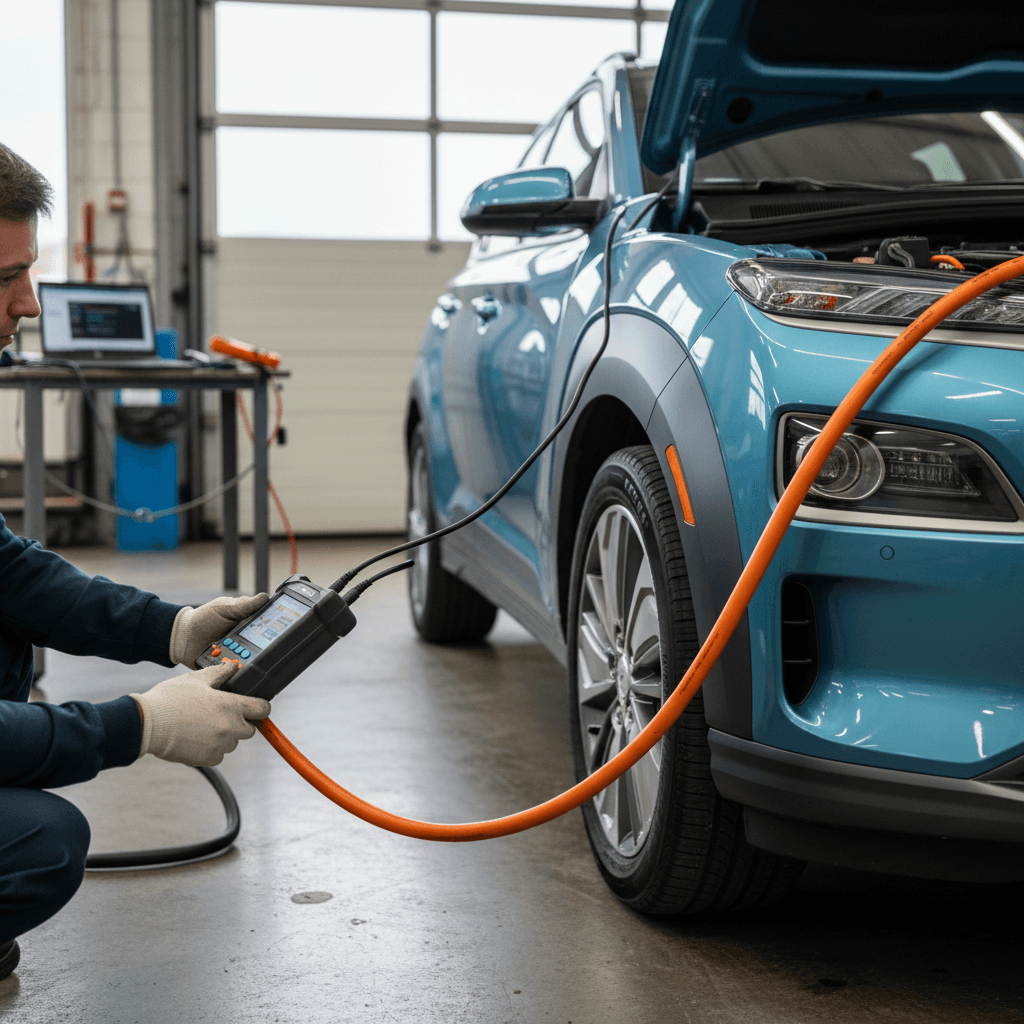
How Recharged checks battery health
Questions to ask about battery health on a 2021 Kona Electric
1. What’s the current odometer and in‑service date?
Battery warranty is time‑ and mileage‑limited. Ask for the original sale date so you know how many years of high‑voltage coverage you have left.
2. Has the car lived in very hot or very cold climates?
Extreme heat and frequent DC fast charging can accelerate degradation. Occasional road‑trip fast charging is fine; constant use on a hot, desert‑based car is more of a concern.
3. Can you see a recent battery health report?
Dealers and specialized shops can pull a battery state‑of‑health reading. At Recharged, this is part of the Recharged Score Report so you don’t have to arrange it yourself.
4. Any warning lights or reduced‑power behavior?
EV system, battery, or cooling system warnings, past or present, are worth investigating. Don’t accept “we cleared the light and it’s fine” without documentation.
Known issues, recalls, and what to watch for
No used car is perfect, and the 2021 Kona Electric has its share of quirks. The key is separating internet horror stories from the issues that actually matter when you’re shopping.
Common 2021 Kona Electric issues to understand
Most are manageable if you know what to look for
Thermal system quirks
Some owners report coolant‑system warnings or odd behavior from the battery thermal management system. Left unresolved, a cooling problem can shorten battery life or trigger limp‑home modes.
Drive‑unit noise
A minority of cars develop a gear‑reduction or motor “tick” or whine at certain speeds. Hyundai has replaced drive units under warranty in documented cases.
Cold‑weather range drop
Like almost every EV, the Kona loses a chunk of range in winter. That’s not a defect, but it can surprise new owners. Pre‑conditioning and using seat/steering‑wheel heaters help.
Don’t skip the recall and campaign check
Red flags during a test drive or inspection
Persistent warning lights
EV system, battery, or cooling warnings that come back after being cleared are serious. Walk away unless the seller agrees to fix them at a Hyundai dealer with paperwork.
DC fast charging doesn’t work properly
If you can, test a DC fast charge. Very low charge speeds or repeated shutdowns may indicate charger‑module or battery‑side issues that aren’t cheap out of warranty.
Uneven tire wear or pull
A hard‑driven Kona Electric can hide suspension or alignment damage. Uneven tire wear or a steering pull deserves an alignment check before you buy.
Rough repair history
Multiple body repairs, especially around the battery area or under the car, warrant a very careful inspection on a lift. The pack itself is a structural, high‑voltage component.
Used 2021 Kona Electric pricing and value for money
Used pricing moves with interest rates, incentives, and gas prices, but by 2026 many 2021 Hyundai Kona Electrics in the U.S. are trading for a fraction of their original MSRP. When new, a 2021 Kona Electric SEL stickered in the upper‑$30,000s before destination and incentives. Today, higher‑mileage examples can be found in the mid‑teens, with low‑mileage Limited and Ultimate trims climbing from there.
- SEL models typically offer the lowest entry price and the best price‑per‑mile of remaining battery warranty.
- Limited trims usually sit a few thousand dollars higher than equivalent‑mileage SELs, reflecting extra comfort and tech features.
- Ultimate trims can command a noticeable premium; make sure the added equipment matters to you versus, say, stepping into a newer‑generation EV.
Value sweet spot
Inspection checklist for a used 2021 Kona Electric
Whether you’re buying from a private seller, a traditional dealer, or online, a structured inspection keeps you from getting blinded by a pretty paint color or monthly payment. Use this checklist to keep yourself honest.
Pre‑purchase checklist for a 2021 Hyundai Kona Electric
1. Verify VIN, title, and history
Run a vehicle‑history report, confirm the VIN on the dash, door jamb, and title all match, and look carefully for accidents, flood branding, or lemon buybacks.
2. Check recall and campaign completion
Use the VIN on NHTSA’s site and Hyundai’s owner portal to confirm that all recalls and service campaigns, including battery and EV‑system updates, are done.
3. Review service records
Regular maintenance, software updates, and any high‑voltage work should be documented. Spotty records aren’t an automatic no, but they lower the price ceiling.
4. Inspect tires and brakes
Uneven tire wear, mismatched brands, or a deep lip on the brake rotors can hint at hard use. Regenerative braking means pads can last a long time, but confirm there’s life left.
5. Test all charging methods you can
At a minimum, plug into a Level 2 station and confirm normal charge speeds. If possible, do a short DC fast‑charge session to ensure the car negotiates and holds a reasonable rate.
6. Evaluate range estimate vs. charge level
After a full charge, the dash estimate should be in the right ballpark for your conditions. A wildly low estimate on a full battery can indicate degraded capacity or deeply inefficient past driving history.
7. Listen and feel on the road
On your test drive, pay attention to drive‑unit noises, vibrations, steering feel, and brake smoothness. The Kona Electric should feel quiet, smooth, and composed.
8. Get a professional EV inspection
If you’re not buying from a specialist, consider a third‑party inspection with EV experience. At Recharged, this step is baked into every vehicle’s Recharged Score evaluation.
How the 2021 Kona Electric compares to other used EVs
When you’re cross‑shopping used EVs, the 2021 Hyundai Kona Electric lands in a niche that’s smaller than a Tesla Model 3 or Hyundai Ioniq 5, but offers more range than many similarly priced Leafs, Bolts, or earlier‑generation compacts.
2021 Kona Electric vs common used‑EV alternatives
High‑level comparison for shoppers considering several popular used EVs around the same budget.
| Model | Approx. range | Body style | Key pros | Key watch‑outs |
|---|---|---|---|---|
| Hyundai Kona Electric (2021) | 258 mi | Subcompact SUV | Excellent efficiency, long battery warranty, easy to park. | Tight rear seat for adults, modest DC fast‑charge speed. |
| Chevy Bolt EV (2020–2021) | 259 mi | Hatchback | Similar range, often lower prices, roomy cabin for size. | Battery‑recall history, firmer ride, smaller dealer network for EV service in some areas. |
| Nissan Leaf Plus (62 kWh) | 215–226 mi | Hatchback | Comfortable ride, often very affordable used. | Uses CHAdeMO fast charging, which is being phased out in North America. |
| Tesla Model 3 Standard Range (2020–2021) | ~250 mi | Sedan | Supercharger access, strong performance, great software. | Sedan practicality vs SUV, higher repair and insurance costs for some owners. |
Specs and impressions will vary by exact year and trim; this is a broad shopping snapshot.
Where the Kona Electric shines
How Recharged helps when you buy a 2021 Kona Electric
Buying a used EV doesn’t have to mean rolling the dice on battery health or hidden issues. Recharged is built specifically around used electric vehicles, including the 2021 Hyundai Kona Electric.
What you get with a Kona Electric from Recharged
Purpose‑built support for used‑EV buyers
Recharged Score Report
Every Kona Electric includes a Recharged Score with verified battery health, charging performance, and an overall condition rating. You see how the pack is really performing, not just what the dash says.
Expert EV inspection
Our EV specialists inspect high‑voltage components, cooling systems, and charging hardware, then road‑test the car so you’re not inheriting someone else’s problems.
Financing & delivery
Recharged offers EV‑friendly financing, trade‑ins, and nationwide delivery, plus in‑person help at our Experience Center in Richmond, VA. The entire process can be handled digitally if you prefer.
Ready to find your next EV?
Browse VehiclesIf you already own a vehicle, you can get an instant offer or consign it through Recharged, then roll that value into your Kona Electric purchase. From first question to final signature, you’re working with people who live and breathe EVs.
FAQ: 2021 Hyundai Kona Electric buying guide
Frequently asked questions about the 2021 Kona Electric
Bottom line: is the 2021 Kona Electric right for you?
If you’re looking for a compact, efficient EV that can cover real highway miles without breaking your budget, the 2021 Hyundai Kona Electric deserves a serious look. Its combination of 250‑plus‑mile range, strong battery warranty, and everyday usability makes it one of the most compelling used EVs on the market right now, especially if you buy one that’s been properly checked and documented.
Take the time to verify battery health, recall history, and charging performance, and you can end up with a small crossover that quietly does it all: commute duty, weekend trips, and everything in between. If you’d like a head start, browse 2021 Kona Electrics on Recharged, where every car comes with a Recharged Score Report, EV‑specialist support, and a buying process designed around how electric‑vehicle ownership really works.