If you’re looking at a 2021 Chevrolet Bolt EV, you’ve probably heard about the battery fire headlines. The truth is simple but sobering: every 2021 Bolt EV was swept into GM’s high‑voltage battery safety recall, and many cars received new battery packs as a result. This guide walks you through the full 2021 Chevrolet Bolt EV recalls list, how to verify what’s been done, and how to shop (or own) confidently instead of guessing.
Why 2021 Bolts were singled out
Overview: 2021 Chevrolet Bolt EV recalls at a glance
2021 Chevy Bolt EV recall snapshot
Think of the 2021 Bolt EV not as a car with “a recall” but as a car built in the middle of a rolling engineering mea culpa. The good news: by 2026, the vast majority of affected cars have already had their battery work done, and the fix is substantial, often a totally new pack. The job for you, as an owner or used‑EV shopper, is to confirm the work, document it, and understand what’s still open.
Recalls are VIN‑specific
The big one: high‑voltage battery fire recall (21V650000)
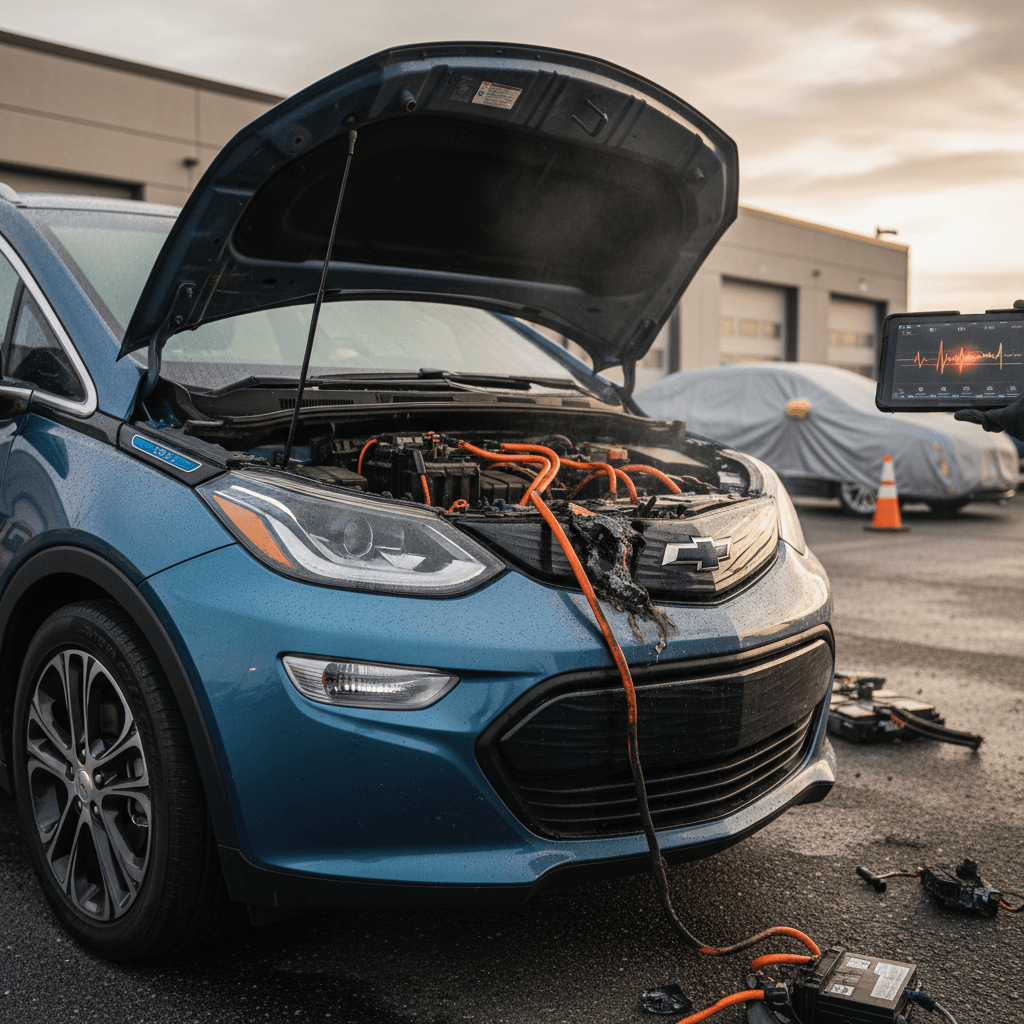
The headline campaign for the 2021 Chevrolet Bolt EV is the high‑voltage battery fire recall, filed with NHTSA under campaign number often referenced as 21V650000 (an expansion of earlier recall 21V560000 on 2017–2019 cars). This recall was announced in August 2021 and ultimately extended to all 2020–2022 Bolt EVs and 2022 Bolt EUVs.
- Defect: Rare manufacturing defects in certain LG‑supplied cells and modules could cause a thermal runaway event and fire, often while parked and charging.
- Population: All 2020–2022 Chevrolet Bolt EVs, which includes every 2021 Bolt EV built.
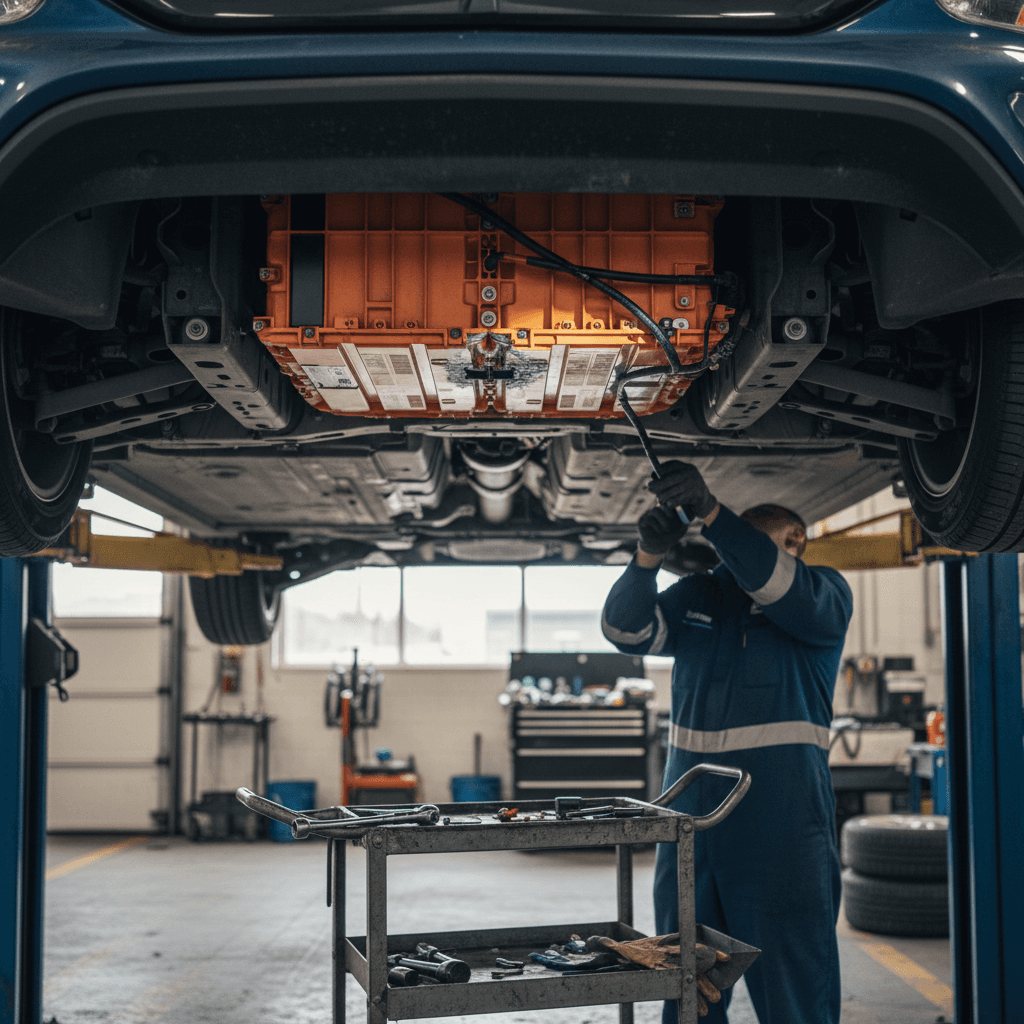
- Primary remedy: GM replaces battery modules, or in practice, often the entire battery pack, with new hardware built under revised quality controls.
- Owner cost: $0. All recall work is done free of charge at an EV‑certified Chevrolet dealer.
What made this recall different
If you’re shopping a used 2021 Bolt EV, this recall is non‑negotiable. You should assume the car either already has a new pack, or it’s owed one. Either way, you want paperwork: the GM recall number, dealer repair order, and confirmation of the new battery’s in‑service date and warranty coverage.
Software limits & interim safety measures GM used
Before GM committed to wholesale battery replacements, the company leaned on software and owner behavior to manage risk. If you see old dealer paperwork or owner notes about charge limits, this is what they’re referring to.
How GM tried to manage risk before new packs
If you’re reading service records, these bullet points decode the jargon.
State‑of‑charge limits
Dealers pushed software updates that capped usable state of charge (SOC), often around 90%, and in some cases even lower.
This temporarily reduced range but kept the pack operating farther from its upper stress limit.
Charging behavior warnings
GM guidance told owners to:
- Avoid depleting the pack below ~70 miles of range.
- Avoid charging overnight indoors.
- Park outdoors after charging.
These weren’t suggestions; they were safety instructions until the hardware fix was ready.
Diagnostic software updates
Several later campaigns focused on improved battery diagnostics, catching bad modules before they failed.
If your service record shows multiple "battery recall reprogram" visits, this is part of that evolution.
How this shows up in a Carfax or service history
Other recalls that can touch a 2021 Bolt EV
Beyond the headline battery campaign, a 2021 Chevy Bolt EV may show other, smaller recalls or field actions over its lifetime. The specifics can evolve, but they typically fall into a few buckets.
Common non‑battery recalls & campaigns you may see
Exact NHTSA numbers and coverage can vary by VIN. Always confirm using the car’s VIN before purchase.
| Area | What it addresses | Impact on you |
|---|---|---|
| Battery diagnostics software | Updates to how the car monitors and flags potential battery issues. | Improves early detection; may show as multiple “reprogram” visits in service history. |
| Charge limit / range display updates | Refinements to SOC limits or how remaining range is shown on the dash. | Can slightly change displayed range; not a sign of degradation by itself. |
| Module replacement vs. full pack | Some early repairs replaced only affected modules rather than the full pack. | Later, many cars received full packs; confirm exactly what was installed and when. |
| False fault codes / DTCs | Campaigns to reduce nuisance warning lights that led to unnecessary pack swaps. | If you see a late‑2023 or 2024 software campaign, this may be why. |
Not every 2021 Bolt EV will have every campaign, but none of these should scare you off if they’re already completed.
Don’t chase every code number
How to check recall status on a used 2021 Bolt EV
If you’re evaluating a used 2021 Bolt EV, whether at a dealership, from a private seller, or online, your first homework assignment is to run the VIN through multiple recall and history tools. It’s free, and it can save you from inheriting someone else’s unfinished business.
5‑step recall status check for a 2021 Bolt EV
1. Run the VIN through NHTSA
Go to the official NHTSA recall lookup site and enter the full 17‑digit VIN. If the battery recall (and any others) are still open, they’ll appear here with status and dates.
2. Check GM’s own recall portal
GM maintains its own recall lookup by VIN. Cross‑check it against NHTSA, sometimes dealer‑side campaigns or service bulletins show up here even when NHTSA doesn’t list them by number.
3. Pull a full vehicle history report
Services like Carfax or AutoCheck can show when recall work was performed, by which dealer, and at what mileage. You’re looking for multiple entries tied to the battery campaign, ending in a clear “battery module/pack replaced” record.
4. Ask for dealer service records
A thorough seller should be able to produce <strong>dealer repair orders</strong> for recall work. These will spell out the GM campaign number, parts replaced, and the date the car left with its new pack or modules.
5. Confirm warranty dates on the battery
Once the dust settled, many replacement packs came with a fresh <strong>8‑year/100,000‑mile</strong> high‑voltage battery warranty starting from the installation date. Have a Chevrolet dealer run the VIN and print that coverage detail.
How Recharged handles this for you
Ready to find your next EV?
Browse VehiclesWhat a completed battery recall actually changes
There’s a persistent anxiety around the Bolt recall story, understandable, given the imagery of EVs on flatbeds. But a properly completed battery recall doesn’t just make the car safer; it meaningfully changes its long‑term value proposition.
1. Safety risk is dramatically reduced
The defective manufacturing steps that led to cell issues were addressed at the source, and the new packs or modules were built under stricter quality controls. Statistically, an updated 2021 Bolt EV is safer than it was the day it rolled off the line.
2. Range can be fully restored
With a fresh pack, many owners report seeing near‑new EPA range, often around 250–260 miles in mild conditions. That’s a rare gift in the used‑EV world: you’re getting an older car with a young battery.
3. Warranty clock may restart
For many replacement packs, GM started a new 8‑year/100,000‑mile battery warranty from the installation date. A 2021 Bolt that got a new pack in 2024 might have coverage to 2032, outlasting a lot of brand‑new EVs sold today.
4. Resale value depends on documentation
Two otherwise identical 2021 Bolts can have very different market values. The one with clear, complete recall and warranty paperwork is simply easier to sell and finance. Keep your records in a single, well‑organized folder.
The one document you really want
Shopping used? 2021 Bolt EV recall checklist
If you’re sitting in a dealership office or staring at an online listing wondering whether to pull the trigger on a 2021 Bolt EV, use this quick‑and‑dirty checklist. Any seller who balks at these questions is doing you a favor by telling you to walk away.
Used 2021 Chevrolet Bolt EV recall & battery checklist
Confirm the big battery recall is marked "complete"
Use the NHTSA and GM VIN tools. You want to see the high‑voltage battery fire recall listed as completed, not open or “remedy not yet available.”
Get proof of the actual work performed
A simple “recall done” note isn’t enough. Ask for a repair order showing whether the car received a <strong>full battery pack</strong> or <strong>module replacement</strong>, and the mileage at the time.
Clarify the battery warranty end date
Have a Chevrolet dealer or the seller show you coverage dates. A new pack installed in, say, 2024 should carry warranty well into the 2030s.
Drive the car from low to mid‑charge
On a test drive, start near 30–40% charge if possible and watch how range drops versus miles driven. You’re looking for smooth, predictable behavior, not a range estimator falling like a stone.
Scan for warning lights or reduced power messages
Any “Service High Voltage Charging System,” “Propulsion Power is Reduced,” or persistent check‑engine light needs to be resolved, preferably by a Chevy EV‑certified dealer, before you buy.
Ask how the car was usually charged
Daily DC fast charging and long periods at 100% SOC are harder on any pack. A car mostly charged on <strong>Level 2 at home</strong> and stored in a garage is the one you want.
Private seller? Be extra methodical
Living with a 2021 Bolt EV after the recalls
Once the recall saga is behind you, a 2021 Chevrolet Bolt EV settles into what it always should have been: a compact, torquey, ruthlessly efficient commuter with more range than most people use in a day. To get the best out of it long‑term, treat the new battery with the care you’d give a good set of tires, because in EV terms, that’s what it is.
- Favor Level 2 charging at home or work over constant DC fast charging, which is harder on the pack.
- Keep daily charging to around 70–90% for routine use, reserving 100% for road trips.
- Avoid letting the car sit at 0% or 100% for extended periods, especially in extreme heat.
- Check for software updates at least once a year at an EV‑certified Chevrolet dealer.
- Store paperwork for every recall or warranty visit; it’s instant credibility when you eventually sell or trade in.
How Recharged can simplify ownership
FAQ: 2021 Chevrolet Bolt EV recalls
Frequently asked questions about 2021 Bolt EV recalls
The 2021 Chevrolet Bolt EV is a car with a complicated past but a very practical present. Thanks to GM’s painful, expensive battery recall program, many of these cars now carry younger packs and generous warranties that make them quietly compelling used buys, as long as you verify the details. Use the VIN tools, demand paperwork, and don’t apologize for asking detailed questions. And if you’d rather have someone else do the forensic work, platforms like Recharged exist for exactly this moment in the EV story.