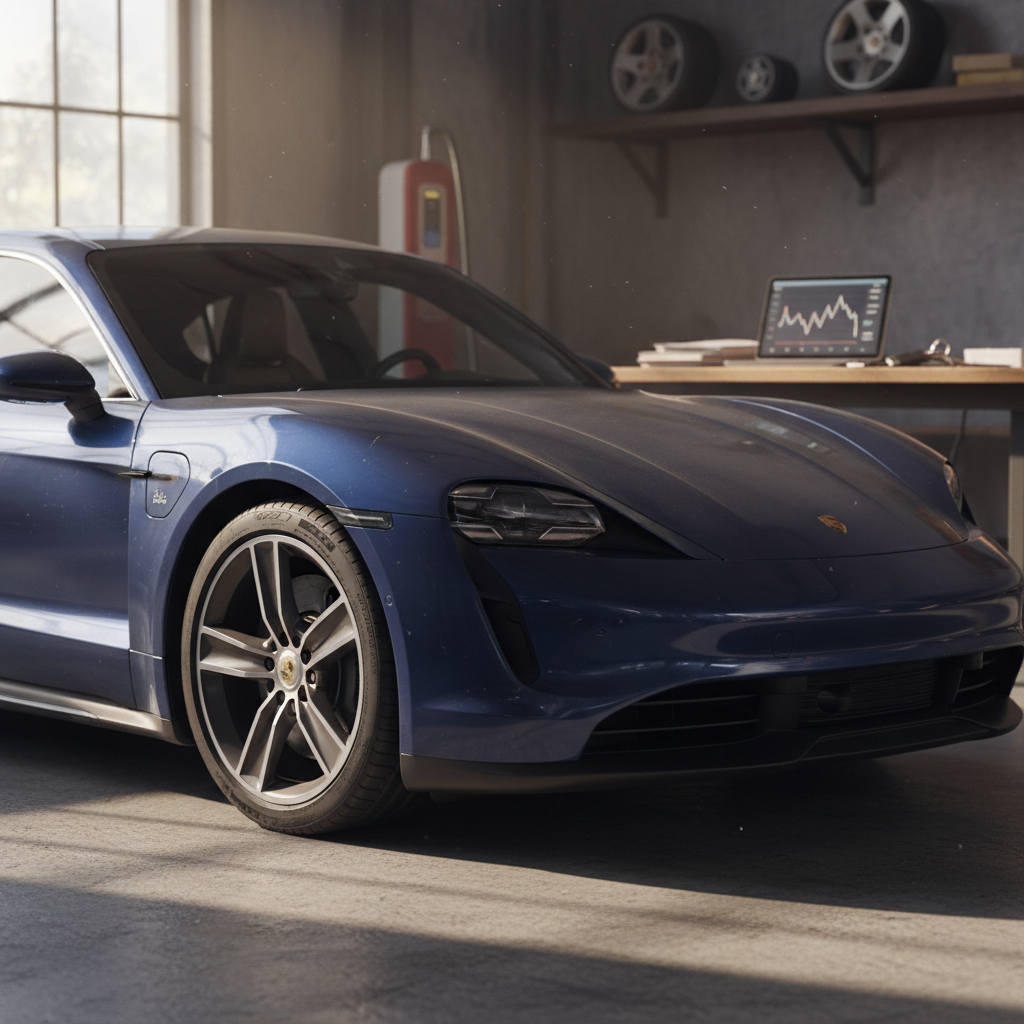
The 2020 Porsche Taycan is the original electric Porsche, the first draft of Stuttgart’s fast-forward future. As a used EV in 2026, it’s a fascinating proposition: breathtaking performance, genuinely special interior, and now, thanks to EV depreciation, pricing that sneaks into high-spec Model 3 money. This 2020 Porsche Taycan buying guide walks you through trims, real-world range, battery and reliability concerns, and how to shop smart so you get the car’s magic without inheriting someone else’s headaches.
Quick take
Why the 2020 Taycan is so interesting as a used EV
In 2020, the Taycan landed like a brick through the Tesla showroom window. It wasn’t trying to win spec-sheet Top Trumps so much as resurrect the old sports-sedan covenant: steering feel, brake feel, road feel, things a spreadsheet can’t measure. The early cars were expensive, tech-forward, and built for Porsche loyalists. Now they’re in the hands of second and third owners, and the market has cooled enough that you can buy a bona fide electric Porsche for what used to be loaded Macan money.
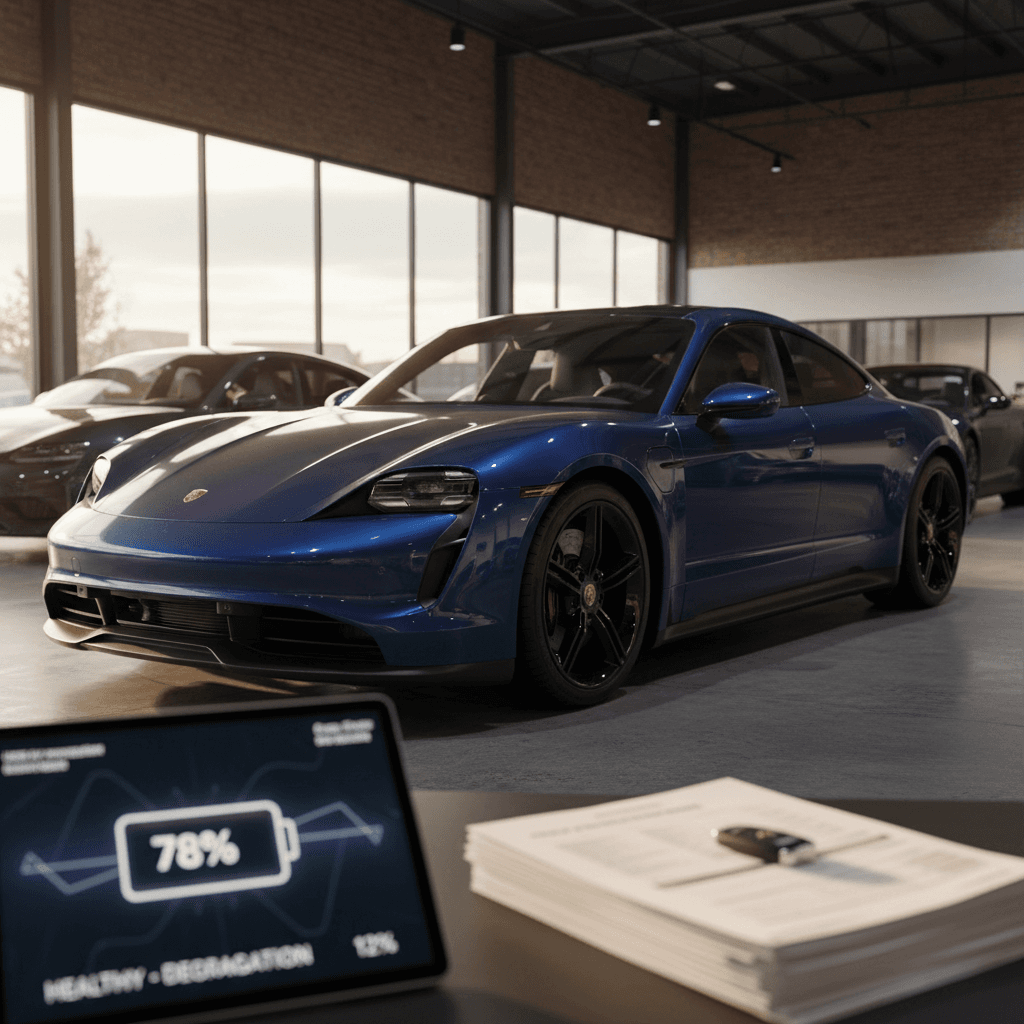
That first model year also brought teething issues: software bugs, charging quirks, and a recall or three. Many have since been corrected under warranty, which is why a 2020 Taycan is a bit like vintage Champagne, brilliant, but you want to be very sure about storage conditions before you pop the cork. A structured, data-driven inspection (including a proper battery health report like the Recharged Score) is non‑negotiable.
2020 Taycan by the numbers (U.S. market context)
2020 Taycan trims and specs cheat sheet
For 2020 in the U.S., the Taycan lineup was fairly simple: 4S, Turbo, and Turbo S, all with dual motors and all-wheel drive. A rear‑wheel‑drive base Taycan arrived later, so if you’re shopping 2020 only, every car you see should be AWD.
Key 2020 Porsche Taycan trims at a glance
High-level differences between the main 2020 Taycan sedan trims. Exact specs vary slightly with options and later software updates.
| Trim | Drivetrain | Battery options | Power (overboost) | EPA range (approx.) | Original base MSRP |
|---|---|---|---|---|---|
| Taycan 4S | Dual-motor AWD | Performance (79 kWh usable) or Performance Battery Plus (93–93.4 kWh gross) | Up to ~522 hp (PB+) | Around 199–227 mi (battery dependent) | ≈$103,800 |
| Taycan Turbo | Dual-motor AWD | Performance Battery Plus only | Up to ~670 hp | EPA ~201–212 mi | ≈$150,900 |
| Taycan Turbo S | Dual-motor AWD | Performance Battery Plus only | Up to ~750 hp | EPA ~192–201 mi | ≈$185,000 |
Think of the 4S as the sweet spot; Turbo and Turbo S are the full send.
Trim-choice advice
Range: what you really get from a 2020 Taycan
The headline controversy with the 2020 Taycan was range. Early EPA numbers, especially for the Turbo and Turbo S, were almost comically low for such an expensive car, hovering around 200 miles. Independent tests often did better than the window sticker, but if you’re used to 300‑mile Teslas, this is not that.
On paper
- 4S (standard battery): roughly 199 miles EPA.
- 4S (Performance Battery Plus): around the low‑220s EPA.
- Turbo: about 201–212 miles EPA.
- Turbo S: roughly 192–201 miles EPA.
Wheel size, tires, and options (like air suspension and glass roof) can nudge those numbers a few miles either way.
In the real world
- At a steady 70–75 mph, many owners report 190–230 miles from a full charge depending on trim and battery.
- In mixed suburban use, it can feel more generous than the EPA sticker, especially in milder weather.
- Cold climates, big wheels, and enthusiastic right feet all conspire to kneecap range.
If you plan frequent 250+ mile days, you either need DC fast charging in your life or a different car.
Don’t ignore wheels and tires
Battery health and warranty: what to know
The high-voltage battery is the soul of any used EV purchase. For the 2020 Taycan, Porsche engineered a conservative buffer into the pack to slow apparent degradation, and many owners report minimal range loss over the first few years. That doesn’t mean problems are impossible, there have been isolated cases of pack failures or modules replaced under warranty, but catastrophic issues are the exception, not the rule.
2020 Taycan battery basics
Know what’s under the floor before you sign
Pack sizes
Most 4S cars came with either a smaller pack (~79 kWh usable) or the optional Performance Battery Plus (~93 kWh gross). Turbo and Turbo S used the big pack only.
High-voltage warranty
Porsche’s U.S. battery warranty generally covers 8 years / 100,000 miles against defects and excessive capacity loss, starting from the original in‑service date. Many 2020 cars still sit inside this window in 2026.
Degradation reality
Well‑treated packs often still show near‑new capacity after 4–5 years. Abuse, frequent hot‑climate fast charging, storage at 100%, can accelerate loss. You want data, not promises.
Why a third‑party battery report matters
Battery due diligence on a used 2020 Taycan
1. Verify in‑service date
Ask for the original purchase or CPO paperwork so you know precisely when the 8‑year/100,000‑mile battery warranty clock started. A late‑registered 2020 car can give you an extra year or more of coverage.
2. Get a real health readout
Request a battery health report from a Porsche dealer or an independent EV specialist. Look for state of health (SOH), cell voltage spread, and any stored high‑voltage error codes.
3. Review fast‑charging history
Moderate fast charging is fine; constant 270 kW sessions in desert heat are less ideal. Ask the seller how the car was typically charged and look for corroborating service notes.
4. Check for battery recalls or campaigns
Confirm that any battery‑related recalls or software campaigns have been applied. On a first‑year EV, updated battery management software is a quiet hero.
5. Do a full‑to‑low range test
On a long test drive, watch how quickly percentage drops and how realistic the remaining‑range estimate feels. Wild swings can hint at calibration issues, or something deeper.
Charging the 2020 Taycan: home and road-trip reality
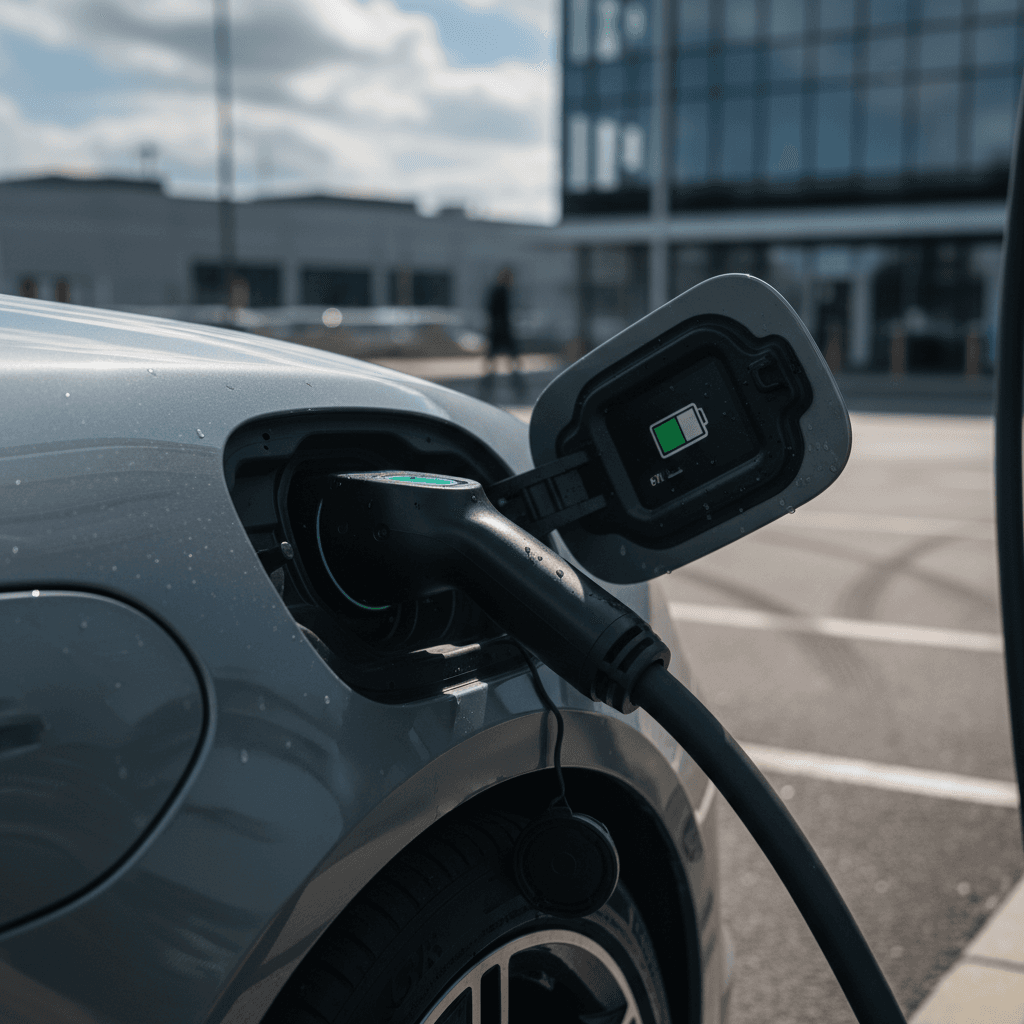
If the Taycan has a party trick, it’s charging. On the right 800‑volt DC fast charger, early cars could spike to about 270 kW, still impressive in 2026, and run from roughly 5–80% in the neighborhood of 20 minutes. The flip side: to enjoy that, you need access to modern high‑power infrastructure, not a lonely 50 kW station behind a strip mall.
How the 2020 Taycan charges in the real world
AC at home, DC on the road
Home & workplace charging
- AC charging: Up to 11 kW on most U.S. 2020 cars (some early 22 kW onboard chargers overseas later proved failure‑prone).
- Daily use: A 240V Level 2 charger typically refills an average commute overnight.
- Apartment life: Make sure your building or workplace has reliable Level 2 before you commit.
DC fast charging & road trips
- Max DC power: Around 270 kW on compatible 800V chargers.
- Best practice: Charge between ~10–80% for speed; the last 20% slows dramatically.
- Planning: Use apps that show station power levels, not just logos on a map.
Road‑trip strategy
Common issues, recalls, and reliability patterns
First‑year cars are inevitably experimental, and the 2020 Taycan is no exception. Broadly, the platform is structurally solid and drives like it was hewn from ingots, but owners have reported a constellation of software and electrical gremlins that can turn the ownership experience into a long text thread with your service advisor.
- Software glitches: occasional infotainment freezes, phantom warning lights, and connectivity issues with the Porsche Connect app.
- Charging errors: intermittent DC fast‑charge failures or “error charging” messages, sometimes cured with software updates, sometimes requiring hardware diagnosis.
- Onboard charger problems: particularly in some higher‑power AC onboard units in other markets; U.S. cars mostly use the 11 kW unit, which has been more robust but not completely drama‑free.
- 12V and electrical oddities: sporadic reports of 12V battery failures or general electrical system faults triggering limp‑home modes.
- Multiple recalls: including campaigns for electrical system checks, control‑unit software, and sometimes battery‑related inspections. Most well‑maintained cars should have these addressed by now.
Why an extended warranty matters
The Taycan is one of those cars that can make you forgive a lot. The way it steers, brakes, and changes direction feels almost analog in a digital era. But you absolutely want someone else to have beta‑tested your particular car before you sign on the dotted line.
Costs to own: tires, service, and depreciation
A used EV doesn’t mean used‑car cheap. The 2020 Taycan is a six‑figure German luxury car at heart, and ongoing costs reflect that. The good news: you’re not paying for oil changes or timing belts. The bad news: 21‑inch Pirellis and Porsche‑priced control modules are still very much a thing.
2020 Taycan ownership cost touchpoints
Where Recharged fits in
Ready to find your next EV?
Browse VehiclesInspection checklist for a used 2020 Taycan
If you take only one thing from this guide, let it be this: the pre‑purchase inspection on a 2020 Taycan needs to be more rigorous than the one you’d give a used Camry. You’re buying cutting‑edge high‑voltage hardware, layered software, and old‑school Porsche running gear in one package. Go deep.
Pre‑purchase inspection checklist for a 2020 Taycan
Confirm full service and recall history
Ask for a complete service printout from a Porsche dealer. You want to see regular maintenance, completed recalls, and no pattern of repeated unsolved faults, especially around the high‑voltage system.
Scan all control modules
Have a Porsche dealer or EV‑literate shop scan every module for stored and pending fault codes. Intermittent DC charging errors, BMS warnings, or repeated 12V issues should all be investigated before purchase.
Inspect wheels, tires, and brakes
Check for uneven tire wear (which can hint at suspension issues), curb‑rashed wheels, and rotor wear. Taycan’s regen is strong, but spirited driving still chews through pads and rotors over time.
Test all charging modes
On the test drive, plug into both AC Level 2 and, if possible, a DC fast charger. Watch for error messages, inconsistent charge rates, or overheated connectors. Charging drama is red‑flag territory on an EV.
Audit driver‑assist and infotainment
Verify that adaptive cruise, lane‑keeping, parking sensors, cameras, and the entire infotainment stack behave normally. A flaky touchscreen or dead camera is more than an annoyance when everything routes through those systems.
Check interior wear and water leaks
Look for water marks, fogged lights, or damp carpets that might signal leaks. Examine seat bolsters, switchgear, and trim; excessive wear can betray hard use even when the odometer looks friendly.
Who should, and shouldn’t, buy a 2020 Taycan
It’s a great fit if…
- You want a driver’s car first, EV second; feel and feedback matter as much as spreadsheets.
- Your daily driving fits comfortably within 150–180 miles and you have home or dependable workplace charging.
- You’re comfortable budgeting for premium‑car running costs, tires, brakes, and the occasional expensive visit if something complex fails.
- You plan to keep the car while the battery warranty is still active, or you have strong extended coverage.
You might want to look elsewhere if…
- You regularly need 250–300+ mile legs in remote areas with sparse high‑speed charging.
- You’re allergic to software quirks or don’t live near a competent Porsche service center.
- Your budget leaves no room for a surprise four‑figure repair bill.
- You just want a pragmatic, low‑drama EV; a mainstream model with simpler hardware may suit you better.
FAQ: 2020 Porsche Taycan buying guide
Frequently asked questions about buying a 2020 Taycan
Bottom line: is a 2020 Taycan a good buy today?
The 2020 Porsche Taycan is a landmark car: the point where a century‑old sports‑car maker rebooted itself in electrons and very nearly out‑Porsched its own gas sedans. As a used EV in 2026, it offers towering performance, real character, and now, thanks to depreciation, pricing that finally matches the compromises in range and complexity.
If you have stable access to Level 2 charging, live within range of a competent Porsche or EV specialist, and go into the purchase with eyes wide open on warranty and inspection, a good 2020 Taycan can feel like a cheat code. The key is finding the good one: clean history, updated software, healthy battery, and no unresolved electrical gremlins. That’s exactly where a platform like Recharged earns its keep, pairing transparent battery diagnostics and fair pricing with EV‑savvy support from search to nationwide delivery. Do the homework, get the data, and the 2020 Taycan can reward you with one of the most compelling electric driving experiences on the road.