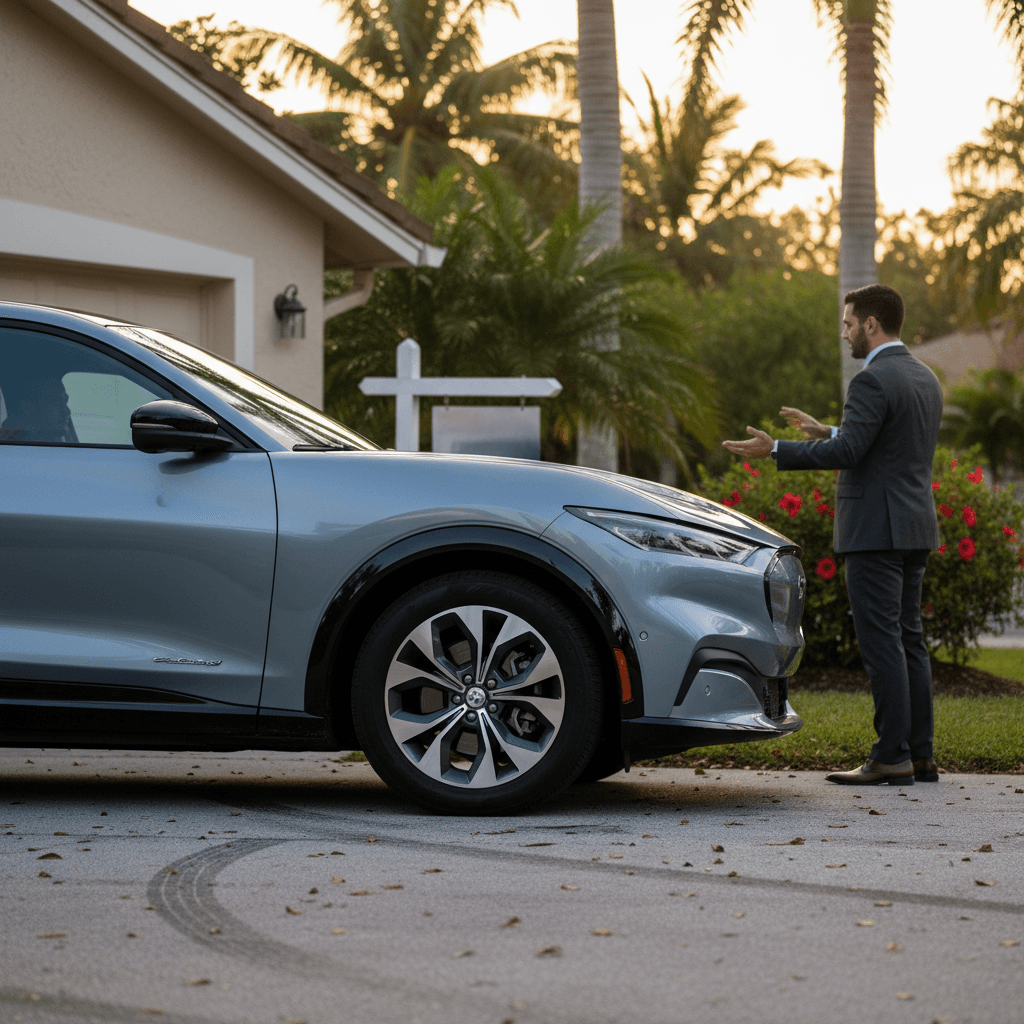
If you’re ready to sell your Ford Mustang Mach‑E in Florida, you’re juggling more than just finding a buyer. You’re dealing with fast‑moving EV prices, Florida’s paperwork rules, and a market where some shoppers still don’t quite “get” electric SUVs. The good news: with the right strategy, you can turn a soft EV market into a solid sale and avoid leaving thousands on the table.
Florida EV resale snapshot
Why Selling Your Mustang Mach‑E in Florida Feels Different
Hot EV market, hot weather
Florida has one of the highest EV adoption rates in the Southeast, especially around Miami, Orlando, Tampa Bay, and Jacksonville. That means more potential buyers who know what a Mach‑E is, but it also means savvy shoppers who are tracking price cuts and incentives on new EVs.
Fast tech, fast depreciation
Mustang Mach‑E prices have adjusted quickly as Ford cut MSRPs and newer tech arrived. Many owners are discovering that their 2–3‑year‑old Mach‑E is worth far less than expected, especially compared with gas SUVs. Timing, mileage, battery health, and how you sell matter more here than with a typical crossover.
Watch out for underwater loans
How Much Is My Mustang Mach‑E Worth in Florida?
Used Mach‑E values move quickly, but a few patterns are clear as of 2026. Many 2‑year‑old examples are trading in the low‑ to mid‑$20,000s, and several studies show around 55–60% depreciation over five years for this model line. That’s steeper than some gas SUVs, but roughly in line with several other early EVs.
Mustang Mach‑E Value Patterns to Keep in Mind
Start with three numbers, not one
Choose How to Sell in Florida: Trade‑In, Private Sale, or Online Marketplace
Three Main Ways to Sell Your Mach‑E in Florida
Each path trades convenience for price, know which one fits you.
1. Traditional trade‑in at a dealer
Pros:
- Fast and simple, especially if you’re buying another car.
- Can help if you’re upside‑down on your loan by rolling negative equity.
- No strangers test‑driving your EV.
Cons:
- Typically the lowest dollar amount.
- Some Florida dealers still undervalue EVs due to uncertainty.
2. Private sale in Florida
Pros:
- Often yields $1,000–$3,000 more than trade‑in for a clean Mach‑E.
- You control the price and screening of buyers.
Cons:
- You handle ads, meet‑ups, test drives, and paperwork at the tax collector’s office.
- Some buyers worry about EV range and charging, which you must explain.
3. Online EV‑focused marketplace (like Recharged)
Pros:
- EV‑savvy buyers nationwide, not just your ZIP code.
- Professional photos, descriptions, and battery health reporting.
- Options like consignment, instant offers, or trade‑in.
Cons:
- Small service fees in exchange for handling the sale.
- May require a quick inspection or diagnostic scan.
Why EV‑specialist marketplaces help Mach‑E sellers
Step‑by‑Step: How to Sell Your Mustang Mach‑E in Florida
Seven Steps to a Smooth Mach‑E Sale in Florida
1. Get a realistic value range
Pull a trade‑in estimate, a private‑party estimate, and one or two instant online offers. Use Mach‑E‑specific guides and compare to real listings in Florida to see what’s actually selling, not just what’s being asked.
2. Check your payoff and equity
Contact your lender for a current payoff quote. Subtract that payoff from your estimated sale price to see whether you have positive equity, are about even, or are underwater. This will influence whether you lean toward trade‑in or private sale.
3. Decide where you’ll sell
If you want <strong>maximum convenience</strong>, a straight trade‑in or instant offer might win. If you’re chasing every last dollar and can be patient, a private sale or consignment on an EV marketplace like Recharged will usually net more.
4. Gather your documents
For Florida, you’ll want your title or lienholder info, current registration, driver’s license, any extended warranty or service contract info, and your key fobs and charging cables. If you’ve used BlueCruise or added accessories, note those as selling points.
5. Prep the Mach‑E
Clean the interior and exterior, remove personal items from BlueCruise profiles and the infotainment system, and make sure the car is free of warning lights. Top off the charge to at least 60–70% so buyers can test‑drive confidently.
6. Create a Florida‑friendly listing
Take clear daylight photos that show the exterior, interior, touchscreen, and charging port. In your description, highlight range, battery warranty remaining, one‑pedal driving, and recent software updates, features that matter in daily Florida driving.
7. Close the deal and transfer title
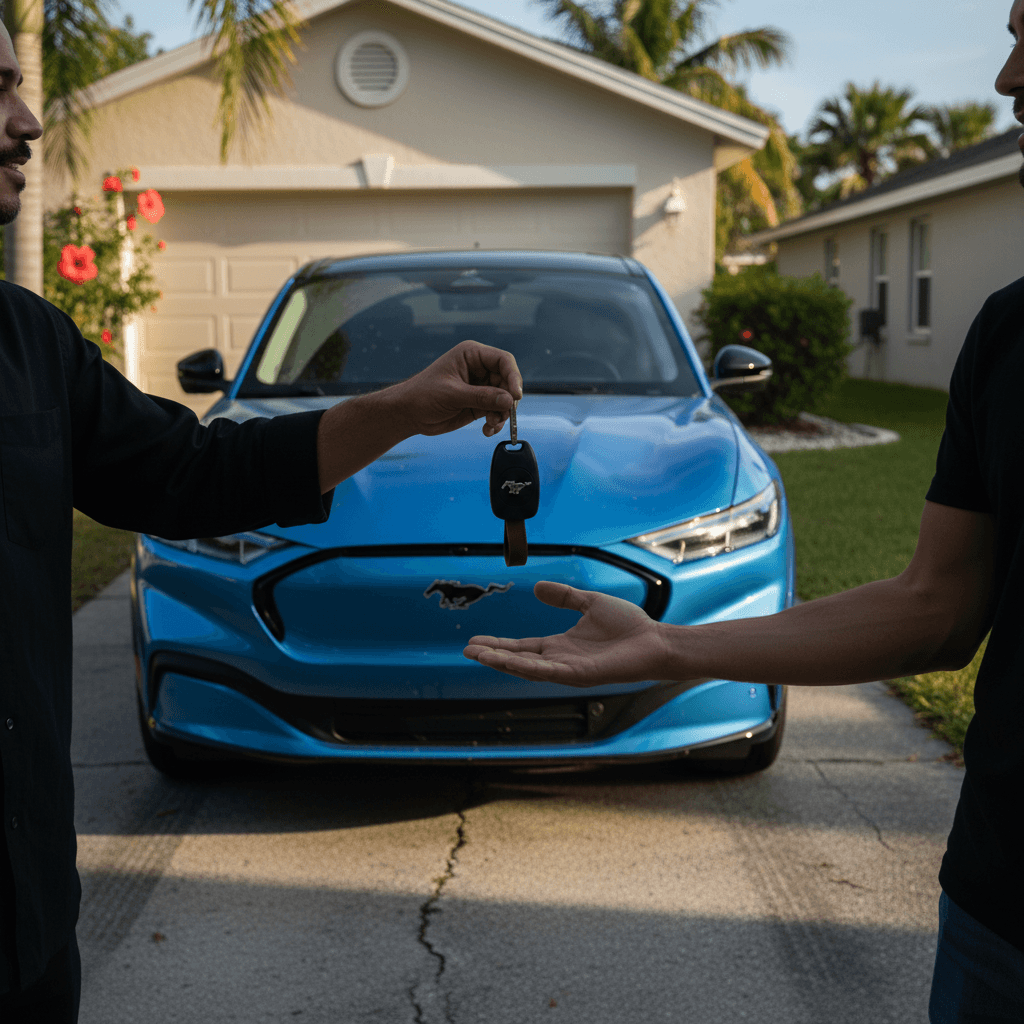
Meet the buyer in a safe, public place, preferably near a tag agency or county tax collector’s office. Once you’re agreed on price, complete the title, bill of sale, and odometer reading together, then go inside to handle the transfer and verify everything on the spot.
Florida Taxes, Title, and Paperwork When You Sell
Florida’s sales tax rules are a little different from what many sellers expect. The state charges 6% sales tax on vehicle purchases, and counties can add a local surtax on the first portion of the price. As the seller, you don’t remit that tax, the buyer pays it when they register the car with the tax collector, but you do want to structure the deal so nothing looks suspicious or under‑reported.
Key Florida Rules When You Sell a Used Mach‑E
Use this as a checklist before you hand over the keys.
| Topic | What It Means for You | Practical Tip |
|---|---|---|
| Sales tax on private sale | Buyer pays Florida sales tax and any local surtax when they register the car. | Price the car fairly and keep a bill of sale; unusually low prices may draw extra scrutiny. |
| Title transfer | Both parties complete the title and odometer reading, then the buyer takes it to the tax collector. | If there’s a lien, coordinate payoff with your lender first so the title can be released. |
| Out‑of‑state buyers | Florida has special rules for non‑residents taking the car out of state. | If you sell to someone flying in from Georgia or the Carolinas, call the tax office ahead of time to confirm their process. |
| “Occasional sale” rule | Florida treats most private sales as occasional sales, no dealer license required. | Don’t make a habit of flipping multiple cars per year; that can be treated differently. |
| Temp tags & insurance | Some buyers will ask about temporary tags for driving home. | Point them to the tax collector or tag agency, don’t try to handle this yourself. |
Always confirm details with your local county tax collector, rules and forms can change.
Don’t under‑report the price
Get Your Mach‑E Ready to Show in the Florida Heat
Presentation still sells cars, even EVs. In Florida’s sun, that means making your Mach‑E look well‑cared‑for and ready for a beach run or I‑4 commute, not like it’s been baking outside with sand in the carpets.
- Wash, clay, and wax the exterior to freshen up the paint and protect against Florida UV exposure.
- Clean the glass thoroughly; streak‑free windows make the car feel newer and safer to drive at night.
- Detail the interior, wipe down the large center screen, vacuum the carpets, and clean any sunscreen or sand residue.
- Condition rubber door and hatch seals, which can dry faster in hot climates.
- Fix small, inexpensive items (wiper blades, cabin air filter, missing key fob battery) so buyers don’t see a “to‑do” list.
Schedule showings smartly
EV‑Specific Tips That Make Your Mach‑E Easier to Sell
Turn EV Curiosity Into Confidence
Most Florida shoppers have heard of the Mach‑E, but they may not have lived with an EV yet.
Highlight real‑world range in Florida
Range numbers on the window sticker don’t tell the whole story. Be ready to explain your actual highway and city range, with A/C running, on trips between Orlando and Tampa or Miami and West Palm Beach.
Explain home and public charging
Include photos of your Level 2 home setup if you have one, and mention common public networks around you. Florida buyers want to know, “Can I charge near work, Disney, or the beach?”
Use the battery warranty to your advantage
Ford’s battery warranty (typically 8 years/100,000 miles for capacity) is a major comfort factor in a hot state. Put the remaining warranty years and mileage prominently in your listing.
Show recent software and features
Point out recent software updates, BlueCruise capability (if equipped), and any app integration. A quick demo of one‑pedal driving and instant torque on a test drive can sell the experience.
Leverage a battery health report
When It Makes Sense to Sell Now vs. Wait
Because Mach‑E depreciation is front‑loaded, waiting isn’t always your friend. In many cases, the big value drop has already happened by years 2–3, and further declines start to slow. But there are still good reasons to accelerate, or delay, your sale depending on your situation.
Signs you should sell your Mach‑E now
- You’re close to your mileage limit on a lease and fees will add up.
- You’re in positive equity and can still cash out a few thousand dollars.
- Your driving needs changed, longer commutes, more road trips, or you want a different body style.
- You’re eyeing a different EV or plug‑in while incentives and deals are still attractive in 2026.
Signs it might pay to hang on
- You’re significantly underwater on your loan and don’t want to roll negative equity.
- The Mach‑E still fits your family’s needs and you like the low running costs.
- Your battery health is strong and you’re well within the warranty window.
- You’re waiting for a major life change, move, new job, or new EV model, to clarify what you really need next.
Be cautious about rolling negative equity
How Recharged Helps Florida Drivers Sell a Mustang Mach‑E
Selling an EV isn’t just selling another used SUV. Buyers want to understand battery health, charging, software, and total cost of ownership. That’s exactly the gap Recharged was built to close for cars like the Mustang Mach‑E.
What Recharged Can Do for Your Mach‑E Sale
Built for EVs, not just any used car.
1. Recharged Score battery diagnostics
Every vehicle listed with Recharged gets a Recharged Score report with verified battery health, charging performance, and fair‑market pricing insights. That’s especially powerful in Florida, where shoppers worry about battery life in the heat.
2. EV‑savvy buyers nationwide
You’re not limited to buyers in Orlando or Miami. Recharged’s marketplace reaches EV‑interested shoppers across the country, paired with nationwide delivery options so your Mach‑E can find the right home wherever demand is strongest.
3. Multiple ways to sell
Choose what fits your situation, instant offer, trade‑in, or consignment, while EV specialists help you price and position your Mach‑E correctly. If you’re moving into another EV, Recharged can also help you finance your next car.
Ready to find your next EV?
Browse VehiclesAlready in Florida? Visit the Experience Center
FAQ: Selling a Ford Mustang Mach‑E in Florida
Common Questions About Selling a Mach‑E in Florida
Selling a Ford Mustang Mach‑E in Florida in 2026 means navigating a fast‑changing EV market, a warm climate, and buyers who are still learning what life with an electric SUV looks like. If you price your Mach‑E realistically, present it well, and choose the right selling channel, whether that’s a local trade‑in, a private sale, or an EV‑focused marketplace like Recharged, you can turn a complex situation into a straightforward win. Take the time to gather your numbers, line up your paperwork, and showcase battery health and charging clearly, and you’ll be well‑positioned to move on confidently to whatever you’re driving next.