
If you own a 2020 Nissan Leaf, you’re probably wondering what your car is really worth as a trade-in in 2026, and whether you’d be better off selling it like a regular used EV instead. With electric vehicles, especially the Leaf, battery health can change the number by thousands of dollars, so book values only tell part of the story.
Short answer
2020 Nissan Leaf trade-in value in 2026: quick overview
The 2020 Nissan Leaf sits at an interesting point in the used-EV market. It’s old enough that depreciation has done a lot of the heavy lifting, but new enough that a well-cared-for car with healthy battery capacity can still be a compelling commuter EV. That means condition and battery state of health (SOH) matter more for trade-in value than the model year by itself.
What shapes your 2020 Leaf’s value
Why “book value” can mislead EV owners
6 factors that drive 2020 Leaf trade-in value
The main levers on your 2020 Leaf’s value
Understanding these makes you harder to lowball at the dealership.
1. Battery health & capacity
2. Mileage & usage pattern
3. Trim level & battery size
4. Condition & accident history
5. Your local market
6. Timing & incentives
Easy pre‑appointment homework
Why battery health matters more than anything else
On a gasoline car, an extra 10,000–20,000 miles usually moves the needle modestly at trade time. On a 2020 Nissan Leaf, however, the difference between a healthy pack and one that’s lost a big chunk of capacity can fundamentally change how usable the car feels, and what someone will pay for it.
How appraisers look at your 2020 Leaf’s battery
- Capacity bars: A quick visual snapshot on the Leaf’s dash. Fewer bars usually means noticeable range loss.
- Real‑world range: How far the car actually goes on a full charge in mixed driving, not just the original EPA estimate.
- Charging pattern: Heavy DC fast‑charging, especially in hot climates, can speed up degradation.
- Diagnostics: Tools like LeafSpy or more advanced diagnostics provide a state‑of‑health percentage that serious buyers care about.
Why Recharged builds value around battery data
Recharged’s entire model is built around transparent, verified battery health. Every car listed on the marketplace comes with a Recharged Score Report that includes battery diagnostics, fair‑market pricing, and condition details.
When you sell or consign your 2020 Leaf through Recharged, that verified battery data can help justify a stronger number than a dealer who only glances at the dash and plugs trim and mileage into a generic pricing tool.
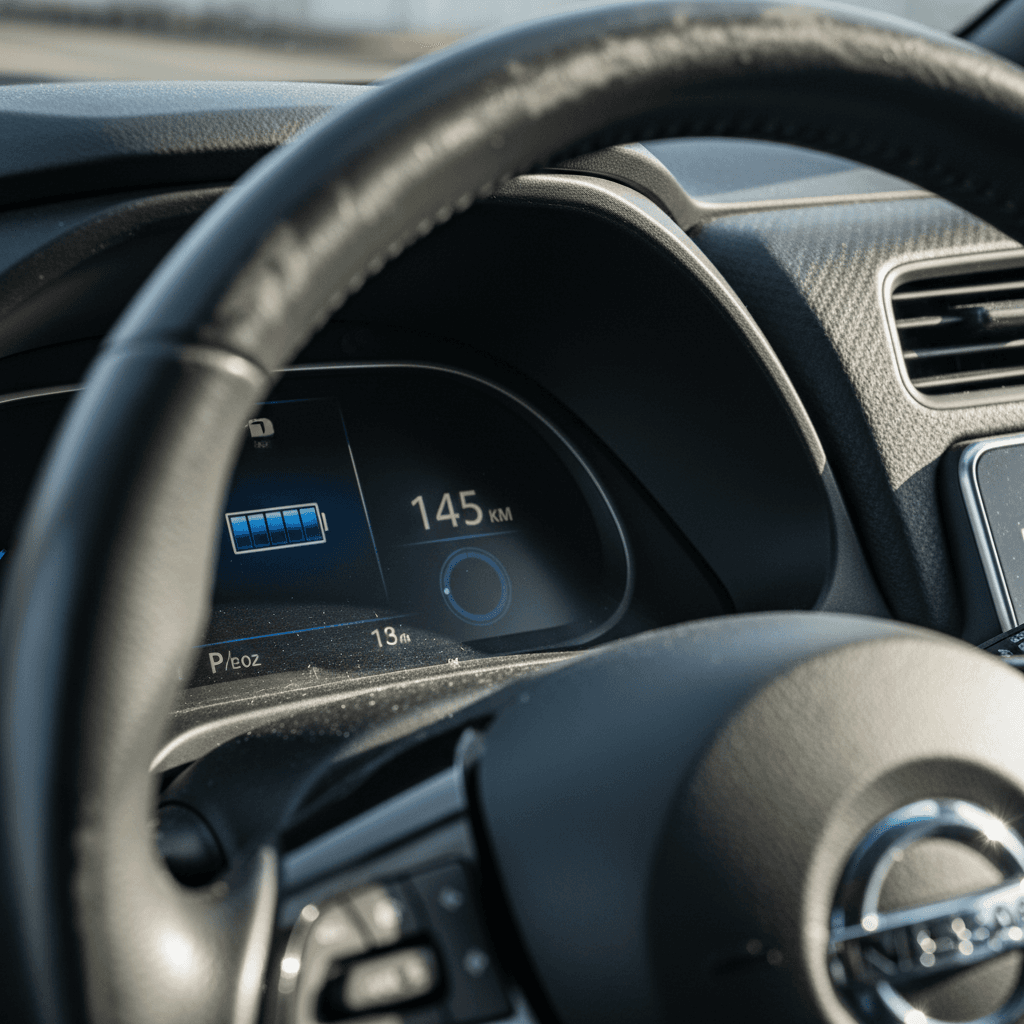
Battery health = leverage
Trade in your 2020 Leaf or sell it yourself?
Once you have a ballpark on your 2020 Nissan Leaf’s trade-in value, the next decision is how to turn that into cash or equity toward your next car. You’ve essentially got three paths: traditional dealership trade, private sale, or a used‑EV specialist marketplace like Recharged.
2020 Nissan Leaf: trade-in vs other ways to sell
How your options compare if you’re moving on from a 2020 Leaf in 2026.
| Option | Typical Price | Time & Effort | Key Advantages | Main Drawbacks |
|---|---|---|---|---|
| Dealer trade-in | Lower, but fast | Very low | One-stop transaction; easy to roll equity into next car | Less focus on EV battery health; risk of low offers |
| Private sale | Highest potential | High | You capture the full market value if you find the right buyer | You manage ads, test drives, paperwork, and safety |
| Recharged marketplace / instant offer | Often between private and trade | Moderate to low | EV‑specialist support, verified battery health, nationwide buyer reach | May take longer than a same‑day dealer trade if you choose consignment |
Use this as a framework, your exact numbers depend on battery health, mileage, and your local market.
Where Recharged fits in
How dealers and buyers calculate 2020 Leaf prices
Whether you’re talking to a franchise Nissan dealer, an independent lot, or a used‑EV specialist, most valuations for a 2020 Leaf start the same way: a data‑driven baseline, followed by adjustments up or down for condition, battery, and marketability.
- Start with wholesale benchmarks for a 2020 Nissan Leaf by trim and mileage (auction data, pricing guides, prior deals).
- Adjust for battery health and market demand for that trim and range in your region.
- Subtract reconditioning costs, detail, tires, windshield chips, any cosmetic or mechanical issues.
- Account for transportation, marketing, and any expected negotiation room.
- Build in profit margin and risk (especially if the dealer isn’t an EV specialist and is nervous about battery value).
Watch for "EV risk" discounts
Steps to boost your 2020 Leaf trade-in offer
You can’t rewrite your 2020 Leaf’s history, but you can absolutely influence how it presents at appraisal time. These are the practical moves that actually matter for trade-in value.
Pre‑trade checklist for your 2020 Nissan Leaf
1. Document your battery health
If you can, pull a battery health report or at least capture photos of your capacity bars and typical full‑charge range. The clearer the evidence that your pack is healthy, the easier it is to negotiate.
2. Charge to a realistic, not extreme, level
Bringing the car in at roughly 60–80% charge shows a normal operating pattern. You don’t need to arrive at 100%, but you do want the appraiser to experience typical real‑world range.
3. Fix obvious, cheap issues
Replacing worn wiper blades, blown bulbs, or a filthy cabin air filter is inexpensive and removes easy excuses for lowball offers. Deep scratches and dents are a separate, case‑by‑case decision.
4. Clean the car thoroughly
A clean interior and exterior do more than just look nice. They send a signal that the car has been cared for, which matters for a 6‑year‑old EV whose long‑term health buyers are judging.
5. Gather your records and accessories
Bring service receipts, both keys, the OEM charge cable, and any upgraded cables or accessories. Missing chargers or a single key eat directly into the number a dealer can justify.
6. Get more than one number
Even if you plan to trade, collect at least two offers, ideally from a Nissan store, a used‑EV specialist, and an online buyer such as Recharged. The spread will tell you how the market sees your Leaf.
Compare offers apples to apples
Using Recharged instead of a traditional trade-in
For a mainstream gas sedan, a traditional trade-in at the dealership might be perfectly adequate. For a 2020 Nissan Leaf, the story is more nuanced. Because so much of the car’s value lives in its battery and EV‑specific features, working with an EV‑specialist can be the difference between a generic number and a price that actually reflects what you’re selling.
How Recharged helps 2020 Leaf owners capture more value
Designed for used EVs, not just used cars in general.
Recharged Score report
Fully digital selling experience
Expert EV guidance
Ready to find your next EV?
Browse VehiclesWhen Recharged makes the most sense
Common 2020 Leaf seller mistakes to avoid
Most 2020 Nissan Leaf owners only sell an EV once every few years, so it’s easy to misread the market or over‑rely on habits from gas cars. Avoiding a few common missteps can keep real money in your pocket.
- Leaning only on generic pricing guides without considering battery health or local EV demand.
- Accepting the first trade-in offer without checking with at least one EV‑savvy buyer or marketplace.
- Ignoring minor, low‑cost fixes that make the car photograph and present much better.
- Undervaluing how much buyers care about the included charge cable, both keys, and a clean history report.
- Assuming a Leaf with visible battery degradation will bring the same money as one with documented strong range.
Don’t hide known battery issues
FAQ: 2020 Nissan Leaf trade-in value
Frequently asked questions about 2020 Leaf value
Final thoughts: what your 2020 Leaf is really worth
Your 2020 Nissan Leaf’s trade-in value in 2026 isn’t just a function of age and mileage. It’s a snapshot of battery health, condition, documentation, and market timing. Two Leafs that look identical in a pricing guide can be worlds apart once an appraiser plugs in a scanner or takes them on a real‑world drive.
The smartest move you can make is to gather good information, photos, service records, and, ideally, a battery health report, then shop your car to more than one buyer. Use traditional trade‑in offers as one data point, but don’t stop there. A used‑EV specialist like Recharged, with its Recharged Score Report, instant offers, consignment options, and financing support, gives your 2020 Leaf a chance to be valued for what it truly is, not just what a generic table says it might be worth.