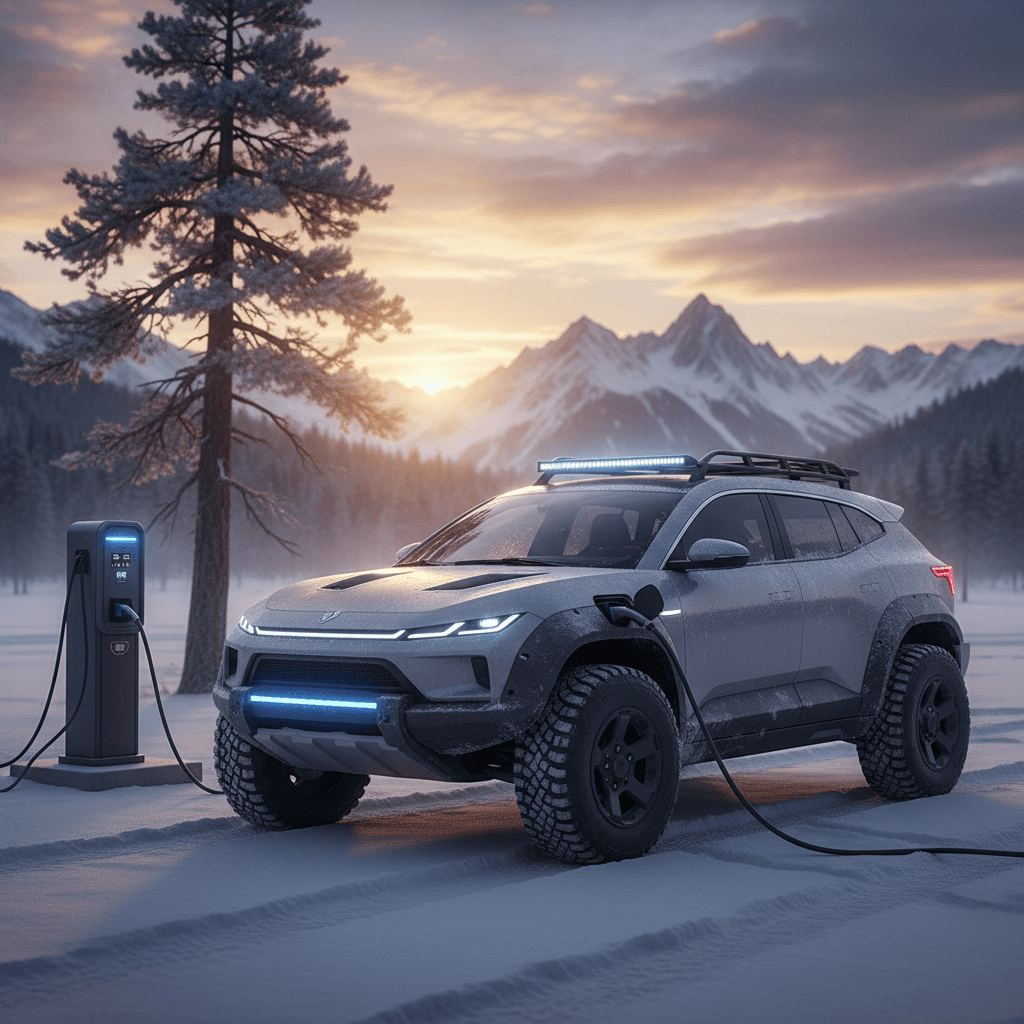
If you live where snow sticks around and temperatures plunge, the **best electric car for winter 2026** isn’t just the one with the biggest battery. It’s the EV that keeps its range in the cold, grips on ice, warms up quickly, and doesn’t surprise you with hidden battery wear. The good news: real-world winter testing from Norway, Canada, and the U.S. now makes it much easier to separate the true cold-weather performers from the spec-sheet heroes.
Winter EV reality check
Why winter EV performance matters in 2026
EV adoption keeps climbing in cold-climate markets, from the Upper Midwest and Northeast in the U.S. to Canada and Scandinavia. Winter performance has gone from niche concern to mainstream requirement. Automakers have responded with **heat pumps**, better thermal management, smarter preconditioning and, in a few 2026 models, early sodium‑ion or solid‑state battery tech aimed specifically at cold-weather performance. That means the gap between the best and worst winter EVs is wider than ever.
Cold-weather EV performance by the numbers
What makes an electric car good in winter?
1. Efficient thermal management
Cold slows battery chemistry and cabin heating is energy‑hungry. The best winter EVs use heat pumps, battery warmers, and smart thermal routing to keep range loss low. Look for models that perform well in independent winter range tests, not just on paper.
2. Traction, clearance, and control
Snowy driving is about grip and predictability. All‑wheel drive (AWD), good stability control, snow‑rated tires, and at least moderate ground clearance make a big difference. Some EV SUVs also offer off‑road or snow modes that smooth throttle response on slick surfaces.
- A standard or optional **heat pump** (not just resistive heating)
- Battery preconditioning tied to navigation, so the pack is warm when you reach a fast charger
- Proven cold-weather range in real tests, not only WLTP or EPA numbers
- Available **AWD** or dual motors for traction
- Heated seats and steering wheel (they use less energy than blasting cabin heat)
- Good charging curve in the cold, able to sustain decent kW after preconditioning
Don’t fixate only on EPA range
Best electric cars for winter 2026: Shortlist
Based on recent Norway NAF winter tests, Canadian road trials, and 2024–2026 model updates, here are standout candidates for **best electric car for winter 2026** if you’re shopping in or near the U.S. market. Not every model is sold in every state, but this list helps you understand what to look for, especially if you’re considering a used EV.
Winter 2026 EV standouts
Models with strong real-world cold-weather credentials
Lucid Air (sedan)
Why it’s here: Enormous battery, excellent efficiency, and top‑tier long‑range performance in independent tests make the Air one of the few EVs that can still deliver ~300+ miles in serious cold when properly managed.
Polestar 3 (SUV)
Why it’s here: Repeated Norwegian winter tests show the Polestar 3 losing only a few percent versus WLTP and still covering well over 300 miles in cold conditions, impressive for a large SUV.
Kia EV4 (hatch/sedan)
Why it’s here: A value winter hero in recent El Prix testing, the new EV4 combines solid AWD performance, efficient heating, and strong range retention at a more attainable price point than many luxury rivals.
Nissan Ariya (SUV)
Why it’s here: Nissan has leaned into cold‑weather validation for Ariya. It offers an available heat pump, e‑4ORCE AWD, and a reputation for predictable winter behavior, making it a smart all‑rounder for snow states.
Hyundai Ioniq 5 & Kia EV6
Why they’re here: Strong real‑world winter test results, fast DC charging even in the cold (with preconditioning), and widely available AWD trims make these two of the most practical winter EVs, especially on the used market.
Tesla Model Y & Model 3
Why they’re here: Not always #1 in the latest Norway tests, but they consistently rank near the top for cold‑weather range thanks to efficient drivetrains, mature software, and robust heat‑pump‑based thermal systems.
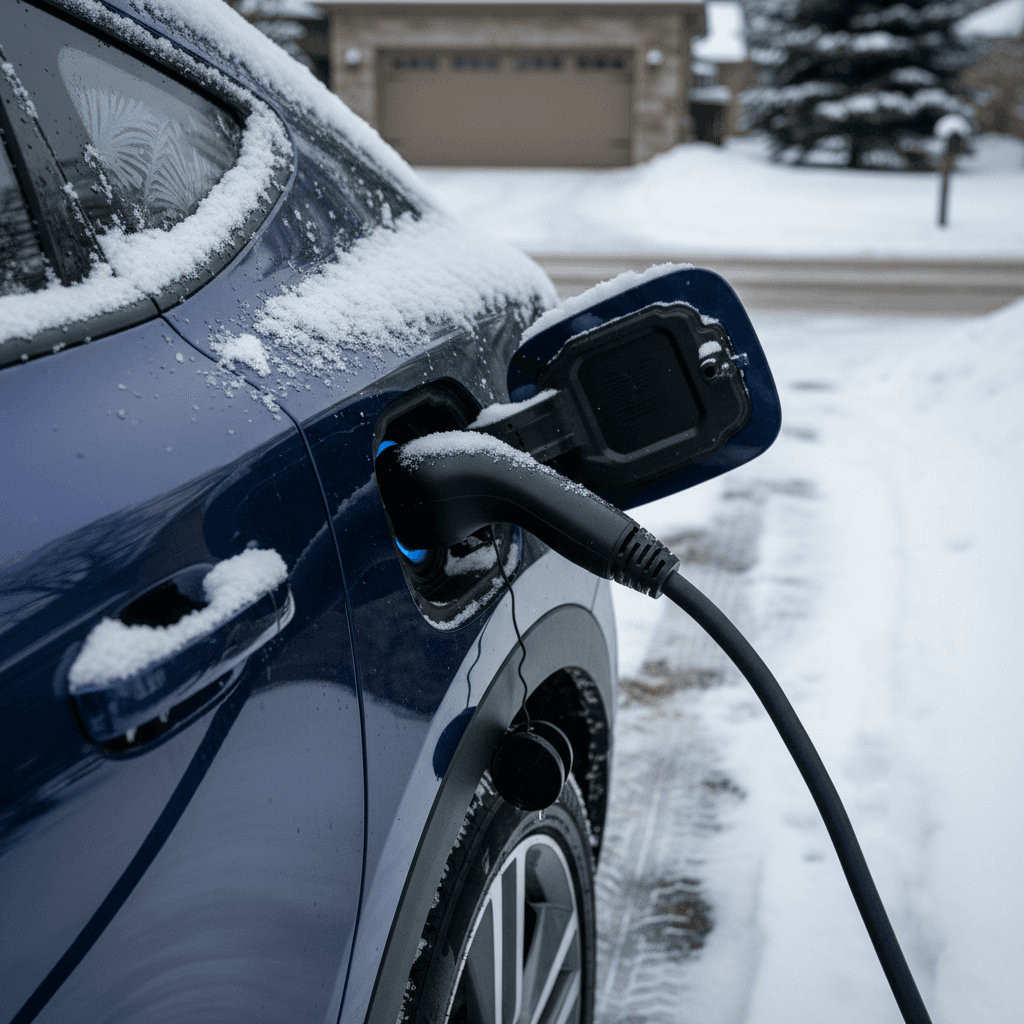
Deep dive: Top winter EV picks
Lucid Air: Winter range king, with caveats
In Norway’s latest winter El Prix, the **Lucid Air Grand Touring** again topped the real‑world range charts, covering more than 320 miles of mixed driving in deep-freeze conditions. For drivers in large, sparsely populated states where winter road trips are common, that kind of buffer can feel like a superpower.
- Very large battery options and industry‑leading efficiency
- Sophisticated thermal management to keep the pack in its sweet spot
- Strong DC fast‑charging curve once the battery is warm
- Comfortable, quiet long‑distance cruiser even on winter tires
Luxury pricing reality
Polestar 3: Efficiency star in the snow
Polestar’s flagship SUV has quietly become one of the **cold‑weather benchmarks**. In recent Scandinavian winter tests, it delivered among the lowest deviations from WLTP range, only a few percent off the lab number, while still offering all‑wheel drive and a premium cabin. That combination makes it one of the best electric cars for winter 2026 if you want an SUV but don’t want to suffer massive range loss.
- Heat pump and advanced thermal management standard in key trims
- AWD with well‑tuned traction control for slick roads
- Long wheelbase and weight give it a planted feel on highways
- Likely to show up in the certified pre‑owned market as early adopters trade in
Kia EV4 and Hyundai Ioniq 5 / Kia EV6: Value winter heroes
Korean EVs have been over‑represented at the top of winter rankings. The new **Kia EV4** turned heads in the 2026 El Prix testing for its strong distance per dollar and respectable absolute winter range. Its older cousins, **Hyundai Ioniq 5** and **Kia EV6**, have already proven themselves in earlier Norway and Canada runs, often losing much less range than rivals and charging quickly even in the cold when preconditioned.
Why these are smart used buys
Nissan Ariya: Cold-weather tuning as a selling point
Nissan has put the **Ariya** through extensive cold‑weather testing, including deep‑snow and sub‑zero validation programs. The company openly markets Ariya as a winter‑ready SUV, particularly in its e‑4ORCE AWD configurations. Range isn’t class‑leading, but its consistency and the smoothness of its traction control make it a confidence‑inspiring winter commuter.
- Available heat pump on many trims
- e‑4ORCE dual‑motor AWD for precise torque distribution
- Comfortable heater and seat heaters that warm quickly
- Competitive pricing, especially on used or outgoing model‑year inventory
Tesla Model Y and Model 3: Proven all‑rounders
Tesla doesn’t dominate every recent winter test the way it once did, but **Model Y** and **Model 3** still deliver strong cold‑weather performance. Earlier Norway winter runs saw Model 3 and Model S set distance records, and newer Highland‑era updates continue to refine efficiency. In North America, Tesla’s software‑driven **battery preconditioning** and widespread Supercharger network make winter road trips easier than with almost any other brand.
Software matters as much as hardware
Used EVs: Best buys for winter driving
If you’re shopping for a **used electric car for winter 2026**, you’re actually in a sweet spot. Many 2021–2024 models introduced heat pumps and improved thermal software, and they’re now coming off lease. That means you can get proven winter hardware without paying new‑car prices.
Used EVs that punch above their weight in winter
Models commonly available used in the U.S. that offer solid cold-weather performance when equipped correctly.
| Model | Best years for winter | Key winter features to look for | Typical EPA range (new) | Notes for used buyers |
|---|---|---|---|---|
| Hyundai Ioniq 5 | 2022–2025 | Heat pump, AWD, battery preconditioning | 220–303 mi | Check for software updates and winter-rated tires |
| Kia EV6 | 2022–2025 | Heat pump, AWD, strong DC fast charging | 206–310 mi | AWD trims are the winter sweet spot |
| Tesla Model Y | 2021–2025 | Heat pump, AWD (Long Range or Performance), Supercharger access | 260–330+ mi | Look for recent battery health data and winter wheel/tire sets |
| Tesla Model 3 (Highland & prior LR) | 2021–2025 | Heat pump (from 2021), dual motor, preconditioning | 250–330+ mi | Earlier cars can still be excellent if battery health is strong |
| Nissan Ariya | 2023–2025 | e‑4ORCE AWD, heat pump, heated steering wheel | 205–304 mi | Many lightly used examples from first adopters |
| Volkswagen ID.4 (updated thermal software) | 2022–2025 | Heat pump option, updated software, AWD | 209–291 mi | Range loss can be higher; check real‑world winter reviews for your trim |
Always verify options such as heat pumps and AWD on the actual VIN before you buy.
Beware of early heat‑pump‑less EVs
Key features to prioritize on a winter EV
Winter must‑haves vs. nice‑to‑haves
Where to focus your budget when you live with snow and ice
Must‑have: Efficient heating
- Heat pump for cabin heating
- Battery pre‑warm and preconditioning via app
- Heated seats and steering wheel
Must‑have: Traction & control
- AWD or dual‑motor preferred
- Snow or “rough road” driving modes
- Ability to fit proper winter tires
Nice‑to‑have: Extra range
- EPA range of 260+ miles if you routinely drive in sub‑freezing temps
- Larger battery packs buffer winter loss
Nice‑to‑have: Fast winter charging
- Navigation‑linked battery preconditioning
- Proven cold‑weather charging curve in owner tests
- Access to a dense DC fast‑charge network for trips
How cold affects EV range and charging
Every EV, gas cars too, really, gets less efficient in the cold. But understanding **why** helps you choose a better winter car and drive it smarter.
- Batteries are chemical systems that work best in moderate temperatures. Below freezing, internal resistance increases and usable energy drops.
- Cabin heating can easily draw several kilowatts. Long stretches of stop‑and‑go winter commuting, with the heater blasting and the car not moving much, can be surprisingly hard on range.
- Cold packs initially resist taking fast charge. Unless the battery is warmed up, your first 10–20 minutes on a DC fast charger may be painfully slow in January.
- Short trips hurt more. If the car has to warm the battery and cabin from stone cold for a 5‑mile errand, you’re burning energy without covering much distance.
Watch the deviation, not just the distance
Winter EV buying checklist
Checklist before you commit to a winter EV
Confirm heat pump and cold‑weather package
Look up the exact trim and options for the VIN you’re considering. Some base trims delete the heat pump or heated features to hit a lower price.
Check battery health, not just mileage
Cold weather amplifies weak batteries. Ask for a recent battery health report. With Recharged, every vehicle includes a <strong>Recharged Score</strong> battery assessment so you know the real usable capacity before you buy.
Review real‑world winter tests
Search for your model plus phrases like “winter range test” or “NAF winter test.” Prioritize cars that show moderate range loss and predictable behavior in snow.
Plan home charging for winter
Ideally, install a Level 2 charger in a garage or carport so the car starts the day warm and full. If you park outdoors, preconditioning becomes even more important.
Budget for winter tires and wheels
A dedicated set of quality winter or all‑weather tires often makes a larger difference in safety than adding 50 miles of rated range. Factor this into your total cost.
Test drive in bad weather if possible
If you’re buying in‑season, drive the car on a genuinely cold or slushy day. Pay attention to traction control behavior, heater performance, and visibility.
Tips to maximize winter range and safety
1. Use preconditioning every time
When the car is still plugged in at home, use the app or scheduled departure feature to warm the cabin and battery. That shifts some of the energy demand to the grid instead of the pack and makes your first 15–20 minutes of driving far more efficient.
2. Rely on seat and wheel heaters
Heated seats and steering wheels use much less energy than raising cabin air temperature. Many drivers stay comfortable at a lower climate‑control setting if surfaces are warm.
3. Drive smoothly on winter roads
Hard launches, sudden braking, and aggressive lane changes not only burn energy but also stress traction systems on slick surfaces. Gentle inputs improve safety and range simultaneously.
4. Respect your reduced winter buffer
If you normally aim to arrive at chargers with 10–15% in the summer, consider increasing that to 20–25% on very cold days. Extra buffer gives you options if a charger is busy, offline, or delivering reduced power.
Avoid arriving at a fast charger with a cold battery
How Recharged helps winter EV shoppers
Picking the best electric car for winter 2026 isn’t just about reading spec sheets, it’s about understanding how a specific used vehicle has been treated and how its battery has aged. That’s where a focused used‑EV marketplace like Recharged can tilt the odds in your favor.
Why shop your winter EV with Recharged?
Tools and transparency built for real-world ownership
Recharged Score battery report
Fair market pricing & financing
Nationwide delivery & support
Ready to find your next EV?
Browse VehiclesFor winter 2026, there’s no single “best electric car” for every driver. A Lucid Air or Polestar 3 may be ideal if you live far from fast chargers and regularly tackle long, frigid highway runs. A used Ioniq 5, EV6, Tesla Model Y, or Nissan Ariya might be the smarter play if you want an affordable, all‑wheel‑drive commuter that shrugs off snow. Focus on **thermal management, AWD, proven winter test results, and verified battery health**, and you’ll end up with an EV that feels calm, capable, and predictable, no matter how ugly the forecast gets.