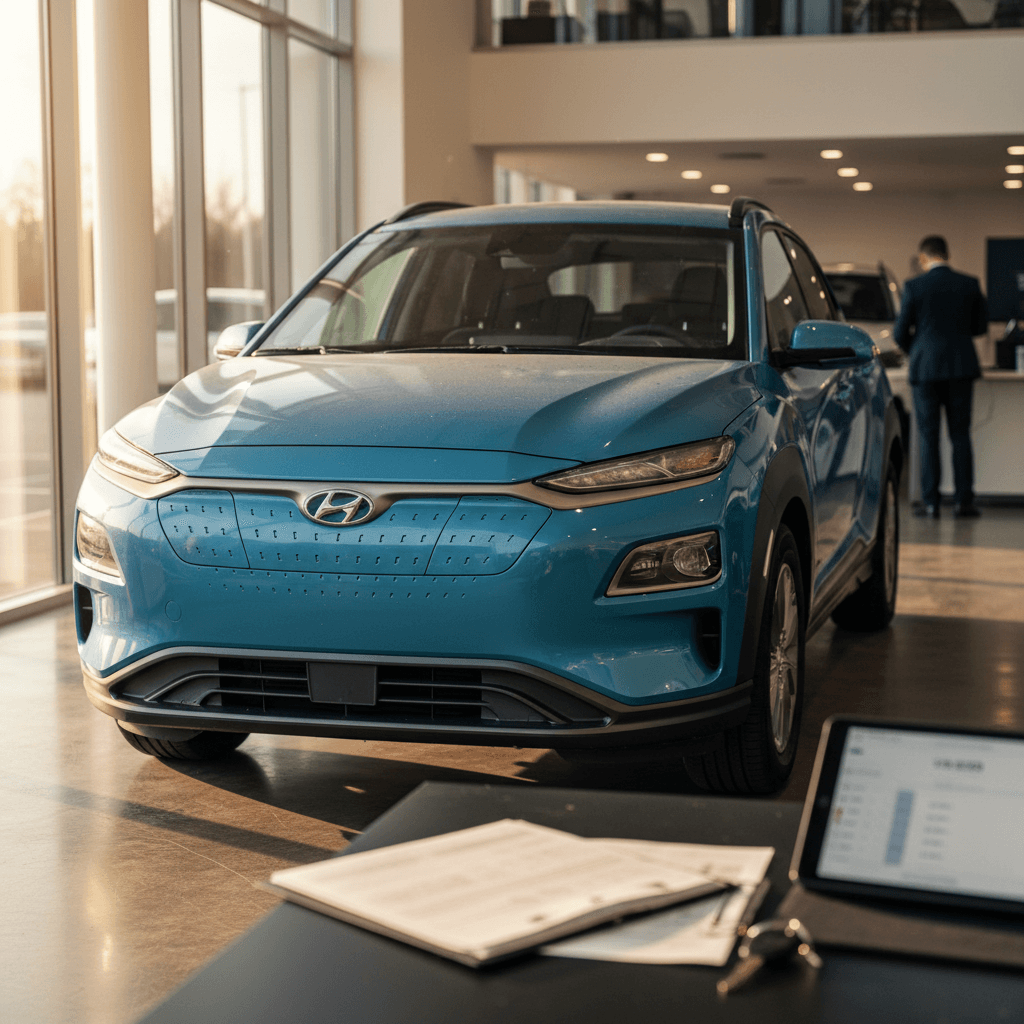
If you own a 2020 Hyundai Kona Electric, you’re probably wondering what it’s really worth as a trade‑in in 2026, and whether a dealer offer you’ve seen is fair. The good news: there’s enough recent market data on Kona Electric pricing that you don’t have to guess. In this guide, we’ll break down typical 2020 Kona Electric trade‑in value ranges, what moves your number up or down, and how to get the strongest offer when you’re ready to move on.
Quick snapshot
What a 2020 Hyundai Kona Electric Trades For in 2026
When you boil all the data down, auction results, dealer listings, and pricing tools like KBB and Edmunds, most 2020 Hyundai Kona Electric models in the U.S. fall into a fairly tight band for trade‑in value in 2026. A widely‑cited depreciation analysis pegs a generic 2020 Kona Electric trade‑in today at roughly $10,750, with a slightly higher retail (resale) value in the low‑$12,000s for an average example. That aligns closely with Recharged’s own market work, where clean 2020 Kona EVs usually pencil out in the $10,000–$13,000 trade‑in window for typical mileage and trims.
2020 Kona Electric Value at a Glance (2026)
Those big averages are useful, but they hide the spread. A base‑trim 2020 SEL with 95,000 miles in rough condition might struggle to get $9,000 as a trade, while a low‑mile Ultimate with fresh tires, a clean history, and strong battery diagnostics can still fetch $13,000–$14,000 from the right buyer. The rest of this article is about understanding which side of that spread your Kona Electric belongs on, and how to nudge it toward the top.
How Dealers Arrive at Your 2020 Kona Electric Trade‑In Offer
EV or not, dealers use a fairly standard playbook when they price a trade. Where your 2020 Kona Electric is different is in how much weight they’ll give its battery health and how cautiously they’ll price around evolving EV demand in your region.
The Four Inputs Behind a Dealer’s Kona EV Trade‑In Number
Knowing the math helps you negotiate more confidently.
1. Book values & auction data
2. Local market demand
3. Battery & mechanical risk
4. Reconditioning & profit target
Don’t anchor on retail listings
Typical 2020 Kona Electric Trade‑In Ranges by Trim & Mileage
Let’s put some guardrails around what’s realistic in early 2026. The table below shows ballpark trade‑in ranges for a 2020 Hyundai Kona Electric by trim and mileage, assuming clean Carfax, no major accidents, and a battery that still delivers near‑stock range in moderate weather.
2020 Kona Electric Trade‑In Value Bands (U.S., Early 2026)
Estimated dealer trade‑in ranges by trim and mileage for vehicles in clean condition with healthy batteries. Real numbers vary by region and equipment.
| Trim / Mileage | Under 40,000 mi | 40,000–80,000 mi | 80,000–110,000+ mi |
|---|---|---|---|
| SEL | $12,000–$13,500 | $10,500–$12,500 | $9,000–$10,500 |
| Limited | $12,500–$14,000 | $11,000–$13,000 | $9,500–$11,500 |
| Ultimate | $13,000–$14,500 | $11,500–$13,500 | $10,000–$12,000 |
Use this as a sanity check, your exact value still depends on options, service history, regional demand, and who you sell to.
Original price vs. today
If a dealer offer to you is more than about $1,500 below the rough band that fits your trim and mileage, that’s a signal to dig deeper: either they’re padding in extra risk, or there’s something about your specific Kona Electric (accident history, past buyback, weak battery performance) that’s spooking them.
Why Battery Health & Warranty Status Change Everything
On an EV like the Kona Electric, battery health isn’t just another line item, it’s the heartbeat of your trade‑in value. Two 2020 cars with the same mileage can be thousands of dollars apart if one still shows close to its original 258‑mile EPA rating in real‑world use and the other is down 20–30%.
Battery health: invisible but critical
Dealers are increasingly looking beyond the dash guess‑o‑meter and relying on diagnostic tools that read state of health (SOH) and charge history. A pack that still tests strong gives them confidence they can retail the car quickly and stand behind it, which supports a better trade‑in number.
If diagnostics suggest accelerated degradation, sustained DC‑fast‑charging abuse, or unresolved recall work, they’ll either drop their offer or pass on the car entirely.
Battery warranty: how many years are left?
For 2020 U.S. models, Hyundai backs the high‑voltage battery for 8 years or 100,000 miles (whichever comes first). In April 2026, that means:
- Low‑mile original‑owner cars can still have 3+ years of coverage left.
- High‑mile commuters may already be at or near the mileage cap.
A dealer can confidently pay more when they know the next owner is still protected by factory battery coverage.
Get a battery health report before you shop it
Condition, Options & Local Market: Quiet Value Adjusters
Once battery health and mileage are accounted for, the rest of your 2020 Kona Electric’s trade‑in value comes down to the usual suspects: condition, equipment, and how many similar EVs are competing with yours nearby.
How Your Specific Kona Electric Nudges Value Up or Down
Visible cosmetic condition
Curb rash, windshield chips, interior wear, and lingering odors all cost money to fix or work around. A car that presents cleanly can be worth <strong>$500–$1,000 more</strong> to a dealer than a tired‑looking twin.
Tires, brakes & maintenance
Fresh tires, current brake service, and documented maintenance tell the next buyer they won’t face big bills immediately. Dealers price that peace of mind into their offer, especially on an older EV.
Advanced safety & tech packages
Higher trims like Limited and Ultimate, or SELs with extra safety and convenience options, are easier to retail, and that supports stronger trade‑in values compared with a base‑spec car.
Accident & title history
A minor, properly repaired fender‑bender might barely move the needle. A structural damage report, airbag deployment, or lemon/buyback history can knock <strong>thousands</strong> off what a dealer is willing to offer.
Color & regional tastes
In some markets, a gray or white Kona EV may turn faster than a niche color; in others, the reverse is true. Dealers care most about <strong>how quickly they can resell your specific car</strong> in their ZIP code.
Seasonality & gas prices
Used EV demand tends to strengthen when gas prices are high or local incentives improve. Timing your sale into a more EV‑friendly moment can move your trade‑in offer up by a noticeable margin.
Watch out for lowball "as‑is" offers
Trade‑In vs. Selling to Online Buyers vs. Private Party
When you know your 2020 Kona Electric’s approximate trade‑in value, the next question is how to convert it into cash or equity toward your next vehicle. You essentially have three lanes: traditional dealer trade‑in, selling to an online buyer/marketplace, or selling privately.
Traditional dealer trade‑in
- Pros: Easiest path; tax savings in many states; one‑stop transaction when you buy something else.
- Cons: Usually the lowest dollar number, because the dealer must leave room for recon and profit.
Most 2020 Kona Electrics will slot in near the bands shown above when traded this way.
Online buyer or EV marketplace
- Pros: Often pays closer to retail if your car is clean; quick digital process; no need to haggle at multiple stores.
- Cons: Might not get sales tax credit vs. local trade‑in; pickup scheduling and paperwork still take coordination.
Recharged operates in this lane, offering instant offers, consignment, and trade‑in options built around EV‑specific battery data.
Private‑party sale
- Pros: Highest potential price, often $2,000–$4,000 above trade‑in if you find the right buyer.
- Cons: Time‑consuming; you handle advertising, test drives, and paperwork; some buyers are wary of used EVs and battery questions.
Worth considering if you’re not in a rush and your Kona Electric is a particularly nice spec.
Run the tax‑credit math
7 Steps to Maximize Your 2020 Kona Electric Trade‑In Value
You can’t change your model year or the macro EV market, but you can absolutely influence where your own trade‑in lands inside those value bands. Here’s a practical, no‑nonsense checklist I’d follow before taking a 2020 Kona Electric to market.
Pre‑Trade‑In Game Plan for Your 2020 Kona Electric
1. Pull a clean, detailed history report
If you don’t already have one, get a current history report and make sure it accurately reflects your Kona Electric’s past. Correcting clerical errors or outdated open‑recall flags before appraisals can prevent knee‑jerk low offers.
2. Address inexpensive cosmetic fixes
Touch‑up paint for obvious chips, a pro‑level detail, and fixing a cracked windshield or obvious wheel damage can add <strong>several hundred dollars</strong> to what dealers are willing to pay, often more than the repair cost.
3. Service the car and gather records
An up‑to‑date service file (cabin filter, brake checks, software updates, tire rotations) reassures buyers. Organize receipts and keep them handy during appraisals; it signals that the car has been cared for.
4. Document real‑world range
Before you shop the car, take a few normal drives from full to 10–20% and note the miles covered. Being able to say, "I still see about 230–240 miles on a full charge in mild weather" is more persuasive than a single dash estimate.
5. Get an independent battery health check
If possible, have an EV‑savvy shop or marketplace like Recharged run a <strong>battery state‑of‑health scan</strong>. Showing dealers hard data can counter over‑cautious assumptions and help you negotiate from facts, not fear.
6. Collect multiple written offers within a week
Online instant offers, local dealers, and dedicated EV buyers will all price your car a bit differently. Gather several quotes in a tight time window so you can <strong>play them off one another</strong> before any one expires.
7. Separate the new‑car deal from your trade
When you’re negotiating at a dealership, always know your Kona EV’s stand‑alone value from independent offers. Aim for a fair trade number first, then work on the price of the next vehicle instead of letting one disguise the other.
Using Recharged to Price, Trade, or Sell Your Kona Electric
Because the 2020 Hyundai Kona Electric lives and dies on battery health, it rewards buyers and sellers who deal in real data instead of guesswork. That’s exactly the gap Recharged is built to fill.

How Recharged Helps 2020 Kona Electric Owners Get Fair Value
Designed specifically around the realities of used EV pricing.
Verified battery diagnostics
Instant offer or consignment
Nationwide reach & delivery
Ready to find your next EV?
Browse VehiclesIf you treat your 2020 Hyundai Kona Electric like any other used car, a low five‑figure trade‑in offer can feel like an insult. When you understand how dealers view battery risk, warranty coverage, and local EV demand, that same offer starts to make more sense, and you’re better equipped to push it higher. Whether you trade locally, sell online, or explore an instant offer or consignment route with a specialist like Recharged, the combination of good preparation and solid battery data is what turns a so‑so number into one you can live with.