If you’re shopping for a luxury electric SUV, the **Cadillac Lyriq** and **Audi Q4 e-tron** will almost certainly end up on your shortlist. They occupy the same premium-utility space, but they don’t actually compete head‑on: the Lyriq is a larger, more powerful midsize SUV, while the Q4 e-tron is a compact model focused on efficiency and urban usability. Understanding those differences is crucial whether you’re buying new or hunting for a well‑priced used EV.
Two different sizes, one decision
Cadillac Lyriq vs Audi Q4 e-tron: Overview
Cadillac Lyriq: Electric flagship vibe
The Cadillac Lyriq rides on GM’s Ultium platform with a 102 kWh battery, rear‑wheel or dual‑motor all‑wheel drive, and up to around 515 hp in current AWD trims. EPA‑estimated range is up to 326 miles on single‑motor rear‑drive models, with AWD versions typically just under that mark. It feels genuinely premium, with a dramatic exterior, quiet cabin, and a focus on long‑distance comfort.
Audi Q4 e-tron: Compact premium all‑rounder
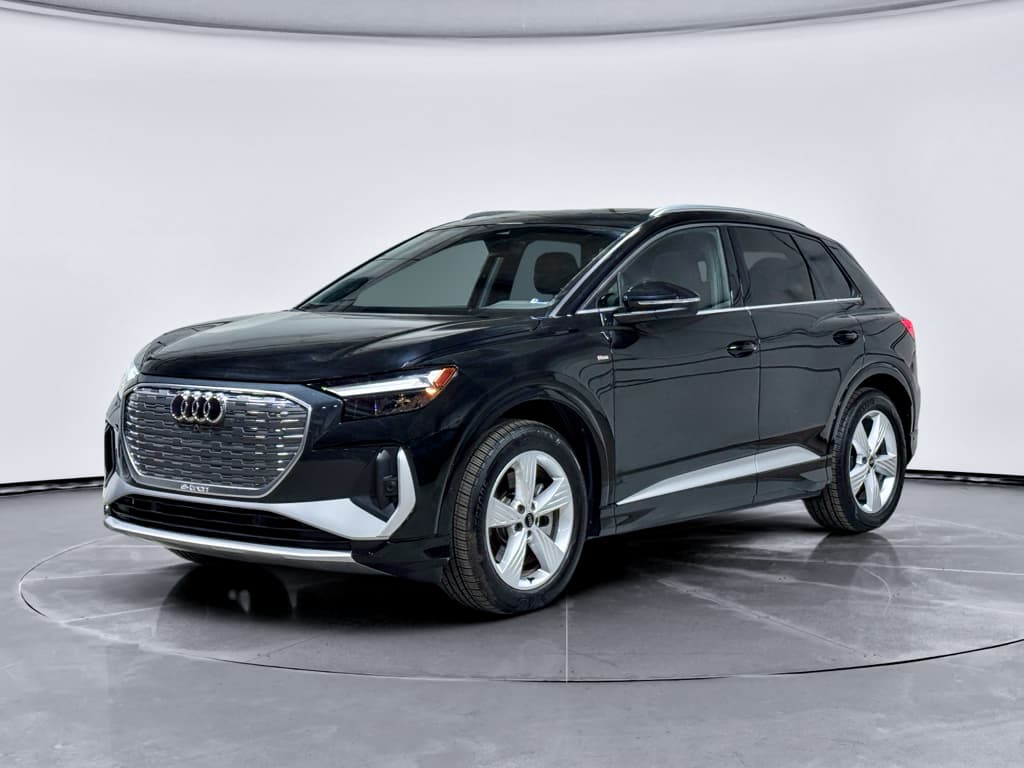
The Audi Q4 e-tron is a compact luxury SUV sharing its MEB platform with the VW ID.4. In the U.S., you’ll see a 77–82 kWh gross battery and power outputs roughly from 201 hp (single‑motor) to mid‑300s (dual‑motor 50/55 quattro). EPA range estimates land in the mid‑200‑mile bracket, with up to about 265 miles on the most efficient rear‑drive versions. It’s easy to park, nicely trimmed, and very familiar if you like Audi’s understated design language.
Headline Numbers: Lyriq vs Q4 e-tron
Key Specs: Lyriq vs Q4 e-tron at a Glance
Core Specs Comparison
High‑level specs for typical U.S. configurations of the Lyriq and Q4 e-tron. Exact figures vary by model year and trim, but these ballparks are helpful when you’re comparing used listings.
| Spec | Cadillac Lyriq (typical) | Audi Q4 e-tron (typical) |
|---|---|---|
| Class | Midsize luxury SUV | Compact luxury SUV |
| Battery (gross) | ~102 kWh Ultium | ~77–82 kWh |
| Drive layout | RWD or AWD | RWD or AWD (quattro) |
| Power | ~340–515 hp | ~201–335 hp |
| EPA range (best trims) | Up to ~326 miles | Up to ~265 miles |
| Max DC fast charge | ≈190 kW | ≈150–175 kW (trim‑dependent) |
| AC charging | 11.5–19.2 kW onboard | Up to 11 kW onboard |
| Towing (max) | ≈3,500 lbs | ≈2,650 lbs |
| Typical new MSRP window | High $50Ks–$70Ks+ | Low $50Ks–$60Ks |
| Segment rivals | Tesla Model Y, BMW iX, Mercedes EQE SUV | Hyundai Ioniq 5, Volvo XC40 Recharge, Mercedes EQB |
Always verify specific specs for the exact VIN you’re considering, especially on the used market.
Specs shift quickly
Performance & Driving Feel
Lyriq: Effortless power, big‑car composure
The Lyriq feels every bit the electric Cadillac. Even the single‑motor rear‑drive version offers around 340 hp, which is plenty to move a midsize SUV with authority. Dual‑motor AWD trims push output into the 500+ hp range with brisk 0–60 mph times that dip well under 5 seconds in performance‑oriented variants.
On the road, the Lyriq emphasizes quiet, unflustered cruising over playful handling. Steering is calm and accurate, ride quality is supple on the right wheel/tire combo, and highway stability is excellent. If you want your EV to feel like a modern, electric take on a traditional American luxury car, this is it.
Q4 e-tron: Tidy, confident, and city‑friendly
The Q4 e-tron, by contrast, feels more like a high‑riding hatchback. Single‑motor rear‑drive models around 200 hp are adequate rather than thrilling, while dual‑motor quattro versions with mid‑300‑hp performance get closer to what most buyers expect from a premium EV. Typical 0–60 mph times hover around the low‑5‑second mark for the higher‑power trims.
Where the Q4 shines is in tight urban spaces and winding backroads. The shorter wheelbase and lighter weight (relative to the Lyriq) promote agility and easy maneuverability. It’s not a sports car, but it’s entertaining enough and much easier to thread through city streets and parking garages.
Performance Takeaways
How the Lyriq and Q4 e-tron feel from behind the wheel
Acceleration
Lyriq delivers noticeably stronger straight‑line punch in most trims, especially AWD. If effortless passing power and on‑ramp surges matter, it has the edge.
Handling
Q4 e-tron feels lighter on its feet and easier to place in tight spaces. Think of it as the more nimble daily commuter, especially in crowded cities.
Ride & Refinement
Both are quiet and composed, but the Lyriq skews more toward plush, long‑distance comfort; the Q4 skews toward controlled, Germanic firmness.
Range, Battery & Charging Experience
Range and charging are where spec sheets can mislead. You’re not just buying a number; you’re buying how the car fits into your charging reality, home setup, commute length, and road‑trip patterns.
Cadillac Lyriq: Big battery, strong range
Every Lyriq uses a 102 kWh Ultium battery, which is large even by modern standards. That pack underpins EPA‑estimated ranges up to the low‑320‑mile region for rear‑drive models and just under that for AWD.
- Daily driving: For most commutes, you’ll only use a fraction of the pack. That’s good for long‑term battery health and range confidence.
- Road trips: DC fast charging peaks around 190 kW on compatible stations. Think of 10–80% sessions in the 30–40‑minute zone in ideal conditions.
- Home charging: The Lyriq offers robust AC charging, from 11.5 kW standard to up to 19.2 kW on certain trims, letting owners with high‑amp home circuits add 30–50+ miles of range per hour.
Audi Q4 e-tron: Smaller pack, reasonable efficiency
The Q4 e-tron’s battery is smaller, roughly 77–82 kWh, depending on model year and market, but its compact footprint and efficient motors make good use of that capacity. Expect EPA ranges that top out around the mid‑260‑mile range on rear‑drive versions, with AWD models in the 230–250‑mile band.
- Daily driving: For shorter commutes and city driving, that’s more than enough, especially if you can plug in overnight.
- Road trips: DC fast charging up to about 150–175 kW (trim‑and‑update‑dependent) typically delivers 10–80% in the mid‑30‑minute range.
- Home charging: Onboard AC charging tops out around 11 kW, which is fine for overnight refills on a 240‑V Level 2 setup.
Think charging network, not just peak kW
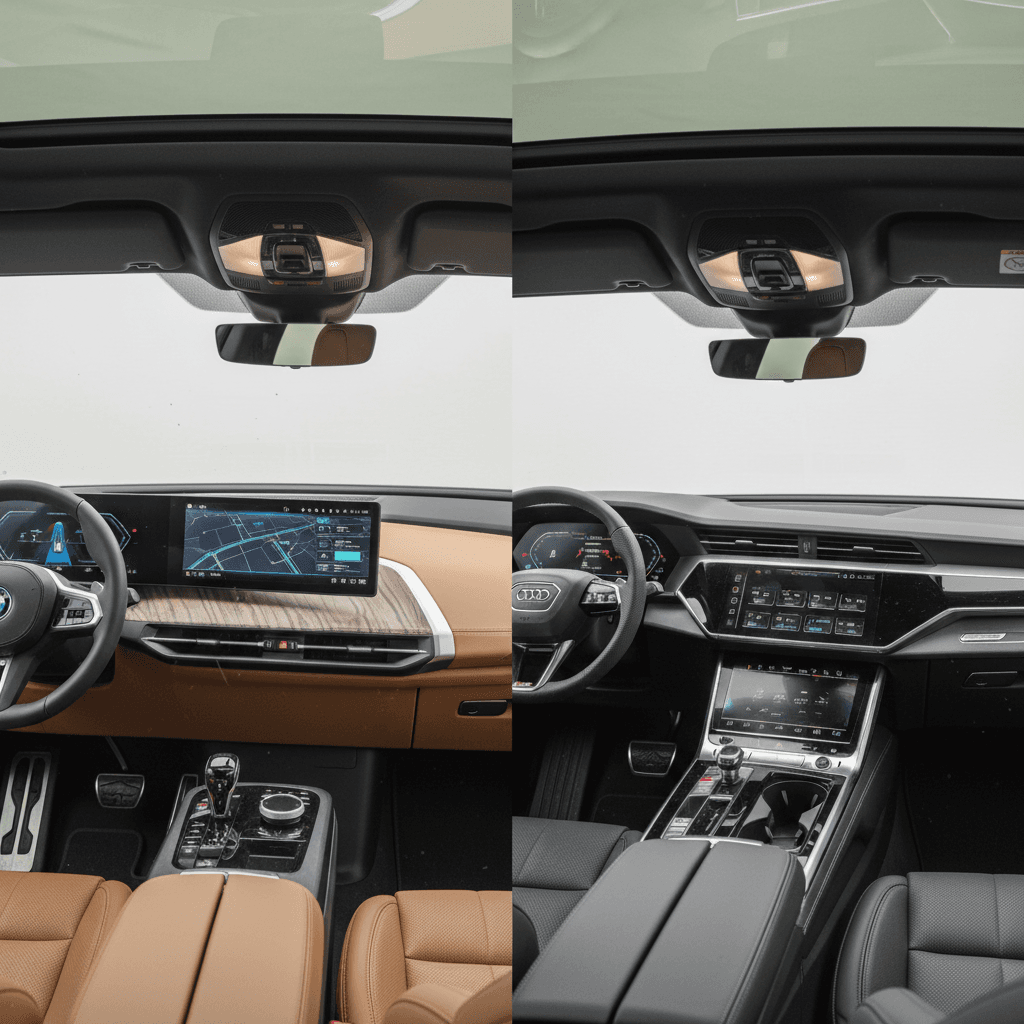
Interior Space, Comfort & Practicality
Here’s where the Lyriq’s midsize footprint becomes obvious. If you regularly carry adults in the back seat, bulky strollers, or gear for weekend trips, its extra dimensions are not just nice‑to‑have, they’re the reason to choose it.
Cabin & Cargo: Where They Differ Most
Both feel premium inside, but they solve different problems.
Cadillac Lyriq: Lounge on wheels
- Space: Generous rear legroom and a wide cabin make it comfortable for four adults plus luggage.
- Seats: Supportive and plush, with available ventilation and massage on many higher‑spec examples.
- Cargo: More room behind the second row than the Q4, better suited to families and road‑trippers.
- Vibe: Dramatic ambient lighting, sweeping dashboard screen, and materials that feel genuinely upscale when well optioned.
Audi Q4 e-tron: Clever compact packaging
- Space: Compact outside, roomy enough inside for a small family. The high roofline and flat floor help.
- Seats: Firm but comfortable in a classic German way; supportive on long drives.
- Cargo: Plenty for groceries and weekend bags, but not in Lyriq territory.
- Vibe: Clean, minimalist Audi design with intuitive controls and solid build quality, even if some plastics are more mainstream than the price suggests.
Parking & garage fit
Infotainment, Tech & Safety Features
Cadillac Lyriq: Big screen, big ambition
The Lyriq leans hard into the futuristic EV aesthetic. A sweeping digital display stretches across the dash, pairing a configurable instrument cluster with a large central touchscreen. Recent model years integrate GM’s new Google‑based infotainment, plus available **Super Cruise** hands‑free highway driving on many trims.
- Pros: Visually impressive, loads of screen real estate, and high‑end driver‑assist options that can dramatically reduce fatigue on long trips.
- Cons: GM’s app‑store approach and phasing out of traditional Apple CarPlay/Android Auto in some newer vehicles may be a turn‑off if you value simple phone mirroring.
Audi Q4 e-tron: Familiar and functional
The Q4 e-tron takes a more conservative tack. You get Audi’s Virtual Cockpit digital cluster and a central touchscreen running the brand’s MMI software, with **wireless Apple CarPlay and Android Auto** on many trims. Physical controls remain for key climate functions, which many shoppers still prefer.
- Pros: Easy learning curve if you know modern Audis, excellent phone integration, and a clean, uncluttered interface.
- Cons: Screen size and wow‑factor lag behind the Lyriq, and some advanced driver‑assist tech is optional rather than standard.
Safety & Driver Assistance: What to Look For on Listings
Confirm core active safety suite
Both models can be equipped with automatic emergency braking, lane‑keeping assist, blind‑spot monitoring, and adaptive cruise control. On used listings, confirm these aren’t part of a package that the original buyer skipped.
Check for advanced highway assist
On Lyriq, hunt for trims with <strong>Super Cruise</strong>. On Q4 e-tron, look for higher‑spec driver‑assist packages that bundle adaptive cruise with more capable lane centering.
Look at camera and parking aids
360° cameras, front/rear parking sensors, and automated parking can make a big EV feel dramatically easier to live with, particularly the larger Lyriq.
Update software when you buy
Ask the seller or dealer to apply the latest software updates before delivery. On both models, updates can improve driver‑assist behavior and charging performance over time.
Ownership Costs & Used-Market Considerations
New‑car pricing moves quickly with incentives, but the used market is where the Lyriq and Q4 e-tron start to look especially compelling, particularly if you’re willing to trade a little cutting‑edge tech for a much lower monthly payment.
Cost & Value Snapshot
How these EVs typically behave in the real world once the new‑car sheen wears off.
Depreciation
Early luxury EVs, especially those with large batteries, often depreciate faster than their gas counterparts. That’s painful for first owners, and a major opportunity if you buy used.
Energy & maintenance
Both Lyriq and Q4 e-tron benefit from lower per‑mile energy costs than similar gas SUVs and reduced routine maintenance (no oil changes, fewer wear parts). Tires and brakes are still real expenses, especially with heavy EVs.
Battery health
Modern packs in both models are designed for long life, but usage patterns matter. Prioritize vehicles with documented service history, sensible fast‑charging behavior, and, ideally, some remaining battery warranty coverage.
How Recharged can simplify this
Buying a used Cadillac Lyriq
Lyriq volumes have risen as Cadillac leans into electrification, so you’ll increasingly see them on the used market. When shopping, pay close attention to:
- Charging capability: Not every Lyriq has the same onboard AC rate. If you have (or plan to install) a high‑amp home circuit, the 19.2 kW onboard charger is worth seeking out.
- Tech configuration: Feature content and software strategy have evolved quickly. Make sure the infotainment setup (and Super Cruise availability) align with how you actually drive.
- Wheel and tire packages: Big wheels look great but can eat into range and ride comfort. If you prioritize smoothness, consider a car on smaller wheels or budget for a second wheel/tire set.
Buying a used Audi Q4 e-tron
The Q4 e-tron has been on sale a bit longer and in higher global volumes, so used inventory is relatively robust. With these, focus on:
- Battery and charging history: Ask how often the car was DC‑fast‑charged and whether it typically lived in moderate climates, both are positive signs for long‑term pack health.
- Software and recalls: Make sure any campaign work or software updates related to charging or driver‑assistance systems have been completed.
- Option structure: Audi relies heavily on packages. Two similar‑looking Q4s can have very different equipment levels. Decode the VIN or review the original window sticker when possible.
Which EV SUV Is Right for You?
Who Should Choose Which?
Match your use case to the right platform, not just the right badge.
Choose the Cadillac Lyriq if…
- You want a larger, true luxury SUV with real back‑seat and cargo space.
- Long‑distance comfort, a quiet ride, and effortless passing power rank above tight‑city maneuverability.
- You plan to take regular highway trips where the bigger battery and available Super Cruise really shine.
- You’re okay with a more futuristic infotainment approach and potentially fewer traditional phone‑mirroring options on the newest model years.
Choose the Audi Q4 e-tron if…
- You live in a dense city or inner suburb where parking and maneuverability matter more than maximum interior volume.
- You prefer the feel of a compact, agile crossover with German tuning and a familiar Audi cockpit.
- You want straightforward wireless Apple CarPlay/Android Auto and are happy with mid‑200‑mile real‑world range.
- You’re moving up from a smaller ICE or hybrid and don’t need three‑row flexibility or max towing.
Framed correctly, the Cadillac Lyriq and Audi Q4 e-tron don’t so much compete as they bracket the premium EV SUV segment: one leans toward grand‑touring luxury and space, the other toward compact agility and urban liveability. The best choice is the one that matches your parking reality, road‑trip habits, and appetite for tech change. If you’d like help translating those needs into the right used EV, Lyriq, Q4, or something else entirely, Recharged’s EV specialists can walk you through battery reports, pricing, and financing options end‑to‑end, all from your couch.
Cadillac Lyriq vs Audi Q4 e-tron: FAQ
Frequently Asked Questions
If you’re ready to compare real‑world Lyriq and Q4 e-tron examples, down to battery health, options, and payments, you can browse used EVs on Recharged, get an instant trade‑in offer for your current car, and even line up financing and delivery without ever setting foot in a traditional showroom.