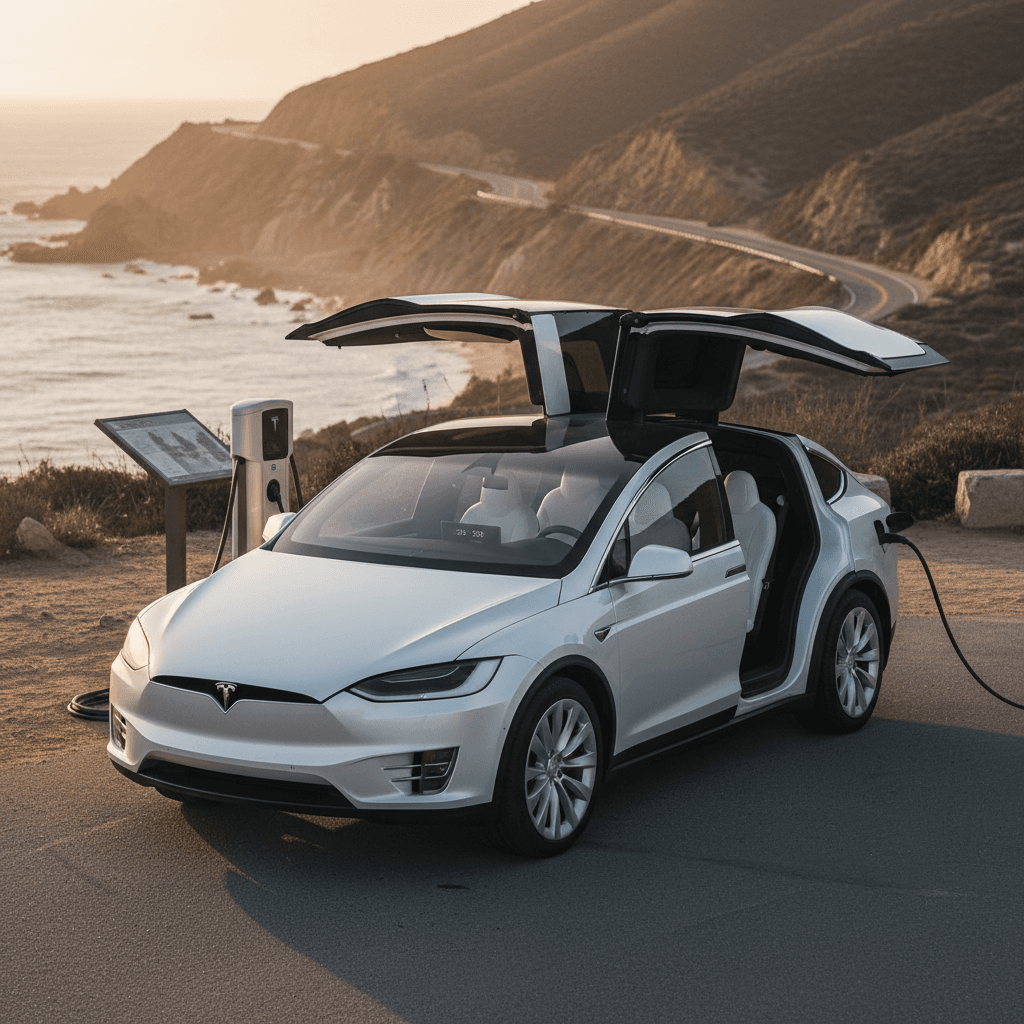
If you’re looking at a 2019 Tesla Model X, you’re probably wondering what its real-world range looks like today, not just what the EPA sticker said when it was new. This 2019 Tesla Model X range test guide pulls together realistic highway, city, and mixed-driving expectations, explains what actually eats into range, and shows you how to evaluate a used Model X so you know what you’re getting.
Why 2019 matters
2019 Tesla Model X range overview
Tesla offered several trims for the 2019 Model X, each with a different EPA-rated range. Those official numbers assume a new battery, mild weather, and mixed driving, so they’re a useful starting point, but not the whole story when you’re shopping used.
2019 Tesla Model X EPA-rated range (when new)
Approximate EPA combined range ratings for major 2019 Model X variants. Exact figures can vary slightly by wheel size and software version.
| Model year / trim | Battery pack | Drive | Common wheels | EPA rated range (mi) |
|---|---|---|---|---|
| 2019 Model X 75D* | ~75 kWh usable | Dual motor AWD | 20" | ~237 mi |
| 2019 Model X 100D | ~95 kWh usable | Dual motor AWD | 20" | ~295 mi |
| 2019 Model X Long Range (late 2019) | ~100 kWh usable | Dual motor AWD | 20" | ~328 mi |
| 2019 Model X Performance | ~100 kWh usable | Dual motor AWD | 20" | ~289 mi |
Use these EPA ratings as best-case benchmarks; real-world range is almost always lower, especially at highway speeds.
Watch the fine print
2019 Model X range test realities at a glance
EPA vs real-world: how far the 2019 Model X really goes
EPA ratings are run on a controlled cycle that doesn’t match how most people use a big three-row crossover like the Model X. In independent range tests and owner logs, a healthy 2019 Model X usually delivers 70–90% of its EPA rating, depending on speed, weather, and how much energy you spend on climate control.
Realistic highway range (100D / Long Range)
- EPA: ~295–328 miles
- 65 mph, mild weather: many drivers report ~250–275 miles from 100% to 0%
- 70–75 mph: more like ~220–250 miles in calm conditions
- Strong headwinds / rain: can pull this under 210 miles
Realistic mixed driving range (100D / Long Range)
- Suburban + city mix at 35–55 mph: ~260–290 miles is achievable
- Lots of stop-and-go with good regen: efficiency can rival or beat EPA
- Short trips in winter: expect closer to 180–220 miles, often less
Think in %, not just miles
Range by battery and wheel configuration
Two identically rated Model X SUVs can behave very differently in the real world if one has larger wheels, roof accessories, or a tired set of tires. Before you stress about degradation, it’s worth understanding how configuration changes range all by themselves.
Key 2019 Model X configuration choices that affect range
Same battery, different real-world results
Battery size: 75D vs 100D / Long Range
If you’re cross-shopping, the step from a ~75 kWh pack (75D) to the larger ~100 kWh packs (100D, Long Range, Performance) is dramatic.
- 75D: Best for predictable commuting and light road-tripping with dense Supercharger coverage.
- 100D / Long Range: Much more headroom for weather, elevation, and faster driving.
20" vs 22" wheels
The 22-inch wheel option looks great but it costs you efficiency.
- Expect 5–10% less range on 22s vs 20s at highway speeds.
- Heavier wheels and stickier tires add rolling resistance.
When comparing range tests, always note wheel size.
Roof racks & accessories
The Model X already has a big frontal area. Add a box or bike rack and you magnify drag.
- Empty crossbars: Small but measurable hit at highway speeds.
- Cargo box / bikes: Range can drop another 10–20% depending on setup.
Best range spec combo
Highway, city, and mixed driving range tests
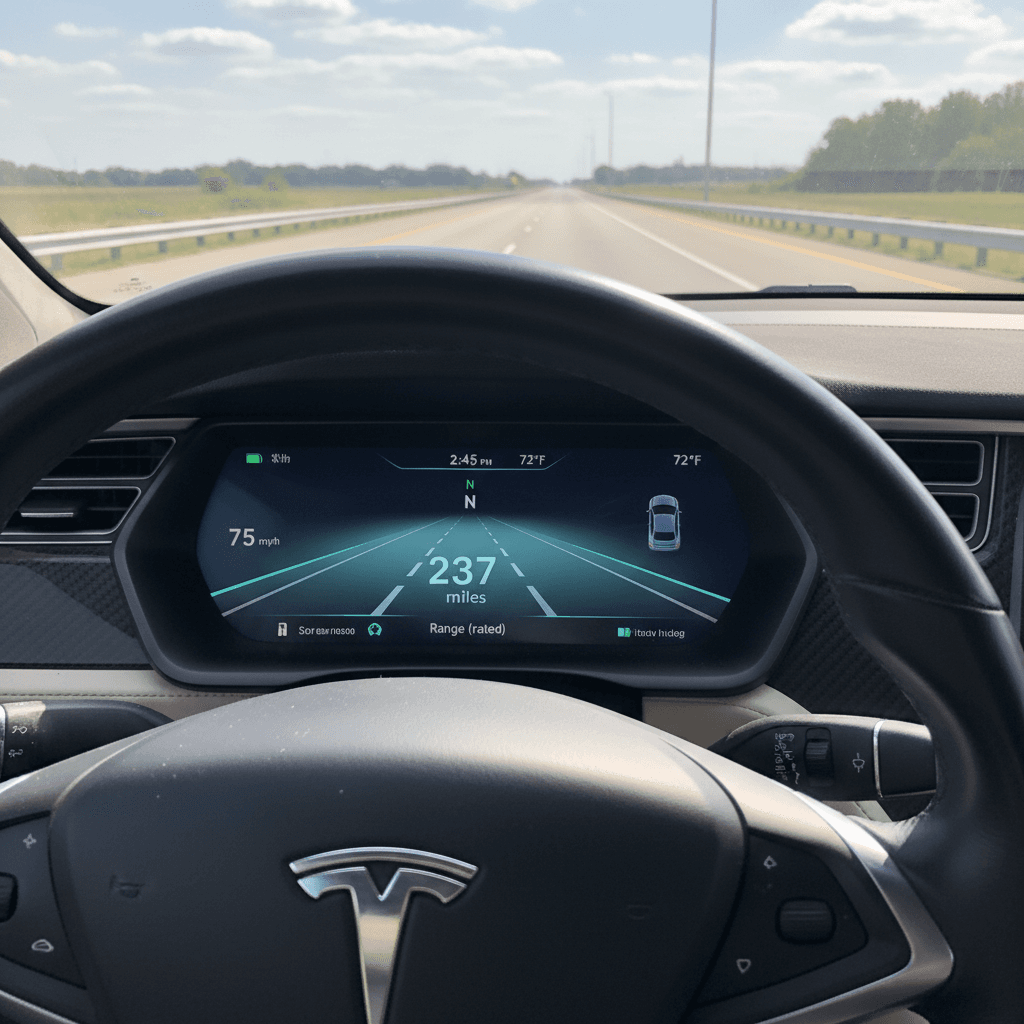
Because the Model X is a large, heavy SUV with all-wheel drive, aerodynamic drag at speed is its main enemy. That’s why highway range can look much worse than city range even though EV drivers are used to thinking of stop-and-go traffic as inefficient.
Example real-world 2019 Model X range test scenarios
Illustrative numbers for a healthy 2019 Model X 100D / Long Range pack, based on owner reports and independent testing patterns. Your results will vary, but the relationships between scenarios are what matter most.
| Scenario | Conditions | Estimated usable range | Notes |
|---|---|---|---|
| Suburban commute | 45–55 mph, 60–70°F, light traffic | ~260–290 mi | Close to EPA when trips are long enough to warm the pack. |
| Highway cruise | 70–75 mph, 60–70°F, no wind | ~220–250 mi | Typical for long road trips with modest speed discipline. |
| Fast highway push | 80+ mph, 60–70°F | ~180–210 mi | High drag dominates; you may need more frequent Supercharger stops. |
| Cold city errands | 20–40°F, short 3–8 mile trips | ~150–200 mi | Warm-up losses dominate, especially without preconditioning. |
| Cold highway | 30°F, 70–75 mph, snow tires | ~170–210 mi | Combination of aero drag, cold pack, and rolling resistance. |
These scenarios show why you shouldn’t expect the same range on a winter highway run as on a mild suburban commute, even with the same car.
Short winter trips are brutal
How weather, speed, and driving style change your range
Once you understand the basics of aerodynamics and battery chemistry, 2019 Model X range test results become much less mysterious. Three factors dominate: speed, temperature, and how smoothly you drive.
- Every +5 mph above ~60 mph costs noticeably more energy. In a tall SUV like the Model X, jumping from 65 to 80 mph can easily cost 15–25% of your range.
- Cold batteries are less efficient and require extra energy for heating. Below about 45°F, expect bigger gaps between EPA numbers and reality unless you precondition while plugged in.
- Aggressive acceleration and heavy braking waste energy the regen system can’t fully recover. Smooth inputs, anticipating traffic and using regen instead of friction brakes, help you get closer to best-case range.
Use Tesla’s energy graph, not just the big range number
Towing and cargo: what happens to 2019 Model X range
The 2019 Model X has strong torque and a rated towing capacity, but range while towing is where reality diverges most from EPA expectations. Drag and weight add up fast when you hitch something to a slippery EV shape.
How much range to expect while towing
Rule-of-thumb penalties for a healthy 2019 Model X
Light utility trailer or small camper
- Think a small open trailer, lightweight teardrop, or a couple of bikes in a rear hitch rack.
- At 60–70 mph, many drivers see 30–40% less range than unladen.
- Planning at half your EPA rating is a conservative, stress-free approach.
Tall, heavy travel trailer
- Boxier trailers can nearly double your effective frontal area.
- At 60–70 mph, range can drop by 40–60% compared with solo driving.
- That means an EPA 295–328 mile Model X can behave more like a 130–180 mile EV.
Plan chargers like stepping stones when towing
Battery degradation on a 2019 Tesla Model X
By 2026, a 2019 Model X is 7 years old. At this age, the question isn’t whether the battery has degraded, it has, but how much and whether that matches its history. The good news: Tesla’s large packs tend to age relatively gracefully when not abused.
Typical vs concerning degradation on a 2019 Model X
Patterns we see in real cars, not lab theory
Typical, well-cared-for pack
- Often 5–10% capacity loss by year 5–7.
- Road-trip range still broadly in line with expectations once you account for speed and weather.
- Consistent charging habits and moderate mileage (say 10–15k miles per year).
More aggressive degradation
- 10–15% loss isn’t unusual on high-mileage or heavily fast-charged vehicles.
- You may notice the car reaching “0 mi” sooner on familiar routes compared with newer examples.
- Not necessarily a death sentence, but should be reflected in pricing.
Red flags
- Range tests or diagnostics indicating 20%+ loss in a 2019 pack.
- Frequent warnings, sudden drops in state-of-charge, or rapid changes in indicated range.
- History of battery-related service or restrictions you don’t fully understand.
How Recharged checks battery health
How to run your own 2019 Model X range test
If you already own, or are test driving, a 2019 Model X, a simple, controlled range test can tell you far more than the car’s projected miles alone. You don’t need special tools, just a bit of time and a consistent route.
Step-by-step DIY 2019 Model X range test
1. Pick a simple, repeatable route
Choose a loop or out-and-back run on a highway or rural road where you can hold a steady speed (60–70 mph) for at least 30–50 miles without major elevation changes.
2. Charge to a known starting SOC
Charge to a clear starting point, say <strong>90%</strong>, and note the odometer, outside temperature, wheel size, tire type, and any cargo or passengers.
3. Use cruise control for consistency
Set Autopilot or cruise control at a constant speed (for example, 65 mph). Avoid unnecessary lane changes or sudden braking that could skew results.
4. Drive at least 50–70 miles
A longer sample gives better data. After your run, note how many miles you drove and how much state-of-charge (SOC) you used, e.g., 80 miles driven, SOC from 90% to 50%.
5. Calculate effective full-pack range
If you used 40% of the battery to drive 80 miles, that implies roughly 200 miles from 100% to 0% on that route (80 ÷ 0.40). Compare this with what you’d expect based on EPA and conditions.
6. Repeat in different conditions
If possible, repeat the test in warmer/colder weather or at a different speed. You’ll quickly see how temperature and speed shift your real-world range window.
Don’t chase 0%
Shopping used: judging 2019 Model X range with confidence
When you’re buying a used 2019 Tesla Model X, you’re not just buying EPA numbers, you’re buying the specific history of that particular battery pack and how its real-world range matches your life. A thoughtful evaluation up front can save you from disappointment later.
Questions to ask the seller
- What’s the typical displayed range at 90–100%? Compare across similar trims, wheel sizes, and climates.
- How has it been charged? Mostly at home on Level 2, or lots of DC fast charging?
- What’s the typical use? Long highway trips are often easier on packs than short, harsh, urban cycles.
- Any battery service history? Ask specifically about HV battery repairs or replacements.
Signals of a healthy 2019 Model X
- Projected range at high SOC is within ~5–10% of what you’d expect for that trim and wheel setup.
- Energy usage on test drives lines up with other owners’ experiences at similar speeds and weather.
- No unexpected drops in indicated range or strange charging behavior.
A structured test drive on a consistent route is worth more than a quick blast around the block.
How Recharged de-risks used Model X shopping
Ready to find your next EV?
Browse Vehicles2019 Tesla Model X range test FAQ
Common questions about 2019 Model X range
Bottom line: what range you can really expect
When you strip away the marketing and lab cycles, a well-cared-for 2019 Tesla Model X still offers road-trip-capable range, especially in 100D and Long Range trims. In day-to-day use, most owners see roughly 70–90% of the original EPA rating depending on speed, weather, and how they drive. That’s more than enough for commuting and family hauling, and, with smart planning and charging, remains compelling for long-distance travel.
If you’re shopping used, the key is to judge this specific vehicle’s battery health and real-world behavior, not just the number on an old window sticker. Structured test drives, simple range tests, and transparent diagnostics, like the Recharged Score Report included with every vehicle on Recharged, turn range from a guessing game into a quantifiable number you can plan your life around.