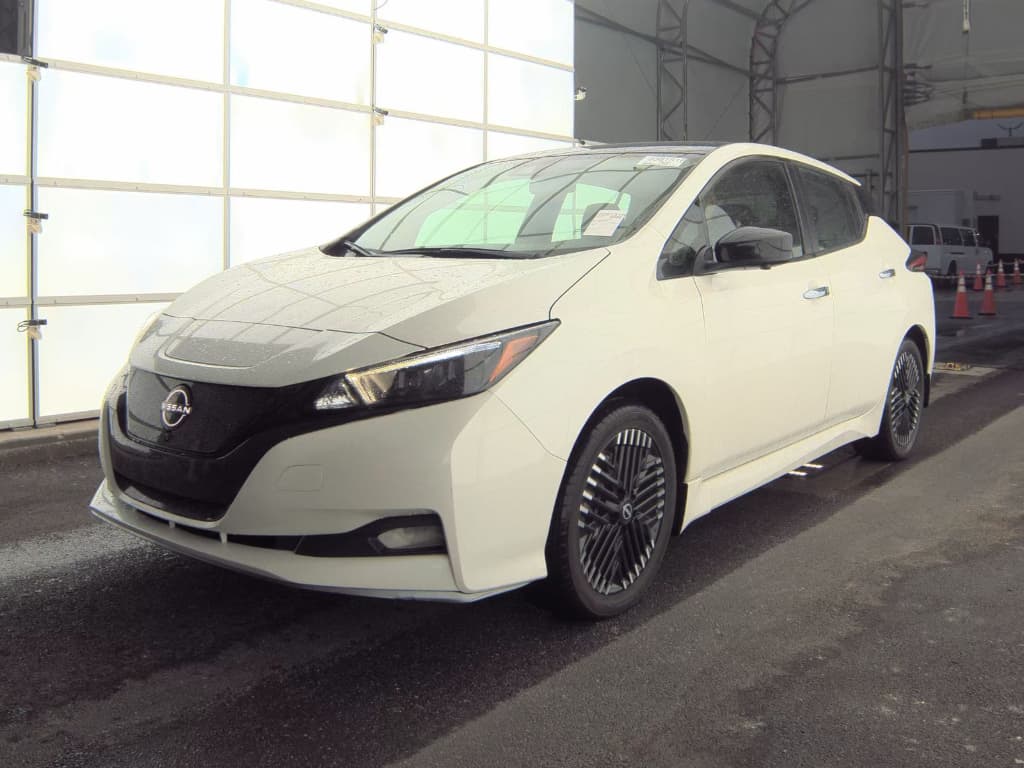
If you’re shopping for an affordable used EV, the 2018 Nissan Leaf will show up again and again. It delivers real-world range around 120–150 miles when the battery is healthy, a comfortable cabin, and very low running costs. But this is also an eight‑year‑old design with some important quirks, especially around battery cooling and fast charging, that you need to understand before you buy.
Why the 2018 Leaf matters in 2026
2018 Nissan Leaf overview: who this EV still suits
The 2018 Nissan Leaf is a compact, front‑wheel‑drive electric hatchback with a 40.0 kWh battery and an EPA‑rated range of 151 miles. In practice, that makes it an excellent choice if you:
- Commute under ~60–70 miles round‑trip most days
- Have access to home or workplace charging
- Rarely take long highway road trips
- Want a comfortable, quiet car for city and suburban use
- Are trying to keep your EV budget firmly in the teens instead of the $30K+ range of many newer models
Where the 2018 Leaf struggles is the same place most early EVs do: fast highway travel. Its air‑cooled battery and CHAdeMO fast‑charging port mean charging speeds drop quickly on back‑to‑back fast‑charge stops and public DC infrastructure is slowly shrinking compared with CCS and NACS. If your life is mostly around town, that’s much less of an issue.
Used‑EV angle
Key specs: range, performance and charging
2018 Nissan Leaf core specs
On paper, the 2018 Leaf’s numbers look modest compared with today’s 250‑mile EVs, but they’re more than enough for an average American driver who logs under 40 miles per day. Here’s how those specs translate into real life.
Range, performance and charging in the real world
What you can expect day‑to‑day from a healthy 2018 Leaf
Real‑world range
With a strong battery, most owners report 120–150 miles of mixed‑driving range in mild weather. Highway speeds, winter temperatures, and a degraded battery can pull that under 100 miles.
Performance
Car and Driver clocked the 2018 Leaf at 7.4 seconds 0–60 mph, quick enough to feel punchy in city traffic. Instant torque makes it feel livelier than the numbers suggest.
Charging times
- Level 1 (120 V): 20–24 hours from empty, backup only.
- Level 2 (240 V): ~7–8 hours, ideal for overnight charging at home.
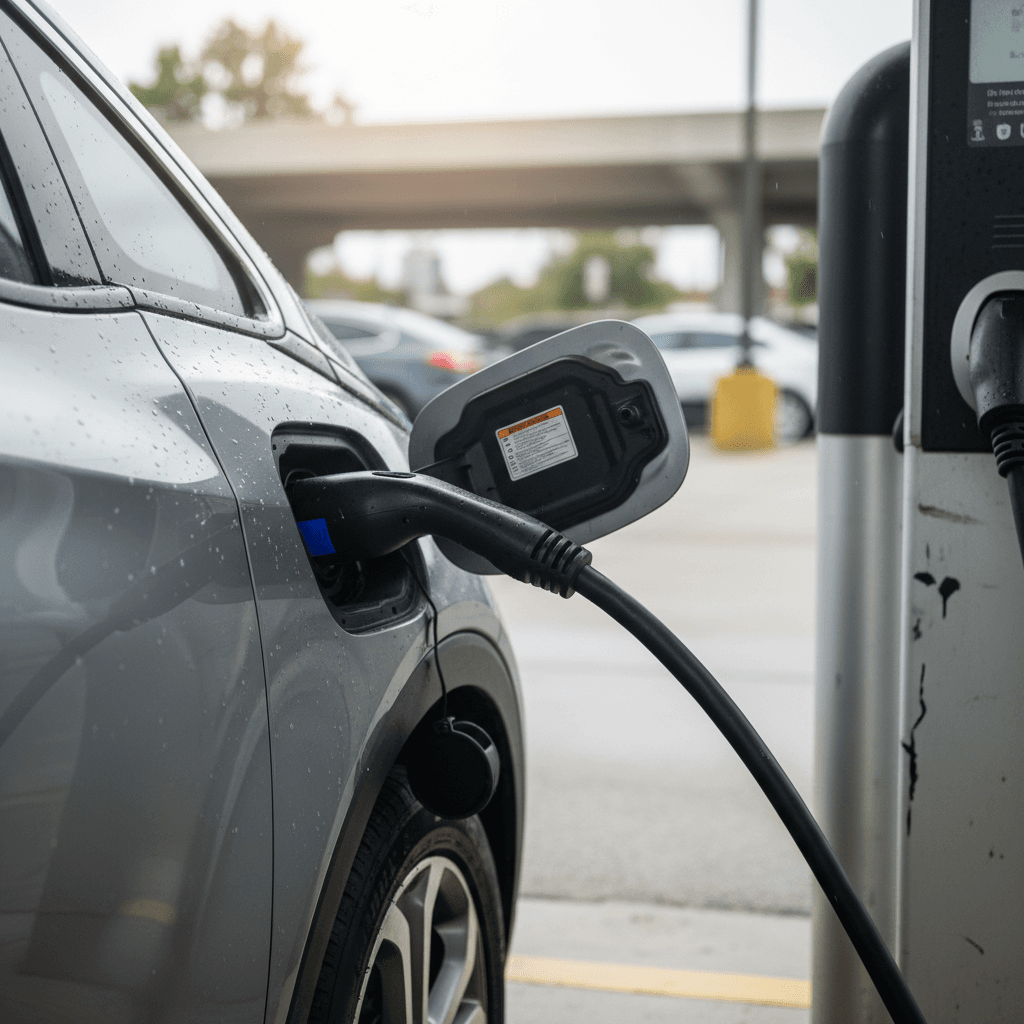
- DC fast (CHAdeMO): About 40 minutes to 80% on a warm battery, but speeds drop quickly on repeated sessions.
CHAdeMO caveat
Driving experience and comfort
Ride & handling
The 2018 Leaf rides very much like a well‑sorted compact hatchback. The low‑mounted battery keeps the center of gravity down, so the car feels stable and predictable in corners, even if it’s not trying to be sporty.
Steering is light and easy, ideal for urban parking and commuting. On rough pavement, the suspension can feel a bit busy compared with newer EVs that weigh more and use more sophisticated dampers, but it’s rarely harsh.
Noise & comfort
One of the Leaf’s best traits is how quiet and relaxed it feels in city and suburban use. The powertrain is nearly silent, and wind noise is modest at legal highway speeds.
Front seats are comfortable for most body types, and the upright hatchback roofline means adults can sit in the rear without feeling cramped. Cargo space, about 24 cubic feet, is competitive with many small crossovers.
Commuter sweet spot
Battery health & degradation on 2018 Leafs
Battery health is the single most important factor in any 2018 Nissan Leaf review, more important than color, wheels, or even trim level. The 40 kWh pack introduced for 2018 is significantly better than the early 24 kWh batteries, but it still relies on air cooling, which makes driving and charging habits critical.
What affects 2018 Leaf battery life?
Why some packs still look great at 120,000 miles, and others don’t
Climate
Hot climates are harder on the Leaf’s air‑cooled pack. Cars that live in cooler regions or garages tend to keep more capacity over time.
Fast‑charging habits
Frequent DC fast charging (especially back‑to‑back sessions on road trips) warms the pack and can accelerate degradation compared with mostly Level 2 home charging.
State of charge habits
Keeping the battery at 100% for long periods isn’t ideal. Owners who typically charge to 70–80% and avoid sitting fully charged in hot weather usually report better long‑term health.
Real‑world owner reports
Interpreting Leaf battery capacity bars
The 2018 Leaf still uses the classic 12‑bar display to show battery capacity. Here’s how to read it when buying used.
| Capacity bars | Approx. health | What that means for range |
|---|---|---|
| 12 bars | ~90–100% | Range similar to new or just slightly reduced in mild weather |
| 11 bars | ~85–90% | Small but noticeable loss; still fine for typical commuting |
| 10 bars | ~80–85% | Range drop you’ll notice on the highway; consider your daily needs carefully |
| 9 bars | ~75–80% | Best reserved for short‑range city duty |
| 8 bars or fewer | Below ~75% | Range can feel tight even in town; price should reflect this |
Capacity bars are only a rough guide. A proper health report, like the Recharged Score, tells you much more.
Don’t rely on bars alone
2018 Nissan Leaf trims: S vs SV vs SL
Nissan kept the trim walk simple for 2018: S, SV, and SL. All share the same 40 kWh battery and motor, so your decision is mostly about comfort, tech, and charging features.
2018 Leaf trim comparison
All the same battery, very different feature sets
Leaf S (base)
- Same 40 kWh battery and 147 hp motor as other trims
- Cloth seats, basic audio, manual seat adjustments
- CHAdeMO quick‑charge port optional, not standard
- Best for: budget shoppers who mainly charge at home and don’t need many extras
Leaf SV (mid‑trim)
- Adds standard quick‑charge port
- Navigation and larger infotainment screen
- More comfort and convenience features; ProPILOT Assist availability via packages
- Often the best value used, balancing price and equipment
Leaf SL (top trim)
- Leather‑appointed seats, Bose audio, LED headlights
- Available ProPILOT Assist and active‑safety tech packages
- More upscale cabin feel and convenience features (e.g., auto‑dimming mirror, heated mirrors)
- Ideal if you want the Leaf to feel more premium for daily use
Trim‑level recommendation
Reliability and common 2018 Leaf problems
Overall, the 2018 Nissan Leaf has proven reasonably durable, but you should go in with open eyes. Independent reliability data shows the 2018 model scoring below average versus all vehicles from the same year, largely due to battery and electronic issues as these cars age.
Most common 2018 Leaf issues to watch for
What owners and surveys report most often
Battery capacity loss
As discussed, some 2018 Leafs have lost more capacity than expected, especially in hot climates or with heavy DC fast‑charging use. A car that frequently voltage‑balances cells at low state of charge can feel inconsistent in its range.
Unexpected braking
Some owners of 2018 Leafs with driver‑assist systems report the automatic emergency braking or ProPILOT occasionally applying brakes when there is no real obstacle. Software updates can mitigate this, but you should test‑drive with all systems on.
Electronics & minor glitches
Like many older EVs, Leafs can show random warning lights, infotainment quirks, or sensor faults. They’re usually inexpensive to address but worth checking before you buy.
Safety first on test drives
The upside: major drivetrain failures (motor or inverter) are relatively rare. Most high‑mileage 2018 Leafs report trouble‑free electric powertrains; the bigger story is how much range the pack has retained and whether any safety systems are misbehaving.
Cost of ownership for a used 2018 Leaf
Part of the reason the 2018 Leaf still deserves your attention is its low running cost. Electricity is usually much cheaper per mile than gasoline, and EVs have far fewer moving parts than gas engines.
Energy and maintenance costs
- Electricity: At a typical U.S. residential rate, many Leaf owners pay the equivalent of roughly $0.70–$1.20 per “gallon” of energy.
- Maintenance: No oil changes, timing belts, or exhaust systems. You’ll mostly deal with tires, cabin air filters, brake fluid, and the occasional coolant service.
- Brakes: Regenerative braking means pads and rotors often last much longer than in a comparable gas car.
Depreciation & resale
Because new EVs have gained so much range and tech since 2018, Leaf values have come down sharply, good news if you’re buying, less so if you’re selling.
A 2018 Leaf with strong battery health can be a value play, but a car with heavy degradation should be priced aggressively or avoided.
At Recharged, every vehicle’s asking price is paired with a fair‑market analysis so you can see how it stacks up against similar Leafs nationwide.
Used‑Leaf ownership sweet spot
How the 2018 Leaf compares with other used EVs
The 2018 Leaf isn’t the only game in town. If you’re cross‑shopping used EVs, you’re likely also looking at cars like the Chevrolet Bolt EV, Hyundai Ioniq Electric, or an older Tesla Model 3. Each has a different set of trade‑offs.
2018 Leaf vs popular used‑EV alternatives
High‑level comparison for shoppers using a Leaf as a reference point.
| Model | Typical used price* | Approx. range when new | Fast‑charging standard | Best for |
|---|---|---|---|---|
| 2018 Nissan Leaf | Lower | 151 miles | CHAdeMO | Budget‑minded commuters and local drivers |
| 2017–2019 Chevy Bolt EV | Usually higher | 238 miles | CCS | Longer‑range drivers who need occasional road‑trip ability |
| 2017–2019 Hyundai Ioniq Electric | Similar or slightly higher | 124–170 miles | CCS | Efficiency‑focused drivers who value low energy use |
| 2017–2018 Tesla Model 3 RWD | Higher | ~220–310 miles | Tesla (NACS) | Drivers who want range, fast‑charge network, and stronger performance |
Always compare specific battery health and pricing, not just nameplates.
Where the 2018 Leaf still wins
Checklist for buying a used 2018 Nissan Leaf
Smart‑buyer checklist for a 2018 Leaf
1. Verify battery health beyond the bars
Ask for a recent battery‑health report. Capacity bars are helpful, but tools like LeafSpy or a professional diagnostic, such as the <strong>Recharged Score battery report</strong>, give you a clearer picture of remaining capacity and cell balance.
2. Confirm CHAdeMO quick‑charge hardware
Make sure the car has the CHAdeMO fast‑charge port if you plan any highway travel or need quick top‑ups. It’s optional on S trims but standard on most SV and SL models.
3. Check climate and usage history
A Leaf that spent its life in a mild climate, garaged, and mostly Level 2 charged is usually a safer bet than one that lived in extreme heat or did constant DC fast‑charging.
4. Inspect tires, brakes, and suspension
Even with low mechanical wear, tires and suspension still age. Look for uneven wear, clunks, or vibration on the test drive. EVs are hard on cheap tires.
5. Test all driver‑assist systems
If equipped with ProPILOT Assist or automatic emergency braking, test these features on a clear road. Watch for phantom braking or warning lights.
6. Confirm charging compatibility at home
Make sure you can install or already have a 240 V Level 2 outlet or wallbox. Relying on 120 V trickle charging alone will get old quickly.
7. Review recall and service history
Confirm all open recalls and recommended services have been completed. A Recharged vehicle comes with a digital history review already done for you.
Make inspection easier
2018 Nissan Leaf FAQ
Frequently asked questions about the 2018 Nissan Leaf
Bottom line: should you buy a 2018 Leaf?
If you judge the 2018 Nissan Leaf by 2026 new‑EV standards, its 151‑mile original range and CHAdeMO fast‑charging look dated. But that misses the point. As a used EV, the 2018 Leaf can be a smart, budget‑friendly way to get into electric driving, especially if your life is mostly local and you have reliable home charging.
The keys are simple: buy the healthiest battery you can find, make sure the car’s charging hardware matches how you’ll actually use it, and pay attention to how its driver‑assist systems behave. Get those pieces right, and a used 2018 Leaf can deliver quiet, low‑stress driving and very low running costs for years to come.
If you’d rather not navigate that evaluation alone, shopping through Recharged gives you access to vehicles with verified battery health via the Recharged Score, transparent pricing, expert EV guidance, and nationwide delivery. That way, you can focus on whether the 2018 Leaf’s capabilities fit your life, not whether the car you’re looking at is hiding any surprises.