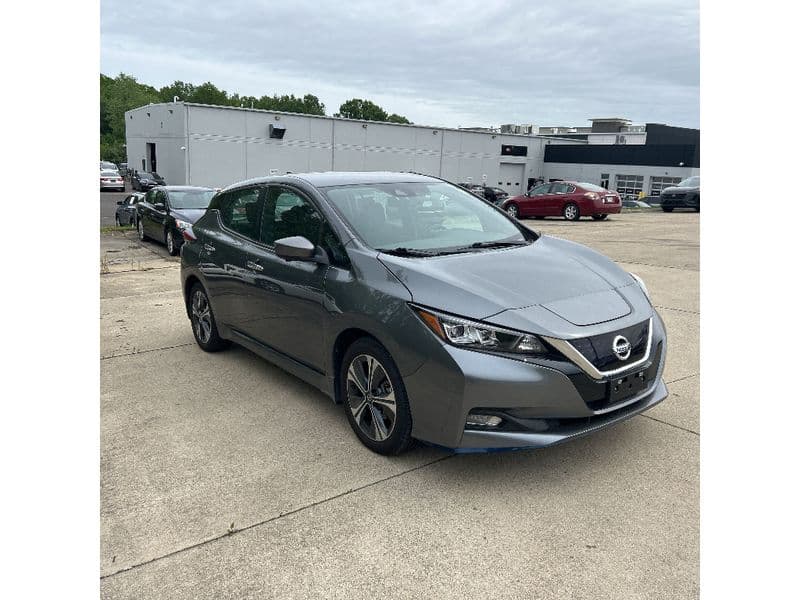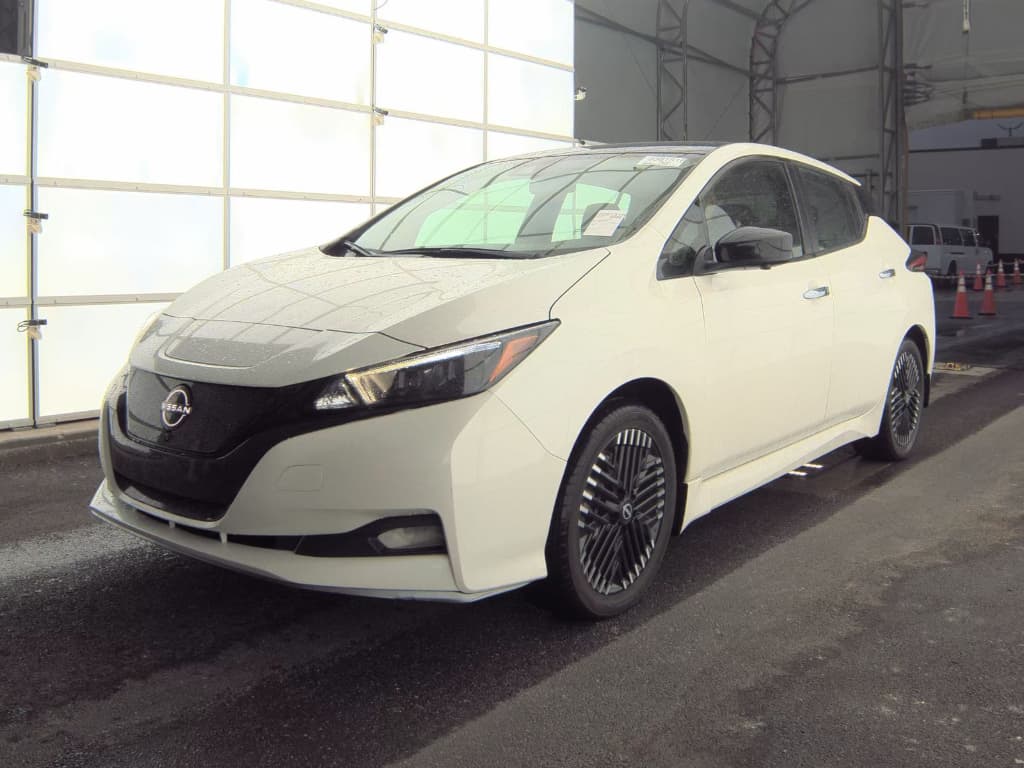
If you’re shopping for a budget-friendly electric car, the 2013 Nissan Leaf is going to pop up a lot. It was one of the earliest mainstream EVs, and on the used market today it’s often cheaper than a comparable gas compact. But its small 24 kWh battery, age, and early EV technology mean you need to go in with your eyes wide open.
Big picture
Why consider a 2013 Nissan Leaf today?
The 2013 Nissan Leaf sits at an interesting point in the used-EV world. It’s the first year of the updated first-generation Leaf (model code AZE0), which brought several meaningful improvements over the 2011–2012 cars, especially in charging and efficiency, while still using the original 24 kWh lithium-ion battery. That makes it widely available and relatively simple, but you must factor in 12 years of battery aging.
Where the 2013 Leaf still shines
Strengths that keep it relevant in 2025
Low purchase price
Perfect for city duty
Simple, proven EV hardware
Biggest limitation
2013 Nissan Leaf specs: the essentials
2013 Nissan Leaf at a glance
Key 2013 Nissan Leaf specifications
The fundamentals that matter most when you’re cross‑shopping or evaluating if a 2013 Leaf fits your life.
| Category | Spec |
|---|---|
| Battery capacity | 24 kWh lithium-ion |
| Original EPA combined range | Approximately 75 miles |
| Motor output | 107 hp (80 kW), 187 lb‑ft torque |
| Drive configuration | Front‑wheel drive |
| DC fast charging | CHAdeMO up to ~50 kW (when equipped) |
| Onboard AC charging | 3.3 kW (S) or 6.6 kW (SV/SL/option) |
| Body style | 5‑door compact hatchback |
| Seating capacity | 5 passengers |
Specs apply to U.S.-market 2013 Nissan Leaf models.
Model-year nuance
Trims & features: S vs SV vs SL
For 2013, Nissan split the Leaf into three trims, S, SV, and SL. Battery and motor output are the same across all three; what changes are comfort, tech, and charging hardware. When you’re shopping used, those details can dramatically affect daily usability.
2013 Nissan Leaf trim comparison
How S, SV, and SL differ in features that matter to used‑EV buyers.
| Feature | Leaf S | Leaf SV | Leaf SL |
|---|---|---|---|
| Onboard charger | 3.3 kW (6.6 kW optional) | 6.6 kW standard | 6.6 kW standard |
| DC fast charge (CHAdeMO) | Optional package | Optional package | Standard |
| Seat material | Cloth | Upgraded cloth | Leather-appointed |
| Heated seats/steering wheel | Often with Cold Weather pkg | Standard on many cars | Standard |
| Navigation / 7" screen | Basic audio (nav optional) | Navigation system | Navigation + more features |
| Rearview camera | Often with packages | Common | Common |
| Solar spoiler for 12V battery | No | No | Yes |
Equipment can vary with options; verify on the actual car you’re considering.
Sweet spot pick
Real-world range & battery health in 2025
On paper, a new 2013 Nissan Leaf was rated for about 75 miles of EPA range. In the real world, and 12 model years later, that number is rarely what you’ll see. The story now is almost entirely about battery degradation and climate history.
What actually determines your range now
Why two 2013 Leafs can feel like completely different cars
Climate history
Age & fast charging
Daily usage pattern
What you might see from a good pack
On a 2013 Leaf with strong battery health (for example, all 12 capacity bars showing and a verified high state of health), many owners still report around 60–70 miles of usable range in mild weather at mixed city speeds.
That’s enough for a 25–30 mile round‑trip commute with comfortable reserve, as long as you’re not relying heavily on 70+ mph highway miles or extreme heat or cold.
What a tired pack feels like
On heavily degraded batteries, real‑world range can drop into the 40–50 mile window, or even less in winter, which severely limits daily usability. In that case, the car can still work for very short, predictable trips but leaves little margin for detours or weather.
That’s why verifying battery health is the most important step before buying a 2013 Leaf.
Reality check on winter range
Common issues & what tends to go wrong
Mechanically, the 2013 Leaf is relatively simple and tends to be robust. Most of the pain points revolve around the battery and a few age‑related wear items rather than classic engine or transmission failures.
- Battery degradation – By far the number‑one concern. Pre‑mid‑2013 builds in very hot climates were especially vulnerable, but any 12‑year‑old 24 kWh pack will show some loss.
- Limited range for modern needs – Even a healthy 2013 Leaf may feel range‑constrained compared with newer 40–60 kWh EVs. Your use case has to match the car’s abilities.
- CHAdeMO fast‑charge standard fading – The Leaf uses CHAdeMO for DC fast charging. More networks are standardizing on CCS and, going forward, NACS. Public CHAdeMO availability is slowly shrinking in many areas.
- Interior wear and tech age – Expect dated infotainment graphics, missing Apple CarPlay/Android Auto, and some wear on seats and steering-wheel surfaces depending on mileage.
- 12V battery and minor electronics – Like any older car, the low‑voltage battery and accessories (door locks, window switches, etc.) can start to show their age but are typically inexpensive fixes compared with an HV battery.
Good news on maintenance
Used 2013 Nissan Leaf inspection checklist
Because battery condition is so critical, shopping for a 2013 Leaf isn’t like shopping for a typical used hatchback. Here’s a focused checklist to help you separate the solid commuters from the future headaches.
Essential checks before you buy a 2013 Leaf
1. Read the capacity bars
Turn the car on and look at the smaller vertical bar graph on the right side of the dash. It shows <strong>12 capacity bars when new</strong>. Each missing bar represents noticeable degradation. A car at 9–10 bars will have substantially less range than new; at 7–8 bars, think of it as a short‑hop vehicle only.
2. Use a scan tool if possible
If the seller allows, connect an OBD‑II dongle and use an app like LeafSpy to read <strong>State of Health (SOH)</strong> and charging history. This gives a clearer picture than bars alone and can expose suspicious recent resets.
3. Review climate and storage history
Ask where the car spent most of its life and how it was parked. Cars that lived in cooler regions and were <strong>garage‑kept</strong> typically have healthier batteries than those baking in uncovered lots in hot states.
4. Check for CHAdeMO and 6.6 kW charging
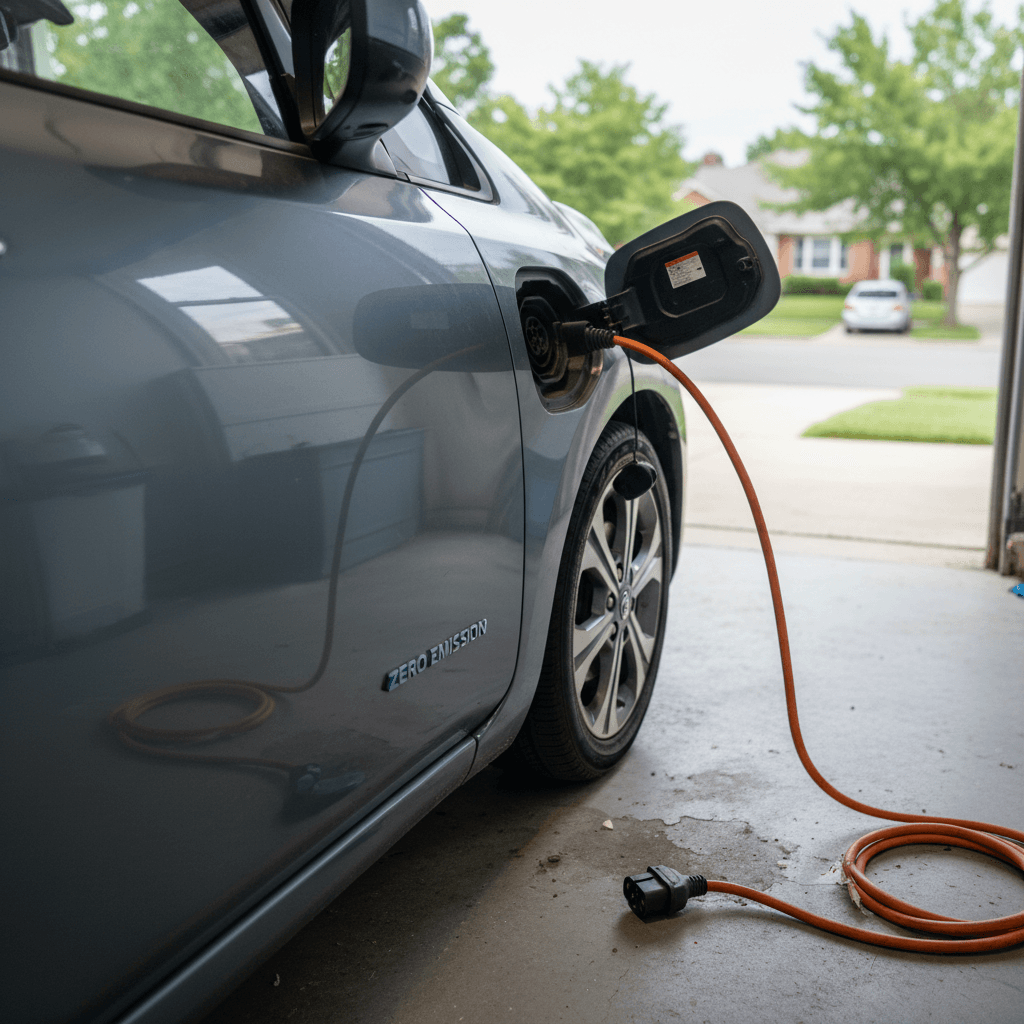
Open the front charge door. If you see two connectors (a larger one below the J1772 port), the car has <strong>DC fast charging</strong>. Verify whether the onboard AC charger is the quicker 6.6 kW unit, especially important if you’ll rely on overnight Level 2 charging.
5. Test a realistic drive loop
Don’t just drive around the block. Take a <strong>20–30 minute mixed‑speed drive</strong> and watch how quickly the state of charge drops. That’s the best real‑world feel for whether the Leaf’s remaining range fits your routine.
6. Inspect tires, brakes, and underbody
Like any used car, worn tires, aged brakes, and underbody rust (in snow-belt regions) add to your near‑term ownership cost. None of these are Leaf‑specific, but they matter when comparing two cars at similar prices.
How Recharged can help
Is a 2013 Leaf right for your driving needs?
Before you fall in love with a low price, you need to be honest about how you’ll use the car. A 2013 Nissan Leaf can be an excellent tool when its capabilities line up with your routine, and frustrating when they don’t.
Great fit
- Short daily commutes under 25–30 miles round‑trip, especially at city speeds.
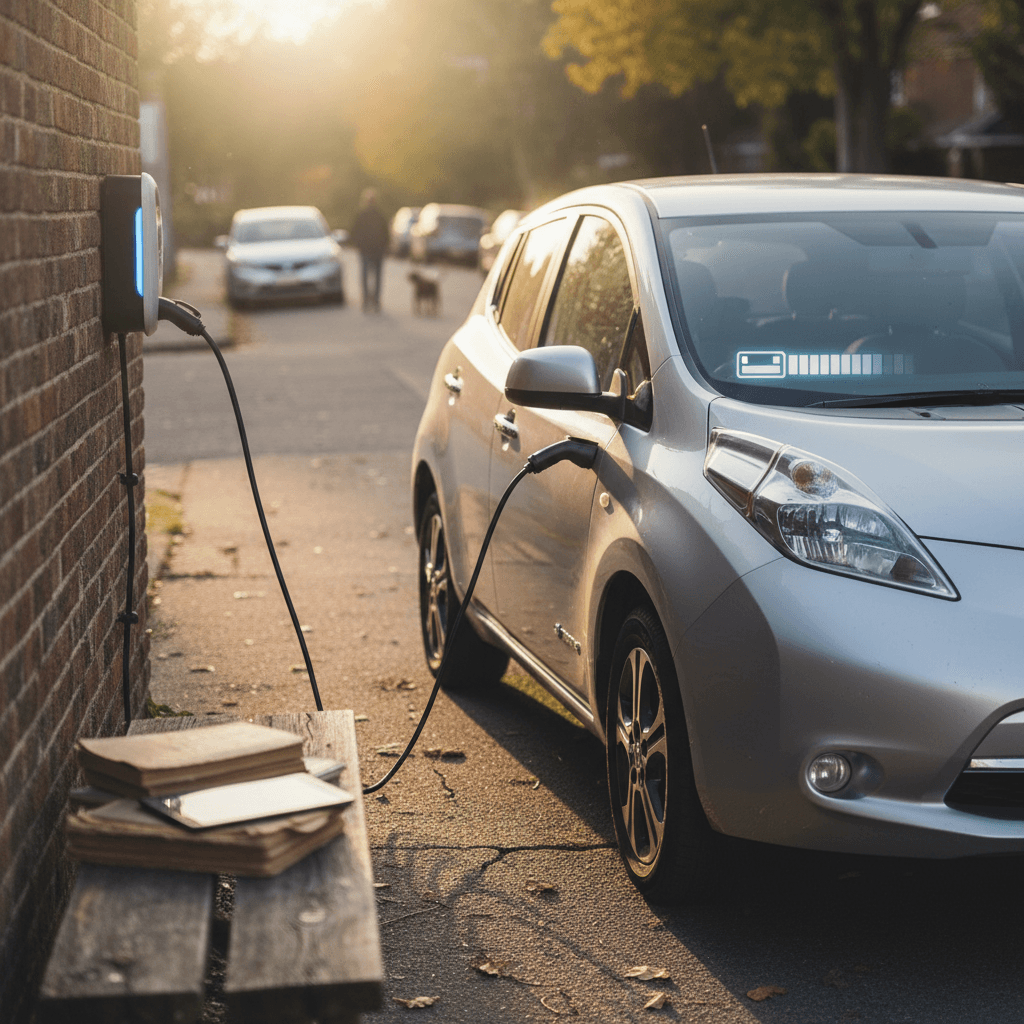
- Homes with Level 2 charging available in a garage or driveway.
- Multi‑car households using the Leaf as a second vehicle for errands and local driving.
- Drivers who prioritize low purchase cost and low running costs over long‑distance flexibility.
Poor fit
- Regular highways runs of 50+ miles per day where a mid‑trip charge would be a hassle.
- One‑car households that need a do‑everything vehicle including road trips.
- Drivers in very hot regions who don’t have solid proof of good battery health.
- Shoppers who want modern tech features like CarPlay/Android Auto and advanced driver‑assist in the same car.
Think about future you
Financing, value, and alternatives to consider
The upside to a 2013 Nissan Leaf is that you’re rarely spending huge money. The downside is that resale values are low precisely because range is limited and the market has moved on to larger batteries. That can work for you if you treat the car as an appliance, something that does a job for a few years at low cost, rather than a long‑term investment.
How a 2013 Leaf stacks up on value
Comparing it to other EV options you might be considering
Versus newer Leafs
Versus cheap gas compacts
How Recharged fits in
Financing an older EV
Ready to find your next EV?
Browse Vehicles2013 Nissan Leaf FAQ
Frequently asked questions about the 2013 Nissan Leaf
The 2013 Nissan Leaf can be a smart, low‑cost entry point into EV ownership if you treat it as what it is: a compact, short‑range electric hatchback that’s now more than a decade old. Focus on battery health, climate history, and your actual daily mileage, and you can end up with transportation that’s quiet, simple, and inexpensive to run. If you’d like help comparing a specific 2013 Leaf to newer used EVs, or want a verified battery health report built in, Recharged is set up to make that process as transparent and low‑stress as possible.