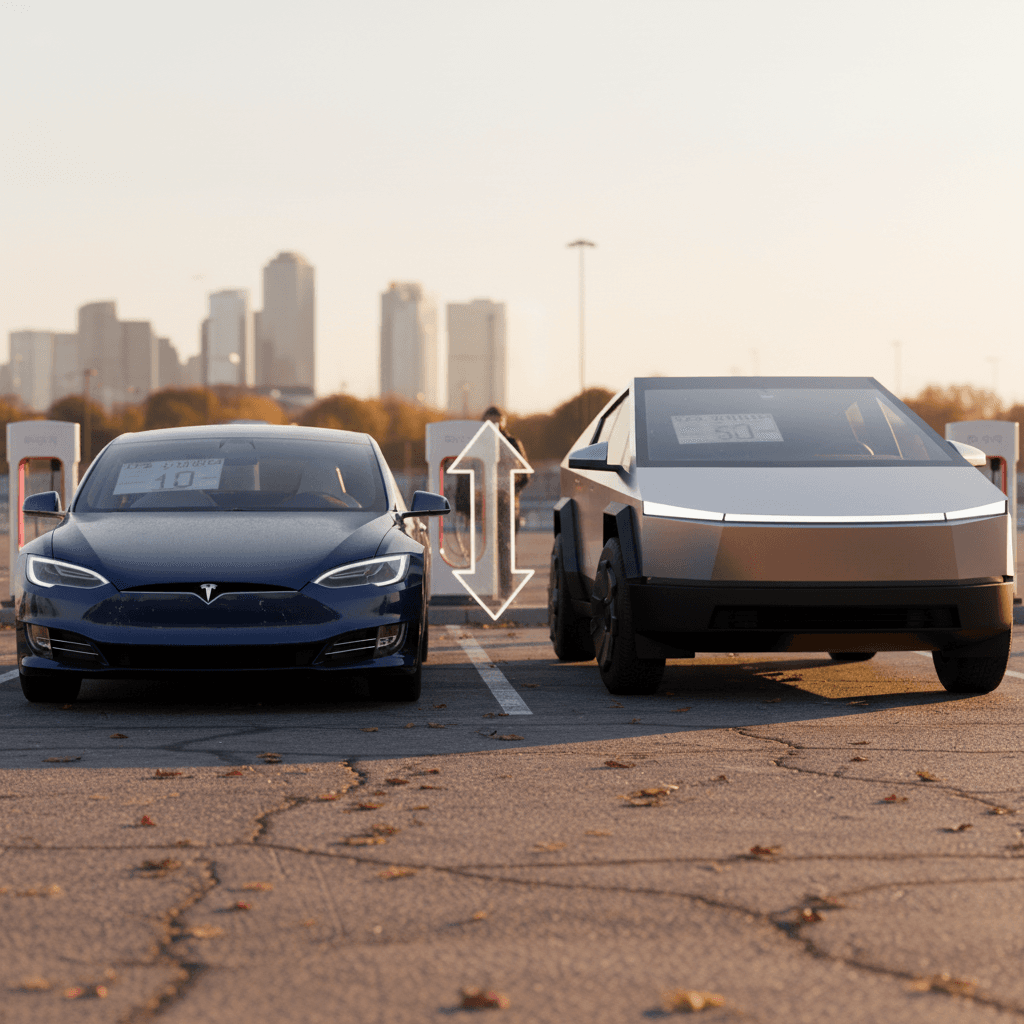
If you’re wondering whether Tesla prices will go up or down in 2026, you’re not alone. Between expiring tax credits, an EV sales slowdown, and years of Tesla price cuts, it’s tough to know if you should buy now, wait, or even sell your current car. This guide pulls together the latest data and market dynamics so you can make a clear, financially sound decision in 2026.
Context: 2026 is a transition year
Tesla prices in 2026: the short answer
- New Tesla prices in 2026 are more likely to drift sideways or slightly up in the U.S. rather than see the aggressive price cuts of 2023–2024. Tesla has already cut deeply to chase volume, and with the federal EV tax credit gone, there’s less room to keep discounting without hurting margins even more.
- Used Tesla prices in 2026 will likely stabilize or rise modestly from their 2024–mid‑2025 lows, especially for high‑demand models like the Model 3 and Model Y in good condition. Data through late 2025 shows wholesale used‑vehicle prices ticking up again, and some recent months have already seen used Tesla prices rebound.
- The exact direction for any given car will depend on trim, battery condition, mileage, local demand, and macro factors like interest rates and gas prices. But the era of "falling every month" Tesla prices appears to be over, at least for now.
No one can “guarantee” Tesla prices
What’s driving Tesla pricing in 2026?
Six forces shaping Tesla prices in 2026
These are the levers that will decide whether prices drift up or down this year.
EV demand “winter”
End of federal EV credits
Raw material & production costs
Competition from other EVs
Used market reset
Interest rates & monthly payments
Watch incentives, not just sticker prices
Outlook for new Tesla prices in 2026
From 2022 through 2024, Tesla repeatedly slashed new‑vehicle prices to support volume, which in turn dragged down used values. Heading into 2026, the picture is different. The company is signaling tighter capital discipline, federal EV tax credits have ended, and the broader EV market is no longer in growth‑at‑all‑costs mode. That makes continued, aggressive price cuts less likely, but it doesn’t mean prices will soar either.
Signals from late‑2024 and 2025 that matter for 2026
Base case: sideways to slightly higher
In the most likely 2026 scenario, new Tesla MSRPs stay roughly flat or rise modestly, especially once you factor in the expired EV tax credit. Tesla may claw back a bit of margin with small, frequent tweaks, a $500–$2,000 adjustment here and there, rather than headline‑grabbing cuts.
To keep payments reasonable, expect targeted incentives rather than blanket price drops: special lease offers, regional discounts where inventory piles up, or bundles that include software features or charging perks.
Downside case: renewed price war
A more bearish scenario is a second round of discounting if EV demand weakens further or a major competitor launches a compelling, cheaper crossover. Tesla has historically reacted quickly to protect market share; if it sees order banks thinning, it can and will cut prices again.
This is more plausible on models with slowing demand or aging designs, think higher‑end Model S/X, than on core, entry‑level trims of the Model 3/Y where pricing is already lean.
How the end of tax credits changes the math
Outlook for used Tesla prices in 2026
Used Teslas have already lived through their price shock. After peaking during the COVID supply crunch, values fell fast as Tesla chopped new‑car prices. By early–mid 2025, multiple analyses showed late‑model used EVs down around 15% year‑over‑year, with Teslas among the biggest declines. At the same time, overall wholesale used‑vehicle prices began rising again, and by late 2025 the Manheim Used Vehicle Value Index had recovered to levels not seen since 2023. In early 2026, there are signs that used Tesla values are bottoming and in some trims even ticking back up.
Where used Tesla prices are likely headed in 2026
Directionally, here’s what to expect, with plenty of model‑ and condition‑specific nuance.
Mild recovery for core models
Continued pressure on niche models
Big spread by condition
Battery health is the new mileage
Model‑by‑model Tesla price outlook
2026 Tesla price direction by model (U.S. used market)
Directional view for the used market, assuming normal economic conditions and no major new policy shocks.
| Model | Typical Buyer in 2026 | 2026 Price Direction (Used) | Key Factors |
|---|---|---|---|
| Model 3 | Value‑focused commuters and first‑time EV buyers | Sideways to ↗ (slight up) | Huge used supply keeps a lid on prices, but loss of new‑car tax credits and strong demand for affordable EVs support values for clean, low‑mile cars. |
| Model Y | Family haulers and small‑SUV shoppers | Sideways to ↗ | Still the best‑selling EV in the U.S. Crossovers remain hot, and buyers like the space. Expect stable prices with a floor under nice specs and colors. |
| Model S | Luxury shoppers, enthusiasts, long‑range drivers | ↘ (gradual down) | Aging platform and heavy depreciation continue to bite, especially on older high‑mileage cars. Expect deals, but budget for repairs and range loss. |
| Model X | Three‑row families, status buyers | ↘ | High running costs, complex features, and fresh three‑row EV competition push values down, especially on early VINs and high‑mile examples. |
| Cybertruck | Early adopters, lifestyle truck buyers | Highly volatile | Still supply‑constrained and polarizing. Some used trucks may trade above MSRP early, but values could correct sharply once supply and competition catch up. |
Arrows reflect expected average price movement over the course of 2026, not any specific vehicle.
Remember: this is directional, not a price sheet
Timing your move: buying a Tesla in 2026
Smart strategies for buying a Tesla in 2026
1. Decide new vs used based on total cost
With federal tax credits gone, new Teslas feel relatively more expensive. Run the math on total cost of ownership: price, financing rate, insurance, and expected depreciation. For many buyers in 2026, a <strong>2–4‑year‑old Tesla</strong> will be the sweet spot.
2. Watch monthly payments, not just MSRP
In a higher‑rate environment, a small change in APR can matter more than a $1,000 MSRP tweak. Compare finance and lease offers across lenders, not just Tesla’s in‑house offers, and consider pre‑qualification with marketplaces like Recharged that specialize in EV financing.
3. Shop seasonality and inventory
Dealer and marketplace inventory tends to be richer, and negotiability higher, when tax‑season cash drops off (late spring) or when new‑model‑year cars arrive. In 2026, pay attention to <strong>mid‑year software or hardware refreshes</strong> that can push older builds down in price.
4. Prioritize verified battery health
A cheap Tesla with a weak battery is not a bargain. Look for a <strong>third‑party battery health report</strong>, actual range tests, and detailed service history. On Recharged, that’s built into the Recharged Score so you’re not guessing.
5. Leverage depreciation that’s already happened
The biggest Tesla price damage was done in 2023–2024. In 2026, that means you can often buy a car after the steepest part of its depreciation curve. Focus on late‑model examples where someone else ate the early‑life drop, but the tech is still current enough to get years of software updates.
6. Don’t overpay for old software promises
Legacy Full Self‑Driving (FSD) packages and older Autopilot hardware may never deliver the robotaxi future some buyers hoped for. In 2026, don’t value software promises from five years ago like they’re new; value what the car actually does today.
Selling or trading in a Tesla in 2026
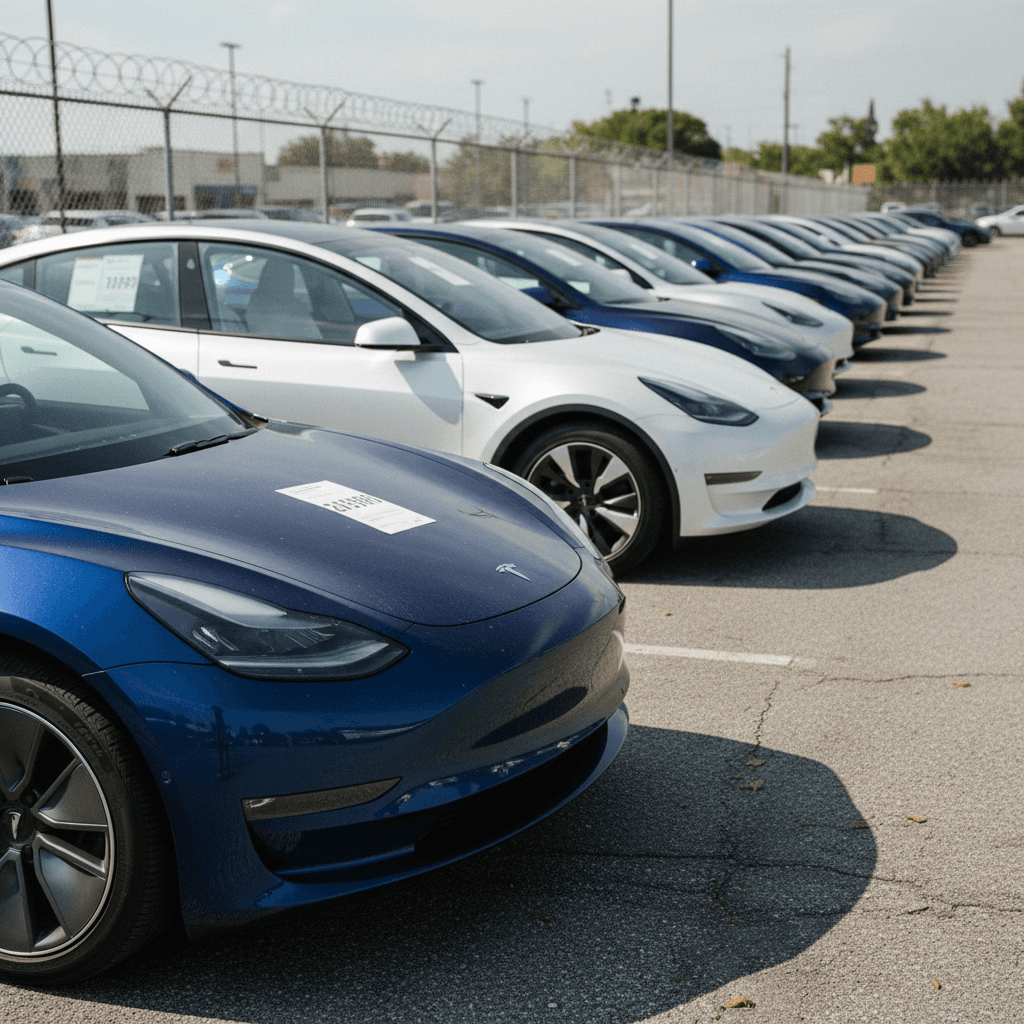
If you already own a Tesla, the 2026 price picture looks different from your side of the table. The collapse in used EV values during 2023–2024 hurt resale, but it also means much of the worst depreciation is behind you. The question now is how you sell, and how you position your car in a more rational, less speculative market.
Option 1: Instant offer or trade‑in
If you value convenience and speed, an instant offer or trade‑in is still the cleanest route. Expect pricing to sit a bit below what you’d see listed retail, that’s the spread that pays for reconditioning, battery testing, and market risk.
Recharged, for example, can give you an instant offer or handle your Tesla on consignment. Because we focus only on EVs and publish a transparent battery health report, we’re often able to justify stronger offers on cars with truly healthy packs.
Option 2: Consignment or marketplace sale
If you’re willing to wait, consignment or a marketplace sale can capture more of the retail value. In a 2026 market where used EVs are gaining traction, that extra effort may be rewarded, especially for well‑specced Model 3 and Model Y examples.
The key is documentation: service records, charging habits, and a third‑party battery health check all help your Tesla stand out, which is exactly what Recharged’s consignment program and Recharged Score are designed around.
Position your Tesla like an asset, not a meme stock
How Recharged helps you navigate used Tesla prices
Recharged was built for exactly this moment, when EV ownership is supposed to be mainstream, but the market is noisy and confusing. Whether you’re buying or selling a Tesla in 2026, the challenge is separating hype from fundamentals. That’s where verified data and a transparent retail experience matter.
Why Recharged is different for used Teslas
Data‑driven pricing, battery transparency, and EV‑only expertise.
Recharged Score battery health
Fair market pricing
Financing, trade‑ins & delivery
Based in Virginia, serving buyers nationwide
FAQ: Will Tesla prices go up or down in 2026?
Common questions about Tesla prices in 2026
In 2026, asking whether Tesla prices will go up or down is really a question about how fast the market is maturing. The speculative highs and painful crashes of the early EV years are giving way to something more normal: values driven by condition, range, and real‑world demand. If you anchor your decisions in those fundamentals, and use tools like the Recharged Score and fair‑market pricing to benchmark any Tesla you’re considering, you can come out ahead whether prices tick slightly up or down over the rest of the year.