You’d think which EV color has the best resale value would have a tidy, one‑word answer. It doesn’t. Color is fashion, fashion is regional, and the used market is a vast, semi‑rational bazaar. But we do have real data, and it says paint can swing your resale by thousands of dollars. The trick is knowing when to play it safe, and when a bold color actually pays you back.
Quick answer
Does color really affect EV resale value?
Yes, color matters. In large national datasets, paint alone can change a car’s three‑year depreciation by roughly 10 percentage points or more. That can mean a difference of $5,000 or more on a relatively new vehicle. Color doesn’t outrank fundamentals like battery health, brand strength, or mileage, but when you control for the basics, the same EV in the wrong color will be harder to sell and will usually command less money.
How much can color move the needle?
What the data says about car color and resale
Large U.S. studies of millions of 3‑year‑old cars, gas and electric, paint a fairly consistent picture. The headline is counterintuitive: the best resale colors are often not the most common ones.
Best and worst colors for 3‑year resale (all vehicles)
Approximate three‑year depreciation by color from recent large‑sample studies of the U.S. used market. Numbers vary by source, but the rank order is remarkably consistent.
| Rank | Color | Approx. 3‑yr Depreciation | Takeaway |
|---|---|---|---|
| 1 | Yellow | ~24% | Extremely rare but in steady demand; best overall value retention. |
| 2 | Orange | ~24–25% | Another low‑volume, extroverted color that used buyers actively seek out on the right vehicles. |
| 3 | Green | ~26% | Earthy or bold greens can hold value surprisingly well, especially on SUVs and quirky models. |
| 4–8 | Beige, Red, Silver, Brown, Gray, Blue | ~29–31% | Roughly average or slightly better than the market depending on body style. |
| 9–11 | Black, White | ~31–32% | Popular and easy to live with, but everywhere; lots of supply means buyers can haggle. |
| 12 | Gold | ~34% | Perennial bottom‑feeder, too niche, too polarizing, and rarely suits EV design. |
Bright, low‑volume colors can outperform refrigerator white when it comes to resale value, provided there’s some enthusiast demand.
Why rare colors sometimes win
Do EVs follow the same color–resale patterns as gas cars?
Broadly, yes, but with two big twists. First, the EV buyer pool skews a bit more design‑conscious and techy; second, the most common used EVs (Teslas, Leafs, Bolts) have very concentrated color palettes. That changes how color plays out on the lot.
How EVs bend the usual color rules
Same physics, different audience.
1. EVs skew toward clean, techy neutrals
White, gray, silver, and black dominate EV fleets because they match the "appliance" aesthetic, clean, minimalist, vaguely Scandinavian. That makes these colors easy to sell in most regions, even if they’re not statistically the very best for resale in the full market.
2. Fewer wild colors… with a few cult hits
Most volume EVs offer a short color list. When an automaker drops a distinctive shade, think a searing yellow or neon green on a hot hatch EV, it can become a collector magnet later, but only for that specific niche.
3. Brand and battery often overshadow paint
In today’s used EV market, brand perception and battery health routinely move prices more than color. A silver car with a strong battery will outsell the "perfect" color with degraded range.
4. Supply quirks can flip the script
Some EV nameplates are heavily white or black from the factory. If you’re the one selling a well‑chosen blue or red example in a sea of neutrals, you may be able to ask, and get, a modest premium.
Best EV colors for resale value
Let’s cut to it. If you’re choosing a color today and you care about resale in 3–7 years, here’s how the board looks for most EV shoppers in the U.S.
- White: The default "safe" EV color. Popular on Teslas and other mass‑market EVs, easy to sell anywhere, and good for hot climates. Resale is solid but not spectacular because there’s so much supply.
- Gray / Silver: Extremely liquid on the used market. Gray in particular strikes buyers as modern and upscale, and it hides dirt better than black or white. Strong choice for family EVs and crossovers.
- Blue (medium to dark): The sweet‑spot "personality" color. Still conservative enough for most buyers, but stands out just enough on a Tesla or Ioniq. Often re‑sells a bit better than red unless the EV is overtly sporty.
- Black: Always in style, always a little bit of a hassle. Shows swirls, dust, and road rash, and in hot climates it can be a dealbreaker. Still, if you keep it clean and polished, black remains an easy sell on premium EVs.
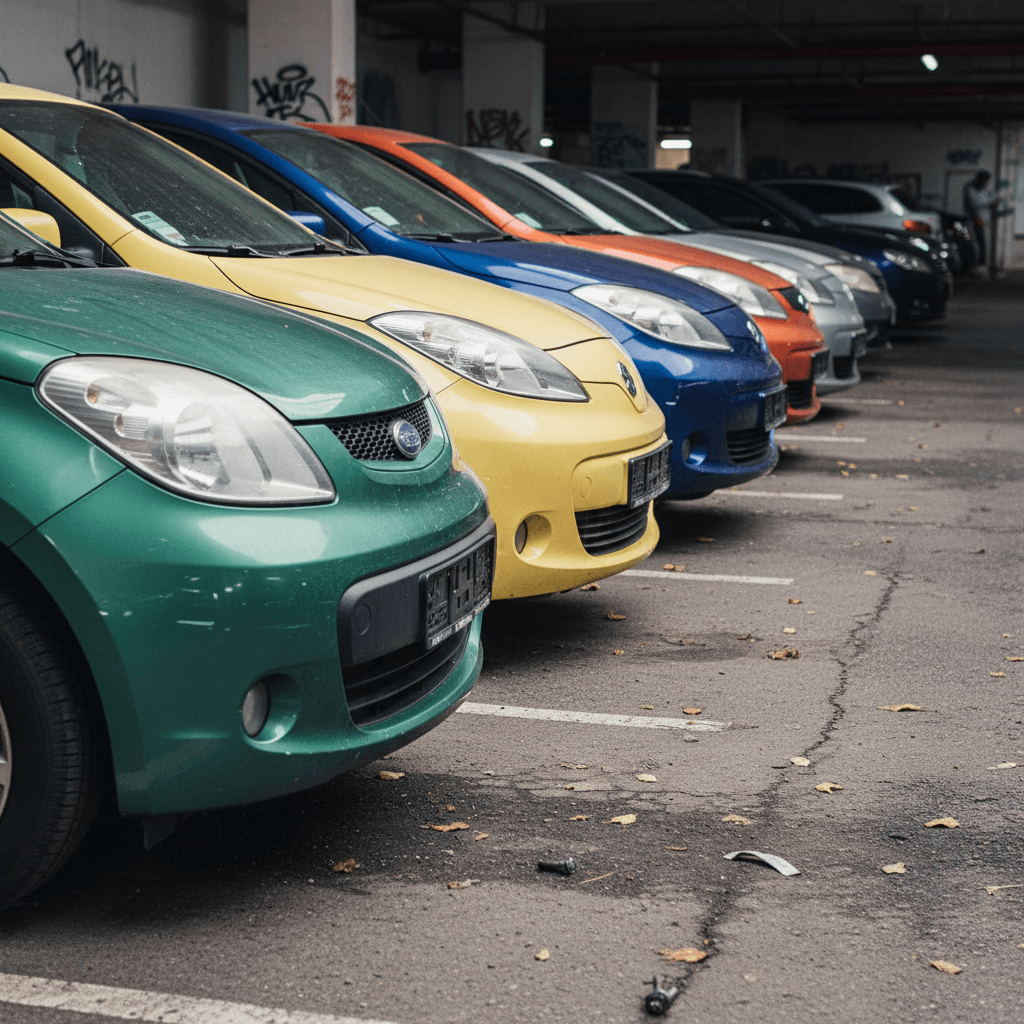
- Carefully chosen bright colors: On performance‑leaning EVs, hot hatchbacks, sporty crossovers, a very rare yellow, orange, or bright green can defy the averages and command a premium because there are so few of them. This is more lottery ticket than safe investment, but the upside is real when color and car match.
Think in terms of buyers, not colors
EV colors that tend to hurt resale
No color is universally “bad”, there’s always someone who wants the loud orange one. But some shades routinely lengthen time‑to‑sale and increase discounting pressure.
Colors that are usually a resale handicap
There are exceptions, but you need to know exactly what you’re doing.
Flat gold & champagne
Perennially at or near the bottom of resale charts. On EVs, gold rarely complements the futuristic surfacing, so you get the worst of both worlds: niche taste with little demand.
Odd browns & muddy greens
Earth tones can work on rugged crossovers. But the wrong brown on a sleek EV sedan makes the car look older and harder to place. Buyers either love it or walk away, and most walk.
Ultra‑niche brights on practical EVs
Day‑Glo orange minivan‑adjacent EVs, lime green three‑row crossovers, these polarize shoppers. Unless the EV is explicitly marketed as a fun toy, loud paint on a family workhorse usually hurts resale.
When bright becomes a liability
Body style matters: cute EV vs. family hauler
The right color on the wrong body style is still the wrong color. A highlighter‑yellow coupe can wear its peacock plumage proudly; the same shade on a three‑row electric SUV just looks like someone mis‑clicked in the configurator.
City runabouts & sporty EVs
- Playful colors work: Small footprints and fun styling can pull off bold hues, mint green Fiat, bright blue hot‑hatch EV, sunny yellow coupe.
- Resale upside: The right bright color can become the “must‑have” spec in enthusiast circles, keeping values firm.
- Risk: Your buyer pool shrinks. If you need to sell fast, you’re waiting for your specific kind of weirdo, in the best sense of the word.
Family crossovers, sedans & minivans
- Neutrals win: White, gray, silver, blue, and black dominate. These buyers care more about payment, range, and seats than about standing out.
- Resale priority: Days‑to‑sale and negotiation leverage. A mainstream color means more shoppers are willing to say yes.
- Rule of thumb: If it’s your only car and it hauls kids or clients, lean conservative. Save the retina‑searing yellow for your second EV.
Climate and region: how where you live changes the answer
Color is not just taste; it’s also climate control and camouflage. An EV that looks perfect in Seattle drizzle may feel like a heat‑soaked mistake in Phoenix.
Regional patterns that affect EV color resale
Same car, different zip code, different reaction.
Hot, sunny climates
Lighter colors, white, silver, very light gray, are easier to live with and keep cooler in the sun. Black and very dark blue EVs can be a tougher resale in the Southwest and parts of the South.
Snow belt & road‑salt country
White is popular but shows slush and grime; gray and silver offer a strong compromise. Deep blacks and very dark blues make every salt streak and swirl mark visible in winter light.
Urban & coastal design hubs
In coastal cities where EVs are fashion statements, tasteful blues, graphite grays, and limited‑run special colors tend to be coveted. Beige crossovers, not so much.
Sell where your color makes sense
Beyond color: 3 things that dwarf paint in EV resale
No matter what the paint chart says, an EV buyer’s first three questions are some version of: How’s the battery, how’s the price, and who’s standing behind this thing if something goes wrong? Color is the fourth or fifth conversation, at best.
What matters more than paint on a used EV
1. Battery health & real‑world range
For used EVs, <strong>battery condition is the new mileage</strong>. A healthy pack with verified diagnostics can easily outweigh any color penalty. At Recharged, every car comes with a Recharged Score battery health report, so buyers aren’t guessing.
2. Brand perception & model reputation
Shifts in reputation, good or bad, can move values overnight. A well‑regarded Hyundai, Kia, or Toyota EV in a merely "okay" color will usually retain more value than a troubled model in the statistically perfect shade.
3. Mileage, history, and documentation
Clean Carfax, reasonable mileage, full service records, and original charging equipment matter more than the exact hue. If you’re selling, having this paperwork neatly organized can offset the fact that your car is, say, a slightly polarizing teal.
Where Recharged fits in
Changing your EV’s color: wraps, repaints, and value
Maybe you already own the car and you’re stuck with someone else’s questionable taste. Can you wrap or repaint your way into a better resale outcome?
Vinyl wraps
- Best choice if resale matters. A quality wrap protects the original paint and is fully reversible.
- Neutral under loud: If your EV is factory white but you crave bright orange, wrap it. When it’s time to sell, you can return the car to a mainstream color underneath.
- Watch the quality: Cheap wraps with seams, bubbles, or color‑shifted panels signal “hard life” to buyers and can hurt resale.
Full repaints
- Risky unless done to a very high standard. A color change that doesn’t go into the door jambs and engine bay screams accident repair.
- Good only if you’re keeping it. If you plan to own the EV for 8–10 years, a tasteful color‑change respray is a personal‑happiness decision, not a financial one.
- Disclose everything. A color‑changed EV should come with documentation and photos of the work. Surprises kill deals.
Never hide a color change
Checklist: choosing an EV color with resale in mind
A practical color‑choice checklist for EV buyers
1. Decide how long you’ll keep the EV
If you’ll flip it in 3–4 years, treat color like an investment decision. If you’ll drive it into the ground, you have more freedom to indulge your inner highlighter pen.
2. Match the color to the body style
Fun, small, or sporty EV? You can push into brighter colors. Family hauler or daily commuter? Lean toward white, gray, silver, blue, or black.
3. Walk your local parking lot
Look around your office or grocery‑store lot. What colors dominate similar EVs? That’s your future buyer pool talking to you for free.
4. Consider your climate and parking
No garage in Phoenix? Maybe skip black. Live where roads are grimy half the year? Darker grays can hide filth and still look upmarket.
5. Think about cleaning and care
Black and very dark blue need regular washing and careful detailing to look premium. If that’s not you, go lighter and more forgiving.
6. If selling soon, get a neutral detail
Whatever the color, a professional paint correction and detail, plus high‑quality listing photos, will do more for your resale value than agonizing between two shades of gray.
FAQs: EV color and resale value
Frequently asked questions about EV color and resale
The bottom line on EV color and resale
If you’re trying to maximize resale, color is neither magic nor meaningless. It’s a tiebreaker. The data says rare, desirable hues can outperform bland ubiquity, but only when they fit the car’s character and the buyer pool. For most EV owners, the smart play is to choose a clean, mainstream color that suits your climate and body style, keep the car’s battery and records in excellent shape, and present it well when it’s time to sell.
And if you’d rather not game depreciation spreadsheets, you don’t have to. At Recharged, every used EV comes with transparent battery diagnostics, fair market pricing, financing, trade‑in or consignment options, and nationwide delivery. You bring your taste in color; we’ll make sure the numbers under the paint make sense.