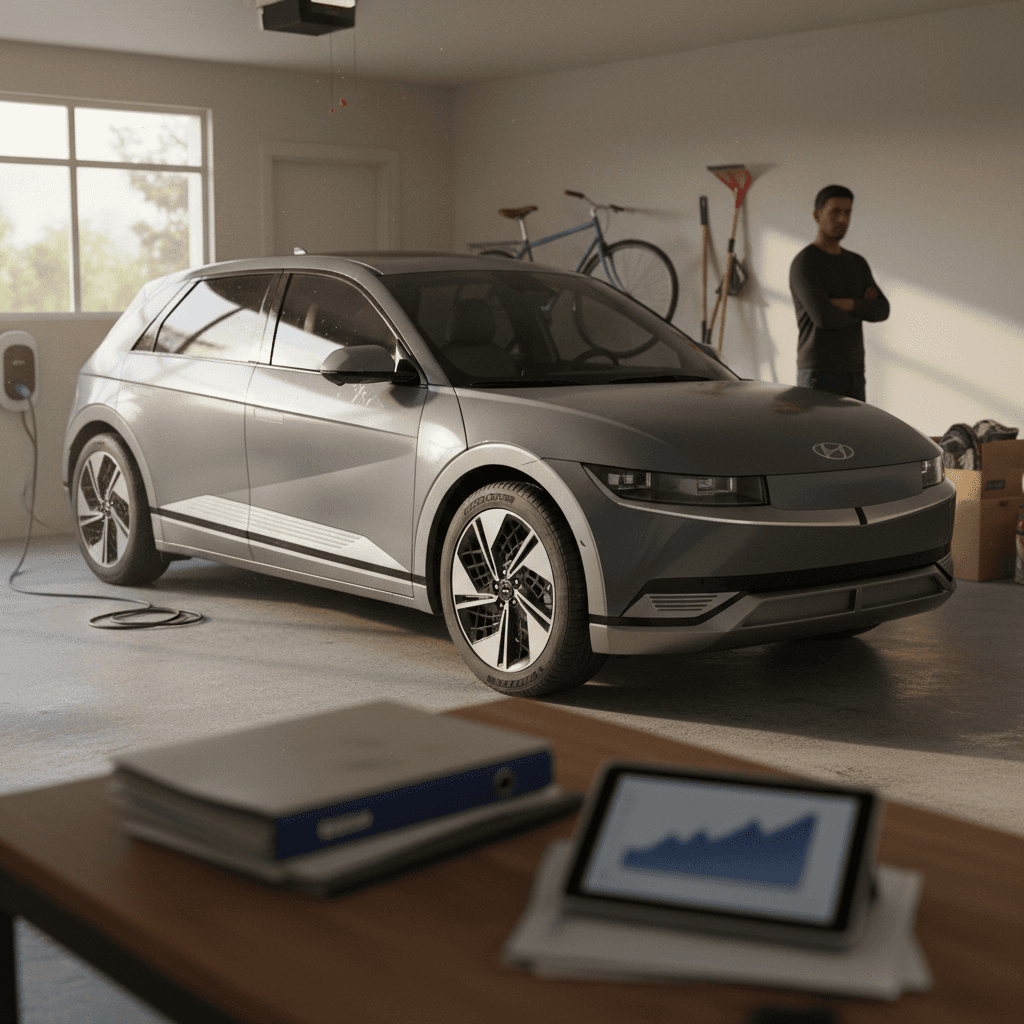
If you’ve spent any time near an EV charger lately, you’ve seen one: the Hyundai IONIQ 5, all sharp creases and pixelated taillights, looking like a concept car that somehow escaped the auto show. It’s one of the most talked‑about electric crossovers on the road, and if you’re weighing a Hyundai IONIQ 5, knowing the real‑world pros and cons is the difference between “dream car” and “why did I buy this?”
Models Covered
Why the Hyundai IONIQ 5 Is Such a Big Deal
Launched for the 2022 model year, the IONIQ 5 rides on Hyundai’s dedicated E‑GMP EV platform with an 800‑volt battery architecture, technology usually reserved for six‑figure German badges. That gives it ultra‑fast DC charging, big‑battery range, and a flat floor with SUV‑like space. Add retro‑future styling and a surprisingly low used price, and you’ve got a car that’s pulling shoppers out of Teslas, Subarus, and family crossovers alike.
Hyundai IONIQ 5 At a Glance (U.S. Models)
Quick Take: IONIQ 5 Key Pros and Cons
Hyundai IONIQ 5 Pros
- Striking design that still turns heads and doesn’t look like anything else in the Costco parking lot.
- Spacious, lounge‑like interior with sliding rear seats and a flat floor.
- Strong range (especially RWD Long Range) and truly ultra‑fast DC charging.
- Vehicle‑to‑load (V2L) power outlet for camping, tailgating, and backup power.
- Excellent safety and driver‑assist tech, plus a 5‑star safety story.
- Used prices and aggressive new discounts make it a value play in 2026.
Hyundai IONIQ 5 Cons
- Rear visibility is compromised by the design; relies heavily on cameras and sensors.
- Ride quality can feel busy or firm on 20‑inch wheels and rough pavement.
- Highway and winter range drops more than some shoppers expect.
- Early build years have scattered reports of software glitches and some recall work.
- The sloping rear roof and shallow cargo floor can limit bulky cargo versus boxier SUVs.
- Hyundai’s EV dealer experience and parts pipeline can feel uneven versus legacy models.
Pro: Standout Design and Lounge-Like Comfort
The IONIQ 5 doesn’t just look different; it feels different to sit in. The long 118‑inch wheelbase gives it more legroom than many gasoline compact SUVs, and the completely flat floor makes both rows feel more like a modern living room than a traditional car. In the front, the floating center console and twin 12.3‑inch screens emphasize the EV‑native packaging, not a gas car retrofitted with batteries.
Interior Comfort: Where the IONIQ 5 Shines
Space and design that actually change how you use the car day to day
Big-Car Space in a Mid-Size Footprint
The IONIQ 5 is about the length of a typical compact SUV, but its long wheelbase and flat floor give you nearly midsize‑SUV legroom in both rows.
Relaxed Seating and Sliding Rear Bench
Higher trims offer relaxation seats with leg rests, and all models have a rear bench that slides fore and aft to trade legroom for cargo space.
Calm, Airy Cabin
Optional panoramic glass, light‑colored materials, and a minimal dash layout create a bright, airy feel that’s especially appreciated on long drives.
Seat Comfort Tip
Pro: Strong Range and Ultra-Fast Charging
On paper and in practice, range and charging are two of the Hyundai IONIQ 5’s strongest cards. Most U.S. Long Range RWD trims land in the low‑300‑mile EPA range, with AWD models a bit lower. What really separates the IONIQ 5 from many rivals, though, is its 800‑volt architecture, which allows it to gulp power from high‑output DC fast chargers far quicker than many similarly priced EVs.
Hyundai IONIQ 5 Range & Charging Snapshot (Typical U.S. Specs)
Approximate figures; exact range and times depend on year, trim, wheels, temperature, and driving style.
| Configuration | Battery | EPA Range (approx.) | DC Fast Charge (10–80%) | Max DC Power |
|---|---|---|---|---|
| Standard Range RWD | ~58 kWh | ~220 mi | ~18–20 min on 250–350 kW | Up to ~200+ kW |
| Long Range RWD | ~77–84 kWh | ~300+ mi | ~18–20 min on 250–350 kW | Up to ~200+ kW |
| Long Range AWD | ~77–84 kWh | ~260–270 mi | ~18–20 min on 250–350 kW | Up to ~200+ kW |
Always check window sticker or owner’s manual for your specific model’s official numbers.
NACS and Supercharger Access
For daily life, that means you can add a meaningful chunk of highway range in the time it takes to use the restroom and grab coffee. It also means that, on road trips, the IONIQ 5 behaves less like an “early adopter” science project and more like a competent long‑distance machine, as long as you respect its highway efficiency and temperature sensitivities, which we’ll get to in the cons.
Pro: Family-Friendly Practicality and Useful Tech
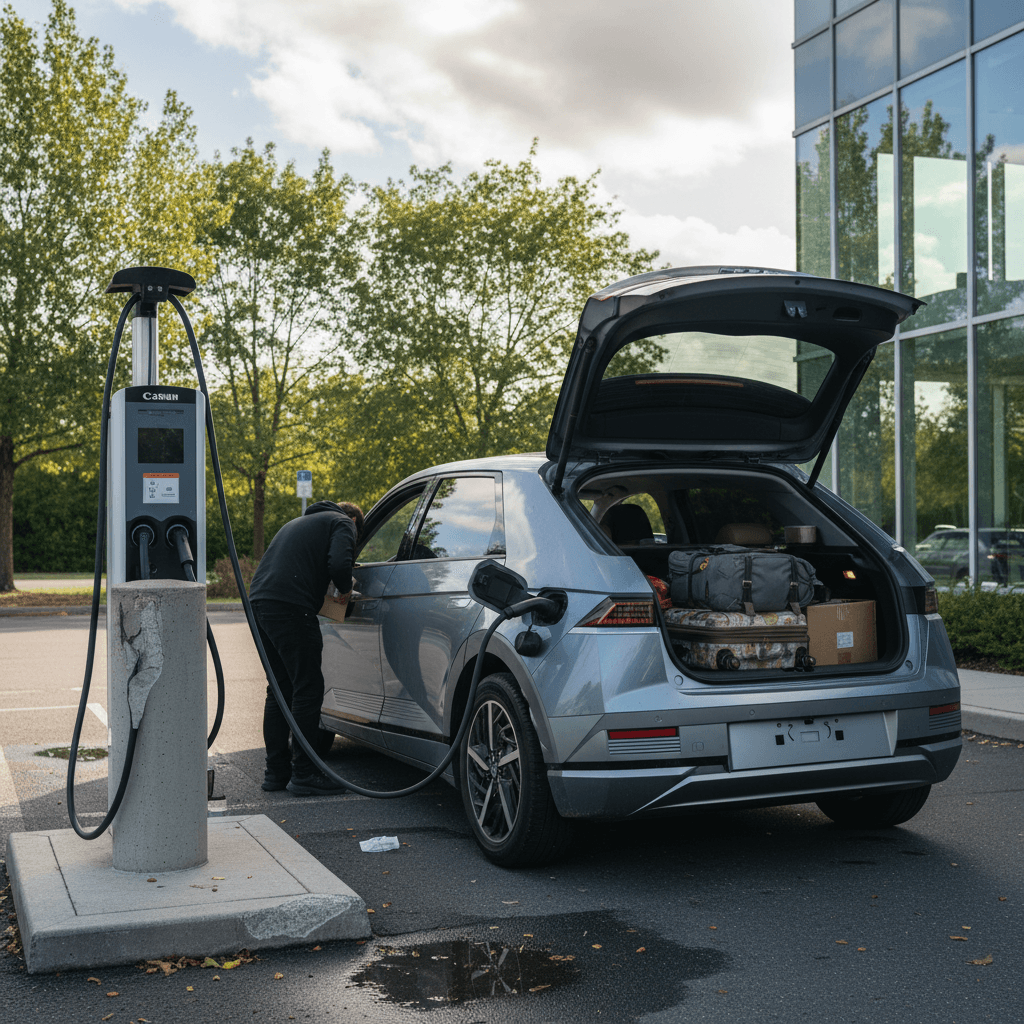
On school‑run duty, the Hyundai IONIQ 5 plays the part of normal family crossover with eerie ease. The rear doors open wide, the floor is low and flat, and the back seat is adult‑sized even with two child seats installed. Hyundai also stuffs in driver aids and clever EV‑only features that owners actually use, like vehicle‑to‑load power outlets for camping and outages.
Everyday Features That Make the IONIQ 5 Easy to Live With
Little things that matter when this is your main family car
Strong Safety & Driver Assist
Hyundai’s suite of Highway Driving Assist, lane‑centering, blind‑spot monitoring, and rear cross‑traffic alerts makes the IONIQ 5 a low‑stress commuter when properly calibrated and used.
Vehicle-to-Load (V2L) Power
With up to around 3.6 kW available from its V2L system, the IONIQ 5 can run tools, camping gear, or home essentials during an outage, one of the most useful EV party tricks available today.
Simple, Modern Infotainment
The twin 12.3‑inch screens, wireless phone connectivity in many trims, and physical climate controls strike a good balance between tech and usability, especially after a short learning curve.
Practical Pro
Pro: Pricing, Incentives, and Used-Market Value
The IONIQ 5 launched as a premium‑priced EV, but the market has moved. Hyundai has chopped pricing on new models and frequently layers on cash incentives. On the used side, early‑build 2022 and 2023 IONIQ 5s now sit in a sweet spot: modern range and charging, but often priced like well‑equipped gasoline crossovers.
2026 Pricing Context
For buyers, that’s good news. You’re getting a visually distinctive, technically advanced EV that now undercuts many rivals on a monthly‑payment basis, especially if you finance smartly or buy used. On a platform like Recharged, you also get transparency around battery health, fair market pricing, and ownership costs, which matter more for EVs than for traditional cars.
Con: Rear Visibility and Everyday Ergonomics
The IONIQ 5’s design makes a statement, but some of that drama comes at a cost once you’re behind the wheel. The sloped rear hatch and thick C‑pillars mean rearward visibility is mediocre. You’ll lean heavily on the backup camera and blind‑spot monitoring in tight parking lots, and even then it can feel like piloting modern architecture more than a glassy family wagon.
- The thick D‑pillars and high beltline shrink the rear window in your mirror.
- The low hood is great, but the square fenders can make it hard to place the corners until you get used to the footprint.
- The steering wheel buttons and column stalks are modern but busy; it’s easy to bump a mode you didn’t mean to change in the first few weeks.
Test-Drive Checklist
Con: Ride Comfort and Noise
Here’s where expectations matter. The IONIQ 5 looks like a lounge and pulls like a big battery, so some shoppers expect it to ride like a cloud. It doesn’t. On the smaller 19‑inch wheels, ride comfort is generally good: composed, European‑firm. But on 20‑inch wheels and rough pavement, the car can feel busy and a little thumpy, especially over expansion joints and patchwork asphalt.
When the Ride Feels Great
- On smooth suburban roads and highways, the IONIQ 5 feels planted and calm.
- The low center of gravity and wide stance make it stable in crosswinds and highway curves.
- Body roll is well controlled for an upright crossover; it doesn’t flop around like some taller SUVs.
When the Ride Can Annoy You
- On frost‑heaved northern roads or broken city streets, sharp impacts are noticeable in the cabin.
- The combination of 20‑inch wheels and low‑profile tires does the ride no favors.
- Road roar from coarse pavement can be higher than some expect in an EV, particularly from the rear.
Wheel & Tire Tip
Con: Range Variance and Winter Performance
The IONIQ 5’s rated range is solid, but as with any EV, real‑world numbers depend heavily on speed, temperature, and driving style. Owners report that high‑speed highway driving and cold weather can both take meaningful bites out of the displayed range, particularly on the AWD Long Range models with bigger wheels.
Range Reality: What to Expect Day to Day
Plan on a Cushion
If your Long Range RWD IONIQ 5 is rated around 300 miles, plan trips assuming <strong>220–250 miles</strong> at 70–75 mph, and less in winter. That’s still very usable, but don’t budget for the brochure number.
Cold Weather Hits Harder
In freezing temperatures with cabin heat on, it’s normal to see <strong>20–35% lower effective range</strong>. Preconditioning the cabin while plugged in and using seat and wheel heaters helps.
Regeneration Is Your Friend
The IONIQ 5’s multi‑level regenerative braking lets you recapture energy in stop‑and‑go driving. Learn the different regen modes; in city use, they’re effectively “free miles.”
DC Fast Habits Matter
Repeatedly charging from very low to 100% at max‑speed DC chargers isn’t ideal for any EV battery. For battery health, most owners live in the <strong>10–80% window</strong>, topping to 100% only when needed for trips.
Winter Range Warning
Con: Reliability and Ownership Quirks
The IONIQ 5 has not been a disaster, but it also hasn’t been flawless. Early builds saw a few recalls and software‑related gremlins: infotainment freezes, random warning lights, charging handshake hiccups at certain public stations. Most issues are fixable via dealer software updates or component replacements, but they can sour the experience if your closest EV‑savvy Hyundai dealer is far away.
- Some owners report intermittent DC fast‑charging issues at specific networks; others report years of trouble‑free use. The hardware is capable, but the public‑charging ecosystem is still uneven.
- Over‑the‑air update capability exists but can feel slower and less frequent than what Tesla drivers are used to.
- Like many newer EVs, certain parts can have long lead times if something unusual fails, simply because volume is still ramping up.
Warranty Context
Is a Used Hyundai IONIQ 5 a Good Buy?
For many shoppers, especially in the U.S., a used Hyundai IONIQ 5 is one of the smartest ways to jump into EV ownership right now. You’re sidestepping the steepest depreciation while keeping modern range, charging, and safety. And unlike some first‑generation EVs, the IONIQ 5 doesn’t feel like a compromised experiment; it feels like a fully realized family car that just happens to be electric.
Where a Used IONIQ 5 Shines
- You get the distinctive design and 800‑V fast‑charging hardware of newer models at a discount.
- Many off‑lease cars have low mileage and detailed dealer service histories.
- Battery warranties are still in effect on most 2022–2024 examples, reducing downside risk.
What to Watch For
- Software update history: make sure major campaigns and recalls were completed.
- Battery health and fast‑charge behavior: check for unexpectedly slow charging or big range swings.
- Tire wear: torque and weight are hard on cheap OE tires; uneven wear can hint at alignment or suspension issues.
How Recharged Helps
How to Shop Smart for a Used IONIQ 5
5 Essential Checks Before You Buy an IONIQ 5
1. Verify Battery Health and Range
Ask for a recent <strong>battery health report</strong> or have one performed. Compare the displayed full‑charge range with what’s typical for that trim and climate.
2. Test DC Fast Charging
If possible, do a short session at a reputable DC fast charger. You’re looking for <strong>stable charging behavior</strong>, no repeated dropouts, and charge speeds that are in the expected ballpark.
3. Inspect Tires and Brakes
Check for uneven tire wear and listen for brake noises. EVs are heavy; cheap or neglected tires can torpedo ride quality and safety.
4. Confirm Software Updates and Recalls
Ask for service records or a dealer printout showing completed <strong>software updates and recalls</strong>. You want the car on the latest calibration for charging, driver‑assist, and infotainment.
5. Live With the Ergonomics
During the test drive, pay attention to <strong>seat comfort, rear visibility, and control layout</strong>. These are the things you can’t fix after you sign.
Buying through a digital retailer like Recharged means you can handle financing, trade‑in, and paperwork online, then have the car delivered to your driveway. If you want to touch and feel first, you can also visit the Recharged Experience Center in Richmond, VA, and compare several EVs, including the IONIQ 5, back to back.
Hyundai IONIQ 5 Pros and Cons: FAQ
Frequently Asked Questions About Hyundai IONIQ 5 Pros and Cons
Bottom Line: Who the IONIQ 5 Is Right For
The Hyundai IONIQ 5 is one of the rare EVs that still feels genuinely fresh years after launch. Its pros, striking design, lounge‑like interior space, strong range, and ultra‑fast charging, are substantial. Its cons, visibility quirks, a sometimes busy ride, winter range loss, and early‑build software hiccups, are real but manageable if you go in with eyes open.
If you want a family‑friendly EV that doesn’t look like every other tall appliance, and you’re willing to be thoughtful about wheel choice, battery size, and charging habits, the IONIQ 5 belongs at the top of your list, especially used, where it’s now one of the sharper values in the segment. And if you’d like help decoding battery reports, comparing trims, or arranging delivery, Recharged can guide you from first search to plug‑in day without the usual EV guesswork.