You’ve decided it’s time to sell your used Tesla Model 3, maybe you’re eyeing a newer Long Range, a Performance, or jumping to a different EV entirely. The big question now is simple but loaded: where to sell your used Tesla Model 3 so you don’t leave thousands of dollars on the table.
The Model 3 is still a hot ticket
Why where you sell your Model 3 matters in 2026
Model 3 values have bounced around over the last few years as Tesla adjusted new‑car pricing and the broader EV market cooled, then stabilized. On average, a Model 3 tends to lose roughly 45–55% of its value by year three when you account for the price cuts of 2023–2024 and more normal depreciation returning in 2025–2026. Where you sell it can swing your real‑world payout by several thousand dollars, especially on a $25,000–$35,000 used Tesla.
What’s at stake when you sell a used Model 3
Quick comparison: where to sell a used Tesla Model 3
Main ways to sell a used Tesla Model 3
At a glance: what you gain and give up with each route.
| Option | Typical Payout | Speed | Effort | Best For |
|---|---|---|---|---|
| Tesla trade‑in | Lowest to mid | Fastest (same day) | Very low | Upgrading to another Tesla, want zero hassle |
| CarMax/Carvana/etc. | Mid | Fast (1–3 days) | Low | Quick sale without haggling, open to any brand |
| EV marketplace (Recharged) | Mid to highest | Moderate (days–weeks) | Moderate | Maximizing value with EV‑savvy buyers and strong battery proof |
| Private sale | Highest potential | Slowest (weeks+) | High | Squeezing out every dollar, comfortable handling buyers and paperwork |
Your best choice depends on how you balance price, speed, and effort.
Start with 3–4 real offers
Option 1: Tesla trade‑in – fastest, but not always best price
If you’re buying another Tesla, a Tesla trade‑in is the path of least resistance. You upload photos, your VIN, and a few details online; Tesla gives you an offer that’s usually valid for a short window; you hand over the keys when you pick up the new car. Sales tax rules in many states also mean you only pay tax on the price difference, which can partially offset a lower offer.
Pros of trading in to Tesla
- One‑stop transaction: Buy and sell in a single visit, no extra trips.
- Tax credit benefit: In many states, trade‑in value reduces the taxable price of your new Tesla.
- No dealing with buyers: Tesla takes the car as‑is within their condition guidelines.
Cons of trading in to Tesla
- Often the lowest offer: Owners routinely report thousands less than private or marketplace sales.
- Limited leverage: Tesla doesn’t really negotiate; the number is the number.
- Only useful if you’re buying a Tesla: No straight "buy my Model 3" option without a new‑vehicle purchase.
Watch the offer expiration
Option 2: General car‑buying sites (CarMax, Carvana, etc.)
The big used‑car retailers, CarMax, Carvana, and similar online buyers, have become the default answer when people wonder where to sell any used car, including a Tesla Model 3. You plug in your VIN and mileage, upload photos, and get an instant or near‑instant offer. If you accept, a local store or mobile team inspects the car and cuts a check.
How CarMax, Carvana, and others stack up for a used Model 3
Think of them as the middle lane between low‑stress trade‑ins and higher‑dollar EV marketplaces or private sales.
CarMax & physical retailers
Pros: In‑person appraisal, immediate payment, simple paperwork. Many owners see offers similar to KBB trade‑in values.
Cons: They may be cautious about EVs or battery condition they can’t easily verify, which can translate into conservative offers.
Carvana & online buyers
Pros: Home pickup, quick online process, firm offers if your description matches reality.
Cons: If inspection uncovers issues or they’re nervous about EV resale in your region, expect last‑minute adjustments or lowball revisions.
Where they shine
These services hit a useful sweet spot when you want better money than a typical dealer trade‑in but don’t want to photograph, list, and show the car yourself.
Use them as leverage
Option 3: EV‑focused marketplaces like Recharged
If you want top‑tier money without shouldering all the work of a private sale, an EV‑specific marketplace is often the sweet spot, especially for a techy, battery‑sensitive car like the Model 3. This is where platforms like Recharged come in.
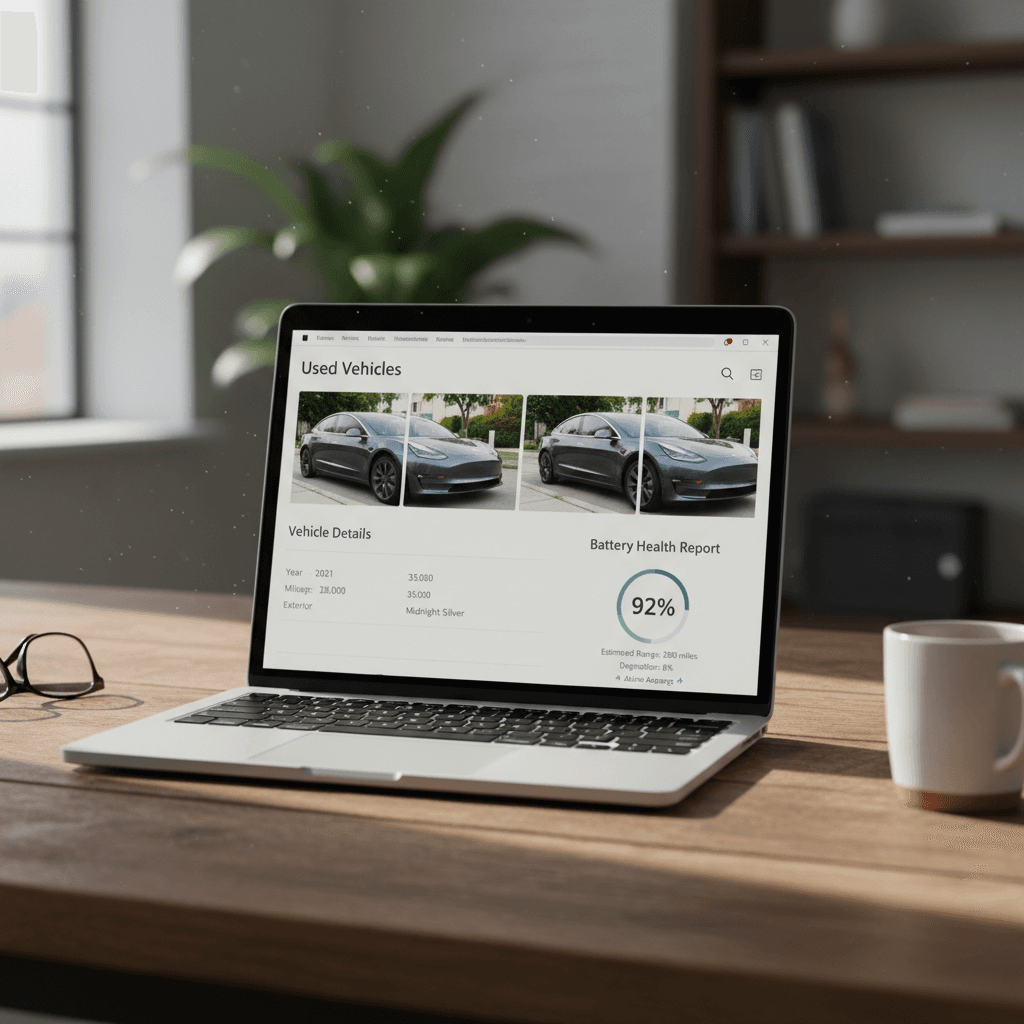
Recharged is built specifically around used electric vehicles. Every vehicle includes a Recharged Score Report with independently verified battery health, fair‑market pricing analysis, and support from EV specialists who live and breathe this stuff. That changes the game when you’re trying to convince a hesitant buyer that your 2019 Model 3 is still a smart bet.
Why EV marketplaces can pay more
- Battery‑first storytelling: Instead of generic “good condition” notes, buyers see concrete state‑of‑health, projected range, and how your car compares to other Model 3s.
- EV‑educated audience: Shoppers already know what a heat pump, LFP pack, or FSD transfer means, and what it’s worth.
- Fair market pricing tools: Pricing engines tuned specifically for EVs, not lumped in with gas cars.
How Recharged helps you sell
- Multiple ways to sell: Trade‑in, instant offer, or consignment‑style listing depending on your timeline and price goals.
- Recharged Score Report: Professional battery diagnostics plus transparent pricing make your listing stand out.
- Nationwide reach: Online retail plus a physical Experience Center in Richmond, VA means your buyer doesn’t have to live down the block.
When Recharged is a great fit
Ready to find your next EV?
Browse VehiclesOption 4: Private sale – maximum dollars, more work
A well‑managed private sale is still the high‑water mark for what you can get for a used Tesla Model 3. You set the price, you control the photos and description, and you decide who shows up for a test drive. Done right, you can beat trade‑in and instant‑offer numbers by $2,000–$5,000 or more, especially on low‑mileage or well‑optioned cars.
What a private sale of your Model 3 really demands
1. Good photos and honest description
Buyers expect detailed interior, exterior, wheel, and screen shots. Highlight both the good (software features, range) and the honest flaws (curb rash, chips, cosmetic dings).
2. Proof of battery health
Serious EV shoppers want more than a guess at range. Screenshots of the Tesla app help; a third‑party battery health report or a Recharged Score‑style diagnostic goes even further.
3. Time to field messages
You’ll answer questions about charging, software, warranty, and range. Expect tire‑kickers along with serious buyers.
4. Comfort with test drives
You’re responsible for vetting buyers, confirming insurance, and choosing safe, neutral meeting spots for drives and inspections.
5. Paperwork and payoff details
If you still have a loan, you’ll need to coordinate payoff with your lender. You’ll also handle title transfer, bill of sale, and local DMV requirements.
Safety first with private buyers
How battery health drives what your Model 3 is worth
Unlike a gas sedan where buyers mainly worry about mileage and service records, a used Tesla lives or dies on battery health. Two Model 3s with the same year and mileage can have wildly different real‑world ranges depending on how they’ve been charged and driven. That’s where you either win big, or get hammered with lowball offers.
What smart buyers look for on a used Model 3
If you can document these, you’ll justify a stronger asking price.
State of health (SoH)
Independent diagnostics or a detailed battery report that estimates usable capacity versus original. This is the gold standard for serious EV shoppers.
Real‑world range
Screen photos of 80–100% charge estimates and your typical highway efficiency. This turns abstract numbers into something buyers can picture on their commute.
Charging history
Evidence of mostly home Level 2 charging and only occasional DC fast charging suggests gentler battery wear, which makes your listing more attractive.
How Recharged’s battery report helps
Pricing strategy: what your used Model 3 is really worth
Pricing a used Tesla Model 3 in 2026 is trickier than setting a number on a used Accord. You’re dealing with past price cuts, rapidly changing EV incentives, and battery tech that evolves every few years. Still, there are some practical guardrails you can use to avoid underselling, or sitting on an overpriced listing for months.
Illustrative 2026 pricing ranges for used Tesla Model 3
These are ballpark owner‑to‑owner asking ranges in the U.S. for clean‑title cars with average mileage. Your local market, options, and battery health will shift the numbers.
| Model Year & Trim (example) | Approx. Mileage | Rough Private‑Party Range | What lower trade‑in offers might look like |
|---|---|---|---|
| 2020 Long Range AWD | 45,000–60,000 | $24,000–$28,000 | $20,000–$23,000 |
| 2021 Standard Range / RWD | 30,000–45,000 | $23,000–$26,000 | $19,000–$22,000 |
| 2022 Long Range AWD | 25,000–40,000 | $27,000–$32,000 | $23,000–$27,000 |
| 2018–2019 Early Long Range | 60,000–90,000 | $17,000–$22,000 | $13,000–$17,000 |
Always check up‑to‑the‑minute comps before you list; EV prices move faster than traditional gas cars.
Don’t price from original MSRP
5‑step checklist before you list your Model 3
Pre‑listing checklist: make your Model 3 irresistible
1. Pull real offers from multiple buyers
Get written quotes from Tesla, at least one national buyer (CarMax, Carvana, etc.), and, if you’re considering an EV marketplace, an instant offer or consignment estimate there too. That gives you your pricing floor.
2. Gather your documentation
Have your registration, title or payoff info, service history (even for simple things like tires and alignments), recall records, and any warranty paperwork ready. Organized sellers feel more trustworthy to buyers.
3. Document battery health and range
Take clear photos of your charge screen at 80–100%, note recent road‑trip efficiency, and, if possible, get a professional battery health report (or list through a platform like Recharged that provides one).
4. Clean and lightly recondition
A professional detail isn’t mandatory, but a clean interior, washed exterior, and touched‑up curb rash or small repairs can easily lift buyer perception, and the price they’re willing to pay.
5. Choose your selling lane
Decide whether you care more about <strong>speed</strong> (Tesla trade‑in or national buyer), <strong>money</strong> (marketplace or private sale), or a balance. Once you know that, the right venue becomes obvious.
Which selling option is right for you?
Pick your path based on who you are as a seller
"I just want this done"
You’re already ordering another Tesla or EV.
You don’t want to meet strangers or handle paperwork.
You’re okay sacrificing some dollars for speed.
Best choice: Start with Tesla trade‑in and a national buyer quote. Take the stronger of the two and be done.
"I want a fair price with minimal drama"
You’d like more than a dealer trade‑in but don’t want to run a mini‑dealership from your driveway.
You’re willing to wait days or a few weeks for the right buyer.
Best choice: List with an EV‑focused marketplace like Recharged that can showcase battery health and manage buyer interest.
"I’ll hustle for top dollar"
You’re comfortable screening buyers, arranging test drives, and managing paperwork.
You’re willing to wait weeks for the right offer.
You want every last dollar for your down payment on the next car.
Best choice: Price your car using marketplace comps and sell privately, ideally with a third‑party battery report to close skeptical buyers.
Selling a used Tesla Model 3 in 2026 isn’t as simple as typing a number into a pricing tool and hoping for the best. Where you sell it, Tesla trade‑in, big national buyer, EV‑specialist marketplace like Recharged, or private sale, changes both your payout and your stress level. Start by collecting a few real offers, get your paperwork and battery story in order, then choose the lane that fits your personality and timeline. With the right strategy, your Model 3 can fund a big chunk of your next EV, and you won’t be left wondering if you sold it short.