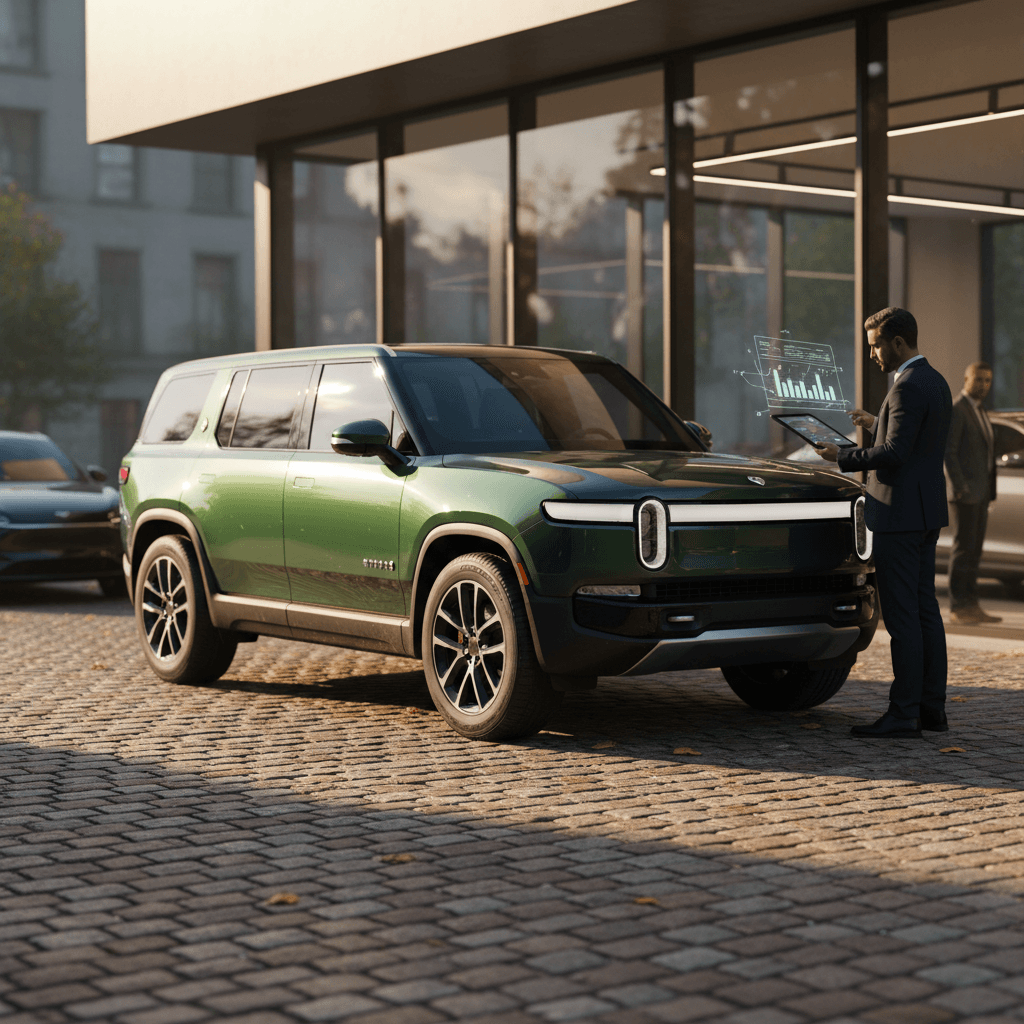
If you’re wondering where to sell a used Rivian R1S, you’re not alone. The full‑size electric SUV has a loyal following and a young, evolving used market, which means your exit strategy matters. The right channel can mean thousands of dollars more in your pocket; the wrong one can leave money on the table or drag out the process for weeks.
The short story
Why R1S resale value matters in 2026
Rivian is still a young brand, and the R1S used market is thin compared with mainstream SUVs. In Q1 2025, Rivian sold just over 5,300 R1S units in the U.S., and those early trucks are now cycling into the secondary market. That limited supply has helped used prices stay firmer than many other EVs, but sentiment is changing as new nameplates and Rivian’s own next‑generation models approach.
Rivian R1S used-market snapshot
For you as a seller, that means two things: buyers still see the R1S as a desirable, premium EV, but they’re also more price‑sensitive and more cautious about battery health and long‑term support. Where you sell, and how you present the vehicle, directly affects how much of that demand you’re able to capture.
Quick answer: Best places to sell a used Rivian R1S
5 main ways to sell a used Rivian R1S
From fastest exit to highest potential price
Rivian trade‑in / direct
Best for: Owners ordering another Rivian.
Pros: Simple, handles payoff, possible incentives.
Cons: Often not the highest value vs. other channels.
Online instant‑offer buyers
Best for: Fast, no‑hassle sale.
Pros: Quick offers, home pickup.
Cons: Conservative pricing; Rivian expertise varies.
Franchise & independent dealers
Best for: Convenience while buying another vehicle.
Pros: Sales tax advantage on trade‑ins in many states.
Cons: Many dealers still treat EVs as risky inventory.
Private‑party sale
Best for: Maximizing price when you’re willing to do the legwork.
Pros: Highest upside if you market it well.
Cons: Time‑consuming; you handle showings, paperwork, and scams.
EV‑specialist marketplaces
Best for: Balancing price and convenience.
Pros: EV‑savvy buyers, battery health validation, guided process.
Cons: Fewer players; you’ll want to pick a partner with real Rivian expertise.
Hybrid paths
Many owners start by getting instant offers from Rivian and online buyers, then list with an EV specialist or privately if those numbers look light.
Smart move
Option 1: Sell or trade your R1S to Rivian
If you’re ordering another Rivian, the path of least resistance is a trade‑in directly through Rivian. On Rivian’s site you can submit your VIN, mileage, and photos to get an estimated value. Rivian typically partners with third‑party wholesalers and auctions behind the scenes, but from your perspective, the transaction feels similar to trading in at a dealership.
- Request a trade‑in estimate in your Rivian account or through your guide.
- Rivian or its partner values your vehicle based on condition, miles, and current Rivian auction data.
- If you accept, Rivian applies your equity against the new R1S or R1T at delivery and handles payoff and title work.
- Your old R1S is collected when the new one is dropped off, simplifying logistics.
Watch the fine print
The upside here is simplicity and, in some states, a sales‑tax advantage if your trade‑in reduces the taxable amount on the new vehicle. The downside: you’re unlikely to get the absolute top dollar for an R1S in high demand, because Rivian and its partners still have to leave room for remarketing risk and profit.
Option 2: Online car-buyers like Carvana, Vroom & others
National online buyers such as Carvana, Vroom, CarMax, Shift and others will usually make a no‑obligation instant offer on a Rivian R1S. They’ve grown more comfortable with EVs, and Rivian inventory is now common enough that most have some auction and retail history to work from.
Online instant‑offer buyers: pros and cons for an R1S
How the big online players tend to treat late‑model EVs like the Rivian R1S.
| Channel | Speed to sell | Typical price vs. private sale | Rivian/EV expertise | Effort level |
|---|---|---|---|---|
| Carvana / Vroom | Fast (days) | Lower | Moderate | Very low |
| CarMax | Fast (same day) | Lower‑mid | Moderate | Low |
| Regional online buyers | Fast‑medium | Mid | Varies | Low‑medium |
Specific policies vary by company and location, but this captures the general trade‑offs.
Reality check on pricing
The typical play is to lock in several instant offers (they’re usually good for 7 days), then decide whether the convenience is worth the spread versus selling through a specialist or privately. If the difference is only a couple thousand dollars and you’re carrying a big monthly payment, speed sometimes wins.
Option 3: Traditional dealers and auctions
You can also trade your R1S to a franchise or independent dealer while buying a different brand. A handful of luxury and off‑road‑oriented stores are leaning into Rivian on trade, but many mainstream retailers still see a big‑ticket EV SUV as risky used inventory.
When dealers make sense
- Sales‑tax savings: In many states, you only pay tax on the price difference between the new vehicle and your trade.
- One‑stop transaction: Especially helpful if you still owe money on your R1S.
- Strong local demand: In some metro areas with high EV adoption, certain dealers know they can retail a Rivian quickly.
Where they fall short
- Limited EV appetite: Many stores will simply wholesale the R1S at auction, which caps how much they’ll pay you.
- Knowledge gap: Sales managers who don’t understand Rivian trims, battery packs, and software may undervalue the truck.
- Dynamic market: Auction lanes can swing quickly; if values soften the week your vehicle runs, that risk is quietly priced into your offer.
Don’t let them price it like a generic EV
Option 4: Private‑party sale
A private‑party sale is still the classic way to maximize price, especially in markets where Rivian stores and service coverage are thin and local buyers don’t have many choices. You capture the retail value that a dealer or online buyer would normally keep.
- Create a detailed listing with accurate specs, options, and high‑quality photos.
- Highlight battery health, warranty status, and any software upgrades.
- Be ready to educate buyers on charging, service options, and ownership costs.
- Screen inquiries carefully and meet in secure, public locations, ideally at a bank or DMV office.
- Use secure payment methods (wire transfer or cashier’s check verified with the issuing bank).
Know your buyer profile
The trade‑off, of course, is time and effort. You’re effectively doing what a retailer or marketplace would do for you, marketing the vehicle, answering questions, vetting buyers, and managing paperwork.
Option 5: EV‑specialist marketplaces like Recharged
EV‑focused marketplaces aim to sit between private sale pricing and trade‑in convenience. Rather than treating the R1S as just another VIN, these platforms lean on battery diagnostics, EV‑specific pricing, and targeted marketing to match your SUV with buyers who understand what they’re shopping.
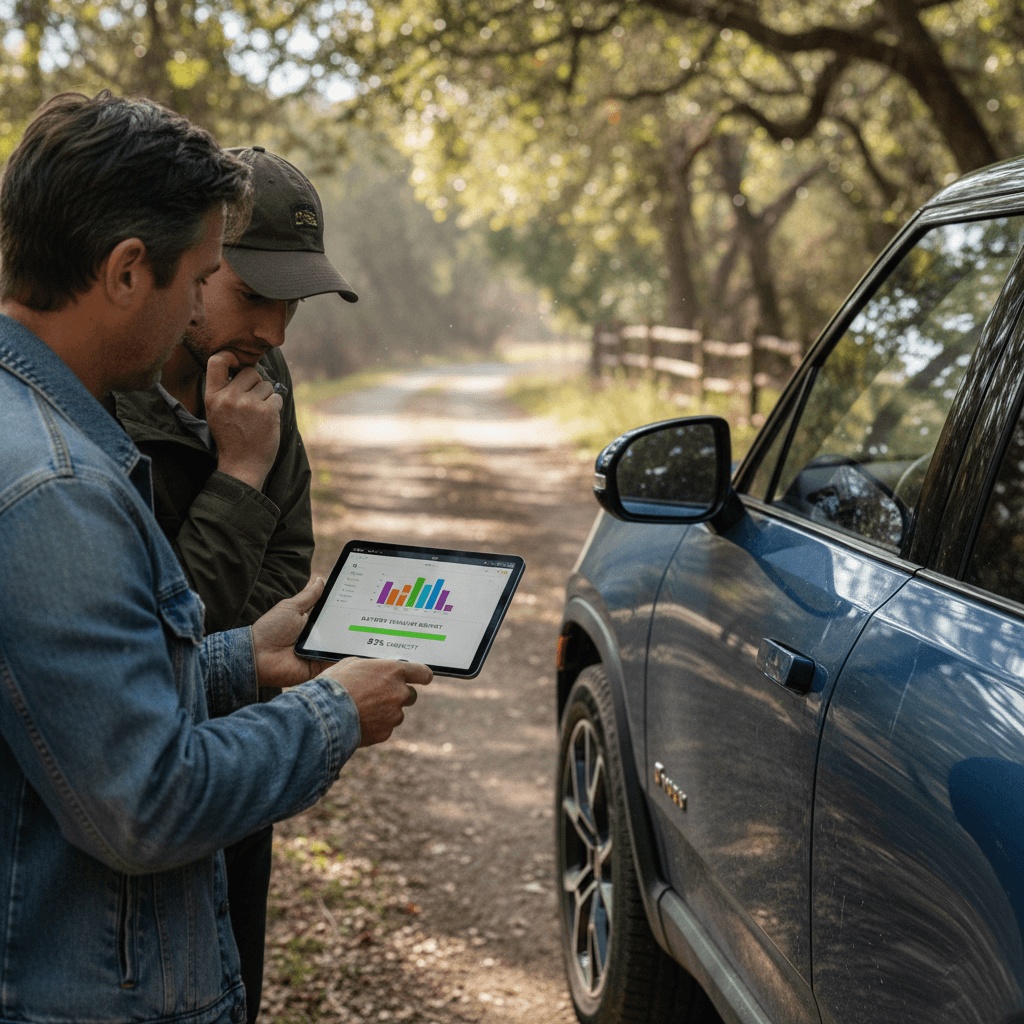
How an EV‑specialist marketplace can help sell your R1S
Where Recharged fits in
Verified battery health
EV‑specific pricing
Guided selling experience
On Recharged, you can sell your R1S outright, get an instant offer, or use consignment to tap into nationwide EV demand while professionals handle photos, listings, and negotiations. If you’re moving into another EV, you can also explore financing and trade‑in options through the same digital experience, or visit the Recharged Experience Center in Richmond, VA if you prefer to talk details in person.
Why this matters for Rivian sellers
Ready to find your next EV?
Browse VehiclesPricing strategy: What your used R1S is really worth
Before you decide where to sell, you need a grounded view of what your Rivian R1S should bring in today’s market. As of early 2026, appraisal tools show mid‑$60,000s to low‑$90,000s for late‑model R1S examples, depending on year, miles, and configuration, with typical retail listings around the low‑$70,000s for 2025 models in good condition.
Typical pricing bands for used Rivian R1S (2023–2025)
Illustrative ranges assuming clean history. Your actual value will depend on local demand, options, and battery health.
| Model year | Mileage range | Condition example | Wholesale / trade‑in band | Private‑party / marketplace ask |
|---|---|---|---|---|
| 2025 | <15,000 mi | One‑owner, clean, under warranty | High‑$60ks to low‑$70ks | Low‑$70ks to low‑$80ks |
| 2024 | 15,000–30,000 mi | Minor wear, full records | Mid‑$60ks to high‑$60ks | High‑$60ks to mid‑$70ks |
| 2023 | 30,000–45,000 mi | Early build, some wear | High‑$50ks to low‑$60ks | Low‑$60ks to high‑$60ks |
Use this as a starting framework, then refine with real offers and battery diagnostics.
Anchor to a realistic spread
This is also where battery health and features, like the Large Pack, Quad‑Motor, and certain color/trim combinations, can move the needle several thousand dollars either way. A platform like Recharged that can quantify those variables with a Recharged Score report gives you more leverage no matter where you ultimately close the deal.
Prep checklist: Get your R1S ready to sell
10 steps to prep your Rivian R1S for sale
1. Pull your Rivian service and software history
Download or request service records and note major software updates. Buyers want to see that campaigns, recalls, and recommended work have been handled.
2. Document battery and charging behavior
Collect recent range screenshots, DC fast‑charging history, and, ideally, a third‑party or Recharged battery health report to show how the pack is aging.
3. Fix easy visual issues
Touch up curb rash where reasonable, replace missing trim caps, address obvious dings, and clean interior scuffs that distract buyers from the truck’s strengths.
4. Get a professional detail
A thorough interior/exterior detail, plus clean frunk and trunk, goes a long way. EV shoppers in this price bracket expect a vehicle that looks “garage‑kept.”
5. Photograph like a retailer
Shoot 20–30 high‑res photos: three‑quarter angles, interior, touchscreen, tires, underbody, and any accessories. Good photos boost offers everywhere from Rivian trade‑in to Recharged consignment.
6. Gather both keys and accessories
Make sure you have key fobs, gear tunnel accessories (for R1T), charging cables, floor mats, and any optional equipment. Missing items hurt value or spook buyers.
7. Clear personal data and profiles
Sign out of accounts, remove navigation history, and reset personal profiles while keeping core settings intact so buyers can experience the truck as‑is.
8. Resolve warning lights
If any warnings are lit, get them diagnosed. A documented, resolved issue is far better than an unexplained dash light when a buyer test‑drives or an appraiser inspects it.
9. Price within a tight band
Use an EV‑savvy valuation (Recharged, Rivian trade‑in estimate, appraisal tools) and price your ask within a realistic $2,000–$3,000 band, not $10,000 over the market.
10. Decide your walk‑away number
Before you list or request offers, decide on a firm minimum net number. It keeps negotiations, from Rivian, dealers, or private buyers, from drifting into emotional territory.
Which selling route is right for you?
Choose the best way to sell your R1S
You value speed & simplicity
Get trade‑in estimates from Rivian and at least one local dealer.
Pull instant offers from 2–3 online buyers (Carvana, CarMax, regional players).
If one number clearly leads and meets your minimum, take it and move on.
You want maximum price
Obtain a Recharged Score or similar battery health report to prove pack condition.
Use EV‑aware tools to set a competitive asking price based on your trim and miles.
List with an EV‑specialist marketplace like Recharged or go private‑party; be patient but responsive to serious inquiries.
You’re switching into another EV
Compare total deal economics: trade‑in value + incentives vs. selling your R1S separately.
Ask whether your chosen retailer or Recharged can bundle trade‑in, financing, and purchase to simplify the transition.
Factor in tax implications; in some states, trading in lowers your taxable amount on the next vehicle.
You’re unsure what your R1S is worth
Start with a data‑backed valuation from an EV‑focused source.
Request offers from Rivian and online buyers to establish a pricing floor.
Talk to an EV‑specialist advisor (for example, through Recharged) about realistic retail pricing in your region.
If you’re trying to decide where to sell a used Rivian R1S, think less about brand names and more about fundamentals: who understands EVs, who can verify your battery’s story, and who is actually putting your truck in front of motivated, informed buyers. Direct trade‑in to Rivian or online car‑buyers can be the right move when time is tight, while private‑party and EV‑specialist marketplaces like Recharged tend to reward owners who are willing to trade a bit more effort for a stronger check.
Recharged was built around that middle ground. With Recharged Score battery diagnostics, fair‑market EV pricing, financing, trade‑in support, and a digital‑first selling experience backed by EV specialists, it’s designed to make your R1S sale more transparent and less risky, for you and for the next owner. No matter which route you choose, going in with solid data and a clear strategy will help you exit your Rivian R1S on your own terms.