You live in California, your driveway is full, and your electric car has started to look less like a revolution and more like an asset on four wheels. The question isn’t **if** you can sell a used EV in California, demand is still strong, it’s **where** to sell it so you don’t leave a few thousand dollars on the table.
TL;DR for busy Californians
Why Selling a Used EV in California Is Different
California is still the gravitational center of the U.S. EV universe. New zero‑emission vehicles grabbed close to a third of the state’s new‑car market by late 2025, and the **used EV market has followed suit** as lease returns and early adopters cycle out of their first cars. Buyers here are EV‑savvy: they care about **battery health, DC fast‑charge capability, and software updates** as much as leather seats.
- High awareness: Shoppers know the difference between a healthy pack and a tired one, and they’ll pay accordingly.
- Policy tailwinds: California’s clean‑air rules and local utility rebates keep demand for used EVs artificially buoyant versus other states.
- Dense, regional demand pockets: The Bay Area, LA/OC, and San Diego are thick with buyers; inland markets can be softer and more price‑sensitive.
Watch out for 2026 rule changes
Quick Comparison of Your Selling Options
Where to Sell a Used EV in California
At-a-glance look at your main options: speed, effort, and typical pricing.
| Option | Typical Price vs Private Party | How Fast You Get Paid | Effort Level | Best For | |||||
|---|---|---|---|---|---|---|---|---|---|
| Online instant-offer buyers (CarMax, Carvana, Ever, etc.) | -5% to -15% | 1–3 days | Low | If you value speed and convenience | |||||
| EV‑focused dealers/marketplaces (including Recharged) | Near private-party for desirable cars | 3–7 days | Low–Medium | If you want EV expertise and strong pricing | Traditional dealer trade-in | -10% to -20% | Same day | Low | If you’re buying another car right now |
| Private-party sale (Craigslist, FB Marketplace, EV forums) | +5% to +15% | 1–6 weeks | High | If you’ll work for the best possible price |
Private-party sales often bring the highest price, but EV-focused dealers and online buyers can be surprisingly competitive for popular models like used Teslas, Bolts, and ID.4s.
Sanity check your number first
Option 1: Online Instant-Offer Buyers (Carvana, CarMax & Co.)
For most Californians, the first stop is an **online instant‑offer** buyer. You punch in your VIN, mileage, condition, and options; a few algorithms later, you have a number and a pickup date. Names you’ll bump into include **CarMax, Carvana, online EV specialists like Ever, and regional buyers that advertise heavily in LA or the Bay Area.**
Instant-Offer Buyers: Pros and Cons
Think of these as the Uber of used‑car selling: not perfect, but very effective.
What’s great
- Speed: You can go from quote to cash in a couple of days.
- No strangers at your house: They send a buyer or you drive to a hub.
- Loan payoff handled: They’ll deal directly with your lender.
- Surprisingly fair on EVs: As the market has matured, their EV pricing has gotten closer to real‑world demand, especially on Teslas and popular mainstream EVs.
What’s not so great
- Spread vs. retail: Their offer has to build in profit and risk, so it’s usually below private‑party value.
- Battery anxiety on their end: If your car shows excessive degradation or a shaky fast‑charge history, expect a lower offer or deductions at inspection.
- One‑way negotiation: You can sometimes bump the offer by showing competing quotes, but you’re playing in their sandbox.
How to use these buyers smartly
Option 2: EV-Focused Dealers and Marketplaces
Electric cars are not just gas cars with an attitude problem; they’re software‑defined battery devices that happen to seat five. That’s why **EV‑focused dealers and marketplaces** have started to carve out a niche: they understand degradation curves, charging behavior, and how to match the right used EV to the right buyer. That expertise can work in your favor as a seller.
Why EV specialists can pay more
- They understand battery health: Instead of blanket‑discounting older EVs, they look at pack condition, chemistry, and how the car was actually used.
- They already have EV‑centric buyers: Their shoppers are looking specifically for used EVs, not cross‑shopping minivans and muscle cars.
- They resell with transparency tools: Platforms like Recharged pair every vehicle with a Recharged Score Report, a verified battery‑health and pricing report, which helps them pay more up front because they sell with more confidence.
How this works if you’re in California
- Digital experience: You can get valuations, accept offers, and sign paperwork online.
- Battery diagnostics: EV specialists often run deeper pack diagnostics than a traditional dealer or generalist buyer.
- Broader reach: Your car isn’t limited to buyers in your ZIP code; it can be marketed nationwide to EV‑savvy shoppers.
If you want help interpreting your battery data and positioning your car, an EV‑focused marketplace like Recharged can guide you through value, financing for the next car, and nationwide delivery or pickup options.
Where Recharged fits in
Ready to find your next EV?
Browse VehiclesOption 3: Traditional Dealers and Trade-Ins
If you’re replacing your EV with another car, electric or otherwise, the old‑school **trade‑in** is still on the menu. You show up, they appraise, you sign, you drive home in something else. The question is whether that convenience is worth the discount.
When a Trade-In Makes Sense (and When It Doesn’t)
Think in terms of opportunity cost, not just sticker price.
Choose trade‑in when…
- You’re already buying from that dealer.
- Your EV is common and easy to price (e.g., Tesla Model 3, Bolt EV).
- You’re busy and don’t want to entertain buyers or handle DMV visits separately.
Be cautious when…
- The dealer openly says they “don’t really do EVs.”
- They can’t explain how they’re valuing battery health.
- The offer comes in far below instant‑offer quotes and they refuse to move.
How to negotiate
- Walk in with printed instant‑offer quotes.
- Ask them to break out your trade‑in value from any purchase discounts.
- Be ready to sell your EV separately if they won’t approach market price.
Don’t let them bury the number
Option 4: Private-Party Sale in California
For the patient and detail‑oriented, **private‑party sale** is still the king of resale value. California has robust peer‑to‑peer markets, Craigslist, Facebook Marketplace, OfferUp, plus EV‑specific forums and owner groups. You can also target EV‑dense regions like the Bay Area or West LA where buyers know exactly what they’re looking at.
Private Sale: What You’re Signing Up For
Higher potential sale price
If your EV is clean, well‑optioned, and has healthy battery data, you can often price **5–15% above dealer or instant‑offer numbers** and still get attention.
More work and more risk
You handle photos, ads, messages, test drives, and screening. You also shoulder more risk around scams and no‑shows.
You must “sell” the EV story
California buyers are EV‑literate, but they still want reassurance about range, charging, and degradation. The more **documentation and education** you bring, the smoother it goes.
You handle paperwork and DMV
Title transfer, bill of sale, smog‑check exemptions (for some plug‑in hybrids), and release of liability all run through the California DMV. None of it is hard, but it’s on you to do it correctly.
Stay safe with meetups and payments
How California Incentives and Rebates Affect Your Sale
California has been a **subsidy machine** for EVs, state and local programs, plus utility rebates from providers like PG&E, LADWP, and SCE, have helped drive both new and used EV demand. That history matters when you sell because it shapes who is shopping for your car and how much they can pay.
- Some **used‑EV rebates require dealer purchases**, not private‑party sales. Buyers who qualify for programs like Clean Cars 4 All or local utility rebates may prefer to buy from a dealer or marketplace that can document the sale properly.
- Rebates and grants usually flow to the **buyer**, not you. But if a particular model year or price band lines up well with incentives, that can nudge demand, and value, upward.
- Federal used EV tax credits (where applicable) also favor purchases from dealers, which can make **dealer‑retailed cars slightly more attractive** than private‑party bargains for some shoppers.
What this means for your strategy
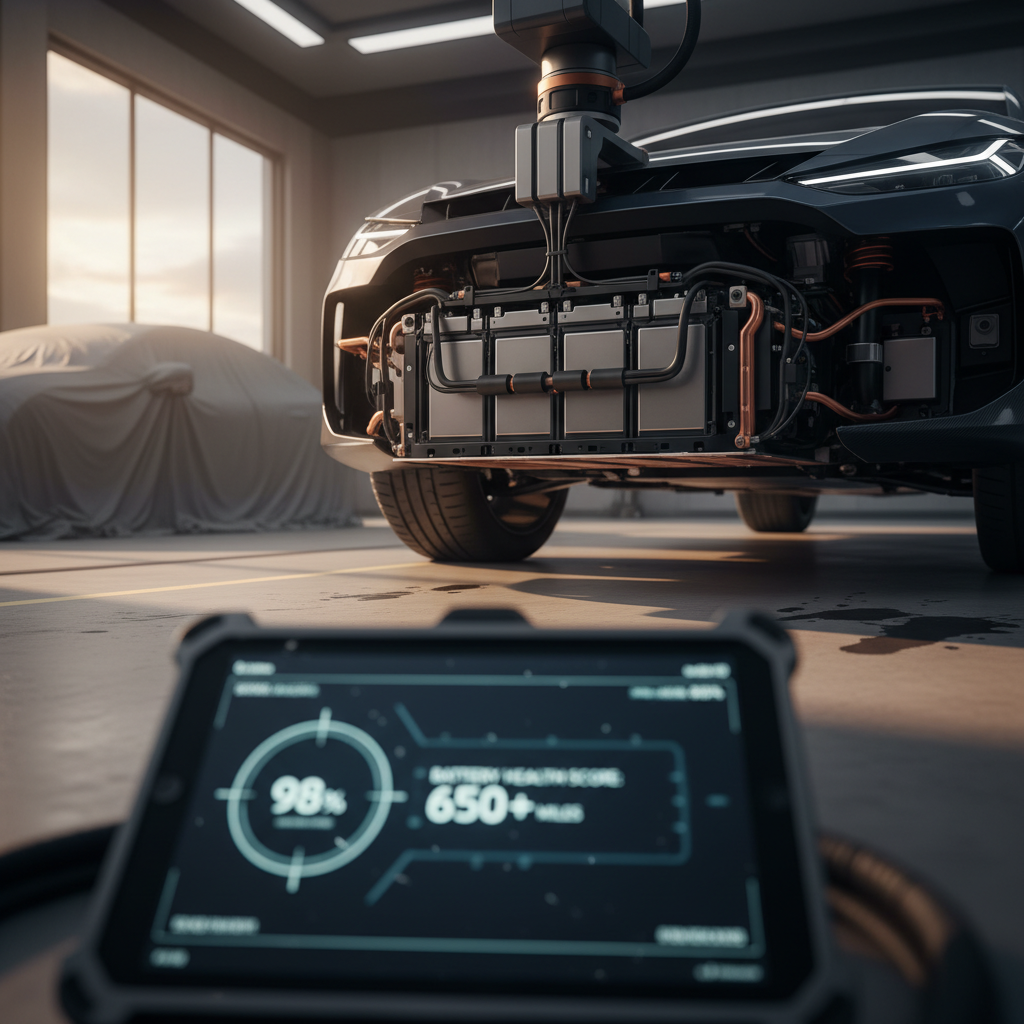
Battery Health: The Number-One Factor in Your Price
In an electric car, the **battery pack is the engine, the transmission, and half the resale story**. California buyers know this; many will skip right past odometer and paint color to ask, “What’s the battery at?” If you can’t answer convincingly, you’re leaving money on the table.
How Battery Health Shapes Used EV Value
This is where tools like the **Recharged Score Report** matter. Recharged uses EV‑specific diagnostics to read pack health, fast‑charge history, and range performance, then translates that into a **clear, shareable score and report**. When that report rides along with your listing, you short‑circuit a lot of the skepticism and back‑and‑forth that drags a sale out.
Turn your battery into a selling point
Step-by-Step: How to Prepare Your EV for Sale
Pre-Sale Checklist for California EV Owners
1. Pull your data and documents
Gather your **title or payoff info, service records, purchase paperwork, and charging history**. If you’ve used mostly DC fast charging or had pack work done, note it, you’ll be asked.
2. Get a real battery-health assessment
Use your car’s built‑in data, a reputable scan tool, or an EV‑focused service like the **Recharged Score battery‑health diagnostics** to document remaining capacity and pack condition.
3. Fix the cheap stuff
Detail the interior, wash and decontaminate the paint, repair minor curb rash if it’s inexpensive, replace **wiper blades and burned‑out bulbs**, and clear warning lights you can legitimately fix.
4. Straighten out software
Update your car to the **latest software**, remove personal data, unpair phones, and sign out of streaming or navigation accounts. A clean digital slate feels as important as a clean cabin.
5. Decide your price and floor
Check instant‑offer sites, dealer quotes, and private‑party listings in your region. Choose a **realistic asking price** and a walk‑away number so you’re not negotiating in the dark.
6. Choose your selling channel
Based on your timeline, risk tolerance, and target price, decide whether you’re going private‑party, dealer, instant‑offer, an EV‑focused marketplace like **Recharged**, or a hybrid approach.
Choosing the Best Way to Sell Your EV in California
If you want it done this week
- Get instant offers from at least two online buyers plus a local CarMax or similar.
- Share any **battery‑health documentation** you have to avoid lowball adjustments at inspection.
- If an EV‑focused marketplace like Recharged can match or beat those numbers, the added expertise and smoother experience are usually worth it.
If you want every last dollar
- Invest in **great photos**, a thorough description, and a battery‑health report you can attach to the listing.
- List in **EV‑dense regions**, Bay Area, LA/OC, San Diego, where buyers understand range and are less skittish.
- Be ready for a longer process: more messages, more test drives, more negotiation. Your payoff is the extra few thousand dollars in your bank account.