If you’re asking, “Where can I charge my electric car?” you’re not alone. The good news is that in 2025 you have more options than ever, at home, at work, around town, and on the highway. The trick is understanding how each option fits into your daily routine so charging feels as simple as parking.
A quick reality check
Why where you charge your EV matters
Where you charge your electric car affects cost, convenience, battery health, and even which EV you should buy. Home charging is usually cheapest and most convenient. Workplace charging can turn your commute into free or low‑cost miles. Public Level 2 chargers help you top up while you shop or dine. DC fast chargers unlock long road trips and quick turnarounds. Once you understand these pieces, you can build a charging plan that fits your life instead of planning your life around charging.
EV charging in the US: snapshot for 2025
The 5 main places you can charge an electric car
Everyday places you can charge your EV
Most drivers rely on a mix of these options over a typical week.
1. At home
Use a standard outlet (Level 1) or a 240V Level 2 charger in your garage or driveway. This is usually the cheapest and most convenient option.
2. At work
Many employers now offer Level 2 chargers in employee parking. Some are free as a perk, others are billed per kWh or per hour.
3. Around town
Public Level 2 chargers at shopping centers, municipal lots, libraries and parking garages let you gain miles while you run errands.
4. On the highway
DC fast chargers at travel plazas and near freeway exits can add hundreds of miles in under an hour, ideal for road trips.
5. At destinations
Hotels, resorts, stadiums and attractions often provide overnight or all‑day charging for guests and visitors.
Bonus: Curbside & community
Cities are adding curbside chargers on street lamps and in public lots, especially helpful if you don’t have a private driveway.
Think “where I park,” not “where I fuel”
Home charging: The hub of your EV life
If you have reliable access to a parking space at home, that’s almost always the best answer to “Where can I charge my electric car?” You plug in when you get home, wake up with a full battery, and rarely think about it again.
Option 1: Level 1 (standard outlet)
- What it is: A regular 120‑volt household outlet using the portable cord that came with your EV.
- Speed: Roughly 3–5 miles of range per hour.
- Best for: Short daily commutes (under ~40 miles), plug‑in hybrids, or occasional top‑ups.
If you drive modest miles and can leave the car plugged in overnight, Level 1 might be enough, no electrician required.
Option 2: Level 2 (240‑volt)
- What it is: A dedicated 240‑volt circuit, similar to an electric dryer or oven, feeding a wall‑mounted charger.
- Speed: Often 20–40 miles of range per hour, depending on the car and charger amperage.
- Best for: Most full‑battery EVs, heavier drivers, and households with more than one EV.
Installation usually requires a licensed electrician, but once it’s in, most owners treat charging like charging a phone, plug in at night and forget about it.
Safety first with home charging
Workplace charging: Free or low‑cost miles while you work
If your employer offers charging, it can effectively turn your parking spot into a fuel station. You arrive with less charge, plug in, and leave topped up, often at a lower cost than public fast charging and sometimes free.
- Look for Level 2 chargers in employee or visitor parking areas.
- Ask HR or facilities if there’s a waiting list, access card, or app you need to use.
- Check whether there’s a time limit so everyone gets a turn.
- If chargers are limited, charge just enough to comfortably get home and leave long‑range charging for home.
Employer perk to ask about
Public Level 2 charging: Around town and at destinations
Public Level 2 chargers are the slow‑and‑steady workhorses of public charging. You’ll find them in city parking garages, on main streets, at shopping centers, and in some apartment communities. They’re ideal for adding 20–40 miles of range while you grab dinner or see a movie.
Level 2 vs. DC fast charging at public stations
Use this quick comparison to decide when to choose each type of public charger.
| Feature | Level 2 public charger | DC fast charger |
|---|---|---|
| Typical power | 6–19 kW | 50–350 kW+ |
| Miles added per 30 minutes | 10–30+ | 80–200+ (varies by vehicle) |
| Best use case | Errands, work, overnight stays | Road trips, quick turnarounds |
| Impact on battery | Gentle for frequent use | Fine occasionally, avoid as your only charging |
| Cost | Often cheaper, sometimes free | Generally higher per kWh or per minute |
Most daily errands pair well with Level 2; save DC fast charging for trips or urgent top‑ups.
You’ll see a lot of ChargePoint logos
DC fast charging: Road trips and quick top‑ups
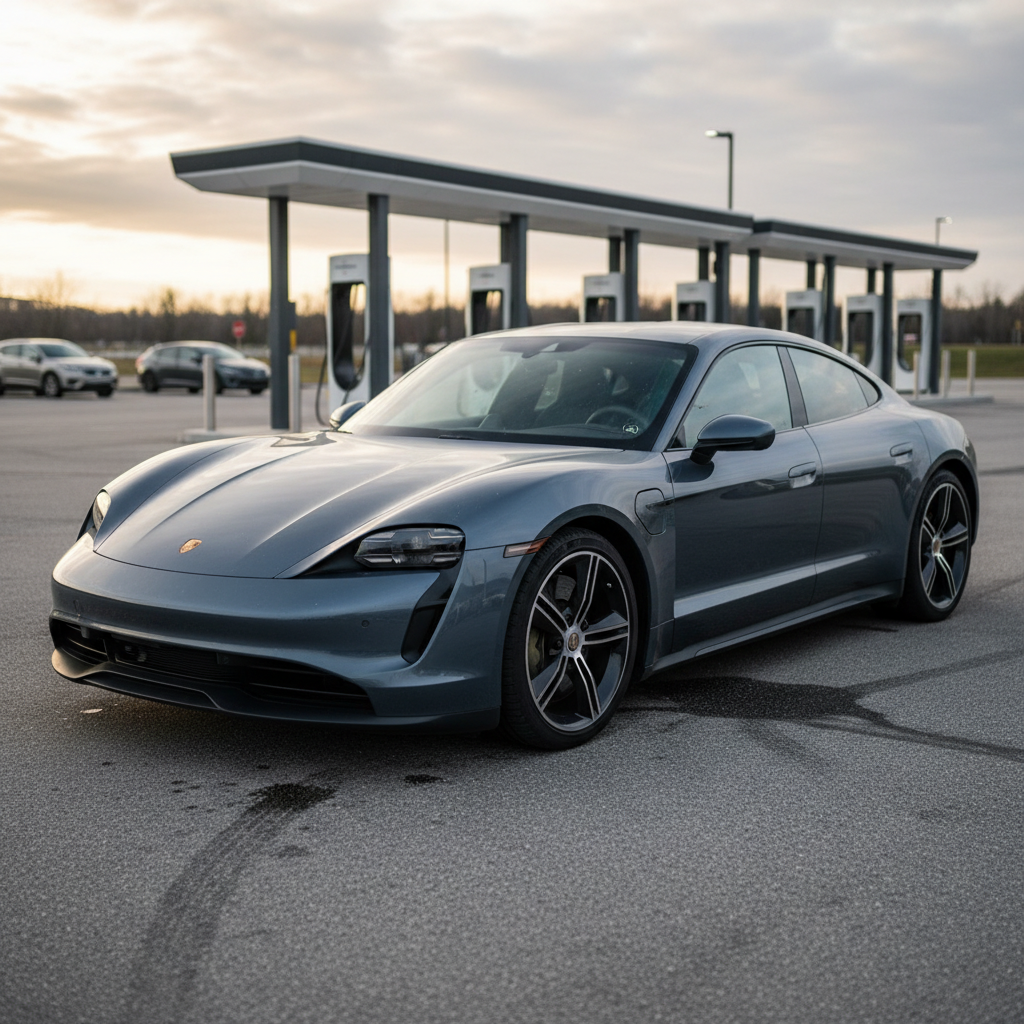
DC fast chargers are the closest EV equivalent to a gas station. They deliver high‑power direct current straight to your battery and can add significant range in the time it takes to stretch your legs and grab coffee. You’ll find them at highway travel plazas, major retail centers, and along key corridors.
Major DC fast‑charging networks you’ll see in the US
Most non‑Tesla EVs can use multiple networks with the right plug and app.
Tesla Supercharger
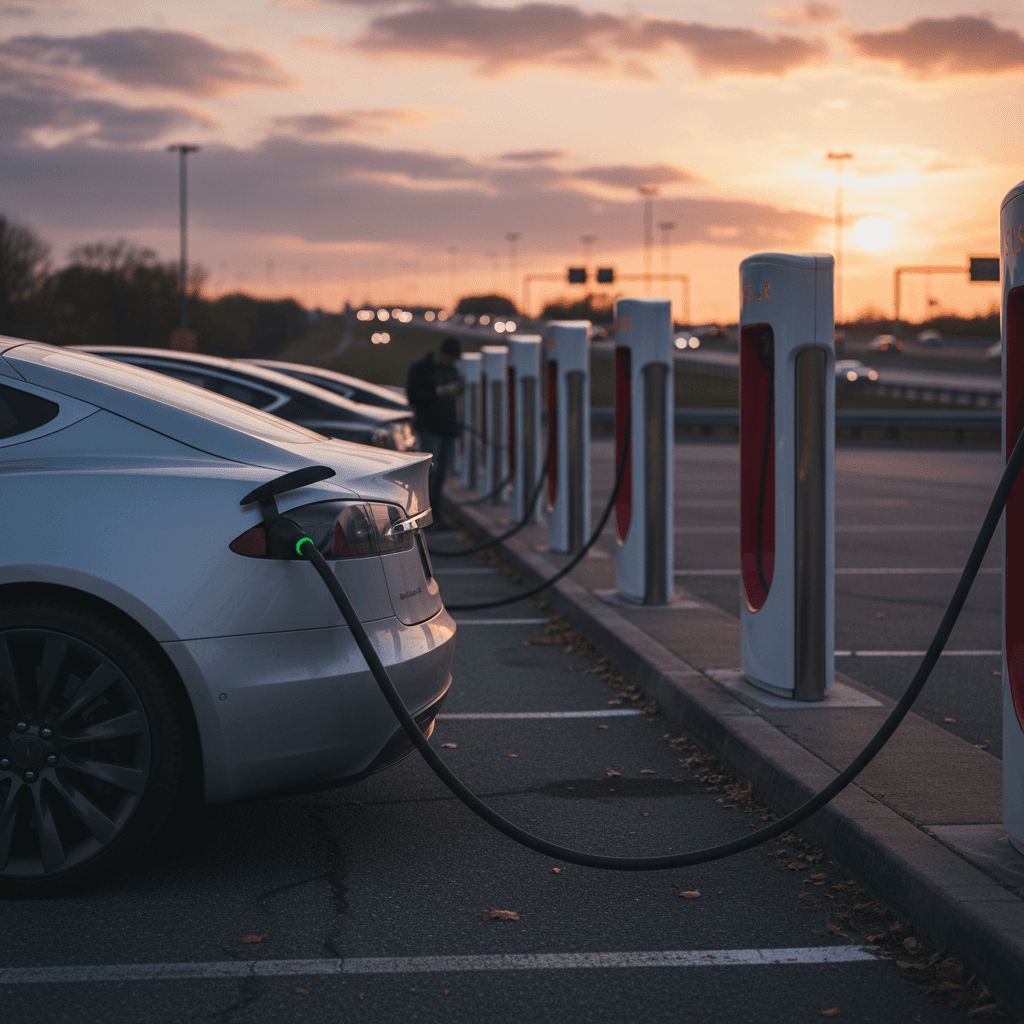
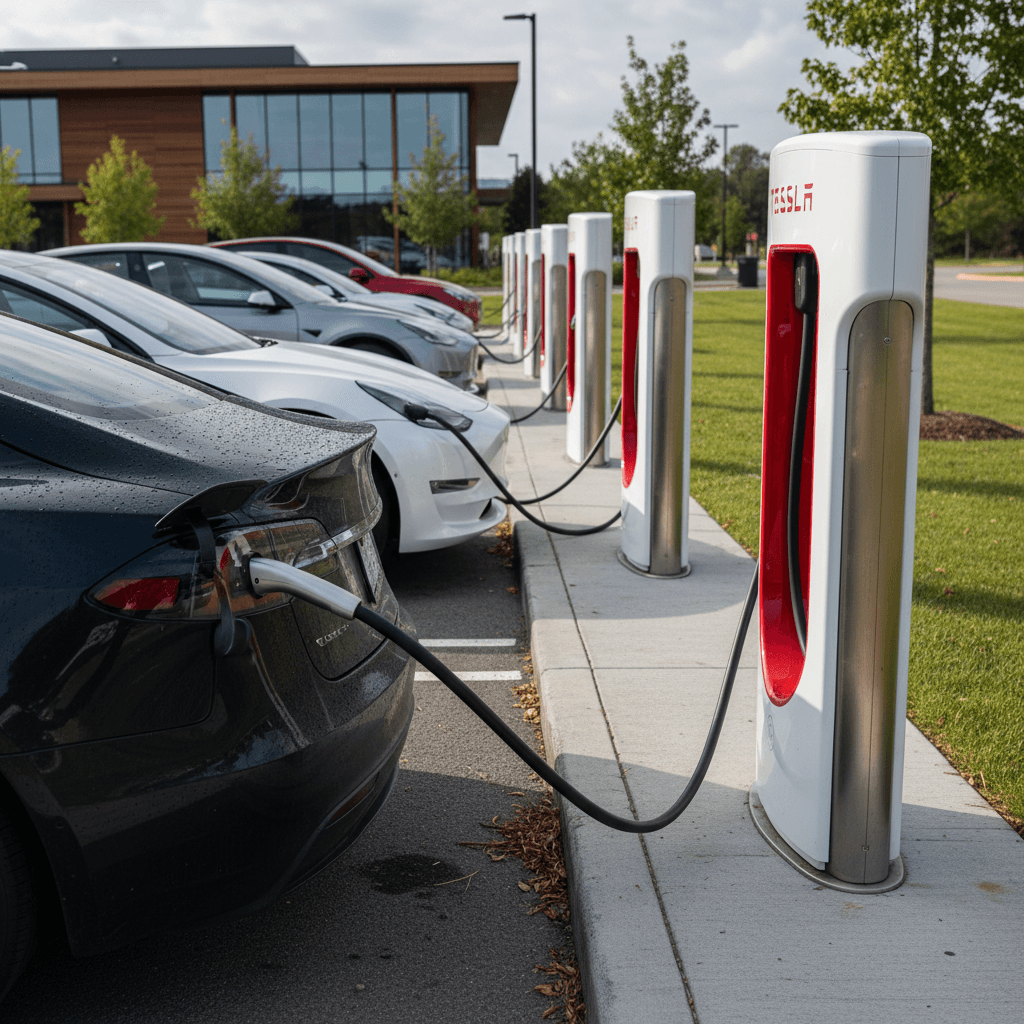
Historically Tesla‑only, Superchargers are gradually opening to more brands via adapters and built‑in NACS ports. Many sites offer 250 kW+ speeds and excellent reliability.
Electrify America
Large nationwide DC fast network along interstates and in metro areas. Supports CCS and often CHAdeMO. Apps and cards offer membership pricing.
Other networks
EVgo, ChargePoint, Ionna (a multi‑automaker joint venture) and utility‑run networks are expanding quickly, especially in urban corridors.
Mind the connector type
Retail, hotels & special destinations
Another answer to “Where can I charge my electric car?” is: wherever businesses want you to linger. Big‑box retailers, grocery chains, gyms and movie theaters increasingly offer Level 2 or DC fast charging as an amenity. Hotels, resorts and vacation rentals often provide overnight Level 2 charging in their parking lots or garages.
- Search specifically for hotels and vacation rentals with EV charging if you’re planning a road trip.
- If a charger is in a hotel garage, ask whether there’s a fee or if it’s for guests only.
- Some retailers partner with networks to offer discounted or free charging while you shop, check the store’s app or signage.
Use EV‑friendly filters when you book
How to find EV chargers near you
Knowing where you could charge only helps if you can actually find the plugs. Fortunately, apps have made locating chargers much easier than it was even a few years ago.
Best tools to locate charging stations
Use more than one app so you always have a backup.
1. Built‑in navigation
Most modern EVs show nearby chargers right on the dashboard or center screen. Many can route you through fast chargers automatically on long trips.
2. Smartphone apps
Apps like PlugShare, ChargePoint, EVgo, Electrify America and others show station locations, real‑time status and user reviews.
3. Google Maps / Apple Maps
Search terms like “EV charger” or “DC fast charger” will show nearby options, along with basic details and directions.
Before you drive to a charger, check these items
Confirm the connector type
Make sure the station has a plug that matches your car (CCS, NACS or an adapter you already own).
Check real‑time availability
Apps will often show whether stalls are in use or temporarily unavailable, so you don’t arrive to a full or broken station.
Look at recent check‑ins
User reviews and check‑ins can reveal reliability issues, parking restrictions or confusing entrances.
Review pricing and time limits
Some stations bill per kWh, others per minute or per session. Time limits can affect road‑trip timing.
Don’t rely on a single station in remote areas
What you’ll pay and how long charging takes
Costs vary widely by location and network, but some patterns hold. Home electricity is usually cheapest, especially if your utility offers off‑peak rates. Public Level 2 pricing often mirrors local electricity costs with a small markup. DC fast charging is the most expensive per mile, but you’re paying for speed and convenience.
Typical charging costs and times (ballpark ranges)
Real numbers vary with your local electric rates, vehicle efficiency, and driving conditions, but these are useful starting points.
| Location / Method | Approx. cost per kWh* | Typical cost per 250‑mile “fill” | Approx. time from 10–80% |
|---|---|---|---|
| Home Level 2 (off‑peak) | $0.10–$0.18 | $7–$13 | 6–10 hours (overnight) |
| Workplace Level 2 | Often free–$0.25 | $0–$18 | 3–8 hours (workday) |
| Public Level 2 | $0.20–$0.35 | $15–$25 | 3–8 hours (while you’re out) |
| DC fast charging | $0.35–$0.60+ | $26–$45+ | 20–45 minutes (depends on charger & EV) |
Think of home charging as your value option and DC fast charging as your convenience option.
How this compares to gasoline
Planning road trips so you never worry about range
Long trips are where DC fast charging shines, but a little planning goes a long way. Today’s EVs and apps make this easier than it sounds, especially once you’ve done a couple of trips and understand how your car behaves.
Road‑trip charging game plan
Map your route with charging stops
Use your car’s navigation or apps like A Better Routeplanner (ABRP) to plan stops roughly every 120–180 miles, depending on your range.
Aim to arrive around 10–20% charge
Fast chargers fill the battery quickest when it’s low. Plan to charge from roughly 10–70 or 80% instead of trying to reach 100% each time.
Favor sites with amenities
Prioritize stations near restrooms, food and safe, well‑lit parking lots, especially if you’re traveling with family.
Build in a buffer
Weather, traffic and hills affect range. Add a 10–15% buffer so you’re not white‑knuckling it to the next charger.
Different road‑trip strategies by EV range
Short‑range EV (150–220 miles EPA)
Plan shorter hops, maybe 80–120 miles between stops.
Mix DC fast charging with Level 2 at overnight hotels.
Keep a closer eye on weather and speed, which affect range more.
Long‑range EV (250+ miles EPA)
You can skip more chargers and choose the sites with better amenities.
Charging less often, but for a bit longer, can be more relaxing.
Take advantage of brand‑specific perks, like discounted fast charging in your first ownership years.
Charging considerations when you’re buying a used EV
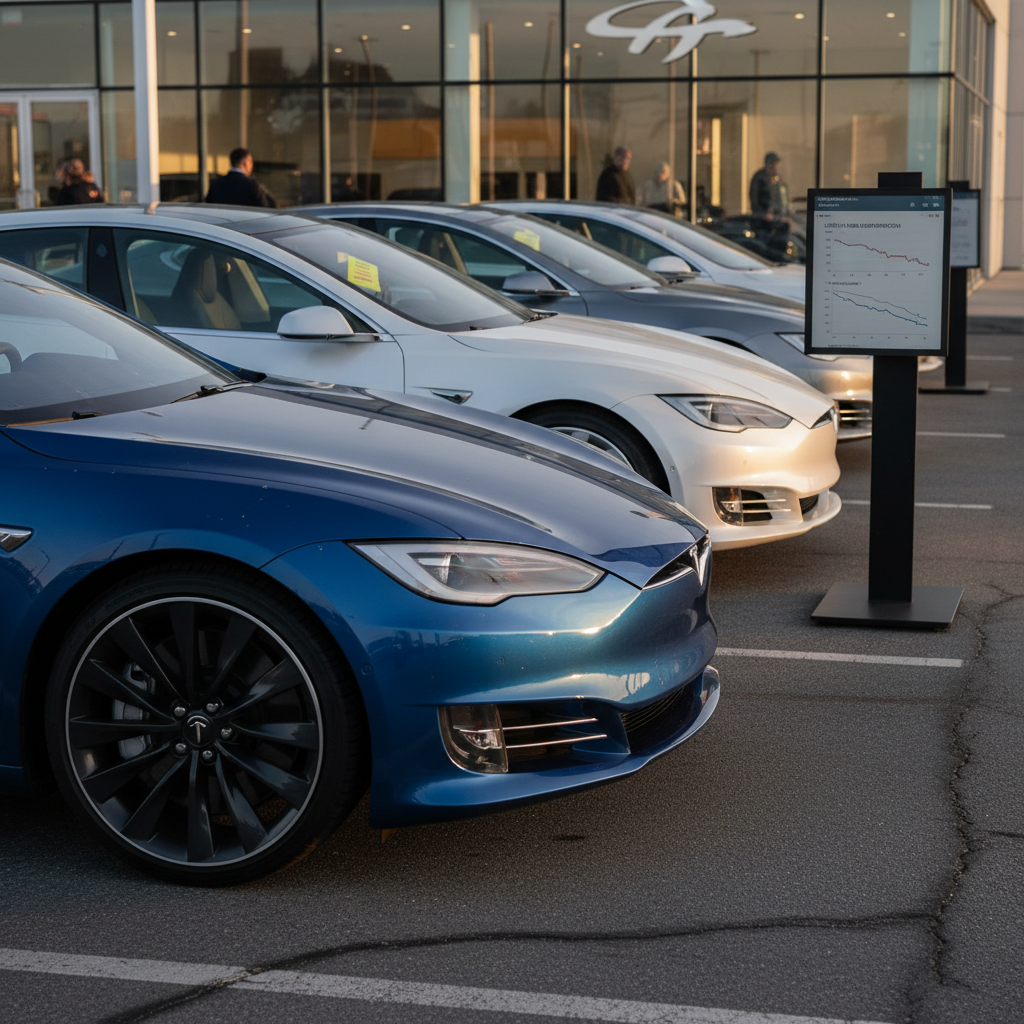
If you’re shopping the used market, “Where can I charge?” becomes “Where should I charge this specific car, and how healthy is its battery?” Different models charge at different speeds and support different connector types. Battery condition also matters, an older pack with significant degradation may spend more time at chargers to deliver the same miles.
Used EV charging questions to ask
These matter just as much as price and mileage.
1. How strong is the battery?
Ask for a recent battery health report, not just the odometer reading. At Recharged, every vehicle includes a Recharged Score with verified battery diagnostics so you know how much real‑world range to expect.
2. What charging speeds and plugs are supported?
Some older EVs max out at slower DC fast‑charging rates, and a few still rely on CHAdeMO. Verify whether the car supports CCS or NACS and whether adapters are included.
3. Does it throttle fast charging?
Heavy fast‑charging can cause some models to slow charging speeds over time. A detailed inspection or owner history can help you understand what to expect on road trips.
4. How will this fit my home setup?
Match the car’s onboard AC charging rate (in kW) to your planned home charger. There’s no need to overspend on a 48‑amp charger if the car can only accept 32 amps.
How Recharged helps
Ready to find your next EV?
Browse VehiclesEV charging FAQ: Quick answers
Frequently asked questions about where to charge
The bottom line: Build a charging routine that fits your life
When you zoom out, “Where can I charge my electric car?” has a simple answer: almost anywhere you routinely park, if you choose the right EV and the right charging strategy. For most people, that means home or workplace charging for the bulk of their miles and public Level 2 or DC fast charging as a safety net and road‑trip enabler. Before you buy, take a moment to map your daily parking spots, your local charging options, and how far you typically drive.
If you’re exploring a used EV, that planning becomes even more important. At Recharged, every vehicle comes with a Recharged Score battery health report, transparent pricing, and EV‑savvy specialists who will walk you through exactly how and where that specific car will charge, at home, at work, and on the road. Do that homework once, and day‑to‑day charging will feel a lot less like an experiment and a lot more like a normal part of owning a car.