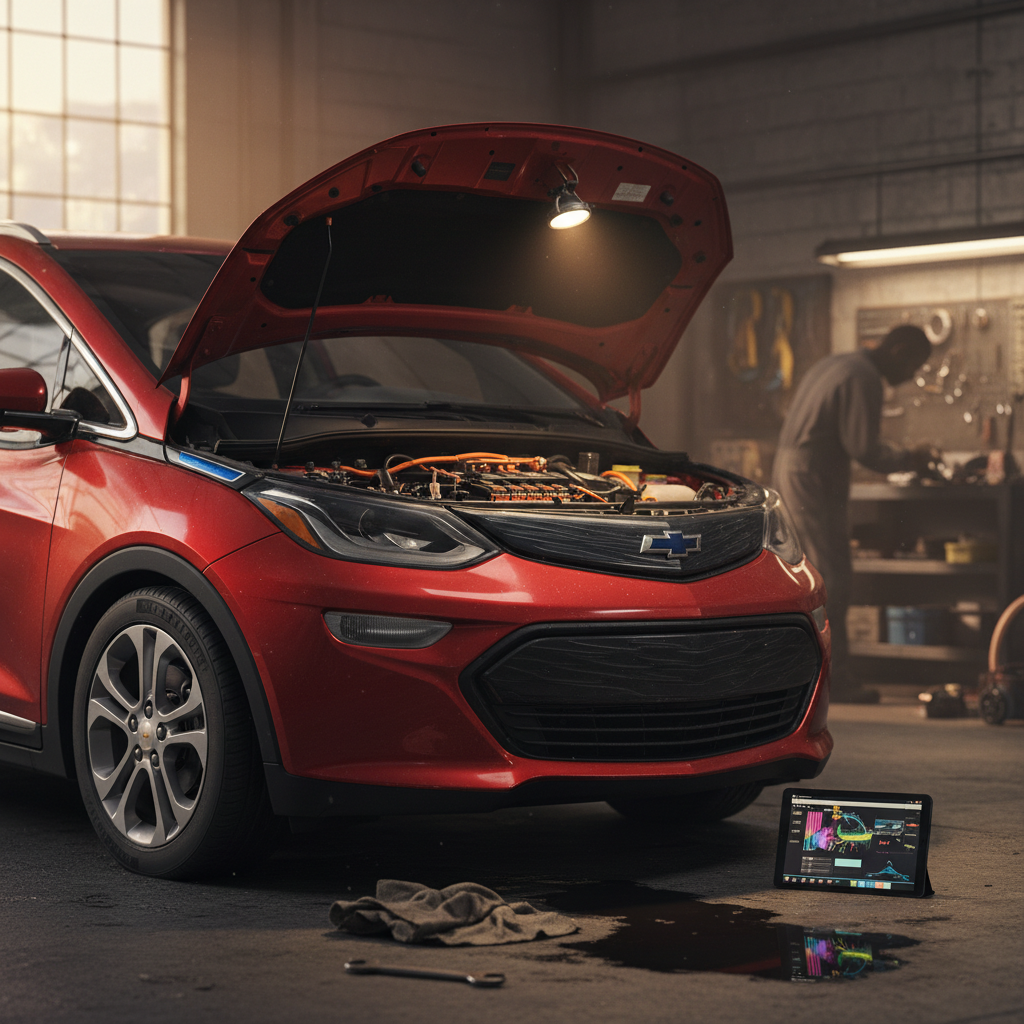
You can feel it standing on any used-car lot in 2026: the **used electric car** section is finally full of real choices. Prices have come down from their pandemic peak, inventory is up, and the technology has quietly proven itself more durable than the early skeptics predicted. If you’ve been wondering **what to look for when buying a used electric car**, this is your field guide, from battery health to drive feel and everything in between.
Good news for used EV shoppers
Why used EVs are so attractive right now
Before we dive into the nuts and bolts of what to inspect, it’s worth understanding **why the used EV market looks so different now** than it did even a couple of years ago. Lease returns from 2021–2023 models are landing on lots, **battery data** from fleets shows slower-than-feared degradation, and new-EV incentives that propped up the new-car market have expired, pushing more shoppers toward used options instead.
Used EV market snapshot (2024–2026, U.S.)
That’s the macro story. On the micro level, your driveway, what matters is buying the right car, with the right battery, at the right price. Let’s get specific.
Big-picture checklist: what matters most
The 6 pillars of a smart used EV purchase
If you remember nothing else, remember these.
Battery health
The single most important factor. You want **verified State of Health**, history of fast charging, and any past battery repairs documented.
Real-world range
Ignore the window sticker from years ago. Focus on how far the car will actually go on a full charge in your daily use.
Charging fit
Does it work with your **home setup** and the public networks where you actually drive? Connector type and charging speed matter.
Warranty safety net
Many EVs still carry **8‑year / 100,000‑mile battery warranties**. Know what’s left, what’s covered, and what isn’t.
Pricing & value
Used EVs depreciate differently than gas cars. Compare pricing to battery health, warranty remaining, and replacement cost.
Condition & history
Just like any used car: accident history, flood damage, tire and brake wear, and a specialist pre‑purchase inspection.
Why Recharged leans so hard on the battery
Battery health: the heart of any used EV
With a gas car, you worry about engines and transmissions. With an electric, **the battery is the ballgame**. It holds most of the car’s value and determines how long the car will feel “like new” to drive.
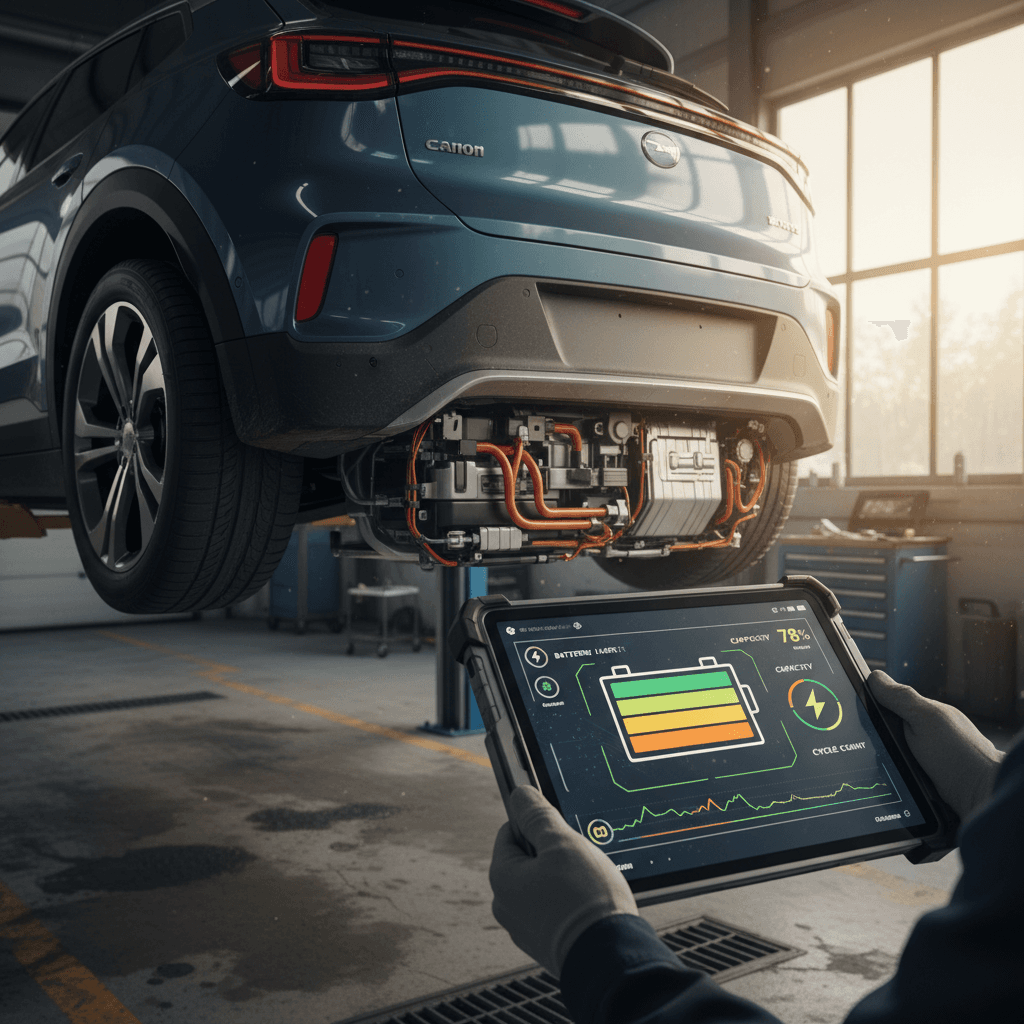
- Ask for a **battery health report**: Ideally a third‑party diagnostic (like Recharged’s battery test) or an official OEM report. You’re looking for a clear **State of Health (SoH) percentage**.
- Compare SoH to age and miles: A 4‑year‑old EV with 60,000 miles and 92% SoH is normal; the same car at 80% deserves a discount and closer scrutiny.
- Check for battery warranty claims or replacements in the service history, this can be a plus if it has a newer pack, but only if it was OEM work with documentation.
- Look for software limits or range caps, especially on early cars that had recall-related limitations applied. Ask the seller plainly if any **battery or charging recalls** are still open.
- Review how the car was charged: Lots of DC fast charging is not an automatic deal-breaker, but paired with low SoH it’s a flag.
Don’t rely on dashboard range alone
Battery health: what’s normal vs what’s a red flag
These are rough, real-world patterns, not hard rules, but they’ll help you frame questions and pricing.
| Vehicle age | Mileage | What “normal” looks like | Red flags to probe |
|---|---|---|---|
| 2–3 years | Under 40,000 | SoH in mid‑90s, range loss barely noticeable day-to-day | SoH under 90%, big drop in highway range |
| 4–6 years | 40,000–80,000 | SoH in high‑80s to low‑90s, modest range loss | Battery warning lights, rapid drops in state of charge, or recent major battery repair with thin documentation |
| 7–10 years | 80,000–150,000+ | SoH in low‑80s to high‑80s; still usable if original range was generous | SoH in the 70s or below, or car unable to reach advertised max charge level |
If a car falls in the red-flag column, slow down, get data, and negotiate hard, or walk away.
Walk-away battery situations
Range: how much do you really need?
The question isn’t “What’s the biggest number on the spec sheet?” It’s “How much **real‑world range** do I need for the way I actually drive?” That answer will save you money, or steer you to a newer, longer‑range model if you truly need it.
Start with your daily routine
- Write down your **typical weekday round‑trip** mileage, including detours.
- Add a buffer for weather, traffic, and side errands, call it 30–40% more.
- Compare that total to the car’s realistic range today, not when new.
If your daily use only needs 70–90 miles, a 150‑mile used EV can work beautifully and cost much less than a 250‑mile one.
Then think about road trips
- If you regularly drive 250+ mile days, look for **EPA-rated range of at least 220–240 miles when new**, so it still feels comfortable after some degradation.
- Check how well that model is supported on fast‑charging networks along your common routes.
- Ask yourself honestly: How often will I do this? Renting a gas car twice a year might be cheaper than buying extra EV range you rarely use.
Use a road trip planner
Charging & compatibility: home and on the road
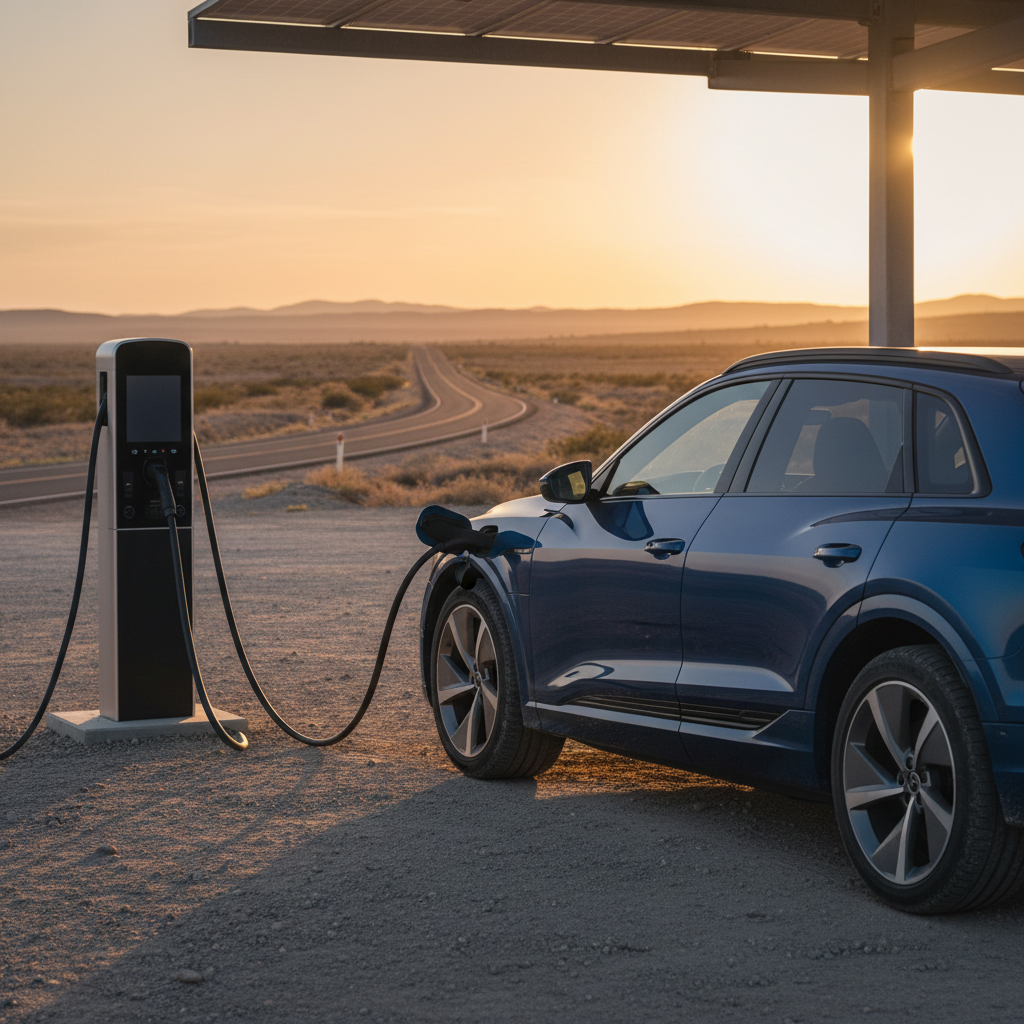
A used EV can be perfect on paper and still be wrong for you if it doesn’t **fit your charging life**. You want three boxes checked: home charging, connector compatibility, and public fast-charging support where you live.
Charging questions to answer before you buy
1. Where will you charge most?
If you have a driveway or garage, plan on installing **Level 2 home charging (240V)**. Apartment or street parking? You’ll lean more on workplace charging and public stations, so fast‑charge speed and network coverage matter more.
2. What plug does the car use?
In North America, newer EVs are moving to the **NACS (Tesla‑style) connector**, while many older ones use **CCS** for fast charging and **J1772** for Level 2. Make sure your car’s plug matches the networks and adapters you’ll actually have access to.
3. How fast can it actually charge?
Look up the car’s **max DC fast‑charge rate** (e.g., 100 kW vs 250 kW) and **onboard AC charger** rating (e.g., 7.2 kW vs 11 kW). A lower number isn’t a deal-breaker, but it changes how you plan road trips and overnight charging.
4. Are there quirks for this model?
Some early EVs throttle fast charging when warm, or charge slowly in cold weather. Search for charging‑related owner complaints on the specific model and year you’re considering.
How Recharged simplifies the charging math
Warranty coverage and repair risks
Here’s the quietly reassuring part of used EV shopping: by U.S. regulation, most EV batteries carry at least an **8‑year / 100,000‑mile warranty**, sometimes longer for certain states or brands. The fine print, however, is where your risk lives.
- Confirm the **in‑service date** so you know exactly when the 8‑year clock started.
- Ask whether the battery warranty transfers fully to second (or third) owners, most do, but confirm.
- Understand what triggers a battery replacement under warranty: often it’s a drop below a specified SoH threshold (for example, 70%).
- Check for other coverage: drive unit, onboard charger, infotainment, and high‑voltage components may have separate warranties.
- For cars out of warranty or close to it, get a sense of **battery replacement cost** and availability, especially for discontinued models.
Watch out for salvage and flood titles
Used EV pricing and depreciation traps
EV values don’t behave exactly like gas cars. Tax credits, rapid tech improvements, and shifting demand can all yank prices around. Over 2024–2025 we watched some models fall 20% while others held firm, especially if they had long range and strong charging support.
What drives used EV pricing in 2026
Use this to sanity‑check asking prices and spot over‑ or under‑valued candidates.
| Factor | Pushes price up | Pushes price down |
|---|---|---|
| Battery health | SoH in the 90s, clean report, no warnings | Low SoH, ambiguous or missing battery data |
| Warranty | Years and miles of battery/drivetrain coverage left | Out of warranty or expiring soon |
| Range & charging | 200+ mile real‑world range, fast DC charging, strong network support | Short range, slow charging, poor network coverage |
| Brand & model | High demand models with good reliability record | Discontinued or orphaned models with limited parts support |
| Owner history | One‑owner, full records, no accidents | Multiple owners, gaps in history, prior major damage |
| Market timing | Buyer’s market, ample inventory | Tight inventory, local spikes in demand |
Strong battery health plus remaining warranty usually deserves a premium over a similar car with a tired pack and no coverage.
Use battery health as your pricing lever
Test drive and physical inspection
Once the numbers look good, it’s time to see how the car feels. Electric cars hide some problems better than gas cars, no misfires or exhaust smells, so you have to pay attention in different ways.
What to look for on a used EV test drive
1. Startup and warning lights
Turn the car on and let it sit. Look for any **high‑voltage system** or **battery** warning messages. A brief light check at startup is normal; anything persistent is not.
2. Smooth power delivery
EVs should pull cleanly and quietly. Hesitation, sudden power cuts, or inconsistent acceleration can indicate **battery or inverter issues**.
3. Brake feel and regen
Listen for grinding and feel for vibration under braking. Test the **regenerative braking** in different modes; shuddering or odd noises can point to drivetrain or brake hardware problems.
4. Suspension and tires
Used EVs are heavy. Check **tire wear** for uneven patterns and drive over rough pavement to listen for clunks. Worn bushings and shocks are common on high‑mileage cars.
5. HVAC and thermal systems
Run heating and A/C on full blast. Weak performance can indicate problems with the heat pump or coolant loops that also condition the battery.
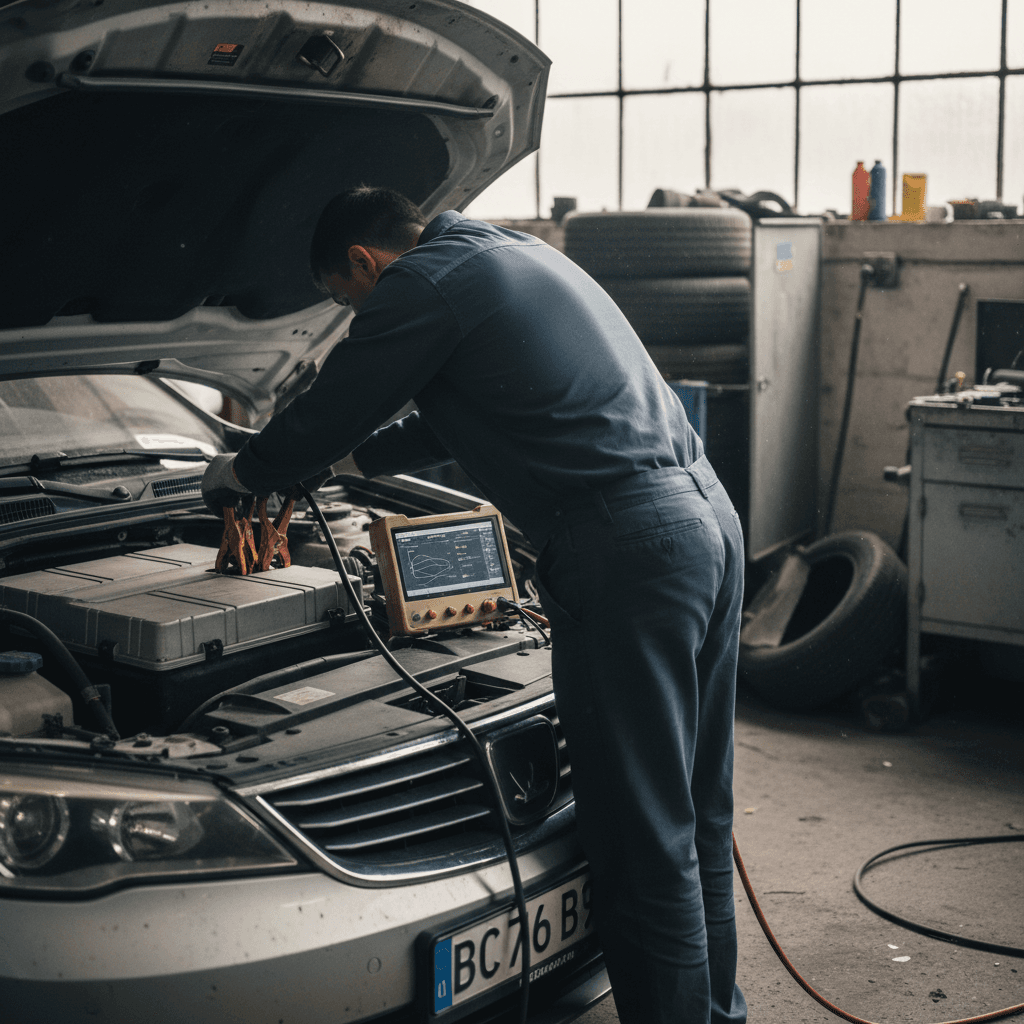
Get an EV‑specialist pre‑purchase inspection
Ready to find your next EV?
Browse VehiclesWhere to buy used EVs, and why it matters
You can find used EVs on franchise dealer lots, independent lots, online marketplaces, and private driveways with homemade For Sale signs. The cars might look similar, but the **information and protection** you get are not.
Comparing common ways to buy a used EV
The car itself is only half the story; the process matters too.
Franchise or brand dealer
- OEM‑backed certified programs on some models.
- Better access to software updates and recalls.
- Battery checks vary widely, ask what they actually test.
Independent lots & classifieds
- Sometimes lower prices, often thinner documentation.
- Battery health data is hit‑or‑miss.
- You’re responsible for arranging your own inspection.
Digital marketplaces like Recharged
- Listings with **standardized battery health reports** and transparent pricing.
- Online buying, trade‑in, and **nationwide delivery** options.
- Access to EV specialists who speak this language every day.
How Recharged fits into the picture
Step-by-step used EV buying checklist
Let’s pull this together into a simple, repeatable process you can use whether you’re browsing Recharged, walking a local lot, or sizing up a neighbor’s lease return.
From browsing to driveway: your used EV playbook
1. Define your use case and budget
Decide how far you need to drive on a typical day, how often you road trip, whether you can install home charging, and what you can comfortably spend, including installation of a Level 2 charger if needed.
2. Shortlist models that fit your life
Research 3–5 models that meet your range needs and have good charging support in your area. Pay attention to known issues for specific years, like early battery recalls or infotainment gremlins.
3. Filter by battery health and warranty
Only seriously consider cars with **documented battery State of Health** and clear warranty information. Use that data to rule out candidates with suspiciously tired packs.
4. Check history and condition
Pull a history report, look for accidents, flood damage, odometer issues, and repeated high‑voltage system repairs. Inspect tires, brakes, interior wear, and charge‑port condition.
5. Test drive like an EV owner, not a gas driver
Focus on warning lights, power delivery, regen behavior, HVAC performance, and any unusual noises under load. Practice plugging into a charger if the seller allows it.
6. Get a specialist inspection and finalize numbers
Have an EV‑savvy shop or marketplace perform an inspection and battery test. Use the findings to negotiate price, secure **financing** if you need it, and arrange trade‑in or delivery. With Recharged, these pieces happen inside one digital flow.
Frequently asked questions about buying a used electric car
Used EV buying FAQ
The bottom line: make the battery your north star
Buying a **used electric car** in 2026 isn’t a gamble when you know what to look for. Start with the **battery**, its health, its warranty, its real‑world range, then layer on charging fit, price, and condition. Ask annoying questions. Demand data. Let any seller who won’t cooperate be someone else’s lesson learned.
If you want an easier path, shop where that work is already baked in. On Recharged, every car comes with a **Recharged Score Report** that lays bare its battery health and value, plus **financing, trade‑in options, instant offers or consignment, and nationwide delivery**, all guided by EV specialists who live and breathe this stuff. However you choose to buy, keep this checklist close and let the numbers, not the nervous myths, steer your decision.