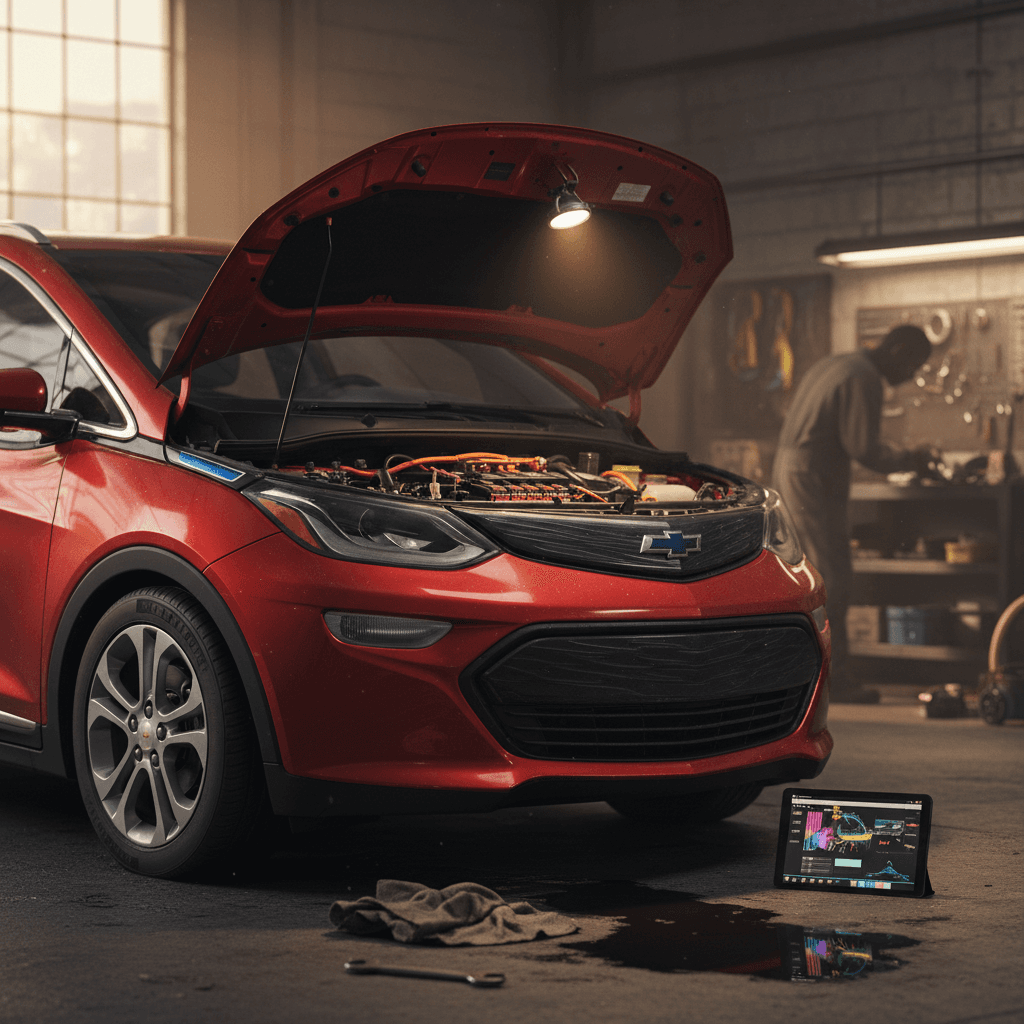
If you’re eyeing a 2023 Chevrolet Bolt EV, you’ve probably heard two very different stories: it’s one of the best-value EVs on the market, and it’s a Chevy with a history of battery recalls. Both can be true. This guide walks you through **2023 Chevrolet Bolt EV problems and fixes** so you know what’s normal, what’s serious, and how to shop a used Bolt with confidence.
Quick take on 2023 Bolt EV reliability
2023 Bolt EV reliability: big picture
The 2023 Bolt EV is the last model year of the original Bolt hatchback and benefits from years of running changes and recall fixes. Owner surveys and reliability data show it performing **better than many 2023 compact cars overall**, and markedly better than early Bolt model years that were caught up in the high‑profile battery-fire recall.
2023 Bolt EV at a glance
So where do problems show up? For the 2023 model year, the most common complaint clusters involve **charging behavior, HVAC performance, infotainment/USB issues, and occasional steering or brake-feel quirks**. True battery failures or motor breakdowns are rare compared with legacy gas powertrains.
Most common 2023 Chevrolet Bolt EV problems
Typical issue patterns on the 2023 Bolt EV
What owners actually report in the real world
1. Charging & battery behavior
Not usually fires or dead packs now, but:
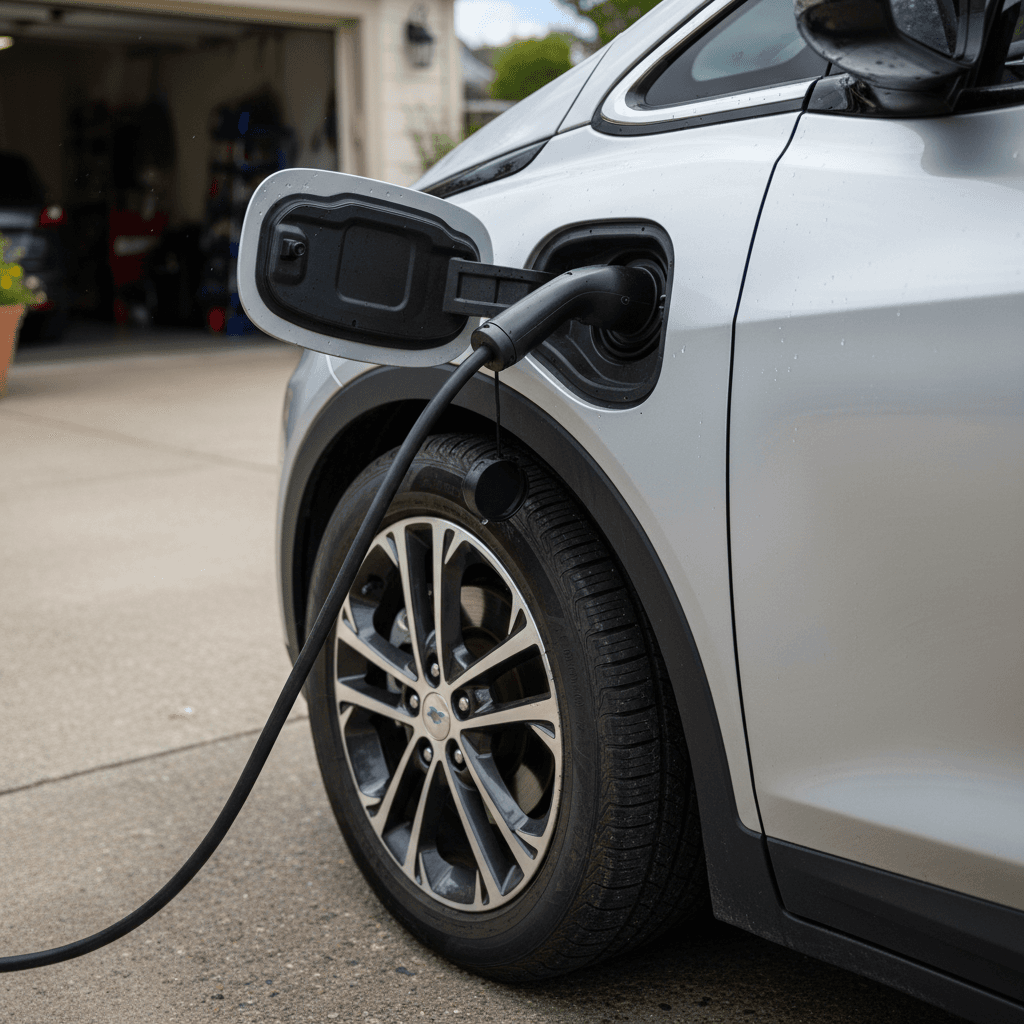
- Cars that won’t charge at certain Level 2 or DC fast chargers
- Confusing charge limits & schedules that make the car "stop" charging early
- Rare high‑voltage battery warnings that require dealer diagnosis
2. HVAC & climate system
Owners report:
- AC that suddenly stops cooling
- Fans that don’t blow at all or work intermittently
- Climate control warning lights or sensor faults
3. Infotainment, USB & electronics
Common but usually fixable annoyances:
- Frozen or black infotainment screen
- USB‑C or USB‑A ports with flaky charging or data connections
- Wireless phone charging that starts and stops randomly
4. Warnings, braking & steering feel
Not always defects, but unnerving:
- "Conditions not correct for shift" or "propulsion power reduced" messages
- Soft or inconsistent brake feel switching from regen to friction brakes
- Suspension clunks and interior rattles over rough pavement
Earlier Bolt issues vs. 2023
Battery and charging issues on the 2023 Bolt EV
The question everyone asks is still about the battery. The 2023 Bolt EV uses the updated LG pack design that replaced earlier high‑risk units, and it’s backed by a long warranty. True pack failures or fire events on 2023 cars are rare, but you can still see **charging-related problems** that feel like battery problems when you’re living with the car.
- Car won’t charge or stops charging on a specific home Level 2 station but works on others
- DC fast charging stalls, errors out, or delivers much slower speeds than the station advertises
- Charging rate at home seems “stuck” around 2–3 kW even on a 240 V circuit
- Charge limit mysteriously set to 50–80% after software updates or settings changes
- Rare “critical battery issue” messages that trigger reduced power and demand dealer service
Rule out simple charging setup issues first
Likely causes & fixes for Bolt EV charging issues
Home Level 2 charges slowly
- Possible cause: 120 V (Level 1) outlet, or the dual‑level charge cord is set to lower amperage.
- Fix: Confirm that you’re using 240 V (NEMA 14‑50 or similar), that the EVSE supports higher amps, and that the Bolt’s charge-current setting is on "maximum" in the infotainment menu.
- Good sign: Other EVs also charge slowly from that outlet, it’s the circuit, not the Bolt.
Car won’t start DC fast charge
- Possible cause: Station-side issue (very common) or communication fault between charger and vehicle.
- Fix: Try a second stall or different network. If multiple stations fail while others work, ask a Chevy dealer to check for software updates or stored fault codes.
- Good sign: Public Level 2 chargers work normally; problem is likely the fast‑charge site, not your car.
When a charging issue is serious
HVAC and climate-control problems
Climate complaints show up often in owner surveys for late‑model Bolts. On the 2023 Bolt EV, patterns include **air conditioning that suddenly stops cooling, blower fans that don’t run, and intermittent HVAC warning lights or codes**.
Common 2023 Bolt EV HVAC symptoms and likely fixes
Use this as a starting point, always have safety‑critical repairs confirmed by a qualified technician.
| Symptom | What it feels like | Likely causes | Typical fix |
|---|---|---|---|
| No airflow from vents | Fan speed on screen, but no air moving | Failed blower motor, blower resistor, or control module | Replace faulty component under bumper‑to‑bumper warranty if still active |
| Warm air only, no cooling | AC button on, but cabin never chills | Low refrigerant, compressor fault, or sensor issue | Leak check, recharge, or compressor/sensor replacement |
| HVAC error messages | Icons or text warnings on cluster | Software glitch or bad temperature/pressure sensor | Software update, code clear, or sensor replacement |
HVAC problems are usually annoying, not catastrophic, but they can be expensive out of warranty.
Warranty usually has your back early on
Infotainment, USB, and electrical glitches
Electronics are where a lot of modern EVs stumble, and the 2023 Bolt is no exception. The good news: most issues here are fixable without replacing major hardware. The bad news: they’re annoying, and they can shake your confidence in a car that relies on screens and software for nearly everything.
- Infotainment screen is black or freezes after startup, especially in very hot or very cold weather
- Apple CarPlay or Android Auto won’t connect reliably over USB or drops mid‑trip
- USB‑C or USB‑A ports switch between “slow” and “fast” charging seemingly at random
- Wireless phone charging pad starts and stops charging repeatedly
- MyChevrolet app is slow, inaccurate, or fails to update charging status (often app/server‑side, not the car)
First-line fixes for Bolt infotainment issues
When to involve a dealer for electrical issues
If you’ve ruled out cables and phones and the **screen still goes dark, ports work intermittently, or warning messages come with loss of power, backup camera, or OnStar**, it’s time for professional diagnosis. There are documented cases where radio/infotainment failures cascaded into broader electrical problems on late‑model Bolts. These should be handled as safety issues and repaired under warranty whenever possible.
Driver-assistance, braking feel, and warning messages
Many 2023 Bolt EV owners praise the car’s smooth one‑pedal driving and simple controls. But a vocal minority report **confusing messages and odd brake or steering feel** that can be unsettling until you understand what’s going on.
Common driver-assistance and braking complaints
What’s normal EV behavior vs. what needs attention
"Conditions not correct for shift" / "Propulsion power reduced"
What it is: Dash messages that may appear after start‑up or when there’s a sensor or software hiccup.
Often fixed by: Cycling the car off, opening the door, then restarting. If messages repeat or the car actually loses power, have the dealer scan for codes.
Soft or inconsistent brake feel
What it is: The transition from regenerative braking to the friction brakes can feel odd at low speeds or in panic stops.
Normal vs. not: A slight change in feel is normal in EVs; a long, spongy pedal or poor stopping power is not and warrants immediate inspection.
Don’t ignore safety-related warnings
2023 Bolt EV recalls and warranty coverage
Unlike earlier model years, the 2023 Bolt EV has not been the target of a large, battery-fire-specific recall campaign. However, there are **smaller recalls and service bulletins**, for example, involving the airbag/electrical system and wireless charging behavior, that you’ll want to verify have been addressed.
Key coverage for a 2023 Chevrolet Bolt EV
Always confirm details with a Chevy dealer; policies can differ by state and in Canada.
| Area | Typical coverage (US) | What it usually covers | What it usually doesn’t |
|---|---|---|---|
| Bumper-to-bumper | 3 years / 36,000 miles | Most electronics, HVAC, infotainment, interior hardware | Wear items (tires, brakes), cosmetic trim |
| Battery & electric drive | 8 years / 100,000 miles (often 10 yrs in CARB states) | Battery pack, drive motor, high-voltage components | Normal range loss with age, damage from abuse or improper mods |
| Corrosion / rust-through | 6 years / 100,000 miles (varies) | Perforation from the inside out | Surface rust, rock chips, cosmetic corrosion |
| Recalls (NHTSA) | No mileage limit, time-limited only rarely | Safety defects in design or manufacturing | Wear and tear, non-safety features |
Much of what worries used-Bolt shoppers is still covered if the car is within time and mileage limits.
How to check recall status on a 2023 Bolt EV
How to diagnose and fix common 2023 Bolt EV issues
Diagnosing a modern EV at home is different from chasing a misfire on an old gas car, but you can still do a lot of **first-pass troubleshooting** before paying shop rates. Here’s a practical roadmap.
Step-by-step troubleshooting for typical 2023 Bolt EV problems
1. Separate charging network issues from car issues
If a DC fast charger errors out, try a different stall or network. If multiple EVs are struggling at the same site, it’s likely the station, not your Bolt.
2. Verify your home electrical setup
Confirm breaker size, outlet type, and EVSE rating. A 40‑amp breaker feeding a 32‑amp Level 2 charger is ideal; undersized circuits will limit charging speed or trip breakers.
3. Reset software the smart way
For infotainment glitches, perform a soft reset using the car’s controls and fully power-cycle the car. Avoid disconnecting the 12 V battery unless a technician instructs you, modern EVs are picky about power loss.
4. Document warning messages and conditions
Take clear photos of the instrument cluster and infotainment screen when errors appear. Note outside temperature, battery level, and what you were doing (fast charging, highway driving, etc.). This helps the dealer reproduce and fix the issue.
5. Lean on warranty and service bulletins
Chevy regularly issues Technical Service Bulletins (TSBs) for known issues like wireless charging glitches or charging communication faults. A dealer who works with EVs often will know these and apply updated software or parts.
6. For used-car shoppers, get independent data
Before you buy, use tools like a certified battery health report. On Recharged, every used EV gets a **Recharged Score Report** with deep battery and charging diagnostics, plus open-recall and trouble-code checks.
Used 2023 Bolt EV buying checklist
If you’re shopping for a used 2023 Bolt EV, you’re in a sweet spot: pricing is attractive, range is competitive, and most major bugs have been worked out. But you still want to separate the great cars from the problem children, especially ex‑rental or fleet units that saw hard use.
What to check on a used 2023 Chevrolet Bolt EV
1. Battery health and DC fast-charging history
Ask for a battery health report and look for consistent range estimates near the original 259 miles in mild weather. Heavy DC fast‑charging isn’t automatically bad, but extreme degradation or erratic state‑of‑charge readings are red flags.
2. Charging behavior on Level 2
During a test drive, plug into a known-good Level 2 station. Confirm the car starts charging promptly, reaches the expected kW rate, and doesn’t throw errors. If it stalls on more than one charger, assume diagnostic work is needed.
3. HVAC performance in real conditions
With the car fully warmed or cooled, run the AC and heat on automatic. Make sure the fan blows strongly at all settings and the system quickly cools or warms the cabin without odd noises or smells.
4. Infotainment, USB, and backup camera
Check that the screen wakes up quickly on every start, the backup camera image is clear, and both USB‑A and USB‑C ports charge and pass data. Test wired CarPlay/Android Auto for at least 10–15 minutes of driving.
5. Brakes, steering, and ride quality
Find a mix of city streets and highway. Pay attention to brake feel in stop‑and‑go traffic, steering response, and any suspension clunks or rattles over bumps. Some road noise is normal; loud banging or grinding is not.
6. Recalls, service records, and prior ownership
Run the VIN for recalls and ask for dealer service records. Fleet or rental history isn’t a deal-breaker, but you want proof that software updates, recalls, and basic maintenance were done on schedule.
How Recharged helps with used 2023 Bolts
Ready to find your next EV?
Browse VehiclesFAQ: 2023 Chevrolet Bolt EV problems and fixes
Frequently asked questions about 2023 Bolt EV issues
Bottom line: Should you worry about 2023 Bolt EV problems?
No modern EV is problem‑free, and the 2023 Chevrolet Bolt EV carries the baggage of earlier Bolt headlines. But when you look at the data and real owner experiences, the 2023 model year stands out as a **mature, relatively reliable small EV** whose issues are mostly manageable, provided you go in with eyes open.
If you understand the common **charging quirks, HVAC complaints, and electronic glitches**, and you use battery‑health diagnostics plus recall checks to screen individual cars, a 2023 Bolt EV can deliver years of low‑cost, low‑drama electric driving. And if you’d rather not decode all of that yourself, shopping through Recharged means every Bolt you see already comes with a verified **Recharged Score Report, financing options, trade‑in support, and EV‑specialist guidance** from the first click to delivery.