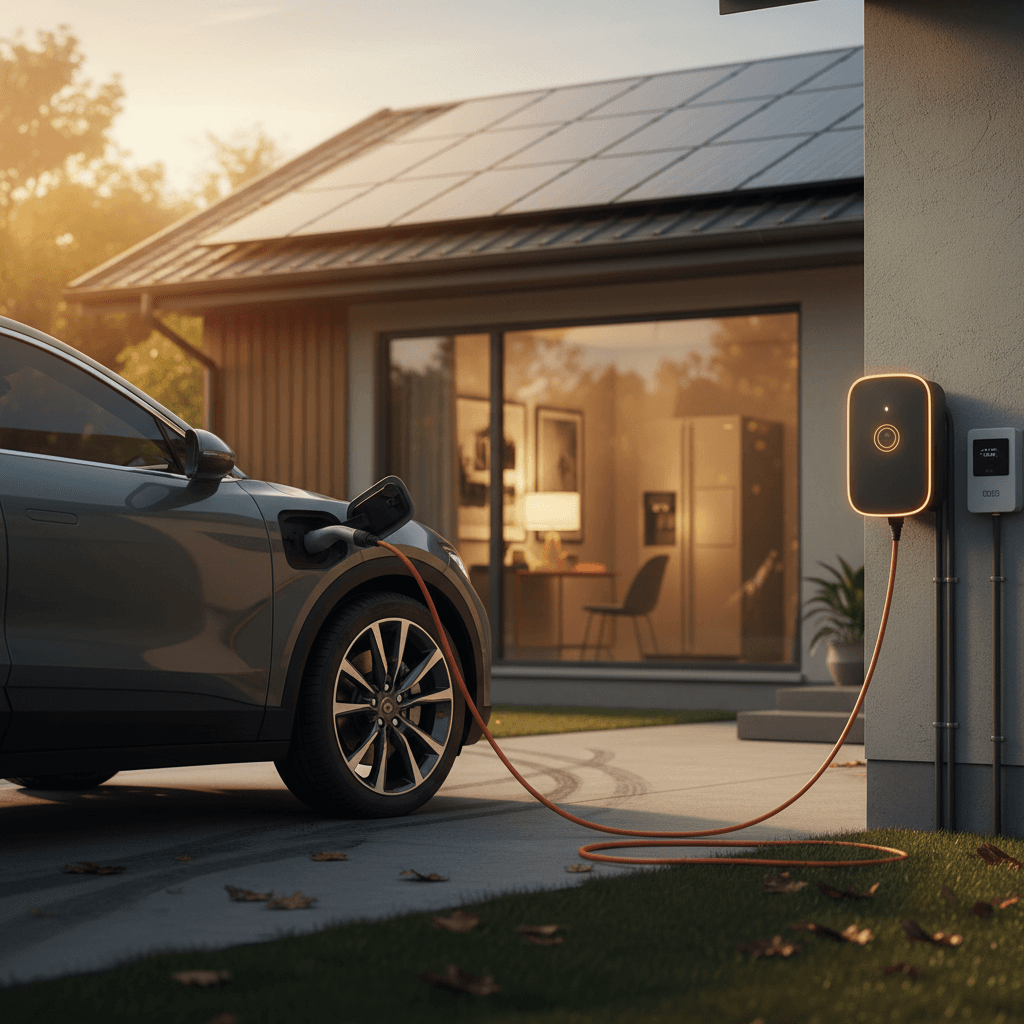
Vehicle-to-home, usually shortened to V2H, is one of the most exciting new tricks electric vehicles can do. Instead of just charging from your house, a V2H‑capable EV can send power back into your home, keeping the lights on during an outage or even helping you save on your electric bill. If you’ve heard about Ford F‑150 Lightning powering homes during blackouts or Kia EV9 using its battery as backup, that’s vehicle‑to‑home in action.
Quick definition
What is vehicle-to-home (V2H)?
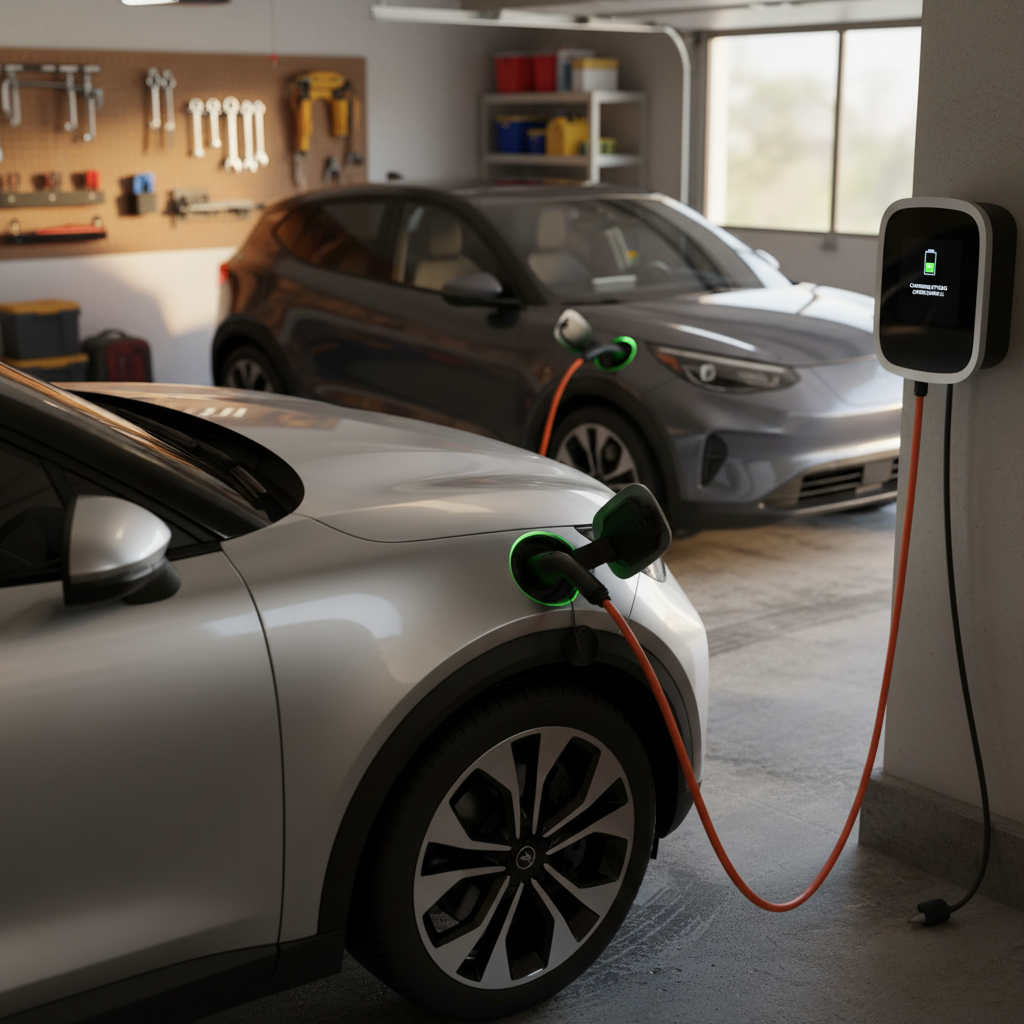
At its core, vehicle‑to‑home is a technology that allows electricity to flow in both directions between your EV and your house. Traditional home charging is one‑way: grid → home → charger → car. With V2H, that same hardware ecosystem can reverse the flow so your car’s battery powers your home circuits when needed.
Most modern EVs already have large batteries, often 60–100 kWh. For context, the average U.S. household uses around 29–30 kWh per day. That means a full‑size EV pack can, in theory, run a typical home for multiple days if you’re careful with usage. Ford, for example, says a properly equipped F‑150 Lightning can provide full‑home power for up to roughly three days of typical usage, or longer if you conserve energy.
- V2H is made possible by bidirectional inverters in the charger or vehicle, which can both charge and discharge the battery.
- You still connect via a charging cable, but the system routes power through a home integration panel tied into your electrical service.
- Controls in the vehicle, an app, or both let you set when the car can discharge and how much range to reserve for driving.
Think of your EV as a rolling home battery
How V2H works, step by step
Under the hood, V2H is a mix of power electronics and software. Here’s how a typical system works from your point of view.
How a vehicle-to-home session usually works
1. EV with bidirectional capability
You need a vehicle engineered for bidirectional power, its onboard systems must allow safe discharge through the charge port. Not all EVs do this yet.
2. Bidirectional charger installed
Instead of a basic Level 2 wall box, you use a <strong>bidirectional charger</strong> that can convert DC from your car to AC for your home and back again.
3. Home integration system
An electrician installs a transfer switch or home integration panel that can isolate your house from the grid during backup operation and route EV power safely to selected circuits or your whole panel.
4. Configure your settings
In your vehicle’s infotainment system or mobile app, you choose how the system behaves: automatic vs. manual backup, how much range to keep in reserve, and any time‑of‑use rules for bill savings.
5. Power outage or event occurs
If the power goes out, or when time‑of‑use pricing hits a peak, the system detects it and, if set to automatic, begins drawing from your EV to run the house.
6. Automatic switchover and recovery
When grid power returns or prices drop, the system automatically switches your home back to utility power and resumes charging your EV to the target level.
Why V2H gets so much attention
V2H vs V2G vs V2L vs home batteries
V2H vs V2G
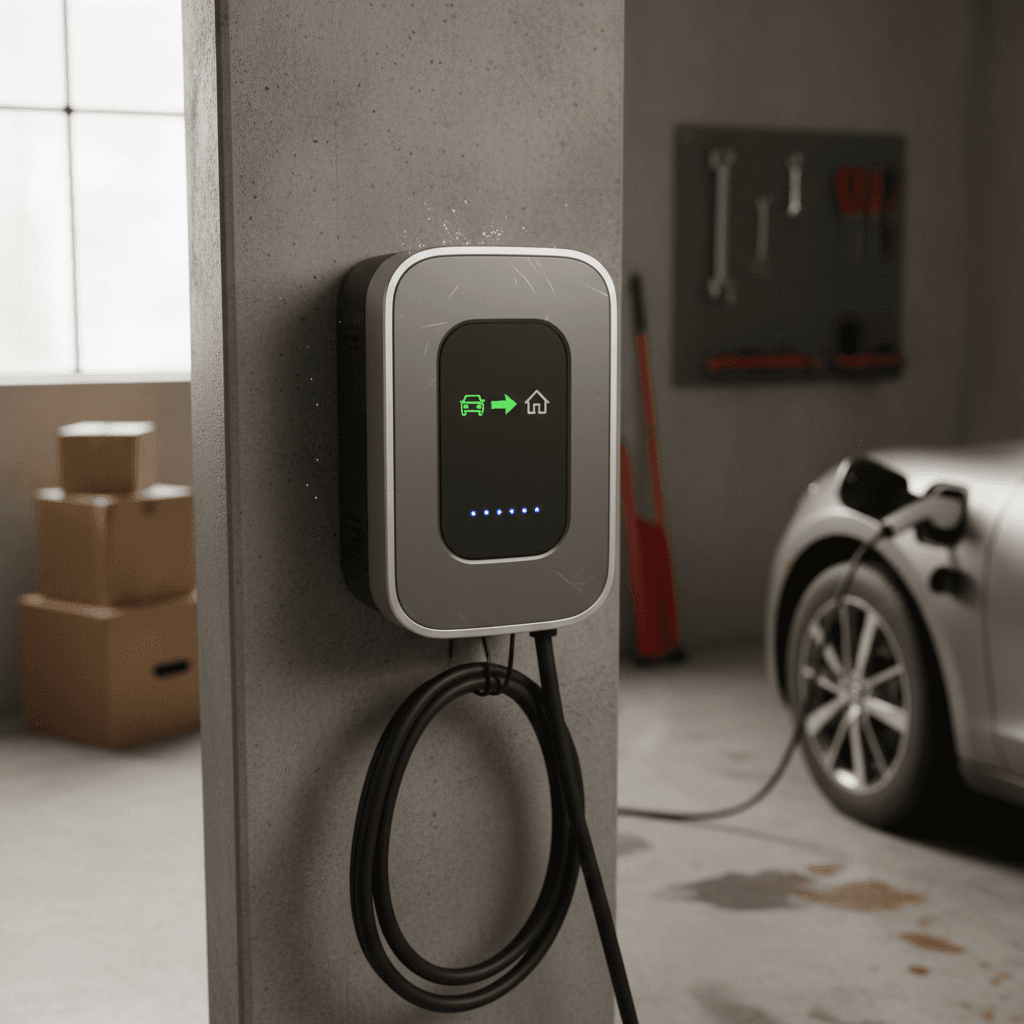
V2H (vehicle‑to‑home) sends power from your EV into your house. V2G (vehicle‑to‑grid) sends power all the way back to the utility grid, usually as part of a utility program that pays you for supplying energy or providing grid services.
- V2H focuses on backup power and your own bill.
- V2G focuses on supporting the wider grid, often with more complex utility agreements.
V2L and portable power
V2L (vehicle‑to‑load) uses built‑in outlets or an adapter on the car to run tools, camping gear, or appliances directly from the battery, like a super‑quiet generator in your driveway.
- Great for tailgating or job sites.
- Usually limited to a few kilowatts and doesn’t integrate with your home panel.
You can also think of V2H as an alternative, or complement, to a dedicated home battery system like a Powerwall. Fixed batteries are always available at home and work seamlessly with solar, but they add several thousand dollars to a project. If you already own a compatible EV, V2H lets you tap that existing capacity instead of paying for separate storage.
Check your terminology
Which EVs offer vehicle-to-home today?
V2H is still an emerging feature, but it’s moving quickly from concept to reality. A few automakers now ship or are rolling out U.S.‑market vehicles that can power a home when paired with the right hardware.
Examples of EVs with vehicle-to-home or home-backup capability
Availability, specs, and names can change quickly; always confirm details with the manufacturer or dealer before you buy.
| Model | Brand | V2H / backup branding | Notable details (U.S. market) |
|---|---|---|---|
| F-150 Lightning | Ford | Home Backup Power / Intelligent Backup Power | Up to 9.6 kW export with Ford Charge Station Pro and Home Integration System; can power a typical home for multiple days when properly configured. |
| EV9 | Kia | Vehicle-to-Home & bidirectional Wallbox | Works with compatible bidirectional charger and home power recovery unit to back up a house; integration with solar and time-of-use pricing is a core focus. |
| Future IONIQ 9 & EV6 (select trims) | Hyundai / Kia | Vehicle-to-Home (V2H) services | Hyundai Motor Group is rolling out V2H services in the U.S., initially for flagship models with plans to expand coverage to additional EVs. |
| Select plug-in & regional models | Various | Backup / export power modes | A small but growing number of PHEVs and EVs in markets like Japan and Europe can feed power back to homes with local‑market hardware. U.S. support is more limited today. |
This isn’t a complete list, but it highlights some of the most visible V2H‑capable EVs in the U.S. market as of early 2026.
Used EVs and V2H
What you need to use V2H at home
V2H isn’t just a feature you toggle on in an app; it’s a small ecosystem. Here’s what most U.S. homeowners will need before their EV can safely power the house.
Core components of a V2H setup
Your vehicle is just one piece of the puzzle.
1. A V2H-capable EV
The vehicle itself must support bidirectional power export through its charging port. This is built into some trucks and SUVs and is coming to more mainstream EVs over the next few years.
Check the owner’s manual or manufacturer site for explicit mention of home backup power, V2H, or bidirectional charging.
2. Bidirectional charger
Unlike a standard Level 2 wall box, a bidirectional EVSE can both charge the car and convert DC battery power back to AC for your home.
Examples include Ford’s Charge Station Pro paired with its Home Integration System, and emerging third‑party chargers like Wallbox Quasar‑class units for compatible vehicles.
3. Home integration hardware
A transfer switch or home integration panel safely disconnects your house from the grid during backup and routes EV power to selected circuits or your entire main panel.
This work must be done by a licensed electrician and may require utility approval or permits.
- Most systems require at least 200‑amp service to support whole‑home backup plus EV charging safely.
- If you have rooftop solar, your installer can often design the system so solar, your EV, and the grid all work together.
- Expect site‑specific costs for wiring, trenching, panel upgrades, and permits on top of charger and integration hardware.
Safety first
Costs, benefits, and when V2H makes sense
V2H can be incredibly useful, but it’s not free. Understanding the trade‑offs will help you decide if it’s worth pursuing now or something to keep on your radar for a future vehicle or home upgrade.
Key benefits of vehicle-to-home
- Backup power without a loud generator: An EV can quietly power your home during storms, wildfires, or rolling blackouts.
- Potential bill savings: In areas with time‑of‑use rates, you may be able to charge off‑peak and run part of your home on stored energy during peak pricing.
- Leverages a battery you already own: Instead of buying a dedicated home battery, you use your EV’s much larger pack.
- Energy resilience: Multiple days of backup can be priceless in areas with repeated outages.
Real‑world costs and considerations
- Hardware and install: Bidirectional chargers and integration panels today can cost several thousand dollars installed, depending on your home.
- Permits and approvals: Utility interconnection rules vary, and some jurisdictions are just starting to publish V2H guidance.
- Battery cycling: Using your EV as a home battery adds charge/discharge cycles. Automakers typically design around this, but it’s still additional wear.
- Car availability: If your EV is your only vehicle, you may not always want to drain it deeply for home use before a commute.
When V2H especially shines
V2H risks, limits, and misconceptions
Because it’s new, V2H can attract both hype and fear. The reality sits in the middle: powerful, but with clear boundaries.
- “I’ll run my house off my car all the time.” In practice, most automakers design V2H for backup and occasional use, not as a full‑time off‑grid solution.
- “V2H will kill my battery quickly.” EV packs are built for thousands of cycles. Sensible V2H use is unlikely to be the main driver of degradation; extreme temperatures and fast‑charging habits matter more. Still, every discharge is a cycle, so don’t treat your car like an unlimited energy faucet.
- “Any EV can do V2H if I just add the right charger.” Today, only vehicles explicitly designed for bidirectional export should be used to power a home.
- “I can just backfeed through a generator inlet.” This is both unsafe and illegal in most jurisdictions without proper transfer equipment. Stick to code‑compliant systems.
Grid rules are evolving
Buying a used EV with V2H in mind
If you’re shopping the used market, you can absolutely factor V2H into your decision, just go in with a checklist. Not every trim or build supports home backup, and software activation fees or missing hardware can surprise buyers.
Used EV checklist for future V2H use
Confirm V2H capability by VIN
Don’t rely on ads or trim names. Ask the seller or dealer to confirm, by VIN or build sheet, that the specific vehicle supports home backup or bidirectional charging, not just 120V outlets.
Understand required hardware
Find out which <strong>charger</strong> and <strong>home integration system</strong> the vehicle needs. For some trucks, certain chargers are included only with larger battery packs; others require separate purchase.
Check software activations
Some brands have one‑time software fees to unlock home backup features on certain battery sizes. Verify whether these have been paid and if they transfer with the vehicle.
Evaluate battery health
Because V2H relies on your EV’s battery, make sure it’s in good shape. Tools like the <strong>Recharged Score</strong> give you a transparent view of battery condition and estimated range compared with new.
Ask about prior heavy use
If the previous owner used extensive V2L or V2H, that’s not an automatic red flag, but it’s worth factoring into your view of battery wear alongside mileage and fast‑charging history.
Plan your home project budget
Before you commit, talk to an electrician or solar installer and get ballpark figures for panel upgrades, wiring, and bidirectional charger install so you’re not surprised later.
How Recharged can help
Vehicle-to-home (V2H) FAQ
Frequently asked questions about vehicle-to-home
Bottom line: Is vehicle-to-home worth it?
Vehicle‑to‑home (V2H) turns an electric vehicle from simple transportation into part of your home’s energy system. For many households, the immediate payoff is peace of mind: knowing that when the grid goes down, your EV can keep the essentials running without gas, noise, or fumes. In the longer term, as more utilities roll out time‑of‑use rates and V2H programs, your car’s battery could also become a tool for trimming electric bills and supporting a cleaner grid.
Whether V2H is “worth it” today depends on where you live, how often you lose power, what your utility charges, and which EV you’re considering. But it’s clearly where the market is heading. If you’re shopping for a used EV and want to stay future‑proof, it’s smart to shortlist models with bidirectional capability and solid battery health. That’s exactly the kind of nuance a Recharged Score Report and EV‑specialist guidance can help you navigate, so when V2H is ready for your driveway, your next EV will be, too.