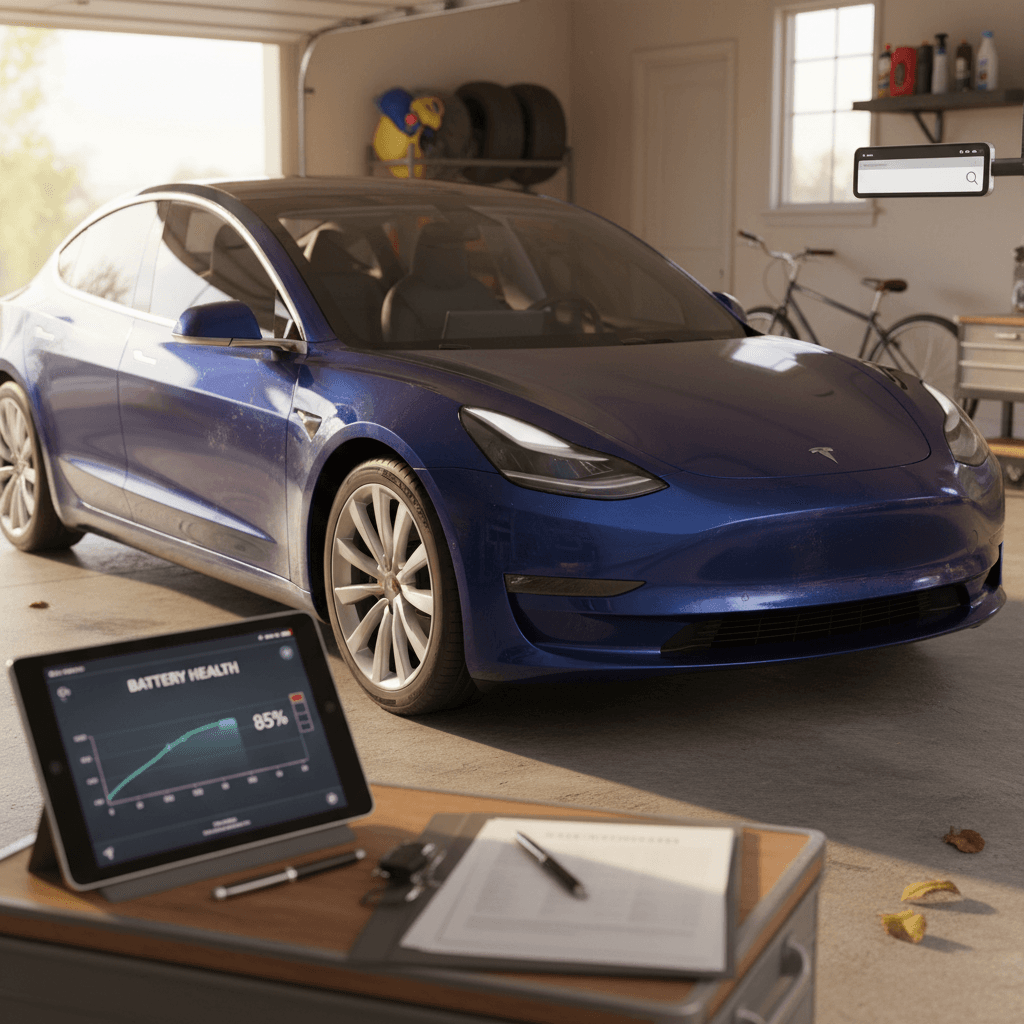
If you’re asking yourself, “What is my Tesla Model 3 worth?” you’re not alone. The Model 3 went from resale superstar to a more normal, sometimes volatile, used car almost overnight. Between Tesla’s frequent new‑car price cuts, shifting demand, and concerns about battery life, it can be hard to pin down a fair number for your car. This guide walks you through how the market really values a used Model 3 today and what you can do to keep as much money in your pocket as possible.
Quick answer
How much is my Tesla Model 3 worth today?
Tesla Model 3 value snapshot (early 2026, U.S.)
Those broad ranges assume normal mileage, clean history, and a healthy battery. A one‑owner 2021 Long Range with 25,000 miles and strong battery health will sit toward the top of its band. A 2018 car with 120,000 miles, visible cosmetic wear, and a tired pack will be on the low side, or even below it.
Why online estimates disagree
Why Tesla Model 3 values have changed so much
What’s shaking up Model 3 resale values?
Three big forces you can’t control, but must understand
Aggressive new‑car price cuts
Tesla has repeatedly cut new‑car prices, especially on Model 3. When a new Model 3 gets cheaper overnight, used prices have to follow, sometimes dropping thousands of dollars in months.
Oversupply of used Teslas
Tesla has been the best‑selling EV in the U.S. for years. That means lots of Model 3s hitting the used market at the same time, giving buyers more choice and pushing prices down.
EV & battery uncertainty
Shoppers are still learning how long EV batteries last and how fast tech changes. Concerns about range, software support, and charging standards all nudge buyers to negotiate harder on price.
In short, you didn’t do anything wrong, the game board moved underneath you. The good news is that the Model 3 is still one of the most desirable used EVs on the road. If you understand how buyers think and price your car realistically, it can still bring strong money compared with many non‑Tesla EVs.
7 biggest factors that determine your Model 3’s worth
- Model year & trim: Performance and Long Range cars usually bring the most, while older Standard Range or RWD cars land lower.
- Mileage: Roughly speaking, values start to soften once you’re past about 50,000–60,000 miles and drop faster after 100,000 miles.
- Battery health & range: A pack that still delivers near‑original range is a major selling point; a weak one is a major discount.
- Condition & accident history: Clean Carfax, no paintwork, and a tidy interior are worth real money to buyers.
- Options & features: Wheels, paint color, interior, Autopilot/FSD status, and heat pump on newer cars all affect price.
- Charging & software: Access to the latest software, premium connectivity transferability, and charging adapters can sweeten the deal.
- Where and how you sell: Trade‑in to a dealer, instant cash offer, consignment, or private party all produce different net numbers.
Think like a buyer, not an owner
Tesla Model 3 depreciation: what the numbers look like
It’s helpful to zoom out and look at how the Model 3 has actually depreciated in the real world. Independent analyses of used sales suggest that a typical Model 3 can lose on the order of 25–30% of its value in year one and roughly 45–55% by year three, assuming average mileage and no major issues. That’s steeper than many gas sedans, but fairly normal among EVs given rapid technology changes and Tesla’s price cuts on new inventory.
Illustrative Tesla Model 3 value curve
Approximate retained value vs. original MSRP for a typical Model 3 with average miles and solid battery health.
| Age of vehicle | Approx. remaining value vs. original MSRP | What that often looks like in dollars* |
|---|---|---|
| 1 year | ≈70–75% | A $50,000 car might resell around $35,000–$37,500 |
| 2 years | ≈55–60% | Same car might land near $27,500–$30,000 |
| 3 years | ≈45–50% | Often in the low‑ to mid‑$20,000s |
| 5 years | ≈38–42% | Commonly high teens to low‑$20,000s |
These are directional examples, not offers. Actual values depend on trim, mileage, condition, options, and market conditions when you sell.
Depreciation can change quickly
Battery health: how it impacts value more than almost anything
Why buyers are fixated on batteries
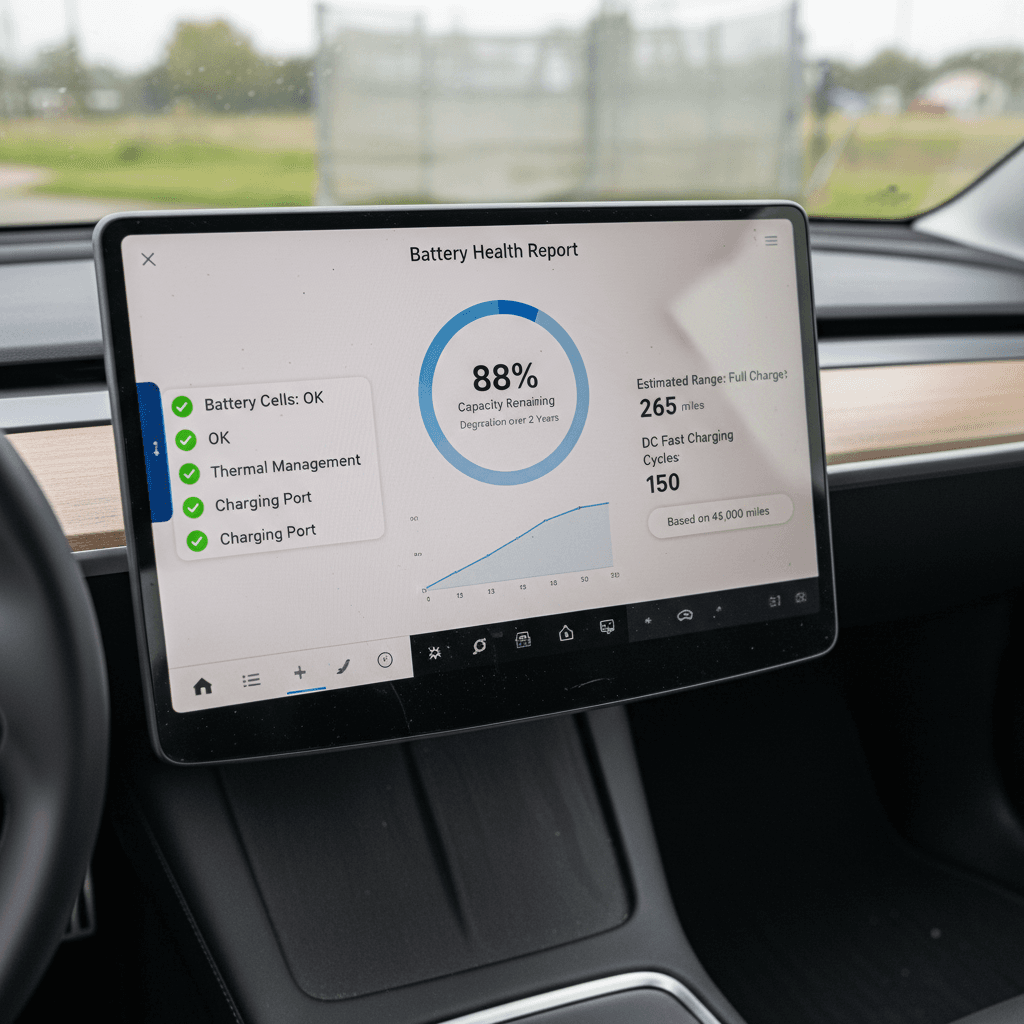
For a gas car, shoppers worry about the engine and transmission. For a Tesla, they worry about the battery pack. It’s the single most expensive component on the car, and it controls not just range but also performance and fast‑charging speed.
Two Model 3s of the same year and mileage can be worth dramatically different amounts if one still delivers close to its original range and the other has noticeably degraded.
What hurts perceived battery value
- Frequent DC fast‑charging and very high annual mileage.
- Visible range loss vs. what the car showed when new.
- No documentation of charging habits or battery care.
- Warning lights, reduced charging speeds, or thermal issues.
Most buyers can’t read pack health directly, so they either discount the price or walk away if they aren’t comfortable.
Where Recharged helps
Ready to find your next EV?
Browse VehiclesSelling vs trading your Tesla Model 3
Three main ways to turn your Model 3 into cash
Each path trades convenience for dollars in a slightly different way.
Dealer trade‑in
Pros: Fast, simple, and you only negotiate one number, the difference between your trade and the next car.
Cons: Often the lowest dollar amount. Dealers build in room for reconditioning, transport, and profit.
Instant offer / online buyers
Pros: Quick quotes, easy logistics, sometimes better than a traditional trade‑in.
Cons: Values can swing day‑to‑day. Offers often drop after inspection if condition or battery health doesn’t match expectations.
Private sale or consignment
Pros: Usually gets you the highest sale price. EV‑savvy buyers especially will pay for a clean, well‑documented car.
Cons: More effort: photos, listings, showings, and paperwork, unless you work with a marketplace like Recharged that handles this for you.
How Recharged fits in
How to estimate your own Tesla Model 3 value (step by step)
6‑step DIY valuation checklist
1. Decode your exact year, trim, and options
Grab your registration, window sticker (if you have it), or Tesla app. Note year, trim (RWD, Long Range, Performance), wheel size, interior color, and whether Enhanced Autopilot or FSD is active and transferable.
2. Document mileage and condition honestly
Write down current mileage and make an unbiased list of cosmetic issues, curb rash, door dings, windshield chips, interior wear, odors, and any warning lights. These are the things a buyer or dealer will notice immediately.
3. Check your battery and range
With the battery at a known state of charge (for example, 90%), compare the displayed range to what your car was rated for when new. Large gaps or obvious degradation will push values down unless you price accordingly and explain it.
4. Scan the market for twins
Search used‑car sites and EV‑focused marketplaces for <strong>cars as close to yours as possible</strong> in year, trim, mileage, and region. Ignore obvious outliers and focus on the middle of the asking‑price pack.
5. Run a few online value tools
Use general valuation tools (like traditional book values) and instant‑offer sites. Enter your information consistently so you’re comparing apples to apples. Treat their numbers as <em>data points</em>, not gospel.
6. Set a realistic target range
Take the midpoint of your market scan, adjust down for issues (accidents, heavy wear, weak battery) or up for stand‑out positives (low miles, rare spec, documented battery health). That gives you a <strong>reasonable asking‑price band</strong> and a walk‑away number.
How Recharged values a used Tesla Model 3
Because Recharged only works with EVs, our valuation process for a used Tesla Model 3 goes deeper than a generic “book value.” Our goal is to price the car where it will actually sell while fairly reflecting its unique strengths and weaknesses, especially around the battery.
1. Verified battery health & range
We start with a Recharged Score battery‑health diagnostic. That tells us how your pack is performing compared with similar Model 3s, how much real‑world range buyers can expect, and whether we need to adjust value up or down.
For you, that means your car isn’t treated like a generic “2019 Tesla.” It’s valued on what’s actually under the floor.
2. Market‑correct pricing & expert guidance
Next, we look at live market data: how quickly similar Model 3s are selling, what they actually transact for, not just list for, and how demand looks in your region.
From there, our EV specialists walk you through pricing options: a fast‑sale number if you want to move the car quickly, or a market‑max number if you’re willing to wait a bit longer, whether you choose instant offer, trade‑in, or consignment.
Transparent from start to finish
Common mistakes that cost Tesla owners thousands
- Ignoring the market window. Waiting six months while new‑car prices fall or incentives expire can easily erase any extra money you hoped to gain.
- Overpricing based on what you paid. Buyers compare your car to new ones and other used listings, not your old purchase agreement.
- Skipping basic reconditioning. A detail, paintless dent repair, and taking care of cheap cosmetic fixes can raise perceived value far more than they cost.
- Not disclosing battery realities. Surprising a buyer with lower‑than‑expected range at the test drive is a fast way to lose the sale, or face a big price cut.
- Accepting the first offer you see. Values vary from dealer to dealer and between trade‑ins, instant offers, and EV‑specialist marketplaces like Recharged. Shopping a couple of options often adds hundreds or thousands to your net.
Don’t forget tax savings on trades
FAQ: Tesla Model 3 value
Frequently asked questions about Tesla Model 3 worth
Bottom line: know your number before you sell
Your Tesla Model 3 is still one of the most liquid and in‑demand used EVs on the market, but only if you approach its value with clear eyes. Start by understanding how year, mileage, and battery health affect what buyers are really paying today, not what you wish the car were worth. Then decide whether you want maximum convenience, maximum dollars, or a smart balance of both.
If you’d like a number that reflects your specific car, not a generic average, consider starting with an EV specialist instead of a traditional used‑car lot. At Recharged, every Model 3 gets a Recharged Score Report with verified battery health, fair‑market pricing, and expert guidance on whether to sell, trade, or consign. However you decide to move on from your Tesla, knowing your true number is the first step to keeping more of its value in your wallet.